



Spain’s very own taste of the Orient
Rioja Oriental has shaken off its bulk wine mantle to become the most experimental of the Rioja sub-zones, writes Patricia Langton.
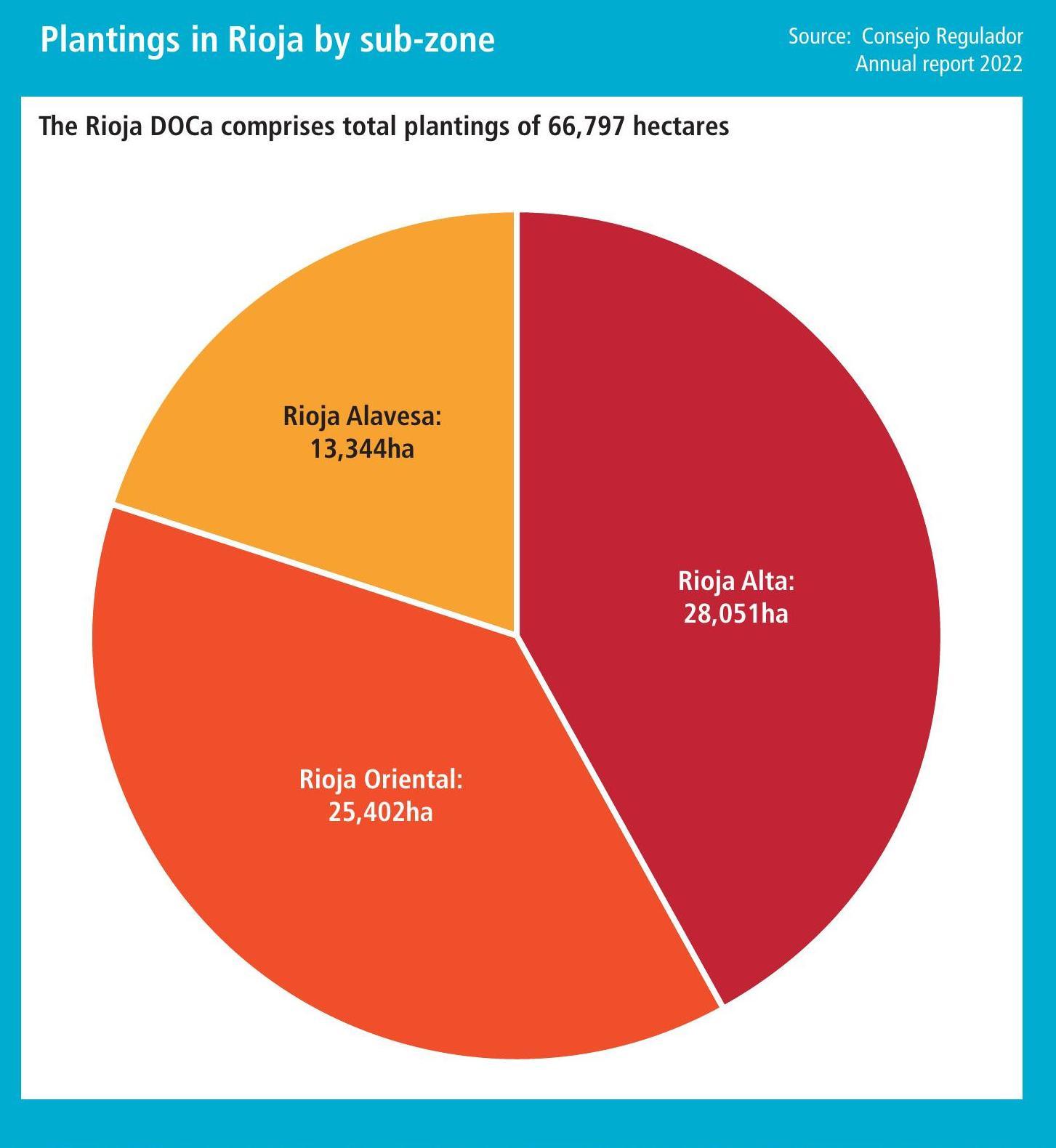
IN 2018, an event took place in the world of Spanish wine which had established wine critics spluttering over their coffee. This was the newly-announced name for Rioja’s most easterly sub-zone, which became Rioja Oriental, rather than Rioja Baja.
The move came in response to calls from a group of quality-oriented producers of the area, who wanted a description which did away with perceptions of low quality and inferiority that they felt the term ‘Baja’ could imply.
The last decade has indeed seen significant change in Rioja Oriental, but why did it take so long when exciting developments were sweeping through other Spanish wine regions?
From the second half of the 20th century this sizeable sub-region of Rioja became the source of bulk wine for producers in Rioja Alta and Rioja Alavesa, who looked east for a reliable supply of more structured wines to beef up blends, especially in poorer vintages, and to meet the demands of growing sales as export markets developed.
Indeed, Rioja Oriental still plays a valuable role in cross-regional blends for which consistency and a house style are key.
As popularity soared for Tempranillo in Rioja winemaking, producers in Rioja Oriental followed the market trend of abandoning hillside vineyards planted to Garnacha in favour of the plains of the Ebro valley, where they planted extensive vineyards which were easier to cultivate.
Tempranillo, despite its short maturation cycle and poorer resistance to drought, was prioritised over the traditional grapes of the area.
For decades, if not centuries, wealthy industrialists from the Basque Country, Spanish banks and other entities had looked to nearby Rioja Alta for their wine investments. The ‘Baja’ wasn’t for them, and co-operatives began to dominate the winemaking scene there. In the 1990s, when the large Rioja houses started to expand their portfolios further afield, they generally headed to regions such as Ribera del Duero.
BOLD MOVE
However, it only takes a few individuals with vision and determination for the landscape to change.
In the late 1940s, winegrower José Palacios built a winery at Alfaro, a major wine town at the south-eastern tip of Rioja Oriental, and took the bold move (for the time, in this area) of bottling wines here 40 years later.
The year 2000 was to mark another milestone when his son Álvaro took over the family business, Bodegas Palacios Remondo, after gaining international acclaim in Priorat.
The family vineyards at Alfaro were planted 50/50 to Tempranillo and Garnacha, but Álvaro Palacios had different ideas. He believed that fine wine here should be made from Garnacha (almost exclusively), and so he set about reverting to the grape variety and experimenting with traditional trellising and lowering yields.
Add the key ingredient of altitude – the vineyards are located on the Sierra de Yerga at around 550m – and all the blocks were in place to build some of Rioja’s finest wines.
The latest release from Bodegas Palacios Remondo, Quiñon de Valmira, has Single Vineyard status and takes its name from its vineyard, which is located at an altitude of 615m.
Other quality-oriented producers are now keen to innovate against the backdrop of a rich local wine heritage.
Bodegas Ontañón is an established family-producer with a strong focus on high-lying vineyards in the Sierra de Yerga and an increasingly wide range of traditional varieties in addition to Garnacha. Recent plantings include 20ha of Maturana Blanca on terraced vineyards, planted in the same way as it would have been 60 years ago.
Its new bodega, Queirón, in the heart of the historic wine town of Quel, has an experimental role. Here ‘new’ varieties and special vineyard wines are offered in small volumes and the winemaking experience is fed back into the parent brand.
Under the Ensayos Capitales label, Queirón has offered intriguing wines such as a sulphur-free Graciano, a Tempranillo Blanco aged on its lees and a late-harvest Tempranillo.
As Ontañon export manager Conrado Herrero says: “The aim is for each grape variety to express itself in its maximum splendour.”
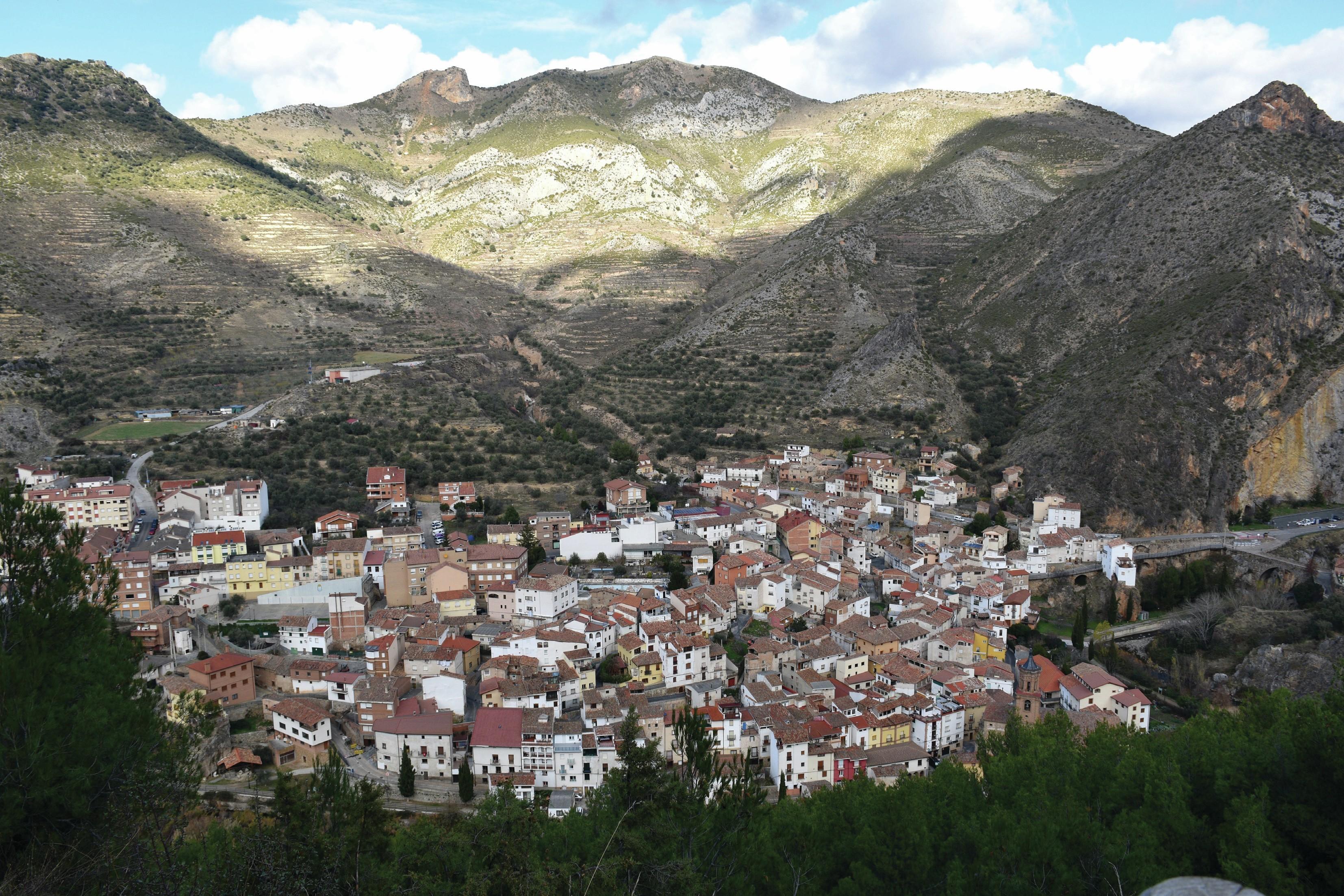
Pueblo blanco: the village of Arnedillo in Rioja Oriental
Javier Arizcuren (of Arizcuren Bodega & Viñedos) is a fifth-generation winemaker also located at Quel. He also happens to be an architect, which comes in handy when you need to build your own winery, as he did in 2016.
Arizcuren is passionate about preserving and restoring the area’s wine heritage – his own vineyards in Sierra de Yerga are made up of 40- to 130- year-old plots mostly planted to Garnacha and Mazuelo (Carignan), with “optimal soil characteristics, altitude and orientation for viticulture”.
The most recent addition to the portfolio is a singlevarietal Maturana (a historic red variety which was granted official status for DO winemaking relatively recently), and his Finca El Foro field blend has gained Single Vineyard status, joining the ranks of more than 20 ‘Viñedos Singulares’ from Oriental producers.
Garnacha is the main grape in Finca el Foro, complemented by a number of others, including Tempranillo. Arizcuren says: “Tempranillo can be interesting in higher areas – our vineyards are north-facing and at high altitude – but you need to pick the grape earlier to avoid losing acidity and fruit.”
He finds that short macerations work well and that Tempranillo doesn’t have to be “too ripe”. Overall, the approach to Tempranillo needs to be different in Rioja Oriental compared to in Rioja Alta and Rioja Alavesa, he emphasises.
Arizcuren acknowledges that Rioja Oriental lacks a clear identity, thanks to having lost about 50 years of heritage.
“We need time to uproot vineyards and at least 20-30 years to fully recover our identity,” he concludes.
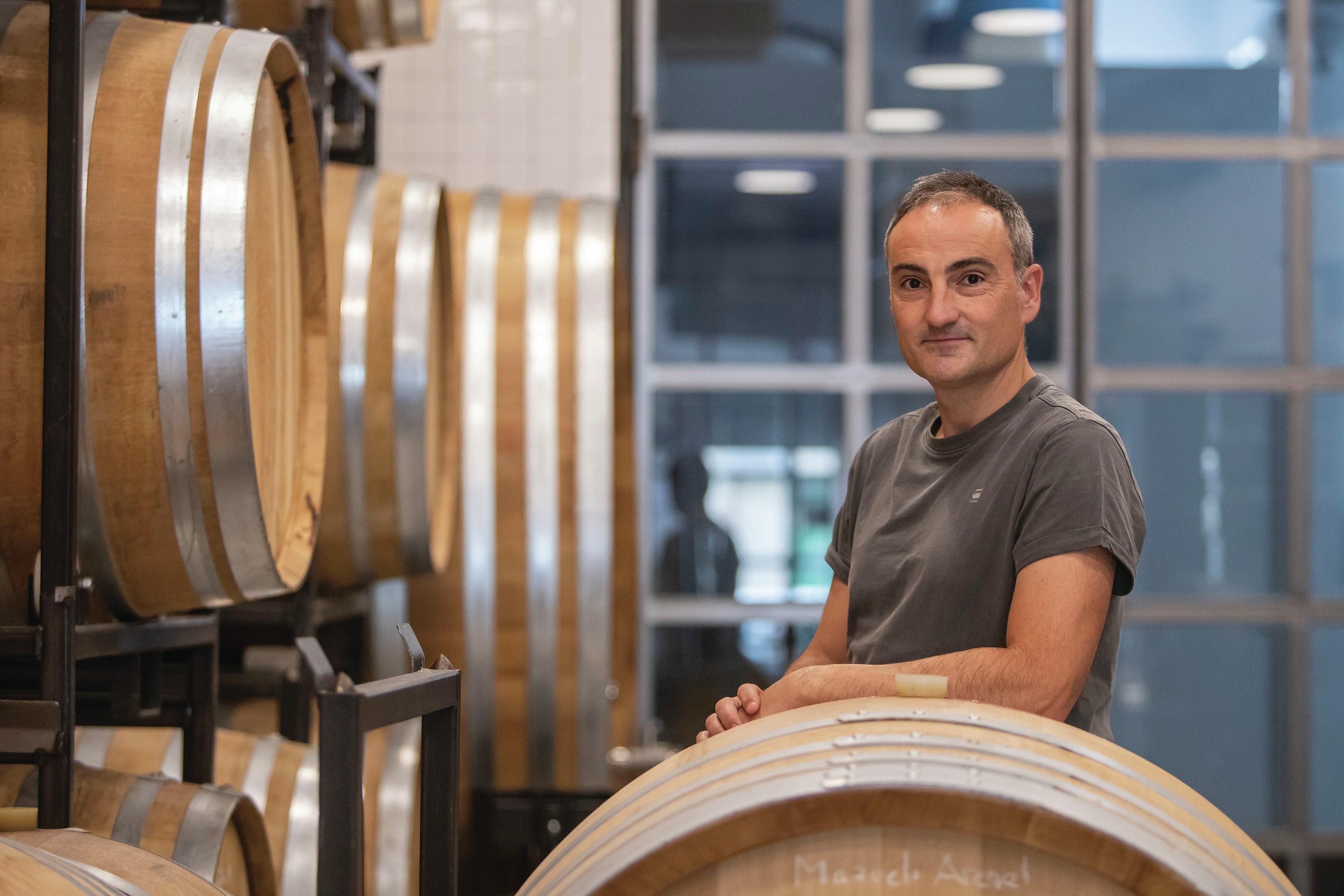
Passionate advocate: Javier Arizcuren wants to revive Rioja Oriental’s reputation
Thankfully, an increasing number of like-minded small producers are coming onto the scene, which might just speed things up. Their wines are being eagerly snapped up by buyers looking for more interesting Spanish wines. For example, Pierre Mansour, director of wine for The Wine Society, has listed Vinos en Voz Baja Costumbres at £16 per bottle, from Carlos Mazo at Aldeanueva de Ebro.
“For me it is the Mediterranean influence that characterises Rioja Oriental, and this is increasingly the sub-zone where Rioja is showing its experimental and innovative side,” Mansour says.
Mazo has started to make wines from old vineyards where Garnacha grows alongside traditional varieties such as Tempranillo, Garnacha Roya, Graciano de Alfaro and Viura, and he seeks to express the local character of the grapes through his wines.
Meanwhile, at Mendavia, near Logroño, Barón de Ley is somewhat atypical for Rioja Oriental. This winery was founded by a small group of Rioja-based investors in 1985, who started out with about 90 hectares.
Today its own vineyards extend to more than 600ha, mostly in Rioja Oriental, with an estate in Rioja Alta and bought-in fruit supplementing production. Its relatively new ageing cellar, with a capacity of 30,000 barrels, gives an indication of its size.
Rioja Oriental facts: all you need to know
Soils: Clay-ferrous and alluvial. Fruit from vines planted on clay-ferrous soils in higher-altitude vineyards tends to offer fresher wines, with higher acidity. Lower-lying vineyards lining the river valleys are the source of more structured wines.
Climate: The Mediterranean influence is more prevalent than the Atlantic in Rioja Oriental. Winters are cool and dry, and summers are hot, featuring the highest temperatures in the region and lower rainfall.
Grape varieties: Tempranillo is the mostly widely-planted variety. Garnacha is the traditional local grape and is ideally suited to Rioja Oriental‘s climate thanks to its long growing cycle and resistance to drought. Graciano and Mazuelo (Carignan) share similar characteristics to Garnacha and are also used in Rioja Oriental winemaking.
Key wine towns: Ausejo, Mendavia, Grávalos, Quel and Alfaro.
A wide range of grape varieties has long been used for Barón de Ley’s diverse range of wines including, interestingly, Graciano. Indeed, Berta Acero, brand manager for Barón de Ley, sees a positive trend for this grape variety in Rioja Oriental, highlighting “greater commitment to Graciano and more premium and exclusive projects featuring the variety”.
This traditional grape, like Garnacha, needs favourable weather to fully ripen later in the growing season and is a good candidate for organic viticulture. Enter Barón de Ley Organic Reserva, a blend of Graciano and Tempranillo from vineyards in Ausejo, resulting in a wine with a “new personality”, thanks to the “elegance, complexity and longevity” that the two grapes give the wine, according to Acero.
Barón de Ley is also the biggest producer of Maturana Tinta, which plays a valuable role in its reserva wines, while Garnacha is a “very important” part of blends and defines the Provence-style Rosado de Lágrima.
Finally, the bodega’s 7 Viñas deserves a mention. Arguably one of Rioja’s most interesting wines, it is made mostly from a blend of classic red and white varieties which are carefully selected from the best vintages. Tempranillo, Graciano, Garnacha, Garnacha Blanca and Viura are sourced from the producer’s estates in Oriental; Mazuelo and Malvasía from its vineyards in Rioja Alta. The wine retails for about £25 per bottle in the UK.
HIGH-ALTITUDE AREAS
Ramón Bilbao, a historic Rioja Alta bodega owned by Zamora Company, is one of the major producers to invest in Rioja Oriental.
Today the producer sources fruit from the area to “add structure, concentration and complexity” to wines such as Ramón Bilbao Crianza, but it’s also part of the exciting winemaking scene in the Sierra de Yerga, having acquired 90ha of vineyard here in 2014.
Head winemaker Rodolfo Bastida describes the Sierra de Yerga as “one of the special places” of Rioja, where the wines show “a strong and highly individual identity, with perfect ripeness, but keeping freshness”.
Bastida is passionate about and convinced by Garnacha’s potential in Rioja Oriental as a “rustic grape variety with resistance to drought that can cope with climate change”.
It’s the natural grape of choice for Ramón Bilbao’s Lalomba Finca Lalinde rosé (90% Garnacha and 10% Viura from its Yerga vineyards) and the new Garnacha blend from “high-altitude vineyards in Oriental” – Ramón Bilbao Limited Edition Garnacha.
Indeed, Bastida and his team have been busily exploring Sierra de la Demanda in the south of the Rioja Oriental region with its “different altitudes, aspects and microclimates”, as well as the Cidacos Valley (towns of Arnedo and Grávalos), not to overlook the Ocón Valley where Ramón Bilbao has sourced grapes for more than two decades.
“Rioja Oriental has plenty of corners to discover,” as Bastida says.
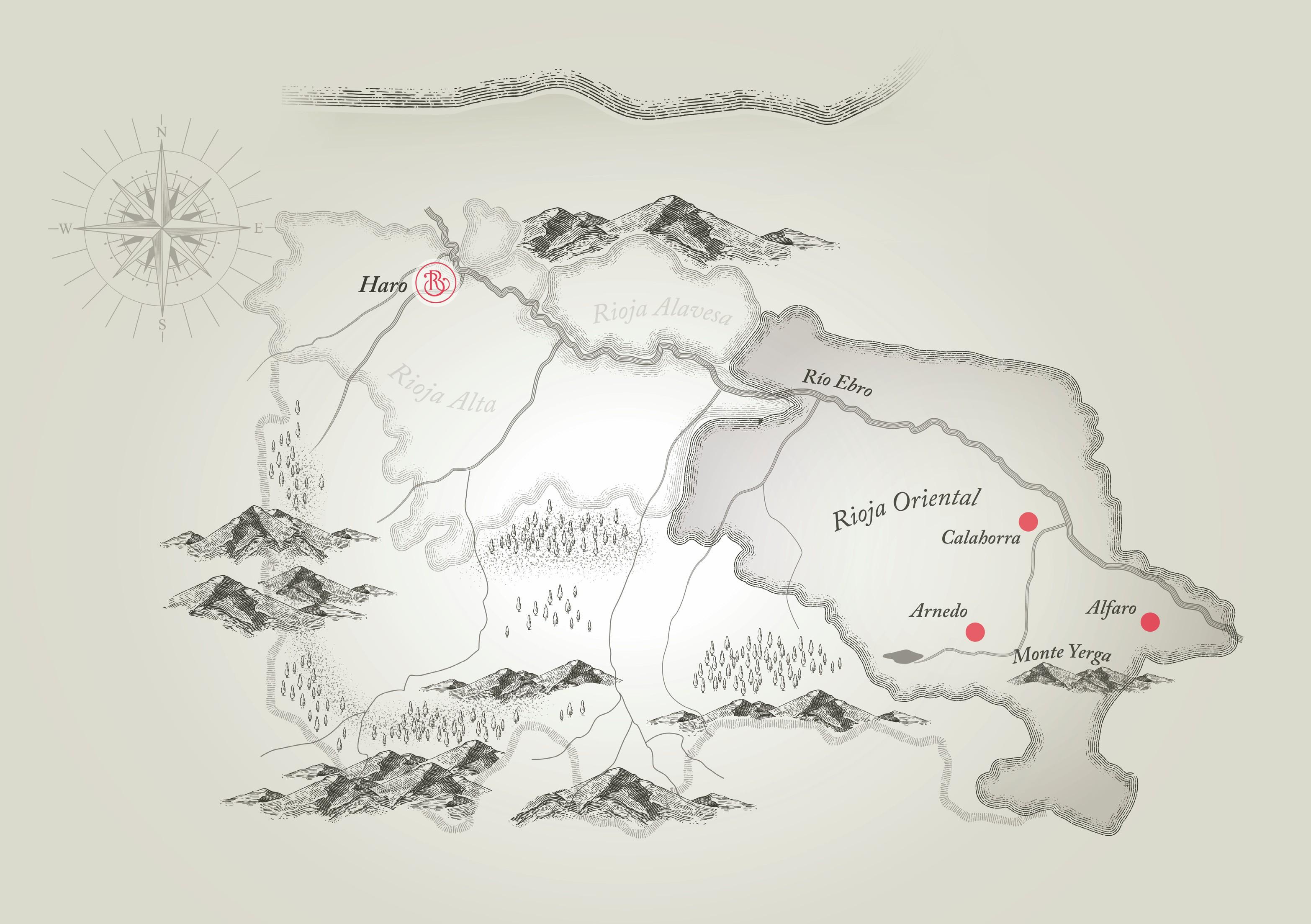
On the map: there’s more to the new Rioja Oriental than rebranding
Returning to the Sierra de Yerga, Finca Ladero (720m) is the source of the top wine of the same name in Ramón Bilbao’s Lalomba project.
This special vineyard was planted mostly to Tempranillo (with some Garnacha) in 1989, making the wine a Tempranillo-dominant blend. Interestingly, as its new owners, Ramón Bilbao’s viticultural team introduced contemporary “low training” in place of the traditional bush style to mitigate the impact of strong winds and to achieve better exposure to the sun. Finca Ladero 2017 has a price tag of £100/€86 per bottle.
No longer the poor relation, Rioja Oriental is repositioning itself as a credible wine area with stellar wines made from Garnacha and more.
Or, as Ana Sapungiu MW, head wine buyer for Oddbins, puts it: “Good producers are showing that fantastic wines are possible [in Rioja Oriental]. It’s definitely an area to watch.”
Related news
English investor buys historic Château Vignelaure
Wales bids for world’s first natural wine appellation
How service crop management could save vineyards in dry years


