



Is it curtains for Merlot?
Of all international grape varieties, Merlot is the one most seriously affected by global warming, with many winegrowers choosing to replace it with other Bordeaux varieties, reports Roger Morris.

MERLOT IS one tough cookie. A few years ago, the variety was trolled in the US by a drunken, hate-mongering character in the film Sideways, who convinced a segment of American wine lovers to quit drinking Merlot and switch to Californian Pinot Noir. Merlot sales suffered for a while, but the grape eventually bounced backed in the US market, where it remains the second most-planted international red variety, behind Cabernet Sauvignon.
But now Merlot is being hit hard by a much more-formidable opponent – global warming. Climate change is rendering the grape less desirable for fine winemaking. Some of the same winegrowers who have in the past received the highest ratings for their Merlot-based wines are quietly replanting it in some famous terroirs with other Bordeaux varieties, chiefly Cabernet Franc.
“I have mixed thoughts,” says Axel Heinz, who has 45 hectares of Merlot among the 115ha planted to red grapes at Ornellaia in Bolgheri. “Merlot is still capable of making good wines, but when it starts getting outside of the optimal ripening window it’s a source of concern.” He has already done some replanting, and warns that as global warming worsens: “Only a few places will be capable of making satisfactory Merlot.”
CHANGE OF GRAPES
Philippe Bascaules, managing director at First Growth estate Château Margaux, says: “When we have been replanting blocks at Margaux, we have been replacing some Merlot with Cabernet Franc.”
And in an interview in 2021 with the drinks business,Peter Sisseck, the famed winemaker at Pingus in Ribera del Duero and Château Rocheyron in St-Émilion, was even more blunt. Saying there is “far too much Merlot in Bordeaux at the moment” Sisseck argued that “winemakers on the Right Bank need to make changes and plant more Cabernet Franc, Petit Verdot, and Touriga Nacional in order to cope with global warming. Spanish grapes are better adapted to global warming”.
Harry S. Truman, the 33 rdAmerican president, liked to use the phrase: “If you can’t take the heat, get out of the kitchen.” Increasingly, that seems to be Merlot’s problem. As Heinz neatly puts it: “Drought, heat and Merlot do not get along.”
For decades, Merlot’s profile served Bordeaux and its red blends extremely well. Malbec had been removed from most Bordeaux vineyards because it couldn’t stand the cold, being especially susceptible to frost damage. As the same time, Cabernet Sauvignon in Bordeaux had a problem becoming ripe, as Napa Valley growers in the 1970s and 1980s loved to point out. Merlot, however, could be counted on to provide good flavours and high sugars in Bordeaux blends, even in many Left Bank vineyards. But with the 2003 vintage, Europe experienced a prolonged summer heatwave, a forecast of what future vintages would come to face. Grapes that couldn’t become “ripe enough” suddenly became “super ripe”. Wine critics routinely described 2003 Merlot-based reds on the Right Bank of Bordeaux as being “jammy”, although some Cabernet Sauvignon winegrowers on the Left Bank applauded the heat as a blessing, at least a temporary one.
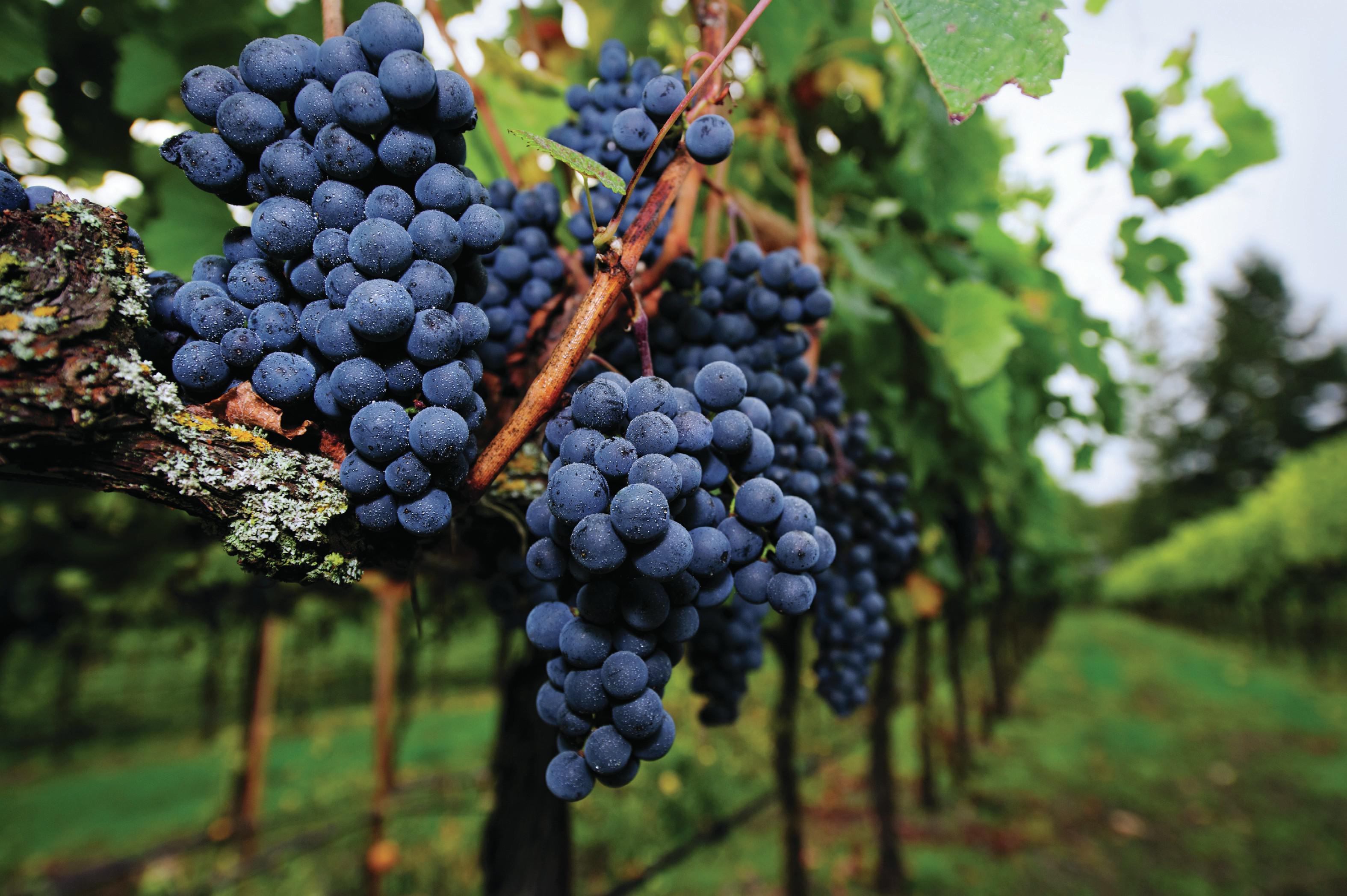
Two decades ago climatologists warned that the earth’s average temperatures would soon increase by one and a half degrees Fahrenheit. Now that estimate seems to have been too optimistic. True, hot and dry summers such as the one Europe experienced this year may not occur every year, but they are occurring more frequently. Another prime terroir for Merlot is California, which in 2022 had the hottest summer in recent memory.
WHERE MERLOT THRIVES
Of course, as with every grape, much depends on where Merlot is grown.
In general, Merlot does well in soils such as clay that are cooler and retain water, but thrives less in well-drained soils, such as sand or gravel – the soils in which Cabernet Sauvignon and most other Bordeaux grapes thrive. As Bordeaux has both types of soil, part of the replanting drive now is to remove Merlot from drier, hotter soils in the region.
“We have mainly gravels and some clay in our soils, a specialty of St-Estèphe,” says Lorène Babin of Château Phélan Ségur, which grows both Cabernet and Merlot. “The more clayish soils soak up water during winter and spring, then release it during summer. This is why dry summers work for us in St-Estèphe.” At Ornellaia Heinz says: “In warmer sites and sandy soil, Merlot is maturing too early than what would be optimal.”
Similarly, aspect can be important. In Napa Valley, Cabernet Sauvignon is routinely planted in hillside vineyards that are well drained, while Merlot is more commonly grown on the waterretaining valley floor. The same is true with Bordeaux’s Right Bank. Cyrille Thienpont, who makes wine with his father Nicolas at Château Pavie-Macquin, notes that the estate is in the process of adding 25% Cabernet Franc on its sloping hillsides, but he maintains that “on the plateau, Merlot remains the grape”.
About 25 years ago, Steve Smith planted Merlot as one of the varieties in the Gimblett Gravels region of New Zealand’s Hawkes Bay when he was establishing Craggy Range. But Smith decided not to plant Merlot when he acquired a property in the Gravels for his recent venture, Smith & Sheth.
He says: “While it made good wine,” he says, noting the region’s marine climate helps keep things cool, “I wouldn’t plant Merlot there today.” In Chile’s Puente Alto region, Enrique Tirado uses small amounts of other Bordeaux varieties to season his Cabernet Sauvignon-based Don Melchor brand, but in recent years he has increased the amount of Cabernet Franc while lessening that of Merlot to about one per cent.
Even where winegrowers are continuing to grow Merlot, with no plans to replace it, vineyard practices are being adjusted to prevent over-ripening.
“We take all necessary actions to keep our Merlot at a reasonable level of potential alcohol and acidity,” Phélan-Ségur ’s Babin says. “We do a shorter pruning, and the trimming is lower to avoid evapotranspiration. Between our rows of vines, we compensate the soils by sowing plant cover. We let them rise, and then we roll them to avoid solar erosion. We are also starting to think about lowering the density and favouring the east/west orientation of our rows rather than north/south.”
For Masseto, Ornellaia’s Merlot-oriented sister brand, Heinz says: “We are doing less leaf plucking, and allowing more ‘California sprawl’,” referring to the traditional practice in that state of allowing maximum bushiness to better shade grapes.
Even with adjustments, Merlot harvests have moved well into August, which is especially painful for the French, who see that month as holiday time, and, increasingly, winemakers urge “optimal windows” for picking.
Having to wait too late for Cabernet to achieve optimal ripening can cause what Bascaules calls “oxidation in the vineyard”, while picking Merlot early to maintain lower sugars can result in the grapes not being ripe phenolicly. So increasingly vineyard practices, including how and when to irrigate (where that is allowed), are being used not to let those optimal windows be dictated only by the calendar or grape variety.
MERLOT ALTERNATIVES
Probably because the two have been planted side by side in some of the most famous terroirs, Cabernet Franc seems to be the most popular choice where Merlot is being replaced. Additionally, Cabernet Franc has features that have become particularly attractive to current tastes.
“The idea of the Rothschild family is to replant more with Cabernet Franc on the Right Bank because it gives a freshness to the wines, which we want,” says Diane Flammande, enologist for Domaines Barons de Rothschild-Lafite (DBR). She points out that the company has properties there, as well as sourcing grapes for regional blends in the area. Meanwhile, Thienpont adds that Franc “brings light and relaxation” to Pavie-Macquin wines.
Similarly, Bascaules is adding Cabernet Franc at Margaux, as Heinz is at Ornellaia, though not yet at Masseto. “Masseto is still good with Merlot,”
Heinz says, but he would “definitely consider” adding Cabernet Sauvignon, not Franc, to Masseto in the future. He adds: “Cab Franc is not always the most tolerant grape to grow.”
At Château Corbin, on the Right Bank, owner Anabelle Cruse-Bardinet says she is taking measures to integrate more Cabernet Franc in the blends as it is being replanted. “Waiting for new plots of Cabernet Franc, we have innovated in a new way of ageing the Cabernet Franc in glass wine globes,” she says, “giving to the wine another dimension with more purity and power and minerality. So they have more strength and they boost the blend of the final wine.”
At Castello del Terricio in Tuscany, Giacinta Pocci reports that when Merlot began over-ripening there in the early 2000s, “we then started experimenting with Petit Verdot, and we are very pleased with the outcome. That’s how we gradually replaced the Merlot in the Lupicaia blend.”
And in his new Gimblett Gravels vineyard, Smith says while he is forgoing Merlot, he is excited about growing Syrah there. However, according to winemaker Ralph Garcin of Château de Nalys, Syrah is being abandoned in some areas of the southern Rhône – possibly the next victim or global warming.
MERLOT ISN’T VANISHING
It appears that global warming is mainly causing Merlot to be replanted in the most expensive and most famous terroirs, with less replanting occurring elsewhere. According to the most recent worldwide figures gathered by the University of Adelaide, Merlot plantings in 1990 increased by two thirds by 2010 before falling back somewhat in recent years – still a strong number two to Cabernet Sauvignon among red grapes planted.
And while winegrowers who produce high-priced wines and who have an eye on ratings are willing to replant even younger vines, many growers would not take that step until production begins to falter as the vines age. Also, there are volume-based growers who welcome harvesting high volumes of super-ripe Merlot grapes.
“Today, Merlot is still a crowd-pleaser,” Heinz says, “and not just for consumers but also for winemakers. There’s a lot to like – it’s easy to grow, and it still makes decent wine.” And many premium producers, such as Sullivan in Napa Valley and L’Ecole No 41 in Washington state, are staying loyal to Merlot.
But there is no doubting the onslaught of global warming, and increasingly serious Merlot winegrowers are rephrasing President Truman’s dictum to read: “If you can’t stand the heat, you won’t make it into my cellar.”
Feature findings
• Merlot is being hit hard by global warming. Climate change is rendering the grape less desirable for fine winemaking.
• Some of the same winegrowers who have in the past received the highest ratings for their Merlot-based wines are quietly replanting it with other Bordeaux varieties, very often Cabernet Franc.
• Even where winegrowers are continuing to grow Merlot, with no plans to replace it, vineyard practices are being adjusted to prevent over-ripening, such as shorter pruning, and sowing plant cover between the vines.
• Many premium producers, such as Sullivan in Napa Valley and L’Ecole No 41 in Washington state, are staying loyal to Merlot.
Related news
Vinexpo Drinks America returns to New York for second edition
Team Green: how VinLog is tackling shipping emissions
London masterclass celebrates 30 years of Chilean 'wine legend' Casa Real


