



Making a splash
Prestige Champagne is becoming increasingly popular, with consumers the world over making a beeline for high-end releases. Here, Giles Fallowfield examines the reason behind the clamour, and highlights the top cuvées
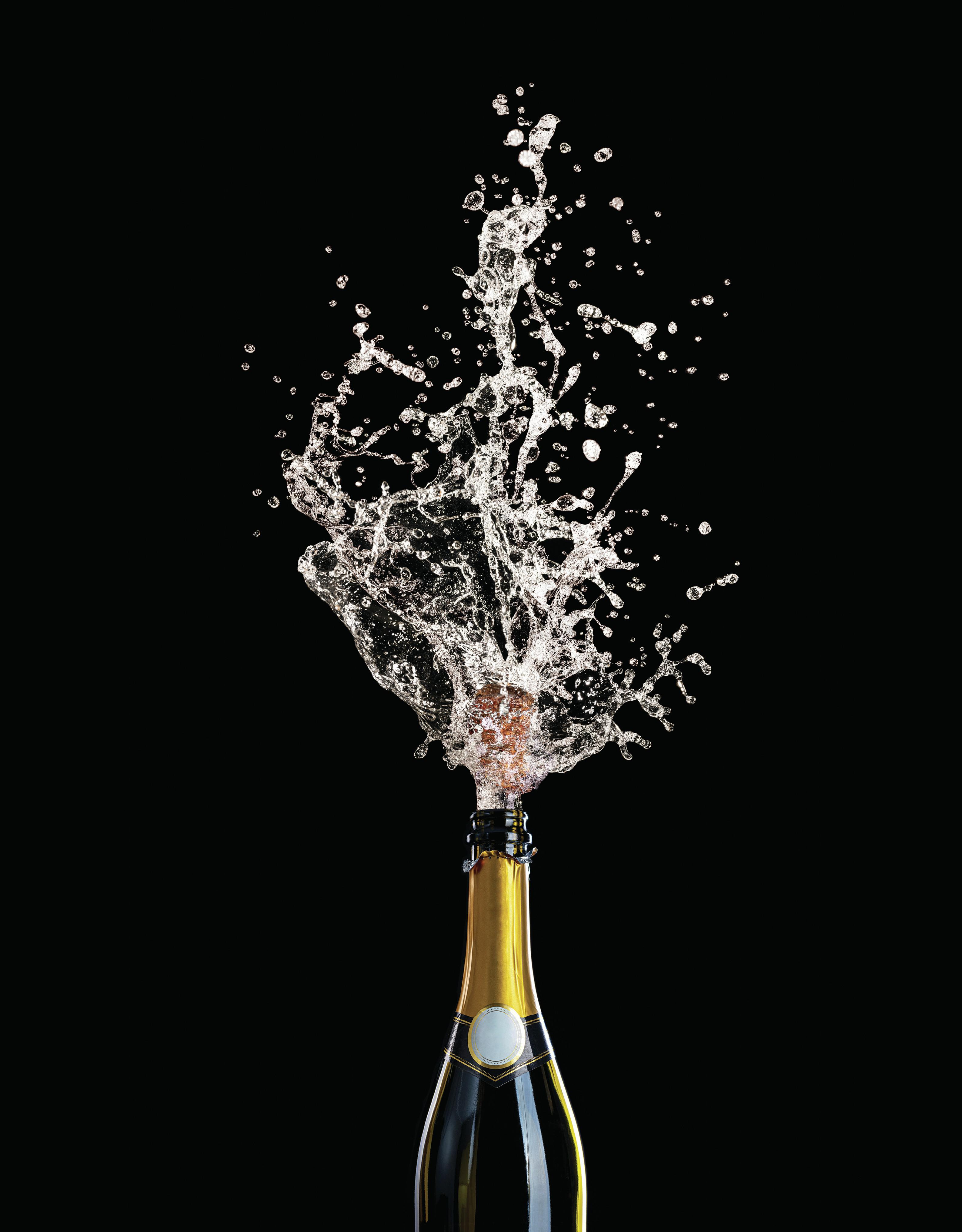
THE PRESTIGE cuvée sector of the Champagne market used to be defined by just three brands – Cristal, Krug, and Dom Pérignon – but although they still command arguably the widest recognition, this is no longer really true.
The sector has enlarged considerably, as has its value and the proportion of exports that these wines account for. It’s true that Brut sans année remains the mainstay of the business, with the ongoing development of that category of Champagne, including better sourced, more premium styled, often longer-aged wines, underpinning it further.
But in top export markets like the US, Japan, and the UK, the allure of selling luxury fizz is self-evident; it’s a very profitable part of the business.
In 2021, Japan, the second-mostimportant market for luxury fizz after the US, took more prestige cuvée Champagne than it did vintage and NV rosé put together (and they love pink fizz in Japan), with shipments there respectively 1,491,034 bottles of the former and 1,391,351 of the latter. The rosé, where even NV is a premium-priced wine, had a shipment value of €31,233,967 (£26,941,601), the prestige bottles, fewer than 100,000 more, were worth €109,159,486, over three times as much.
Grapes are becoming increasingly expensive in Champagne, with those from the best Grands Crus crossing the €10-per-kilo level in 2022, with other costs also escalating. So it has never been more important for every house with ambition, to have a cuvée positioned in the luxury premium segment and priced accordingly. And if recent evidence is anything to go by, the likes of Cristal, Krug and Dom Pérignon can’t meet the post pandemic demand for such wines.
Other top contenders include LVMH’s Dom Ruinart (2010) and Veuve Clicquot’s La Grande Dame (2012); Pol Roger ’s Sir Winston Churchill Cuvée (2013 currently), Taittinger ’s Comte de Champagne (currently on the fairly small volume 2012 vintage); Billecart-Salmon’s Cuvée Louis Blanc de Blancs and Cuvée Nicolas François Billecart (respectively 2008 and 2007); Bollinger RD 2007, and Salon 2012, only a tiny volume of which was made. All are increasingly hard to track down.
OUT OF STOCK
The mantra used to be that such wines were on ‘allocation’, but as 2022 draws to a close, many are simply ‘out of stock’. This represents a great opportunity for other producers to fill the void, and with many fine quality products around, this may be a great chance to establish their credentials in the longer term too.
All the above-named cuvées have a specific vintage on the label. While the hype surrounding certain years, generated by the Bordeaux-centric critics that top wine merchants like to quote, often bears little resemblance to the quality in the bottle, vintage still matters. Especially for consumers who ‘collect’ prestige formats, but don’t really understand Champagne. It’s not by chance that some Champenois say, ironically, of course, there are only top vintages in Champagne in years that coincide with great wines in Bordeaux.
Historically this has put a wine like Laurent-Perrier ’s Grande Siècle – athree-harvest blend where the individual years involved used to be a closely guarded secret – at a disadvantage. Over time, the company has come to realise that actually, the three years involved are a central part of the story, and a very marketable facet of this wine, which can age attractively to great effect.
Therefore, since April 2019 each new release of Grande Siècle has been given an ‘Itération’ number, and details of three vintages in the blend, which has given this wine a new lease of life. Les Réserves Itération 17 – comprising a blend of 1990, 1993 and 1995 – is a further-aged refinement of the concept, getting more than two decades of lees ageing that boasts real complexity and great elegance.
Sales have benefited greatly in countries like the US, where over 2.1m bottles of prestige fizz worth €123,766,355 were shipped in 2021. Despite this being a year of Covid lockdown, it still saw the second-highest total of such shipments to this market in the past decade. Only 2019 prestige cuvée shipments to the US of 2.34m bottles worth just over €149m, exceeded that level.
While I back my assertion that the prestige market is dominated by single vintage expressions of Champagne, exceptionally, in the case of the US in 2021 this is not true. While ‘marques internationales’, as the CIVC’s export statistics describe them, account for just over 1.9m of the 2.1m bottles of prestige fizz shipped to the US, this broke down into 912,564 vintaged bottles and 996,356 without a vintage on the label. As the only two significant international brands in this sector that are not vintaged, we can safely assume the majority of this was accounted for by Laurent-Perrier ’s Grande Siècle and Krug’s Grande Cuvée.
As documented in the drinks business’s Champagne supplement published this year, Laurent-Perrier reported very strong results for the year ending March 31, 2022, with turnover up by 26.6% compared with 2019-2020, and a massive 58.6% ahead of the previous financial year (April 2020-March 2021). Stéphane Dalyac, chairman of the LP management board, puts this down in no small measure to, “the improved mix of high-end cuvées”. While the first half of the year (to the end of September 2021) was already looking strong, with 29.5% growth, continuing buoyant demand saw this accelerate in the last quarter of 2021 and early 2022. But to benefit from that you had to have the stock for key markets, and nowhere was this more vital than in the US, where Laurent-Perrier greatly benefited from Dalyac’s decision to open up production quickly after lockdown, even though demand was at that point still depressed.
Impact Databank puts Laurent-Perrier sales in the US in 2021 at + 63.8% year on year – Mumm at +58.3% is the only other top-10 brand to rise by more than 50% over the same period– making Laurent-Perrier number three in this market behind Veuve Clicquot and Moët & Chandon. The company had already more than doubled the volume it shipped to the US in the decade between 2010 and 2020.
An interesting back story with a rich family history suggests that a warm welcome in the US market awaits the likes of Philipponnat too. Clos des Goisses, the large, south-facing single vineyard site in the family’s historic home of Mareuil-sur-Aÿ, has certainly attracted the attention of the US market, and where sommeliers and journalists get excited, fine wine collectors quickly follow. It shouldn’t take much to transfer the love to Philipponnat’s prestige line Cuvée 1522, especially in the house’s 500 th anniversary year.
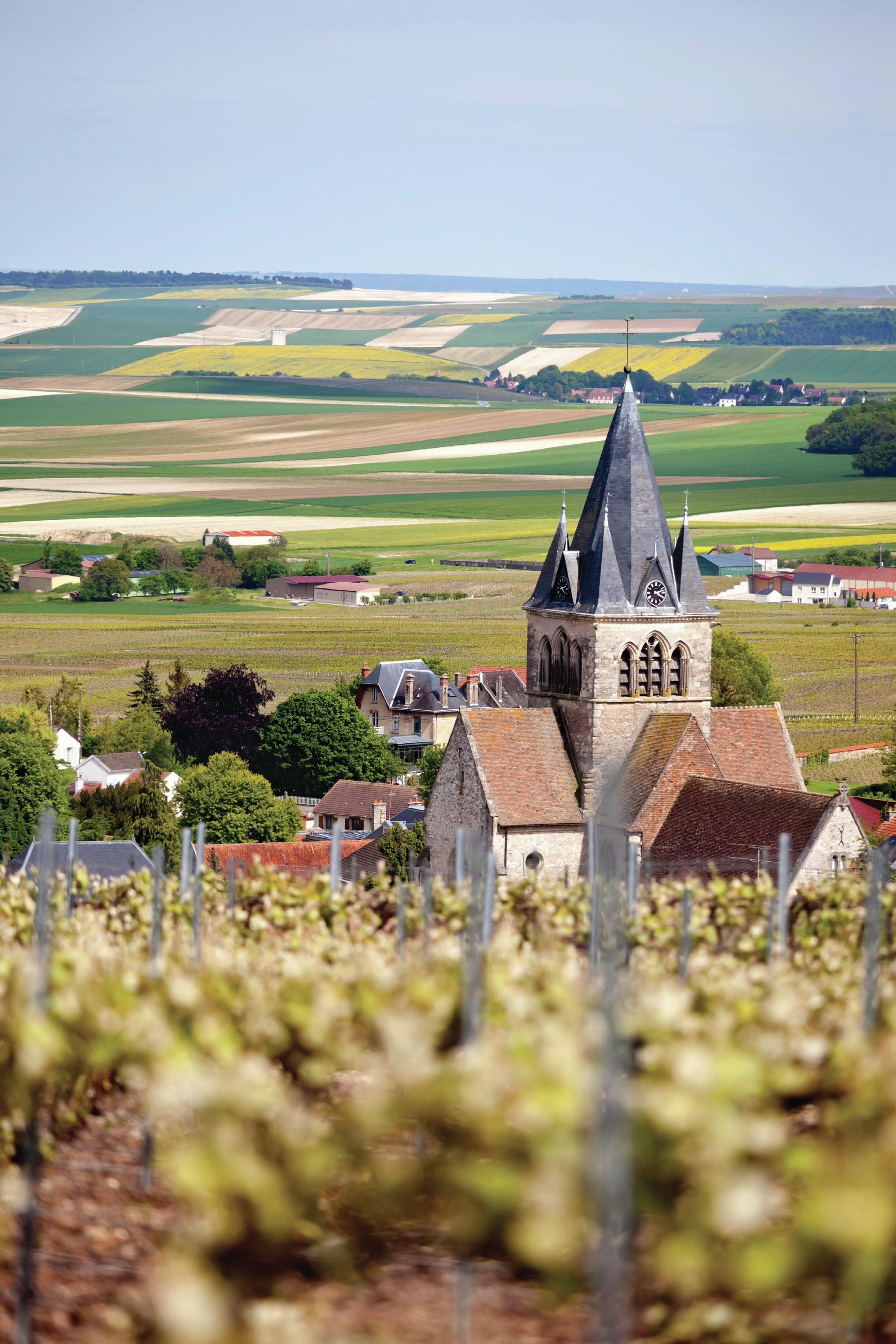
In 1522, Apvril Le Philipponnat, a Swiss captain in the service of King Francis I, living in Aÿ since the end of the fifth Italian War, already owned property in the locality called Le Léon in Aÿ, today classified as a Grand Cru. Philipponnat still owns vines there today. This presence is the oldest trace of an uninterrupted family tradition in Champagne, with Charles Philipponnat at the head of the house since 2000, representing the 15 thgeneration of the family.
RELAUNCHED LINE
Although it doesn’t boast quite this sort of long-running family history, Lanson which celebrated its 250thanniversary in 2010, and is part of the same Lanson-BCC group as Philipponnat, is also targeting the US market. Spearheading its campaign is the redesigned and relaunched prestige line Noble, and two very impressive wines – Brut and Blanc de Blancs – from the 2004 vintage, with no mention of Lanson on the front label.
As part of the other largest group in Champagne outside LVMH, Vranken Pommery Monopole, the house of Pommery, has also seen heightened demand for its prestige line, Cuvée Louise. The 2005 vintage released at the start of this year with a completely new design – the coloured lines on the bottle symbolic of rows of vines in the iconic Pommery vineyards of Aÿ, Cramant, and Avize, the crus used in the blend – has sold extremely well. Julien Lonneaux, international director at Vranken-Pommery Monopole, says: “Since the redesign 11 months ago the demand has been massive. We didn’t expect to sell the volume we’ve achieved in this period. It’s beaten the forecasts, and we may have to change vintage earlier than we expected or planned.”
At the Pernod Ricard-owned houses G.H.Mumm and Perrier-Jouët, the US market has always been important, particularly for Perrier-Jouët Belle Époque, as the Impact Databank figures suggest. And the brand image was further polished with worldwide interest shown in the historic Christie’s auction in December 2021 of an amazing Oenothèque collection of older vintages of mostly Belle Époque in different formats, with 15 lots in all, the oldest from 1874, the youngest from 2006, the former setting a record price of £42,875.
In October, Perrier-Jouët celebrated the 120 tha nniversary of its Art Nouveau heritage – the Japanese anemone design by Emile Gallé used to adorn Belle Époque bottles – with a dinner at the Hotel de Crillon in Paris, created by executive chef Boris Campanella and ambassador of the house, Pierre Gagnaire. It was also the occasion for chef de cave Séverine Frerson to reveal her 120 thanniversary limited-edition blend of the current 2013 vintage of Belle Époque, with a special dosage liqueur from the legendary Bouron-Leroi plot in the centre of the Cramant vineyard, aged in oak casks to give “an even more silky, delicate texture” that Frerson compares with the “petals of the Japanese anemone”.

Mumm’s prestige line, Lalou, now comes under the stylish RSRV labelling, and the current vintage, 2008, shows the heights this cuvée can reach in terms of quality and complexity. There’s a great story behind the sourcing too, with the blend chosen for each vintage from 12 individual plots in eight historic crus for the house. This 2008 blend comes just from seven of the lieux-dits in six of the crus: Verzenay, Verzy, Ambonnay, and Bouzy for Pinot Noir; Cramant, and Avize for Chardonnay. After an absence of several years this cuvée in available again in the UK market, number three for prestige lines, through The Whisky Exchange, which Pernod Ricard purchased in September last year.
Just as Lanson may be intending to do with Noble, Piper Heidsieck has already done with its ‘former ’ prestige line, Rare. That is to say, it has been spun off as a separate, standalone brand. The loss of Rare leaves Piper with a hole in its range, which the brand has been quickly and cleverly trying to fill, seeing this as an opportunity, rather than a disadvantage. The first Piper Heidsieck Hors Series release last year, a February 2021 disgorgement of the 1971 vintage of Piper with 50 years of lees ageing, really impressed with its mature richness and considerable complexity. As a follow-up release, it has found some 1982 Piper, which it has cleverly put on the market with a very limited number of the original wine (and original disgorgement), with the same Sauvage label previously used.
There are just 500 twin packs for the world of these two wines that will allow customers to compare the newly disgorged wine (January 2022 after 39 years on its lees) with the original disgorgement from the late 1980s. Two very distinct and exciting wines, but basically the same liquid in the bottle.
Sister brand Charles Heidsieck has relaunched Cuvée Champagne Charlie, now also a multi-vintage blend, although its predecessor was vintaged, to specifically target the US market in which Charles made its name. Expectations for this new creation of cellar master Cyril Brun are high, but the volume of the first such cuvée – based on the 2016 harvest, but with no less than 80% reserve wine in the blend – is pretty tiny, at just 3,800 bottles. However, this is a story you feel the US market in particular will get, and no doubt the volume will be larger with each new version made because the quality of the first blend impresses.
The co-operative brands, and in Champagne this includes some of the best producers in the appellation, have the general advantage over many of the houses in that their grape supplies from grower members are more assured. The top-end wines that are made under the Nicolas Feuillatte brand: cuvée Palmes d’Or (2008), Mailly’s Cuvée Les Echansons Grand Cru Brut Millésimé (2012); Le Mesnil Sublime Grand Cru (2015), plus Union Champagne’s De St Gall Cuvée Orpale (1998) are very impressive wines that compare with the best. There are also good vintage offerings from Pannier Égerie de Pannier (2012) and Collet’s Esprit Couture (2012). Plus there is the very well regarded Palmer & Co’s Amazone de Palmer, and Castelnau’s Hors Catégorie series, both very fine, while stylistically completely different multi-vintage blends, the latter seeing quite a bit of oak.
The likes of LVMH will be somewhat anxious that their top brands, in tight supply, do not miss out on increasing their dominance of sales in this very profitable, small, but gently expanding sector of the market, as consumers are made more aware of other top-class prestige cuvées they can now buy.
Drappier La Grande Sendrée
If you are looking for a top-class prestige line, with a great story to match, then Drappier ’s La Grande Sendrée has all the right credentials. According to commercial director Charline Drappier, this message is gathering momentum: “We have experienced a lot more success with La Grande Sendrée over the past two years, especially in export markets like in the US, Italy, Switzerland, and Japan. In California last month, during La Fête du Champagne, in Los Angeles, we really saw it being appreciated. We poured back vintages in magnum, including 2002, also showing the great ageing ability of this cuvée. My father (Michel) had identified this plot very early in his winemaking career, and we’ve been making this singlevineyard wine since the late ’70s. Although it has been recognised by a few connoisseurs, and it’s one of the few served at the Elysée palace, it is only recently that sales have really gathered momentum.” This is, says Drappier, partly because people have “become more interested in the way we look after the vineyards, increasingly converting them to organic certification”. It’s also a complex vinification process, reaching a balance between oak foudre ageing and eight to 10 years lees ageing. “The prestige cuvées market used to be more brand-driven, but now the fact that we’ve been selected by American Airlines in first class is perhaps a sign that the market is evolving towards more boutique Champagnes,” says Drappier.
Laurent-Perrier Grande Siècle Itération
After initially releasing Itération 24 in bottle, and Itération 22 in magnum, Laurent-Perrier Grande Siècle is now on Itération 25 in bottle and Itération 23 in magnum, where the three harvest bases respectively are 2008 (65%), 2007 (25%) and 2006 (10%), and for the #23 magnum: 2006 (65%), 2004 (20%), 2002 (15%). The Chardonnay portion in these blends “never goes below 55%”, says Lucie Pereyre de Nonancourt, Bernard de Nonancourt’s granddaughter, who has assumed an active role in the business, taking on particular responsibility for Grand Siècle over the past two years. “It’s usually more like 60% (as it is in the #25 bottle, while in the #23 magnum the Pinot Noir portion rises to 42% vs 58% Chardonnay),” she says.
Grand Siècle is composed of up to 11 of the 17 Grands Crus in Champagne, with six villages at the heart the blend, three Chardonnay crus: Mesnil-sur-Oger, Avize and Cramant, while the three most important Pinot Noir villages are Ambonnay, Bouzy and Tours-sur-Marne, the last named, where the house of Laurent-Perrier is located. “We are looking for structure, but not a muscular style,” she says. “It’s about freshness and elegance, not power.”
Two new prestige cuvées from co-operatives
There is more than just a vintage connection between Jacquart Cuvée Alpha and Devaux Stenopé, both from 2012, which, despite that strong link, have very different taste profiles. Jacquart used to be made by three co-operatives: Cogevi, based in Aÿ, which has its own brand in Collet and is no longer involved, Coopérative Vinicole de la Vallée de la Marne, which also makes Pannier, and Union Auboise, based in the Côte des Bars village of Bar-sur-Seine, which also makes Devaux. Cuvée Alpha is a 52% Chardonnay and 48% Pinot Noir blend, coming purely from six Grands Crus: Avize, Cramant, and Oger in the Côte des Blancs Crus and Aÿ, Verzenay and Verzy in the Montagne de Reims. At the moment, the piercing citrus Chardonnay is to the fore, and as you might expect with such particular village sourcing, it really needs more time to mellow and show the undoubted class it possesses. Stenopé, by coincidence is the opposite blend, 52% Pinot Noir set against 48% Chardonnay. Here, Côte des Bars Pinot Noir, the variety for which the area is rightly famous, is set against the rich, ripe Chardonnay of Montgueux, a small area of vineyard that stands alone, just to the west of the city of Troyes, which some refer to, for good reason, as the Montrachet of Champagne. Judicious oak ageing lends another dimension to this wine, and magnums of the two previous vintages, 2010 and 2009, shown off at a launch tasting, demonstrate that this is a relative newcomer of some substance and quality, particularly the 2009 vintage. It means there is still more competition for the big houses’ domination of the prestige sector.
Feature findings
• Champagne’s prestige cuvée sector is a very profitable part of the business, especially in export markets such as the US, Japan, and the UK.
• In 2021, Japan, the second-mostimportant market for luxury fizz after the US, took more prestige cuvée Champagne than it did vintage and NV rosé put together.
• Many houses put a specific vintage on the label, and since doing so, Laurent Perrier ’s Grand Siècle has seen its sales blossom in the US.
• Some of the most sought-after prestige wines that used to be available only ‘on allocation’ are now simply ‘out of stock’, such is the clamour to purchase them.
Related news
Laurent-Perrier returns to growth despite Champagne headwinds
French vineyard prices fall again as Bordeaux leads decline
Jeroboams: 'a modern fine wine merchant... can't just sell people wine'


