



‘We are here for the long run’: Pompeii plants vines once more
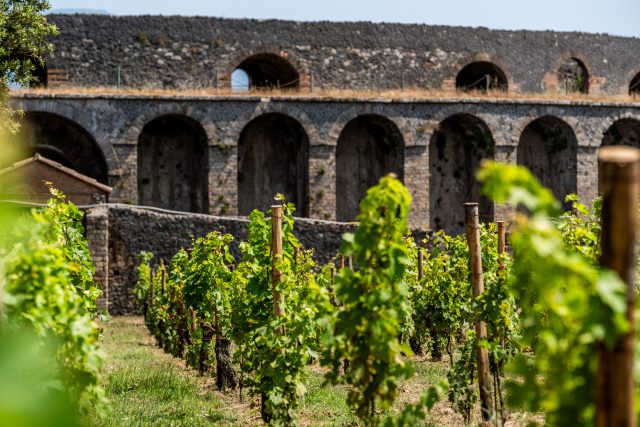
A partnership between Pompeii Archaeological Park and Tenute Capaldo Group has begun its international tour in London, setting out an ambitious plan to root viticulture once more in the ancient city.
Speaking at the Italian Cultural Institute on 25 February, the park’s director general, Gabriel Zuchtriegel, told an audience drawn to Roman culture that the project is about far more than bottles and balance sheets.
“It is about producing wine. It is about lowering maintenance costs and creating new income. But it is actually much more,” he said, describing a plan that seeks to braid together scientific research, sustainability and the promotion of Italian produce.
The six-hectare vineyard, to be planted with Greco and Aglianico, will be cultivated entirely organically. Professor Attilio Scienza of the University of Milan, one of Italy’s leading oenological experts, is lending his expertise. The grapes are varieties long championed in Campania by Feudi di San Gregorio, part of Tenute Capaldo Group and a key partner in the scheme alongside Basilisco in Basilicata.
Zuchtriegel traced the project’s origins to botanical studies begun in the 1990s by the park’s applied research laboratory, examining the vineyards of ancient Pompeii, their techniques and the population’s eating habits. Those studies evolved into a broader archaeo-farming initiative encompassing olive cultivation and social farming within what the park calls a social and cultural farm.
Wine as culture, not commodity
For Zuchtriegel, the most arresting argument for reviving viticulture lies in the frescoed walls of Pompeii itself. In a recently excavated and reconstructed banquet room, figures associated with Dionysus, Bacchus to the Romans, appear between painted columns. Satyrs and Maenads inhabit the space, while at the centre, a woman in green, accompanied by Silenus, looks directly at the viewer.
The imagery, he suggested, was more than decoration. It reminded diners reclining on couches that wine drinking was a collective act bound up with myth and divinity.
He drew a pointed comparison with contemporary debates about alcohol policy. Some countries are considering health warnings on wine bottles. In Italy, he argued, relatively low levels of addiction compared with other nations may reflect the fact that wine is embedded in a broader culture of cultivation and shared meals rather than treated as an isolated intoxicant.
“I think the numbers also point in that direction. There is a lot of wine production, but not so many problems,” he said, adding that wine in antiquity carried a sacred dimension, particularly in religious gatherings.
Partner Content



Exported across the Mediterranean
Wine was central to Pompeii’s economy long before the eruption of Mount Vesuvius in 79 AD. A famous painting now in the National Archaeological Museum depicts the mountain covered in vineyards with Dionysus on its slopes. Pompeian wine travelled across the Mediterranean from Spain to what is now Turkey, to North Africa and southern France.
Not all contemporaries were convinced of its merits. One wall inscription reads: Eat the bread from Pompeii but drink the wine from Nuceria.
Roman taste differed markedly from ours; wine was mixed with water and spices, a style that might struggle to find favour in today’s market. Even so, the new venture does not aspire to archaeological pastiche. It seeks to re-establish viticulture on sites that were vineyards two millennia ago, both within the ancient city’s gardens and in surrounding areas, and to allow visitors to see and taste the results.
A partnership for the long run
Antonio Capaldo, chairman and president of Feudi di San Gregorio, cast the project in explicitly historical terms. When the Romans conquered a territory, he said, they planted olive trees and vines before imposing taxes or building roads. The crops took three or four years to bear fruit. The message was simple. We are here to stay.
“We would like this project to be, for the world of wine, the same thing that the vine was for the Romans,” Capaldo said. “We are here for the long run.”
He added that a soldier would drink one litre of wine per day, mixed with water, in part because much of the available water was contaminated.
For the drinks trade, during a time when wine faces regulatory pressure and shifting consumer habits, Pompeii offers a narrative of endurance. The park is investing in conservation of landscape and environment alongside tangible ruins, inviting private enterprise as an active partner.
Winemaking and ageing facilities will follow in due course. What is clear is that Pompeii is no longer content to be frozen at the moment of catastrophe. By putting vines back into volcanic soil, it seeks to recover not the exact flavour of Roman wine but the patience that planting demands, and the vibrant culture it cultivates.
Related news
Week in Pictures: BAFTA bubbles and Pompeii vines


