



Top table: how Prosecco seduced the on-trade
As Prosecco continues to light up the global on-trade, Roger Morris discovers its pouring power by the bottle, by the glass and in cocktails like the Spritz.
Now is an especially good time to be a Prosecco producer. In spite of the perfect storm of economic and political turmoil in the wine world, global Prosecco sales in 2025 nevertheless grew to almost 667 million bottles, up 1.1%, or about 7.3m units more than in 2024. The newer Prosecco Rosé category, made official in 2020, remains vigorous with more than 60m bottles sold, and the newer lower-alcohol category (8%–9%ABV) offers considerable and immediate growth potential.
An added bonus was the year-end news that Prosecco sales in France – home to Champagne and other assorted domestic sparkling wines – grew by a whopping 21.1%. In real terms, this means that France has now surpassed Germany to take third place in the race for the highest Prosecco export sales, following behind the US and the UK.
Moreover, this sparkling wine from northeast Italy has in recent years gained significant brand recognition in the on-trade worldwide, where cocktails and wine by the glass beckon. Now, in a market where name recognition is crucial, there is Champagne, then Prosecco, then everyone else. Brand Prosecco has been so successful, in fact, that it now shares Champagne’s age-old headache of brand protection, fighting the battle with competitors who want to call their fizz Prosecco even when it isn’t.
Strategic priority
According to Prosecco DOC consorzio director Luca Giavi: “The on-trade is a strategic priority for Prosecco DOC globally because it’s where consumers discover brands, rituals and new ways of enjoying sparkling wine, whether that’s by the glass, as an aperitivo or in cocktails.”
He adds: “Part of the reason that the on-trade is so important is that it allows us to spread the culture of wine, and not just Prosecco, especially in a time of Dry Januarys.”
There are no reliable statistics either worldwide or by country as to exactly how much Prosecco is sold in the on-trade – bars, restaurants, hotels and related venues – compared to how much is sold in the off-trade, in wine shops and supermarkets. A worldwide view of sales estimates gathered by the Perplexity AI search engine reports that 35%–40% of total Prosecco is being sold in the global on-trade, both by volume and value. It’s slightly less in the UK, which is renowned for its strong Prosecco supermarket sales, with the on-trade estimated at about 20%.
However, many of the Prosecco producers the drinks business spoke to for this feature say the on-trade accounts for a much higher slice of their business. Take Scott Ades, president of Dalla Terra, the US importer of Adami Prosecco DOCG, for example, who puts his figure at 60%–70% on-trade. This is partially because, he says, brands from the historic Valdobbiadene region normally target restaurant rather than retail sales.
Charles Lazzara, founder of Colorado-based fine wine company Volio Imports, represents Prosecco brands Col Solivo, Le Colture and Tavernello in the US. He cautions that on-trade and off-trade sales tend to rise and fall hand-in-hand: “You have to have the wine in stores before you can have promotional events for the on-trade, and that takes time to build.”
Versatile pairing
When it does make it onto restaurant wine lists, whether those be fine dining establishments or casual eateries, Prosecco is eagerly snapped up by guests. Some of this has to do with the fact that it pairs so well with a diverse array of dishes, meaning a bottle can be ordered for the table, even when groups are ordering wildly different food.
Torrey Grant, wine director at New York City restaurant Leonetta, says he strategically positions Prosecco with the venue’s raw bar. “It has been a good way of encouraging bubbles with items like oysters and ceviche at a lower price than, say, Champagne,” he explains.
Meanwhile, at Ungrafted wine and food bar in San Francisco, owner and Master Sommelier Chris Gaither loves matching Prosecco DOC wines with “our delicious celery salt French fries”. Indeed, as Doug Frost MW MS, beverage director for The Restaurant at 1900 in Kansas City, argues: “Prosecco is a great accompaniment to anything fried, as it helps make fried food taste less oily.”
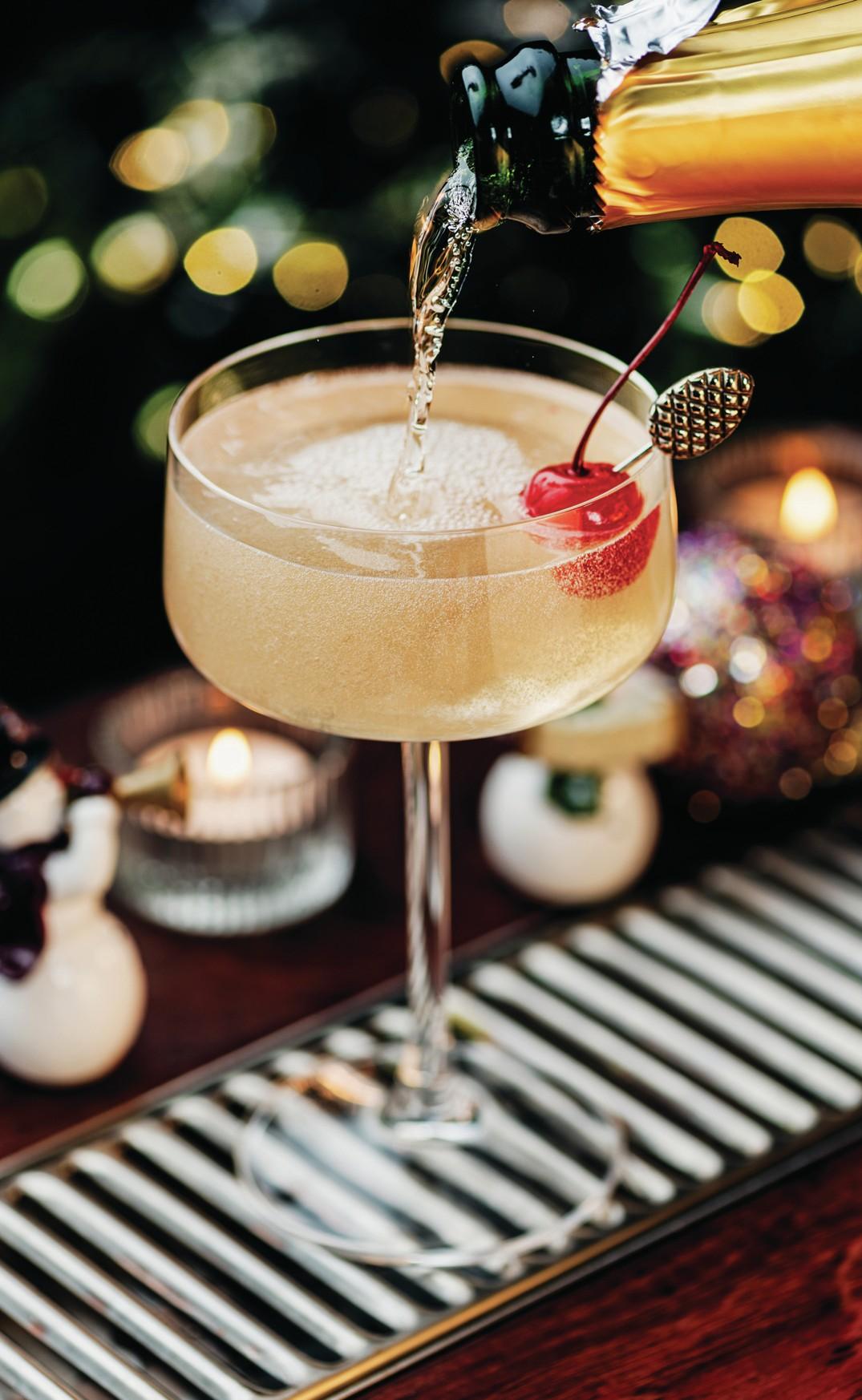
Perfect pour: Prosecco can be used in a number of cocktails, not just the Spritz
Over at Eataly, the Italian restaurant and marketplace which now has 10 different venues, specialised Prosecco dinners are hosted, the wines paired with hearty Italian dishes like risotto and branzino (sea bass). On the other hand, Ethica Wines, which markets Prosecco in multiple countries, tailors its pairings to individual markets. “China has fallen in love with pizza, so we promote Prosecco with pizza there,” Damiano Sorato, vice president of sales – on-trade, says. “In the US we promote it with burgers.”
Vanessa Lehmann, head of communications for Henkell Freixenet, sums up the wine’s versatility when she says: “The combination of lightness, aromatic freshness and mixability makes it easy to consume Prosecco at various occasions throughout the day. It aligns perfectly with moments that celebrate ‘la dolce vita’, and embodies the Italian lifestyle and the carefree joy of being together.”
Similarly, Maura Milia, manager of the Eagle Bar at the Chancery Rosewood in London’s Mayfair, and also a brand ambassador for Martini Prosecco, says: “What sets Prosecco apart is its role in Italian culture. It’s not just an aperitif; it’s the ritual that signals the start of aperitivo hour or the opening of a meal. That lifestyle positioning, that little touch of class, is central to the sparkling wine category’s identity.”
Growth potential
Some Prosecco producers believe the greatest growth potential lies in by-the-glass sales. “This is due to several factors: the increasing attention that high-level restaurants and wine bars are dedicating to their by-the-glass programmes, and the growing curiosity of consumers who can explore and taste a variety of wines this way, ” says Gianluca Bisol, president and brand ambassador at Bisol 1542.
For all of Prosecco’s success by the bottle and glass in the on-trade, these serves pale in comparison to one cocktail – the Spritz – to which the Prosecco category owes much of its recent success. This aperitif combines a bitter liqueur, such as Aperol or Campari, with a splash of soda water, a slice of orange as garnish and strictly Prosecco to provide the bubbles.
Moreover, once the bartender has stocked the bar with Prosecco for the Spritz, why not keep it there for other cocktails, such as Mimosas and Bellinis, as well as to pour by the glass? Sales of Aperol, the growth engine for the Spritz, have grown 20-fold since it was taken over in 2003 by the Campari Group, and in 2023 it increased its revenues by 23% over the prior year, growing to US$780m. Aperol’s owners expect sales to increase even further, as they are now heavily promoting the Spritz as a year-round drink, rather than just a summer cooler.
But what kind of Prosecco is making its way into these millions of Aperol Spritzes?
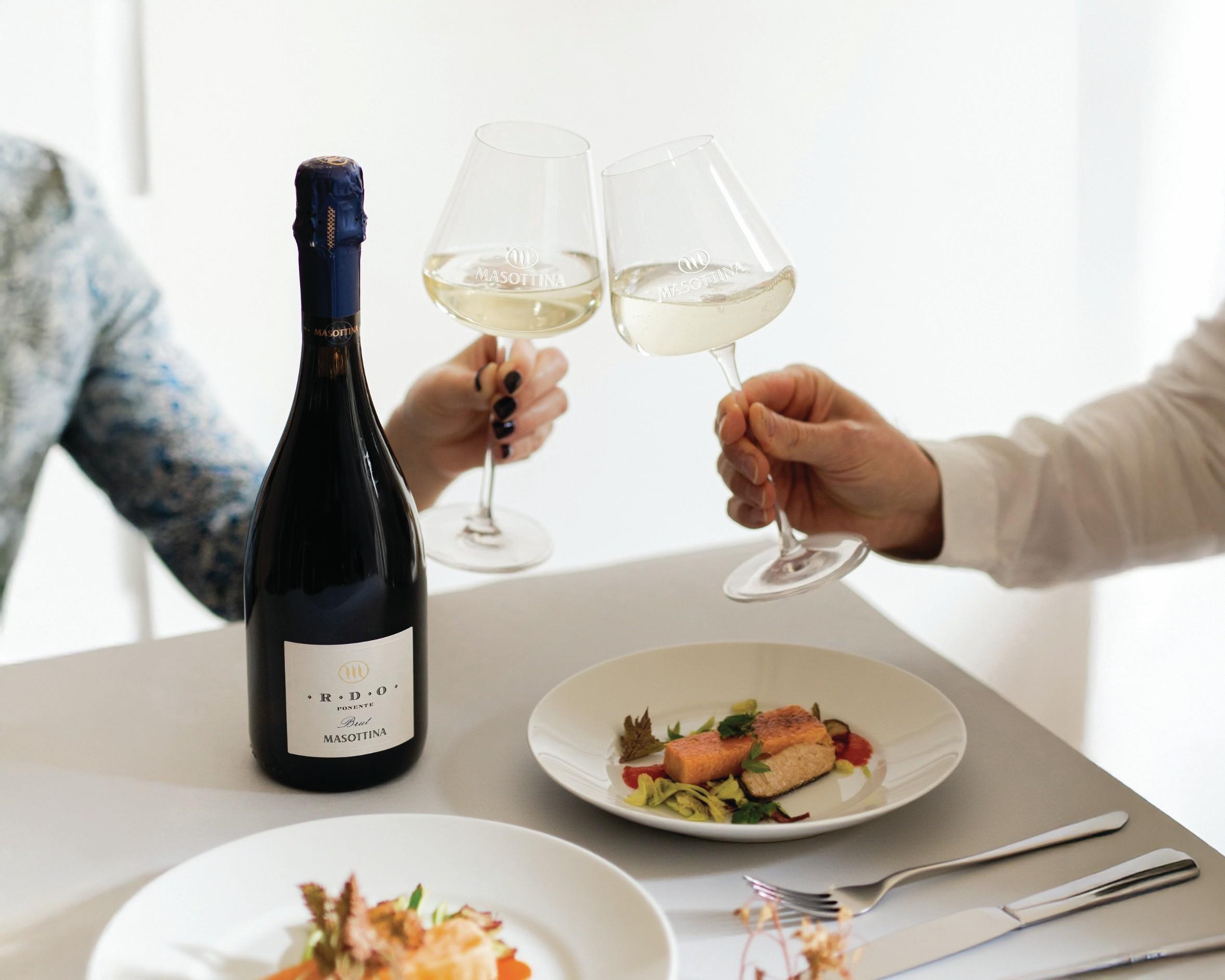
Ideal partner: Prosecco’s versatility with food is a plus
“Prosecco DOC is mainly used for cocktails, while DOCG is often offered by the glass,” says London-based master sommelier Matteo Montone. “Some Rive and Cartizze expressions are also appearing more frequently [in the on-trade], and Prosecco Col Fondo is gradually gaining interest as well.” Montone’s home turf in the UK is also most likely the world leader in dedicated Prosecco wine bars, including Kristina Issa’s eight-year-old Prosecco House, near Tower Bridge in London, which advertises “28 different styles of Prosecco”.
Some beverage directors, such as Restaurant at 1900’s Frost, have been trying to lead the charge for Prosecco in cocktails for years, including in educational programmes such as BarSmarts and the Tales of the Cocktail annual industry gathering in New Orleans.
“Champagne’s rich and yeasty character in a cocktail can be full and generous, but so too can Prosecco’s inclusion, giving cocktails a lightness and refreshing character,” Frost says. “The Negroni Sbagliato is an exciting cocktail. Put Champagne in it and the drink becomes dull. Prosecco is the only appropriate bubbly for this one.”
Frost is not the only drinks expert to espouse the virtues of Prosecco in mixology. Jean-Philippe Teresi, director of food and beverage at La Concha, a hotel in Key West, says: “Prosecco’s light, crisp profile and delicate bubbles make it ideal for cocktails. Unlike heavier sparkling wines, Prosecco enhances fresh citrus, botanicals and spirits without overpowering them.”
Brand recognition
For others such as Massimo Tonini, managing director for Prosecco producer Valdo, having your Prosecco incorporated into cocktails and spritzes is all well and good, providing that the brand name gets a mention on the menu. “Most of the time we encourage mixology, provided that we feature in the recipe as ‘Valdo Prosecco’ and not one of many,” Tonini says. “This happens most of the time, since our distributors and bartenders recognise Valdo’s expertise and ample spectrum of bubbles ranging from Prosecco DOC and DOCG to blends and traditional method sparkling wines. This gives us a certain versatility and recognition within the mixology arena.”
At Leonetta in New York, brunching guests can take advantage of its Prosecco and Spritz bar – “a station where people can create their own Spritz or choose unique edible garnishes for the Prosecco,” says Torrey Grant. “Both are ways to continue to create excitement.”

The power of promotion
Part of the reason for Prosecco’s global ascendancy has been the willingness to put expensive promotional efforts behind the wine. In 2025, the Prosecco DOC’s promotion plan reached 39 countries with 382 events, generating 2.1 billion impressions. In the US, its programme stood out with National Prosecco Week USA, featuring 1,955 points of sale both in the on-trade and off-trade, and targeted road shows in San Francisco, Chicago, Raleigh and Washington, DC. Additionally, it sponsored a nationwide Prosecco cocktail contest in partnership with the US Bartenders’ Guild.
Nor was Asia ignored. Prosecco DOC was a sponsor at Expo Osaka 2025 in Japan, and in Hong Kong it put on the Prosecco DOC Tram & Jam Sparkling Fest, a travelling celebration through the city’s streets.
More recently the consorzio was a prominent sponsor of the 2026 Winter Olympics and Paralympics in its own back yard. At the producer level, Vanessa Lehmann of Henkell Freixenet, explains: “We still see great growth potential with our new Mionetto Aperitivo Kit, including Mionetto Aperitivo and Mionetto Aperitivo Non-Alcoholic, with a market start that exceeded our expectations, especially in countries like France and Poland.”
Meanwhile, Gianluca Bisol reveals: “The on-trade channel represents, both in Italy and abroad, the main sales channel for Bisol 1542 Prosecco Superiore. This predominance is not accidental, but the result of a clear and consistent commercial strategy that we have always pursued.” Diva Moretti Polegato, whose family owns the Villa Sandi DOC and DOCG brands, as well as the high-volume La Gioiosa, tells db that Villa Sandi will soon be rolling out a high-end cocktail promotion to support sales in US restaurants and Mexican holiday resorts.
Roadblocks
The biggest roadblock to this continued on-trade growth, say producers, importers and the Prosecco DOC itself, is not competition with other brands and categories, but economic pessimism from consumers worldwide. “The global on-trade is suffering from higher costs to consumers, which are affecting bars and restaurants,” Polegato says. “Post-Covid, dining excitement has decreased.” Adami export manager Enrico Valleferro agrees: “The younger generation’s habits and the global economy’s instability make the market more uncertain. Also, the exchange rate and tariffs play a role in that.”
But, at the same time, there is an air of general optimism. “There is a great opportunity for lower-alcohol Prosecco,” says the consorzio’s Giavi, “but only as long as producers continue to feature the typical Prosecco taste and sensory profiles.” Most producers seem confident that the Glera varietal profile will allow this to occur.
0% Prosecco
More controversial, but possessing huge market potential, is the no-alcohol sparkling wines produced by Prosecco growers. As Giavi points out, no-alcohol is not an official Prosecco category and cannot legally be called one. He also does not yet see a movement within the consorzio to make no-alcohol an official Prosecco category, as Prosecco Rosé became a few years ago. Bigger producers remain undeterred, letting brand names carry the product.
“We see a big market for zero-alcohol,” Polegato says. “Villa Sandi is dealcoholised Glera, so it tastes like Prosecco. We launched it three months ago, so it was big during Dry January. And mixology loves it.”
Meanwhile, American importer Lazzara is excited that the Tavernello brand he sells in the US is planning to test-market a no-alcohol sparkler. However, perhaps the biggest future opportunity is the “Prosecco lifestyle”, illustrated during the recent Winter Olympics held in Italy. “Prosecco has globally millions of fans,” says Adami’s Valleferro. “The key for the future of Prosecco will be to get people understanding its areas of production and distinct taste profile and qualities. So Conegliano Valdobbiadene, the most prestigious and historical area, is different than Asolo, and that is different from the DOC Treviso and the [general] DOC.”
Or, put more simply: “Prosecco is one of the most appealing customer categories,” says Volio’s Lazzara. “It has low alcohol, it sparkles, it’s got a fruity flavour profile and the price point on average across the board is less than US$15.” Millions of consumers worldwide are drinking to that.

Trade talk: how key is the on-trade to your business, and why?
Francesca Paladin, owner, Casa Paladin
“For Bosco del Merlo, the on-trade is fundamental – both commercially and strategically. Over the last 12 months, around 80% of our sales have come through the on-trade. It’s where our Prosecco Brut and Prosecco Rosé are discovered at their best: served at the right temperature, presented by professionals and experienced by the glass in the exact moments that define the category – celebrations, gatherings and aperitivo. It is also the most powerful channel for building brand preference, because it creates trust through recommendation, and encourages repeat purchase. A key part of this is our Life in Rosé project, with which we want to support women through empowerment projects. For us, Prosecco Rosé is not only a product: it is also a symbol within a wider narrative – one that the on-trade is uniquely able to activate through visibility, experiences and participation.”
Jonny Pickering, head of sales, Della Vite
“The on-trade remains a key pillar of the Della Vite business (circa 47%). While the off-trade is crucial for driving volume, revenue and distribution, the on-trade is fundamental to building brand awareness, loyalty and premium positioning. It is often the first point of discovery for new consumers and a critical environment for driving brand advocacy, storytelling and showcasing the quality of the liquid. Our hero products – Della Vite DOCG Superiore and Della Vite Millesimato Rosé – will continue to drive market share within premium hospitality. To further support the mid-range category, we will be introducing a new SKU designed to compete in this space, and set the benchmark as the UK’s best house pour.”
Alberto Serena, CEO, Montelvini
“The on-trade channel plays a strategic role for Montelvini, not only in terms of volumes, but above all in terms of brand positioning and value building. Restaurants, wine bars and quality venues are where consumers experience our wines directly, often guided by the recommendation of industry professionals. Over the past 12 months, on-trade has accounted for the vast majority of our sales, while off-trade represents approximately 10%. This underlines how central the on-trade channel is to our growth strategy, especially in international markets. It is also the key environment for launching innovations, particularly within the low-and no-alcohol segment.”
Alessandro Vella, general manager, Italian Wine Brands
“Rather than relying on a single route to market, we work with a portfolio pyramid approach, allowing us to position different brands and price points in the most relevant channels. Within this structure, the on-trade plays a key role for our top and premium brands, particularly Barbanera. The on-trade also allows us to stay closely connected to evolving consumption trends, test innovation more rapidly and work directly with sommeliers, bartenders and mixologists – especially as wine increasingly intersects with lifestyle, aperitivo culture and mixology.”
Mario Vandi, head of marketing, Cantine Riunite
“Over the past 12 months, the hospitality sector has accounted for close to a quarter of our domestic sales, remaining a powerful driver of visibility and reputation. The on-trade is where a brand comes to life. Restaurants, wine bars and events provide an environment in which provenance, quality and personality can be communicated with immediacy. This is particularly true for Prosecco. Few wines are as closely associated with conviviality and shared moments as Prosecco. Its natural affinity with aperitivo culture and celebration makes the on-trade a vital stage on which the category expresses its full character. In many cases, the experience of discovering a Prosecco in a bar or restaurant directly informs future purchasing decisions in the off-trade. For us, the two channels are not in competition, but in dialogue – each reinforcing the other.”
Federico Dal Bianco, vice president, Masottina
“The on-trade is extremely important to Masottina, as it allows us to connect directly with consumers and showcase our wines in the setting in which they are meant to be enjoyed – thereby strengthening our brand positioning. Over the past 12 months, approximately 90% of our sales have come through the on-trade, compared to 10% via the off-trade, with minimal contribution from wholesale channels. The on-trade not only drives brand awareness, but also creates experiences that foster loyalty and encourage repeat purchases.”
James Dainty, business unit controller, Lanchester Wines
“Across Lanchester Wines, around 85% of our Prosecco volume goes into the on-trade, either direct to venues or through on-trade wholesalers. Prosecco continues to be one of the strongest sparkling categories for hospitality, and we work closely with our longstanding partner, Vinicola Tombacco in Veneto, to support that demand. Tombacco is a family business with generations of Prosecco expertise, and they also work with specialist producers such as the team behind our Ballancin Prosecco Superiore DOCG for styles they don’t make themselves. This breadth gives the on-trade access to consistent quality across a range of price points and appellations.”
Sandro Bottega, managing director, Bottega SpA
“Our Bottega-branded wines are dedicated exclusively to the on-trade and duty free channels. These two channels have historically been – and continue to be – the strategic pillars on which the company has built its growth over the years. They allow us to fully express our premium positioning and to work closely with hospitality professionals and travel retail partners. For the off-trade, we operate with a different portfolio of brands, which are designed specifically for retail dynamics. We can presume that about 70% of our total business is on-trade.”
Elena Branda, marketing manager, Perlino
“Perlino is present in more than 70 countries worldwide, and the brand is growing and growing. Currently we are selling mainly to the off-trade and wholesalers; therefore our presence in the on-trade is a bit less active. We have, however, a sister company called Mixer Cocktails which is focused on the on-trade channel with a very big expertise in horeca. Perlino is mainly in on-trade with premium Vermouth di Torino Corsieri del Palio and Vermouth di Torino Casa Martelletti.”
Related news
Prosecco name dispute reaches UK High Court
Don’t cry over spilt fizz: 20 tonnes of Prosecco smashed in lorry crash


