



La Place’s spring collection 2026: additional tasting notes
While the majority of the professional tastings for La Place’s March releases take place in February, there are always a few samples that were yet to be bottled or that get ensnared in the ever more complex process of crossing borders. db’s Bordeaux correspondent Colin Hay rounds up the (eminent) stragglers.
Here, concluding my report on la place’s spring collection, are my thoughts on this year’s stragglers. Together they make for quite an attractive mixed case!
| US releases (red) | Vintage | Region | Rating |
| Hora | 2023 | Napa Valley | 94 |
| Founding Brothers | 2023 | Napa Valley | 96 |
| Cathiard Vineyards | 2023 | Napa Valley | 99 |
Hora 2023 (Napa Valley; 60% Merlot; 30% Cabernet Sauvignon; 10% Malbec; 14% alcohol; tasted at Smith Haut-Lafitte with Fabien Teitgen). Gloriously plush and plump. Lithe and gracious, very spicy with incense, cinnamon and vanilla pod underscoring the floral notes; plenty of substance and Napa flesh. There’s a touch of Szechuan pepper and a sprig of fresh mint too. Plummy fruits and a little damson from the malbec. I love the floral elements that shade into herbal notes – rosemary but also rose water and confit rose petals. And there’s freshly cracked black pepper. Cool at the core and impressively luminous too. Svelte but with really grippy tannins that break into the compact fruit from the external reaches. Juicy and sapid with little ripples of freshness released by the grip of the tannins that seem to extract the acidity from the tapering dark berry fruits that form the finish. 94.
Founding Brothers 2023 (Napa Valley; 60% Cabernet Sauvignon; 30% Merlot; 10% Cabernet Franc; 14.5% alcohol; tasted at Smith Haut-Lafitte with Fabien Teitgen). Classical. More serious in a way, and with almost a hint of Bordeaux austerity. In a way, it’s a little like tasting an en primeur sample – and very much how I imagine some of the Bordeaux 2025 tastings in prospect! Crystalline. A touch of cedar. A little graphite and again that nuttiness – walnut shell – that I find in Hora. Succulent, svelte in texture and with the most refined tannins. Very structured but not overly ample in form, giving this heightened concentration in the mid-palate. Viscous but always crystalline, pure and luminous. Very technically accomplished. Saline and salivating on the finish – with almost a note of oyster shell; but smoky too. A rather intellectual presentation of top Napa terroir! A wine to recalibrate one’s expectations of Napa. 96.
Cathiard Vineyard 2023 (Napa Valley; 100% Cabernet Sauvignon from St Helena and Rutherford; 14.5% alcohol; tasted at Smith Haut-Lafitte with Fabien Teitgen and decanted 90 minutes before hand). A magnificent wine from a magnificent vintage. There’s glorious fruit purity and intensity. Black raspberry, loganberry, blackberry, bramble and a little hint of damson. Black cherries with aeration. There’s also that profound aromatic freshness that is so enticing and the signature of the best Bordeaux wine-making in Napa. A touch of blood orange. Bordeaux technically but that accentuates the sense of Napa in the glass – in all its glory and opulence but also just in terms of the clarity of its fruit expression. Floaty, aerial and lifted on the attack. Yet profoundly layered. Ample and structured, the pixilating tannins entering between the layers and also descending at the external reaches of the wine in the mouth. So fresh, especially when the tannins grip and, in so doing, precipitate additional freshness. It’s as if we have tears of sapidity that fall from the top of the palate after the lift and aerial character of the attack. This is impressively accessible given the tannic density but you really want to hold this back for the cellar maturation it warrants. 99.
| Italian releases (red) | Vintage | Region | Rating |
| I Sodi di San Niccolo (Castellare di Castellina) | 2022 | Toscana | 96 |
Partner Content
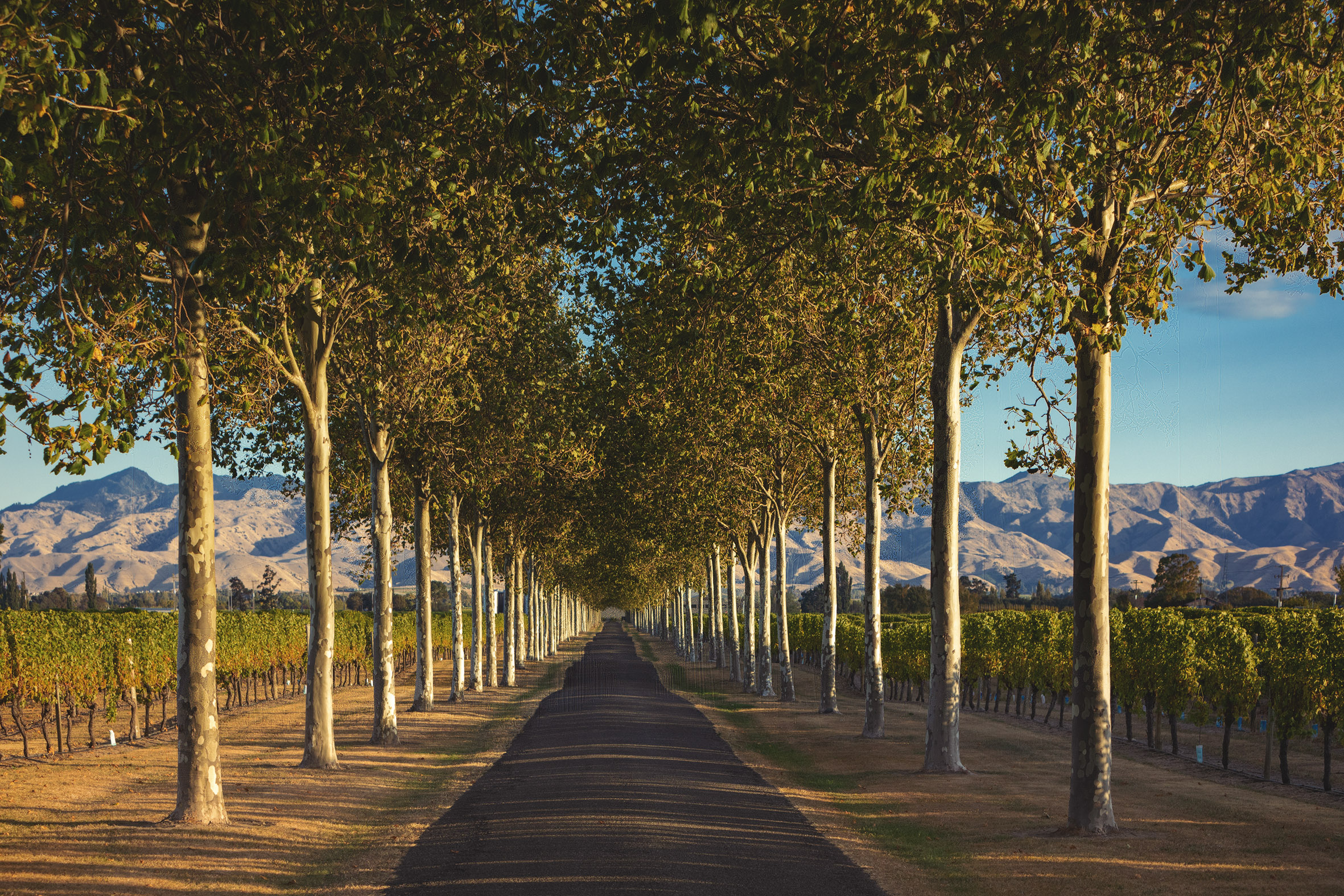
I Sodi di San Niccolo (Castellare di Castellina) 2022 (IGT Toscana; 85% Sangioveto – a special clone of Sangiovese with thinner skins; 15% Malvasia Nera – which softens the big tannins of the Sangiovese; aged in oak, 50% new, 50% first and second use for 24-30 months; 14% alcohol; the bird adorning this year’s label is a stonechat – it changes each year and like the wine is sourced from the vineyard itself). Another brilliant I Sodi di San Niccolo following on from the sublime 2021 despite the rather more challenging vintage conditions (essentially, extremely hot and extremely dry). This is solar and sunny in temperament but with a lovely natural freshness to the fruit that holds everything in balance. Bracken, forest floor, rosemary and a hint of lavender accompany the copious, predominantly red, berry fruits – with a little tomato stalk and leaf too. This is dense, compact and quite intense in the mouth, with an intriguing blend of oak smoke and curry spices beautifully intermingling with the rich, bright red berry fruits. The tannins are very refined and their gentle grip and engagement, particularly, on the finish, serves to keep this fresh all the way to a distant horizon. The balance is very impressive. 96.
| Chilean releases (red) | Vintage | Region | Rating |
| Clos Apalta Vinotèque | 2016 | Colchagua | 98+ |
| Clos du Lican | 2023 | Colchagua | 97 |
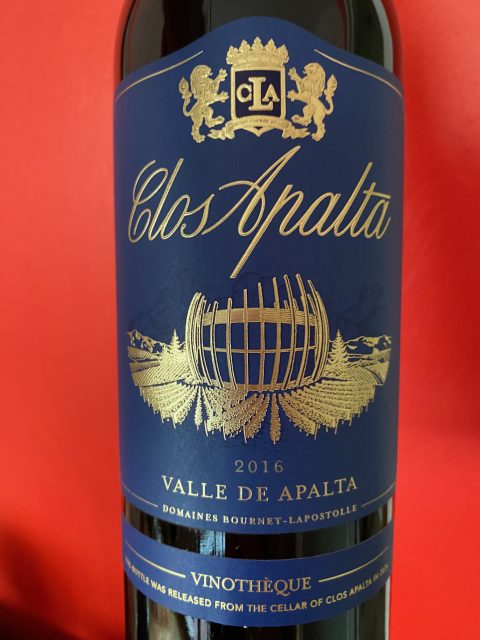 Clos Apalta Vinotèque 2016 (Apalta Valley, Colchagua, Chile; 64% Carménère; 19% Cabernet Sauvignon; 17% Merlot; pH 3.73; 15% alcohol; certified organic and biodynamic; around 5400 cases were produced). The Carménère and Cabernet Sauvignon here is from ungrafted vines planted in 1920. A truly exceptional vintage of Clos Apalta which it is fabulous to have the occasion to return to now, 10 years on. I prefer this to the somewhat more evolved 2015. Indeed, tasted blind I’d underestimate the age of this even knowing it come from Clos Apalta – and, in that respect at least, there’s something of Bordeaux 2016 about it. This is magical, with incredibly beautiful aromatics – blue berry fruits, lily, peony and lilac, even a little violet and then almost a wave of cassis. The purity of the fruit, aromatically and on the palate, is also extraordinary, above all for a wine that has had almost a decade in bottle. I am in raptures. There’s a supreme elegance, refinement and harmony here but also a shimmering vibrancy that radiates energy, freshness and sapidity in equal measure and in all directions. Brilliant and very much one of the stars of the March releases. 98+.
Clos du Lican 2023 (Apalta Valley, Colchagua, Chile; 100% Syrah; 15% alcohol; only some 17,734 bottles produced). This, just the fifth vintage release of Clos du Lican, comes from a range of micro-terroirs planted at between 150 and 300 metres of altitude. It produces a Syrah of great complexity and staggering freshness. This is incredibly lifted and aerial for pure Syrah and is, in a way, one of those wines which expresses its terroir more than it does the varietal. There are beautifully plump, ripe dark berry fruits with a little plum and plum skin, wild herbal and heathery notes and hint of bark and forest floor. There’s also a gamey, more obviously Syrah, element and, of course, white and cracked black pepper in abundance. Pure, quite narrow framed and with wondrous density and compactness partly as a consequence, this is vibrant, racy and energetic. Chewy and juicy in equal measure on the seemingly eternal finish. Excellent. 97.
| Australian releases (red) | Vintage | Region | Rating |
| Grange La Chapelle | 2022 | Vin du Monde | 99 |
Finally, a note for a wine neither offered through la place nor even in March – the wondrous joint venture between Domaine La Chapelle and Penfolds. This was released in February – almost, in a way, a precursor to the spring collection releases.
Grange La Chapelle 2022 (Vin du Monde; 50% Shiraz from Grange; 50% Syrah from La Chapelle – so 100% Shi-rah!; pH 3.74; 14% alcohol; the Grange was aged in 100% new oak, the La Chapelle in 15% new oak). Tasted with Delphine Frey & Peter Gago at Vinexpo, Paris on its official release date. This is slightly closed at first (but then it has just traversed the globe!) and it opens slowly but reassuringly, revealing more and more of its secrets as it does so. There’s a creaminess that it somehow conveyed aromatically alongside the slightly dusty, earthy minerality (that, paradoxically, seems indicative of a single place, a single terroir). There’s a little black pepper too and that lovely distinctly gamey element from the Syrah here. There are fresh minty notes with gentle aeration. Eucalyptus too. A little smoke. And the redolent dried florality that I often associate with La Chapelle. In the mouth, this is glossy, indeed almost glass-like and luminous, in its texture. It is quite amply framed, plush and glacial in its purity, with a depth and profundity that is perhaps more redolent of Grange. There’s black chocolate, black cherry and crunchy black berries, walnut and walnut shell, and, more intriguingly, a touch of iodine and almost a hint of peat. It’s incredibly shapely too, even at this nascent stage, and I am struck by the integration of the architectural tannic mesh that holds the wine together. It’s almost as if we’re tasting this from a much larger format, so seamless is the integration and harmony achieved. As this already suggests, the tannins are ultra-fine grained and they pixilate the mid-palate, picking out details and picking up in the process the black pepper spice. The magic is here once again, the alchemy that turns raw precious metals into this perfect fusion achieved once again. 99.
Related news
La Place’s hors Bordeaux 2026 spring collection: tasting notes


