



Karuizawa: the long goodbye
More than 25 years after the celebrated Japanese whisky distillery fell silent, what may be the last two casks in existence are coming up for auction at Christie’s in London, following the ‘valedictory’ release of Karuizawa Once in a Lifetime late last year. Richard Woodard reports.
Karuizawa is the ghost distillery that refuses to fade away entirely. Not only do its highly prized whiskies continue to haunt auction rooms around the world, but the past few months have seen not one but two new Karuizawas hitting the market. And now two casks – quite possibly the last in existence – are being auctioned by Christie’s in London, with a pre-sale low estimate of around £2 million each.
It’s some farewell for a winery-turned-distillery that was rather unloved during its working lifetime. Founded in the spa town of the same name in Japan’s Southern Alps in 1955, Karuizawa pumped out fillings for blends over the following decades, before falling permanently silent in 2000. Its 12-year-old expression was the first Japanese single malt to hit the local market in 1976, without making much of an impression at the time.
But behind its unassuming exterior, Karuizawa had a secret. Its whisky – centred on the use of Golden Promise barley, long fermentations, small stills, peat and ex-Sherry casks – was built for marathons, not sprints. Karuizawa’s distinctive microclimate, with cold winters, hot summers and high humidity, only served to concentrate its rich, structured and complex character as the spirit matured over the decades.
Golden Promise
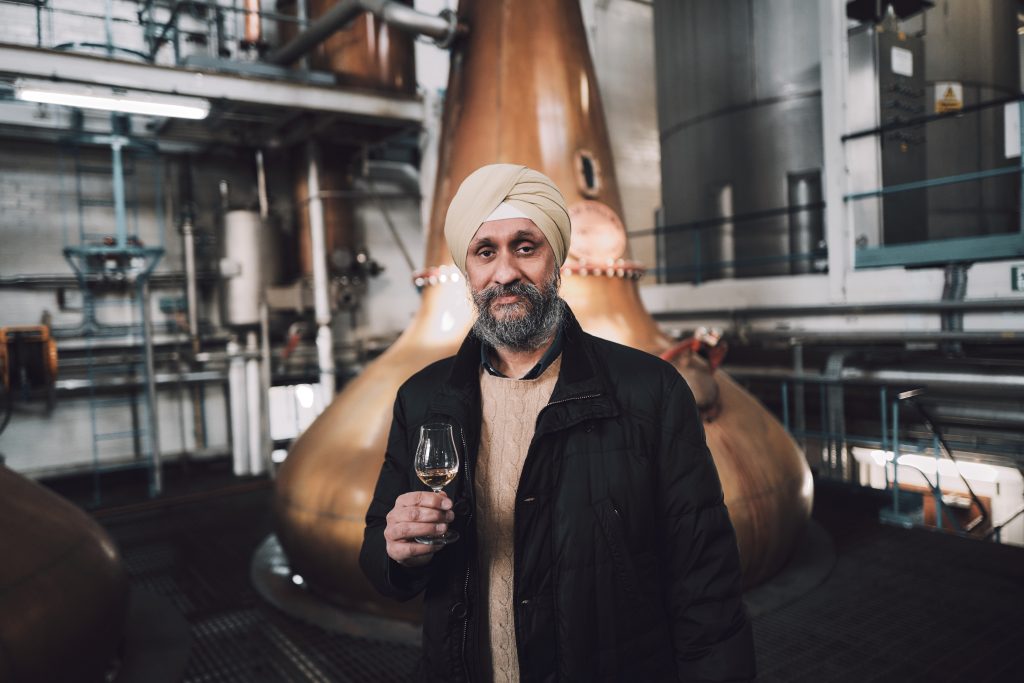
“The first time trying Karuizawa was a special and captivating moment,” recalls Sukhinder Singh, co-founder of Elixir Distillers and, before that, The Whisky Exchange, who is selling his last two casks of Karuizawa in a live Christie’s auction in London next week. “My first experience was trying the hallmark Sherry cask-matured bottling; it was rich and powerful, complex and flavourful, even at the super-high strength.
“No-one expected the demand would be so crazy – however, for me, it ticked all the right boxes. Everything about Japan was super-cool, it was a lost distillery, it was matured in Sherry casks and tasted damned good.”
If there was a turning point in the Karuizawa story, it probably occurred in 2007, when Marcin Miller and David Croll of Number One Drinks – the company which became Karuizawa’s international distributor – undertook a tasting of cask samples with whisky writer Dave Broom.
Of the 69 samples assessed that day, Miller would have happily bottled 68 as single-cask releases – an unprecedented hit rate. When the news broke in 2010 that Karuizawa was to be demolished, Number One Drinks acquired the remaining 364 casks.
Cult following
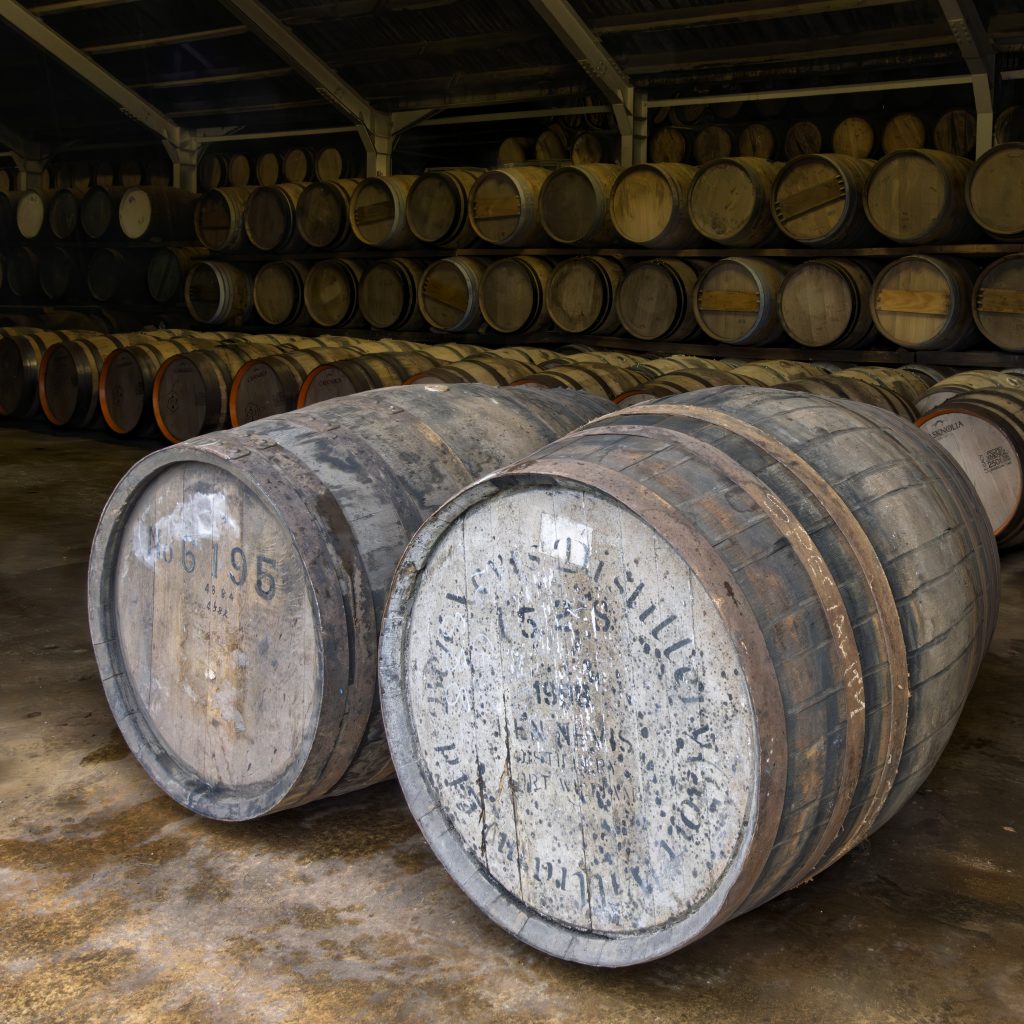
As Number One’s Karuizawa releases acquired a cult following, Singh and two more of the company’s clients were invited to Chichibu distillery in Japan (which housed the casks following Karuizawa’s demolition) in 2012 to select and buy casks. Singh reckons he acquired “around 30-35 casks in total”, bottling all but two – the youngest – over the ensuing years.
The two casks to be auctioned at Christie’s were both distilled in 1999, so shortly before Karuizawa ceased production, but their stories – not to mention the whiskies inside them – are contrasting. “My friends are split in terms of which one they prefer,” says Singh.
Partner Content
Cask 6195 (61.8% ABV, yielding about 420 bottles) is in its original cask, a 500-litre ex-Sherry butt – probably an American oak refill cask. Singh says it shows less wood influence and is “fresher and fruitier [by Karuizawa standards], with notes of melon, banana, cola, pistachio, malt and lingering, soft, fragrant wood”.
Cask 888 (57.7% ABV, 420 bottles) was originally also filled into a Sherry butt, but when this showed signs of wear after the casks were transported from Japan to Scotland in 2019, it was re-casked into a first-fill Sherry butt that had previously contained Ben Nevis malt whisky. It’s richer and more Sherried, says Singh, “with earthy mushrooms, leather, soy, salted liquorice, tomato leaf – syrupy and beautifully mouth-coating and lingering”.
The whiskies may be well into their third decade, but Singh believes they could easily age for another 10 years before bottling. Included in the Christie’s lot is storage at Tormore distillery in Scotland – owned by Elixir Distillers – for up to three years after the auction, until the whiskies reach the age of 30; further storage can then be agreed with Elixir Distillers, who will also bottle the whiskies at no extra cost (excluding any bespoke elements).
Next week’s auction caps a busy coda for Karuizawa. In November, Number One Drinks released its final bottling from the distillery: Karuizawa Once in a Lifetime, a 145-bottle vatting of whiskies dating from the 1960s to 2000, priced at £19,500 a bottle, described by Marcin Miller as a “valedictory homage” to mark the distillery’s 70th anniversary. Rather than the “snapshots” offered by single-cask releases, Once in a Lifetime aims to tell the whole story of the distillery, creating what Miller calls “the most complete Karuizawa”.
And in October, Miller announced a 10-bottle release from his own Karuizawa cask, filled in December 1998, with each bottle featuring a unique, hand-painted label by British artist Harland Miller. Priced at £15,000 a bottle excluding VAT and sold by Hedonism Wines, all proceeds go to Migrate Art, a charity that supports displaced and disadvantaged communities around the world.
So is that it? Could these releases, in bottle and cask, be the last Karuizawas to hit the market? We can’t know for sure, but it’s perfectly possible. The other question is when – or even if – these whiskies will be drunk, once they’ve been sold.
Singh regrets the fact that, as Karuizawa’s star rose and auction prices hit dizzying levels – topped by the £363,000 paid for a 52-year-old bottling at Sotheby’s in 2020 – people were less willing to open and share their precious bottles. Not that that’s a problem for him: even after selling his last two Karuizawa casks, Singh still has plenty of the distillery’s output in his vast private collection, including all the bottlings from his previous cask releases, plus “another 40 or so bottlings of others that I really love”.
And yes, he does drink them. But slowly. “I always have a bottle open, which I nurture to last as long as possible,” he says. “But always a pleasure to share with like-minded friends.”
The two Karuizawa casks will be sold during a live auction, ‘A Final Chapter: The Last Karuizawa Casks from the Collection of Sukhinder Singh’, to be held at Christie’s in London on Tuesday, 10 March at 2pm. Pre-sale low estimates for each cask are around £2m.
Related news
Grand Cercle president: 'Today, Bordeaux is a challenger'
Drinks trade gets dedicated AI-powered search tool
Future Château raises £0.7m to expand lower alcohol wine range


