



Yealands Wine Group split “a positive”, says winemaker
Last October, Yealands Wine Group quietly split in two following a “disappointing and concerning” year of operating losses. Sarah Neish discovers why the break has been a boon for the New Zealand producer, and what its rebirth might mean for the sector.
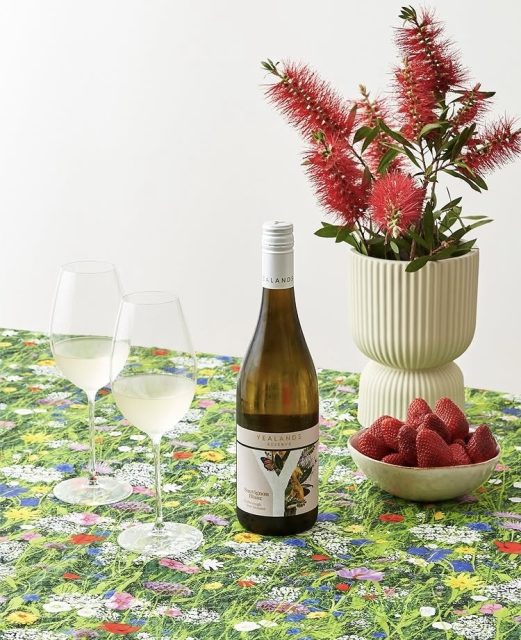
In October 2025, New Zealand energy company Marlborough Lines, which also owns the Yealands wine label, announced it was “disestablishing” the Yealands Wine Group Board following disappointing financial results (Yealands is reported to have lost around NZ$11.5 million in 2025).
The move did not come completely out of the blue as Marlborough Lines CEO Tim Cosgrove had already promised at a 2024 AGM meeting to take “a really good look at the business” after Yealands posted a NZ$19m loss that year. He did not mince his words at that meeting, stressing that there would be “no sacred cows” across the company, so change, it seemed, was inevitable. The Yealands wine arm of the business had also been put up for sale between 2021 and 2023, though Cosgrove claimed he did not receive a suitable offer during this time.
Shake-up
Three months on from the Yealands restructure chief winemaker Natalie Christensen revealed in an exclusive interview with the drinks business how things are looking.
Speaking about the previous hierachy she explained: “We are 100% owned by Marlborough Lines, which has its own board, and Yealands also had its own separate board,” she explained.
As a result of this, said Christensen, “I guess we lost some of our agility.”
The winemaker told db that the well-documented challenges across the global wine industry as a whole meant that many other wine groups saw similarly declining figures during the past couple of years, but added that “the fact that we are owned by Marlborough Lines means we had to disclose our financials.” Indeed, New Zealand Winegrowers revealed in its latest report that total value sales of New Zealand wine fell by about 1% during 2025 due to a slow global economy resulting in “sluggish exports to established markets, reduced demand for grapes, and lower grape prices.”
True transparency
As of October 2025 the Yealands wine business has been split into two entities – Seaview Estate, which comprises the vineyards and the winery – and Yealands Estate, which looks after sales and marketing.
“Seaview Estate sells its wines to the Yealands Estate to sell on,” Christensen said.
The down side of the split is that there were a number of redundancies “in the top tier” of staffing. However, the benefit of the restructure “is true transparency of where we’re making money in the business and where we’re not,” Christensen said, revealing that each entity now has its own general manager, both of which report directly in to Marlborough Lines.
“Tim Cosgrove, the CEO of Marlborough Lines, is now much more involved in the wine side, which is awesome,” she added. “I have a lot more contact with him and he visits more. It has made things more streamlined and efficient, so from where I sit it has been a positive.”
Looking to the future
Partner Content

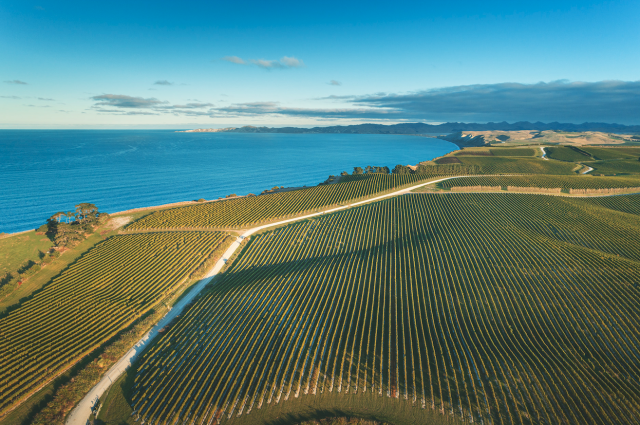
The separating out of the two sides of the Yealands wine business arguably has another plus point in that it offers an opportunity to highlight the producer’s Seaview Vineyard. Perched on a clifftop directly above the ocean in Marlborough’s Awatere Valley, Seaview is planted with 800ha of vines, and grapes there have “really thick skins, small berries and low cropping,” said Christensen. It is also the single largest privately owned vineyard in New Zealand, meaning the biodiversity restoration project it has undergone in recent years is quite a feat. From this site Yealands produces a Sauvignon Blanc, an Albariño, a white blend (called P.G.R) and a Pinot Noir, with these single-vineyard wines sold into fine dining establishments in New Zealand and abroad.
Babydoll launch
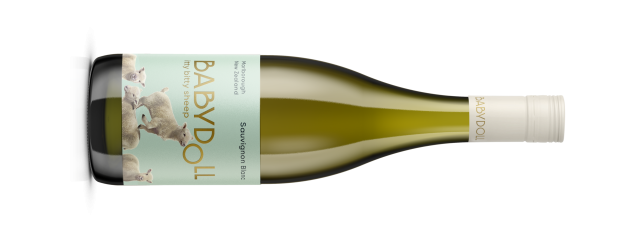
While the aforementioned wines serve the higher echelons of the on-trade, Yealands spotted a gap in the market for a premium but affordable Sauvignon at the more relaxed end. That is why this week the producer launched Babydoll Marlborough Sauvignon Blanc 2024 in the UK, which it hopes will be a hit on the British pub scene.
The name Babydoll refers to a breed of miniature sheep which originated in Sussex but were transported to New Zealand in the early 1840s. A handful of these tiny wool balls have a home in Yealands’ vineyard as sustainable grass mowers, and unlike other sheep breeds their short stature means they do not pose a threat to the grapes as they are simply unable to reach them.
Playful branding
The wine’s branding, designed to appeal to 20 to 30-something consumers buying wine in pubs and casual dining venues is “playful and fun, not pretentious at all”, said Christensen,” but the liquid in the bottle is still “a serious, classic Sauvignon” with grapes chosen from “high-quality parcels.”
“When we do our Sauvignon Blanc grading, the quality for Babydoll sits right where our Yealands Reserve wine is (around £12 in UK supermarkets). But Babydoll has a different flavour profile, with more floral characters and layers of tropical fruit and passionfruit.”
The wine is available now through UK distributor Matthew Clark, priced at about £30 per bottle within on-trade venues, and Christensen hopes Babydoll with “inject some new energy into the non-white tablecloth” sector of the on-trade.
As well as leading the five-strong winemaking team at Yealands, Christensen has also recently been appointed chair of the New Zealand Sauvignon Blanc 2027 conference, meaning she is responsible for planning the three-day event to be held in Marlborough next year. Just like Babydoll, she hopes the event will provide an opportunity to combat some of the wine snobbery that still lingers within the industry.
“Our Sauvignon Blanc has such an identifiable character that consumers feel really comfortable with it,” she told db. “And maybe that’s part of the snobbery, that it’s so widely loved. But we’re not embarrassed or ashamed about making joyous wines, and there are plenty of serious, complex wines coming out of New Zealand, too.”
Perhaps, she suggests, the conference will help to “open up the minds of some of these gatekeepers.”
Yealands’ total annual sales are around 1.6 million nine-litre cases exported to more than 65 countries.
Related news
Classic New Zealand Wine Trail gets NZ$991k in tourism push
Why New Zealand's Sato Wines is quiet about its 'natural wine' identity


