



Why Stanislas Thiénot is confident in the future for Champagne and Bordeaux
Overseeing Arvitis, a company that specialises in Champagne and Bordeaux, one might think that Stanislas Thiénot would be concerned – but actually he’s confident in the future of his business and these two historic wine regions. db finds out why.
It’s now been three years since the great, world-famous wine regions of Champagne and Bordeaux have suffered declines in sales, albeit coming off a short-lived surge in demand created by the unprecedented conditions of the pandemic.
As such, a major player with brands and vineyards in both areas, acquired when values were high and demand was increasing, might be expected to be in a position of retreat, perhaps looking to divest interests and row back on investments.
But after a discussion with Stanislas Thiénot, who heads up the family’s holdings – which comprise Champagne houses Canard-Duchêne, Joseph Perrier, Marie Stuart and Thiénot, alongside a portfolio of Bordeaux châteaux primarily managed through its subsidiary Maison Dourthe, as well as the Place de Bordeaux négociant house CVBG and the historical traditional négociant Kressmann – it became clear that this is a business investing in these classic French regions, with hopes for growth.
Among such developments are plans for Champagne Canard-Duchêne, which is being primed for expansion in the UK following many years of change to improve quality, increase supply, bring greater clarity to the range, and upgrade packaging.
With a new head appointed at the group’s wholly owned UK importer and distributor, Champagnes and Châteaux, it is hoped that Champagne Canard-Duchêne can expand its presence in the market, where it was once much more prominent.
An oenotourism opportunity
As for the other maisons in the company’s stable, these are set to benefit from major investment in oenotourism, including a significantly improved visitor centre at Joseph Perrier and the creation of a new facility for Champagne Thiénot in Reims, called Le 3 – named after the street number of the house.
As previously reported by db, the building has been repurposed to house a cellar, tasting room, shop, bar and boutique hotel for the maison, which celebrates its 40th anniversary this year.
Looking at the wider region, Thiénot’s outlook for Champagne is optimistic, although he does not expect any sudden rebound. “All of Champagne is organised for 300 million bottles – upstream and downstream,” he said.
With shipments last year totalling 266 million bottles, he sees volumes eventually returning to the 300m mark.
Softening Champagne prices
Referring to the increased cost of Champagne, he notes several factors that have forced up prices, notably grape prices and interest rates – the latter making the cost of maturing stock more expensive for brand owners – as well as the increase in costs of labour, dry goods and packaging materials in the post-Covid period and following the war in Ukraine.
However, with prices softening – largely due to a slight decline in interest rates – and greater acceptance of a higher base price for Champagne, Thiénot believes sales will increase in the coming years.
“Champagne prices increased mostly due to a rise in grape prices and interest rates – Champagne producers carry a lot of stock, but interest rates have started to decrease over the past year, and that will help the houses be more flexible with pricing. In France, if we can drop our prices a little, then we will recover volume – and it’s the same in the UK,” he said.
Indeed, he noted that the year-end trend showed a small decline in average prices for Champagne shipments, alongside an increase in volumes.
Stressing the importance of interest rates, he added: “With the houses of Champagne carrying, on average, four years of stock, if rates drop from 5% to 4%, that’s a 4% difference – and if they drop another 1%, it’s potentially an 8% saving. With that, we can change the price we put on the market.”
Partner Content

Bordeaux’s new generation
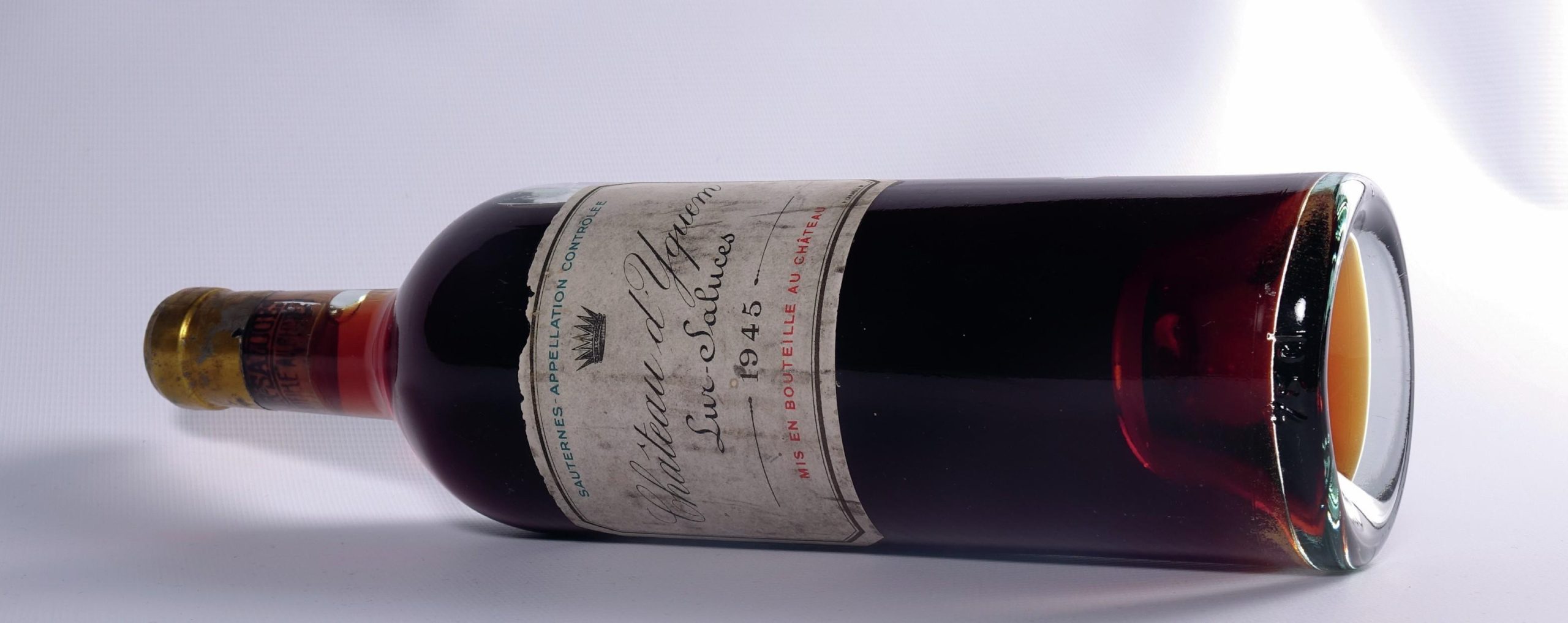
Turning to Bordeaux, Thiénot said the region’s challenges have been ongoing for longer, with around 15 years of difficult trading, interspersed with “a few patches” of positive performance – whether the spike in demand from China between 2010 and 2012, or the relatively short-lived post-Covid global increase seen across fine wine and wine consumption more broadly.
Nevertheless, he remains optimistic about Bordeaux’s future. This outlook is based on changes at the production level, with “a new generation” taking over in the past 10 to 15 years and “a real shift” in style during the last five.
This, he explained, has meant “less oak and more fruit expression”, producing wines – even at the top end – that are far more pleasurable to drink in their youth, citing the 2020 and 2022 vintages as delicious to enjoy now.
A land of whites and reds
He also points to Bordeaux’s long history of producing fine white wines, and its ability to pivot towards styles aligned with current demand for fresher, lighter drinks.
“Bordeaux is also a land of white wine, and although today it is 80% red, 50 years ago Bordeaux was more than 50% white – in the 1960s and 1970s the majority of production was white wine,” he recalled.
With the global decline in wine consumption largely affecting red wine, Thiénot sees an opportunity for Bordeaux to capitalise on whites, which have shown relative stability.
“It will be complicated for some regions to shift to white wine, but in Bordeaux we can, because we have a real white wine terroir, with Atlantic weather and limestone,” he said.
Indeed, Bordeaux’s temperate climate – compared with the more extreme conditions seen in Mediterranean Europe – underpins Thiénot’s confidence “in the mid-term”, particularly with the introduction of a new Appellation d’Origine Contrôlée (AOC) for dry white wines, Médoc Blanc. Officially approved by the INAO for the 2025 vintage, it covers whites made from Sauvignon Blanc, alongside Sémillon, Sauvignon Gris and Muscadelle.
France’s best-value wine region?
There are further reasons for Thiénot’s confidence, notably the relative value of Bordeaux wines.
“Today the mid-range offer in Bordeaux is so competitive – there are few other regions where you find such depth at €10 – and while prices in other regions have risen over the past 10 years, Bordeaux’s mid-range wines have been decreasing.”
As a result, he believes that Bordeaux offers the best choice and quality of wines priced between €5 and €15 in France.
From excess to shortage
Finally, he sees an end to the oversupply situation that has plagued Bordeaux in recent years, following a sharp reduction in production caused by large-scale vineyard removals.
“We are now producing less than we have been selling over the past two years, and although we are at a low point in terms of sales, we are still selling more than we produce – and that’s because the Bordeaux vineyard area has moved from 120,000 hectares before Covid to 80,000 hectares today,” he said.
Indeed, Thiénot sees Bordeaux facing a “natural shortage” of wine in the near future, when the region’s “overstock has been absorbed.”
Finally, he stated, further expressing his optimism for the region: “Bordeaux has centuries of history – you cannot erase that in just a few years.”
Related news
Thiénot celebrates 40th anniversary at new Le 3 venue
Immersion Collection celebrates 40 years of Champagne Thiénot


