



Why annoyed diners still hand over the service charge
Nearly half of UK diners feel pressured by service charges, yet almost the same number always settle them anyway, highlighting a growing gap between attitudes and behaviour when the bill arrives.
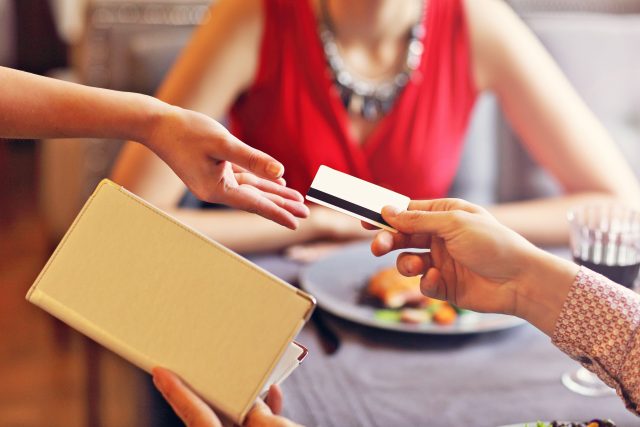
Brits may complain about service charges, but when faced with the final bill many still reach for their wallets. New research from Lightspeed reveals a clear contradiction between how UK diners feel about service charges and tipping and how they actually behave in restaurants.
The study shows that 46% of Brits feel annoyed or pressured when they see a service charge added to their bill. Despite this, 47% say they always pay it. At the same time, 65% of diners do not believe a service charge should be paid every time they eat out.
The findings point to a nation that understands the theory but struggles with the reality. While 80% recognise that a tip is a voluntary reward for good service and that a service charge is intended to help venues cover costs, many still feel uneasy about paying extra.
When diners push back
Although service charges are often paid, diners are not afraid to challenge them if the experience falls short. According to the research, 61% would remove the service charge if the food is bad, 61% if the waiter is rude and 55% if service is slow. Cost pressures also play a role, with 40% asking for the charge to be removed if it exceeds 10% of the total bill.
This scrutiny extends beyond service charges. More than half of Brits (52%) check their bill carefully to ensure items are priced correctly against the menu.
Behavioural psychologist Jo Hemmings says social pressure often overrides personal feelings. “Dining out is a very social and personal occasion,” she explains. “Certain groups of people can feel uncomfortable at the idea of appearing ‘stingy’ in front of others if they were to not pay a service charge or leave a tip. These charges can become internalised as a moral obligation rather than something transactional.”
Partner Content



Generous, but on their own terms
Despite their frustrations, Brits still see themselves as generous diners. The UK is Europe’s most generous tipping nation, with the average tip sitting at 9%, higher than in France and Switzerland. Over half of diners (55%) describe themselves as generous tippers, leaving between 10% and 20% at the end of a meal.
That generosity, however, comes with conditions. Almost two thirds (63%) are unhappy with restaurants deciding the tip amount for them, and 86% believe tipping should be optional. A majority (61%) think tipping has become more expected, similar to the US, and 34% say they dislike this shift.
Additional tipping on top of service charge has increased by 22% since 2023, suggesting that appreciation for good service is still frequently shown. When diners do tip, 69% say it is a genuine thank you, while 54% would tip more if they knew the money went directly to their server.
Mood also plays a part. On average, Brits tip 8.7% less if they arrive at a restaurant in a bad mood. This figure rises to 8.9% among 18–29 year olds, while 30% of those aged 60 and over say their mood does not affect their tipping behaviour at all.
“As we get older, our emotions tend to stabilise and we form fixed habits,” Hemmings adds. “Tipping becomes routine with age and experience rather than something emotionally driven.”
Five types of British tippers
To better understand these behaviours, Lightspeed worked with Hemmings to identify five tipping personas commonly found among UK diners. These range from the Goodwill Giver, who tips to support the hospitality industry, to the Silent Sigher, who pays to avoid awkwardness. Others include the Tip Traditionalist, who believes a tip must be earned, the Service Skeptic, who tips only when value is proven, and the Social Performer, who uses tipping as a display of generosity.
Liam Crooks, managing director of EMEA hospitality at Lightspeed, says the findings underline the importance of clarity at the point of payment. “There’s a clear difference between how we feel and what we pay,” he says. “This research shows just how important transparency, choice and trust are if hospitality businesses want customers to feel comfortable when the bill arrives.”
Related news
Pubs bustling in January despite drop in drinking
All the new Michelin-starred restaurants in Britain and Ireland for 2026


