



What the doctor ordered: China’s burnt-out youth mix traditional medicine and cocktails
Traditional Chinese Medicine (TCM) bars have cropped up across China, summarising what the country’s youth describe as “punk wellness”, in other words, “wrecking yourself while saving yourself”.
AFP describes how in one softly-lit Shanghai bar, 26-year-old graduate student Helen Zhao holds out her wrists to have her pulse taken.
She is at Niang Qing in Shanghai, and this is the first step in ordering the bar’s ‘health’ cocktail – a tipple based on TCM. Next, a doctor in a white coat uses the guest’s pulse reading to diagnose physical ailments.
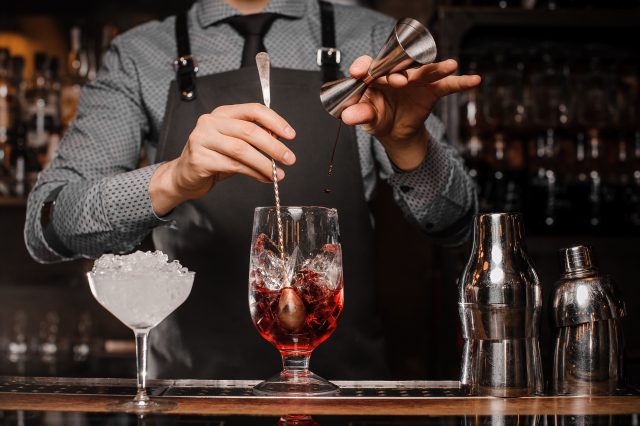
Then, a mixologist concocts bespoke cocktails using herbs and roots from apothecary drawers that line the bar – from angelica root to goji berries.
Speaking to AFP, Zhao said, “this bar is actually an opportunity for me”. She describes her “typical young person” lifestyle as one of late nights and junk food.
And according to the bar’s in-house TCM practitioner, Ding, mixing alcohol and Chinese medicine has a long history. “It was traditionally called medicinal wine,” he told AFP, making clear that, at the Shanghai bar today, the focus is on health awareness rather than treatment.
This comes amidst a tough time for China’s youth – who face a fiercely competitive job market where working from 9am to 9pm, six days a week, is the norm in many sectors. Over the past few years, reports of young employees allegedly dying from overwork have spread online, sparking debates about mental and physical health.
A 2024 survey found that more than 60% of young people consider themselves to be in a suboptimal health state.
In Niang Qing, a 41-year-old white collar worker, Cici Song, told AFP she felt late evenings were her “only real ‘me time’”.
Partner Content


“On the other hand, you want to take care of your body,” she said, nursing an amber-coloured drink created to ameliorate her diagnosed “phlegm-damp constitution”.
“So this is a kind of balance — having fun while trying to reduce the damage.”
“Niang Qing” was founded by students from Shanghai University of Traditional Chinese Medicine only last year, but has already expanded to five locations across the country.
“We’ve noticed that many young people are actually very interested in TCM culture, but the ways to experience it might seem dull,” said 22-year-old co-founder Wu Siyuan.
The idea of the bar was born “to let people experience TCM culture through entertainment”.
Analysts have noted a growing interest among young Chinese people in products that repackage traditional Chinese culture for modern times.
TCM in particular has seen a global spike in popularity, and co-founder Wu said his bar is now seeing more foreign customers.
TCM bars “draw people from online to offline, and the social experience it creates delivers emotional value”, Hua Hui, a professor at Shanghai Jiao Tong University, told AFP.
“Young people are under great pressure and need new scenarios for relief,” he said, describing this as “a worldwide issue”.
“Today’s TCM bars provide precisely this — a new form of socialising and wellness for a new era.”
Related news
Japan Airlines CEO takes pay cut after cabin crew booze scandal


