



The airline turning its home wine region into an in-flight calling card
As airlines increasingly chase premium travellers, one regional carrier is using its wine list to champion Alto Adige – and, in the process, offering a case study in how aviation can amplify local wine economies.

When airlines talk about elevating the passenger experience, wine is usually framed as a perk. For SkyAlps, it is something closer to a mission statement.
Founded in 2021 by Bolzano entrepreneur Josef Gostner, the South Tyrolean airline has quietly built an in-flight offering that puts its home region’s wines, food and producers front and centre. From a monthly changing wine list featuring Alto Adige producers, to a policy allowing passengers to fly home with up to six bottles of local wine free of charge, SkyAlps is positioning itself not just as a carrier, but as a conduit between a wine region and the wider world.
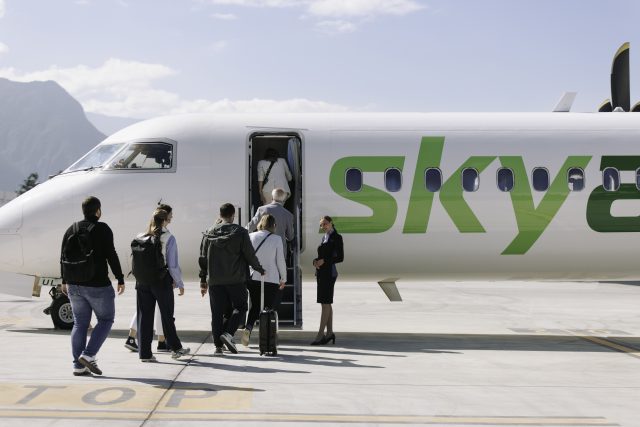
Operating a fleet of eight Dash-8 Q-400 turboprop aircraft, each with 76 seats, SkyAlps connects Bolzano directly with a number of European destinations. Crucially for the UK trade, it runs a direct London Gatwick–Bolzano service year-round, flying up to three times a week on Wednesdays, Saturdays and Sundays.
While the airline’s scale is modest, its ambition is not. Every SkyAlps fare includes a high-quality in-flight service built entirely around South Tyrolean produce, from local apple juice and yoghurt to traditional breads, biscuits and wines. It is a tightly focused regional showcase, designed to immerse passengers in Alto Adige before they have even landed.
For wine producers, that exposure is anything but incidental.
A rotating wine list with trade intent
At the heart of SkyAlps’ strategy is a monthly changing wine list, developed in collaboration with the Consortium Vini Alto Adige. Across the year, 48 selected producers are featured, with four awarded quality wines poured on board each month, all included in the ticket price.
The wines represent a region that already enjoys strong international recognition, but continues to invest heavily in education and visibility. Alto Adige/Südtirol is one of the oldest wine-growing regions in the German-speaking world, shaped by a mild alpine climate, Mediterranean air currents and around 300 days of sunshine per year. Roughly 20 grape varieties are cultivated, with Schiava and Lagrein among the most important.
By rotating the selection monthly, SkyAlps offers repeat travellers — including sommeliers, buyers and journalists — a reason to re-engage with the region’s diversity, rather than encountering the same static wine list flight after flight. For producers, it provides a rare opportunity to reach an international audience in a context that is explicitly framed around origin, not brand dominance.
That focus on origin extends beyond the glass.
Partner Content




Flying wine home — literally
SkyAlps has also introduced a policy that speaks directly to wine tourism and direct-to-consumer sales. Passengers flying from Bolzano may each carry one carton of wine, containing up to six 0.75-litre bottles, free of charge.
The wines must be purchased from participating Alto Adige producers, packed in a shipping carton and labelled with a SkyAlps promotional sticker. It is a small logistical detail with potentially outsized impact, removing a familiar barrier for tourists keen to buy at the cellar door but wary of excess baggage fees.
In trade terms, it reinforces a model increasingly discussed across European wine regions: encouraging visitors to become exporters, one case at a time.
From the cabin to the cellar
Bolzano itself provides a fitting gateway. Among the city’s historic wine addresses is Löwengrube, one of the oldest inns in the city and the winner of the Alto Adige Wine Culture Award in 2025. Behind its historic walls sits a cellar that prioritises South Tyrolean wines alongside other prestigious regions, with an emphasis on storytelling and context.
“We serve our guests what we ourselves love both on the plate and in the glass,” Michael Meister explained to the team behind the SkyAlps in-flight magazine.
Beyond the city, wine experiences stretch high into the Dolomites, where producers and mountain inns alike position wine as part of a broader cultural landscape. From Oberholz hut in the Latemar ski resort to Pitzner winery just below Castel Cornedo in Bolzano, Alto Adige’s wine narrative is increasingly tied to place.
At Pitzner, the Pitzner brothers manage nine individual vineyards across nine hectares, a small footprint that allows nature to remain central to the operation. “It may be small,” the winery notes, “but that’s exactly why lush, bountiful nature feels at home here.”
Why this matters for the drinks trade
SkyAlps’ approach lands at a moment when Alto Adige is investing heavily in visibility beyond traditional wine audiences. Recent coverage in db has explored how the region’s complex cultural identity, bilingual labelling and alpine terroir shape its wines, as well as the growing importance of wine tourism in putting Alto Adige on the map for food- and travel-led consumers.
Campaigns such as ‘Europe for the Senses’, which sees Alto Adige DOC collaborating with Etna DOC and Pecorino Romano PDO, underscore a broader shift towards quality-driven, origin-focused storytelling aimed squarely at premium markets.
Against that backdrop, SkyAlps offers a live case study in how infrastructure — not just producers or consorzi — can play a role in building a region’s wine narrative. By integrating local wine into the journey itself, the airline collapses the distance between vineyard and visitor.
For the drinks industry, the lesson is a simple one: when wine is treated not as an add-on, but as part of a region’s economic and cultural ecosystem, even a regional airline can become a powerful ambassador.
Related news
Sonoma's Aperture Cellars makes its debut on United Airlines


