



Drinks makers push low calorie options in response to GLP-1s
With the use of weight loss injections like Ozempic and Monjaro rising exponentially, drinks brands are responding with their own low-calorie messaging, reports Tom Bruce-Gardyne.
The power of Elton John, the brand, is currently being put to the test with the launch of new no-alcohol sparkling wine Elton Zero Blanc de Blancs. There is no doubting the fame of this national treasure, whose songs have been streamed 18 billion times, and the wine has an attractive quality and price. For a crowd-pleasing £10 a bottle, you get a “squeaky-clean 0% fizz with a sophisticated and appealing personality”, wrote Patrick Schmitt MW, in the sparkling wine’s first published review.
It was a smart move to launch an alcohol-free wine at the start of Dry January, but it is not just the low-alcohol content that will likely win over consumers, but the corresponding low-calorie content too.
“I do genuinely think there is a structural change happening,” says Lynne Cadenhead, who has just launched Immaculate, a crisp, botanical, zero-proof gin and tonic RTD. “People will always drink, but they seem much more aligned to being healthy, and one reason they’re drinking less is they want to look good on social media.”
While Immaculate contains only 43 calories per can thanks to being alcohol-free, DrinkWell has achieved less than double that for Traces, its range of 11% ABV wines that weigh in at a skinny 78 calories a bottle. In June 2024, it became the first UK label to be endorsed by WeightWatchers, or WW as the organisation is now known. Tom Bell, DrinkWell’s founder and MD, believes that consumer understanding of calories and alcohol “has certainly come a significant way forward in the last three or four years, really since Covid”.
Stripping out the alcohol and joining the no-low category of wines might seem an obvious move to make, but Bell claims the vast majority of consumers have so far rejected them, and says: “The industry has seen that trial has been ok, but repeat purchases and overall acceptance over the long term has been really, really poor.”
Disruptive force
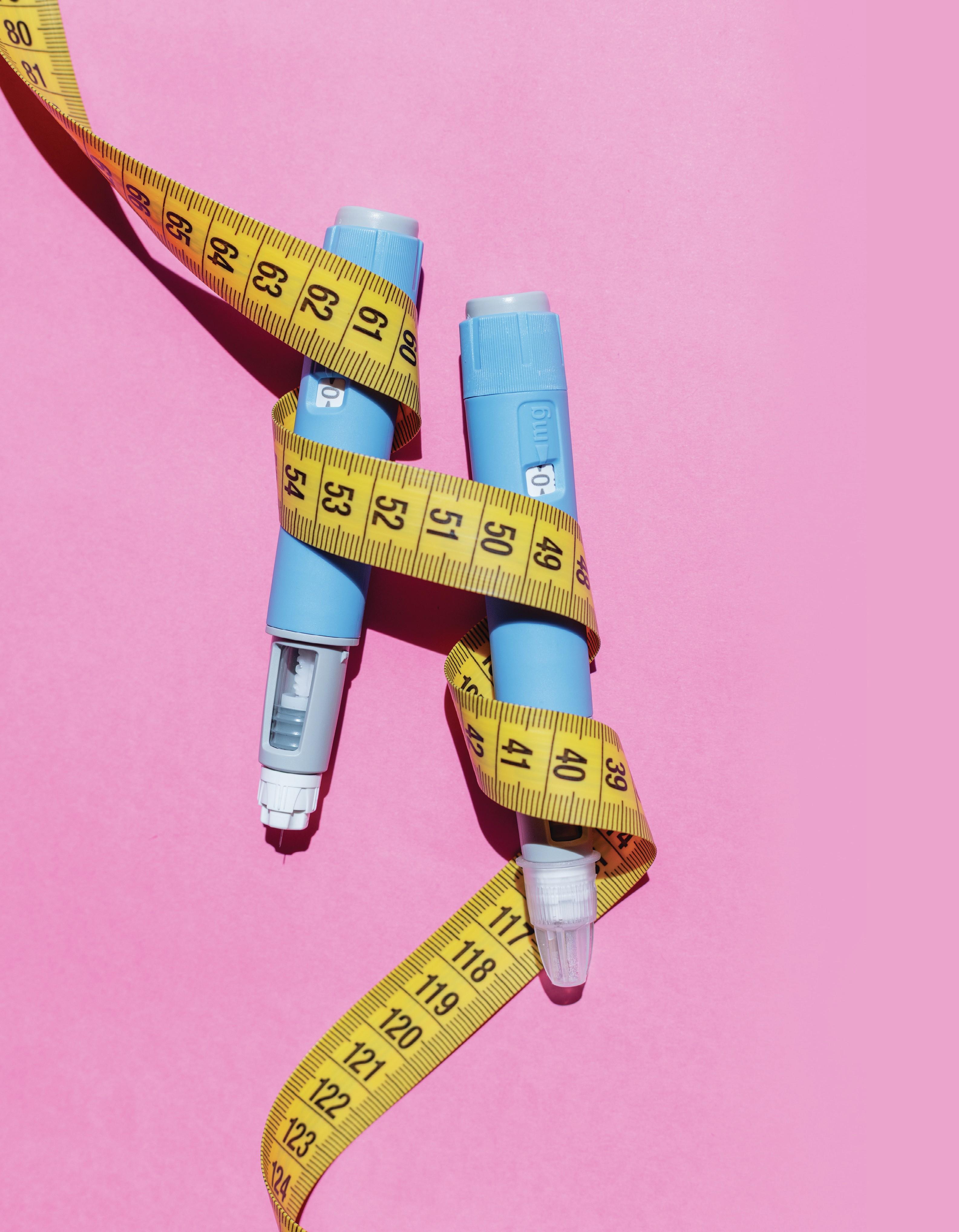
In the background, and getting ever louder, is the disruptive force of drugs like Ozempic and Monjaro that suppress the appetite for food and drink. Created to treat type 2 diabetes, these GLP-1s have morphed into a booming lifestyle drug now taken by around 12.5% of US adults, according to analyst Trevor Stirling, MD for European and American beverages at Bernstein. That equates to about 30 million people, which he predicts could easily reach 50m by 2030.
The medium- to long-term consequences for the drinks trade are hard to assess.
“When people go onto GLP-1s, in the first few weeks and months, they cut back on everything, and then slowly but steadily reintroduce things back into their lives,” says Stirling. “We’re seeing a lot of evidence that alcohol gets reintroduced.”
For now, he is calling it “a narrative in search of a story”, and attributes about “20% of the recent weakness in US alcohol consumption as being due to GLP-1s”.
In the UK, Stirling says that around 6%–7% of adults are currently on the weight-loss jabs, adding that, from tracking monthly beer volumes there seems to be “no real change” in drinking trends. That might shift if, as Bramble Consulting predicts, the UK figure rises to 20% of the population by 2030.
“I wonder whether the impact on the alcohol industry will be more than it suspects,” says David Read, chairman of supply chain consultancy Prestige Purchasing. “I think a lot of GLP-1 users will be drinking zero-alcohol beers and low-alcohol wines and spirits.”
Crowded and noisy
As Elton John’s husband David Furnish says, the no/low sector is “a crowded, noisy category”, and yet for all the buzz it is still fairly niche. According to data and insights analyst IWSR, zero-proof beers accounted for 3% of the overall beer category by volume and value in the UK in 2024, while for spirits the share number was 2%, and wine less than 1%.
Imme Ermgassen believes this space will soon belong to brands like Botivo, the zero-proof botanical aperitif she cofounded in 2023. “Three years ago, the momentum was all behind non-alcoholic gins. Now products are completely different, and not trying to be any particular version of alcohol,” she says.
“People are more health-conscious, but I don’t think everyone’s looking to give up drinking.”
Ermgassen dismisses the oft-repeated claim that Millennials and Gen Z are driving the trend towards moderation and sobriety. “If they are not drinking, they are probably taking mushrooms,” she says. “I don’t think we are suddenly going to wake up and find everyone’s doing yoga and drinking tap water.”
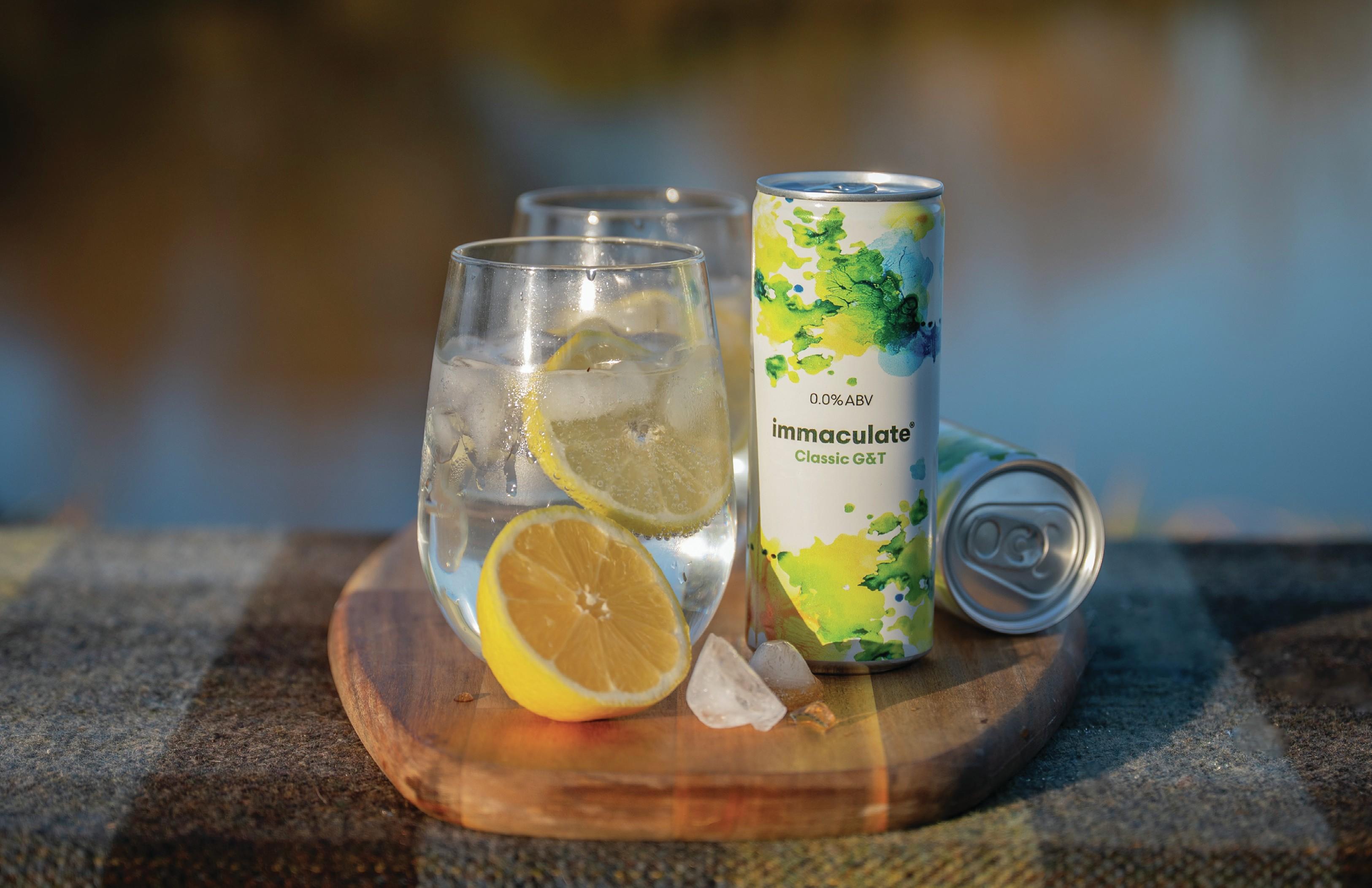
Lighter option: Immaculate is 0% ABV and has only 43 calories a can
Instead, she believes it is among 50 to 65-year-olds “where the health motive starts to get a lot more aggressive”.
Botivo promotes itself as ‘a pleasure brand’ rather than a health product, and is aimed at what Ermgassen calls “this ABV-agnostic future where people are just going for drinks that they really enjoy the flavour of. Some will contain alcohol and some won’t.”
In a similar vein, Tom Benn describes his Future Château range of 5% ABV wines as “quite a hedonistic brand”. With their modest strength and only 33 calories per 100ml, the wines might well appeal to those on weight loss drugs. “I thought my audience was going to be Gen Z, but I was surprised to discover it was actually 40 to 60-year-old women,” he says. Apparently, it is particularly popular with those post-menopause.
“There is a broad cultural shift of people getting healthier,” Benn says. “But I think the risk of health trends is that, any time you look at a specific, sub-segment of that trend, it is very difficult to say if it’s here for the long term or not. Lots come and go, from alternative proteins to grains and fibre, and yet the overarching trend of health has been consistent for decades. I don’t think that’s going to change.”
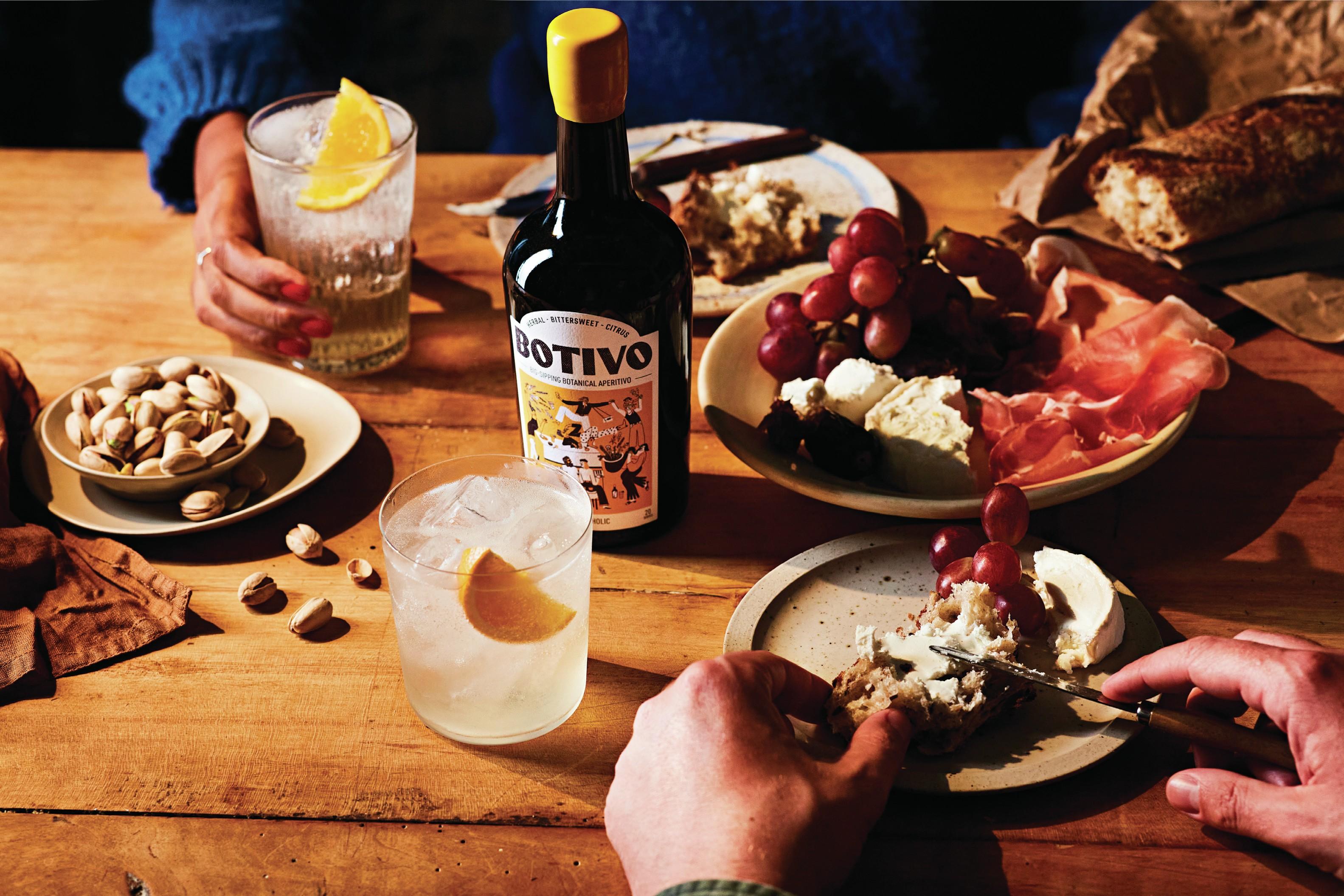
Distinct identity: no-alcohol brands like Botivo do not consciously copy full-strength categories
Abstinence and veganism
As for giving up booze altogether, Benn does not believe that will become an enduring trend. “I see a lot of parallels between abstinence and veganism, where both have a core segment who are very loyal, obviously for very different reasons,” he says. “We have fewer vegans and vegetarians in the UK than we had five years ago, but we have more people who were trying to eat more vegetables. The net impact of the latter reduces meat consumption by much more than 2%–3% of people being vegan does, and I think the same thing is probably happening with alcohol.”
Have the big industry players grasped the extent of this cultural shift? “Yes and no,” replies Benn. “I think they grasp that it’s coming, but I think time and again they’ve failed to understand customer psychology. I think what they’ve got disastrously wrong from the get-go about no-and-low is that they’ve positioned it as a compromise.” In his view, it is often a pale imitation – a drinks industry equivalent to the fake steak.
Not on the radar
When Laura Willoughby founded mindful drinking specialist Club Soda 11 years ago, non-alcoholic drinks “weren’t even on the radar”, she says, adding: “I know that, behind the scenes, big companies like Heineken were already developing products, so they launched [Heineken] Zero on the market here in 2017.”
The category is now led by Guinness 0.0, sales of which overtook Guinness Original at online grocer Ocado last year. While the brewers may have the edge in the non-alcoholic space thanks to technology and the fact “the hops do a lot of the heavy lifting”, says Willoughby, she believes that some no-alcohol wines “are coming pretty damn close to the real thing”.
The UK Government is currently considering a ban on such products to under-18s, but Willoughby says: “Most alcohol-free brands are quite relaxed about it, because they all want to be in the beer, wines and spirits aisles that are designed for an adult palate.” She insists: “It’s not just Gen Z and Millennials who are drinking less. It’s every generation.”
If so, the rise in weight loss drugs may only fuel the trend. “People on them just stop drinking because it takes away any of your desire for sugar, alcohol, excessive spending … all of those things that your dopamine loves you to do more of,” she says. “If you’re on GLP-1s, it’s because you want to lose weight. Well, alcohol-free drinks have less sugar and less calories, so they already hit that need.”
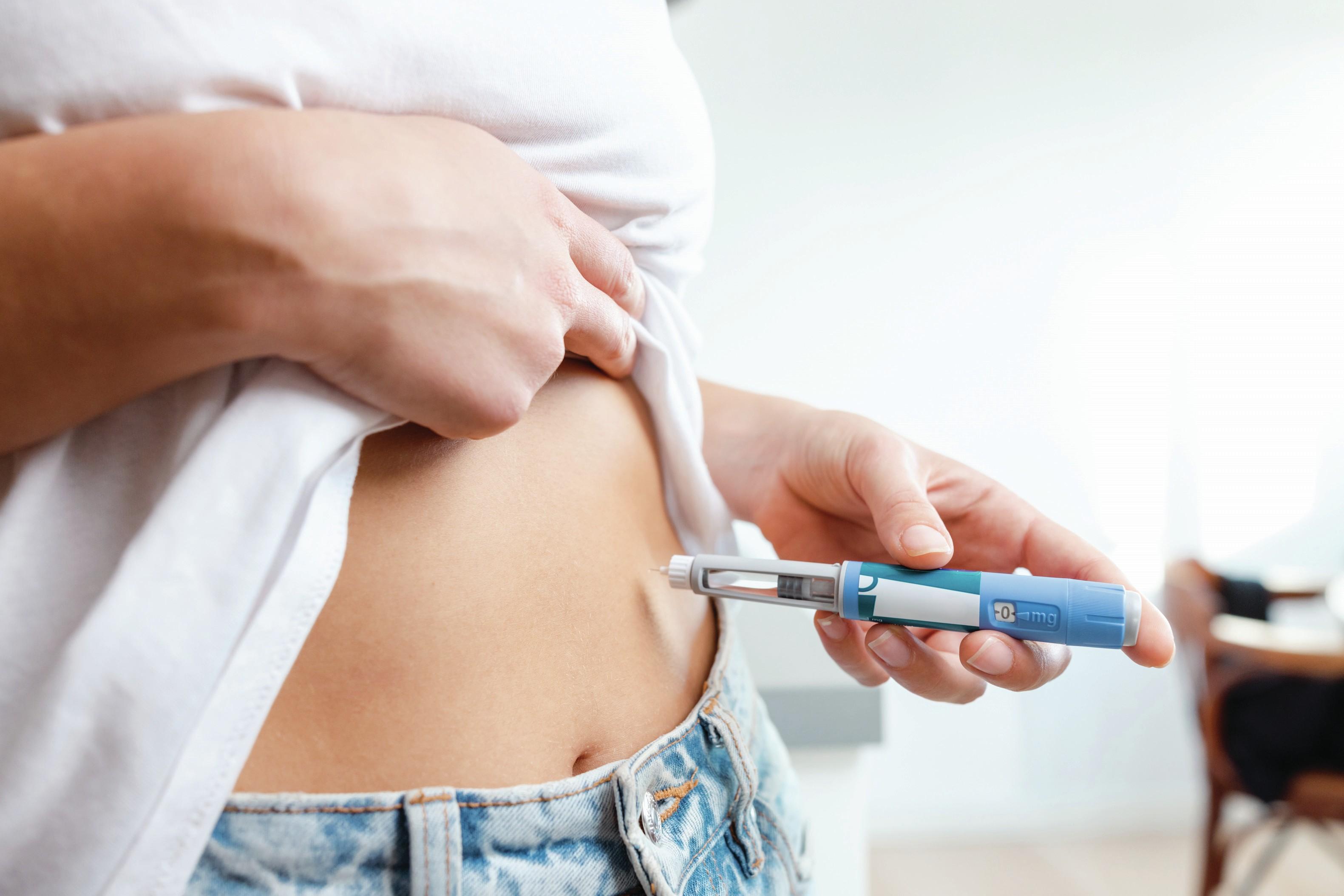
Sharp end: the impact of GLP-1 injections on alcohol sales is still being assessed
GLP-1s and changing taste
However, there is evidence that these drugs may affect not only your appetite, but also your taste buds. As well as anecdotal reports of former doughnut lovers embracing the bitter flavours of kale once on GLP-1s, there is now research supporting the belief that the drugs alter people’s perception of taste. In one study published in the journal Diabetes, Obesity and Metabolism in 2025, 23% of those surveyed said foods tasted saltier than before starting the drugs, while 21% found them sweeter.
The food industry is starting to respond, with UK retailer M&S launching its new Nutrient Dense range in January, specifically for users of weight loss drugs. So far, there has been no equivalent from the drinks industry, as far as analyst Trevor Stirling, is aware. “It’s still very early days, and for those on GLP-1s, we just don’t know how it’s going to change their taste in alcohol,” he says. “But one thing about spirits is there’s such an amazing variety of flavours out there, you would have thought people could find their new, favourite poison.”
It certainly poses some interesting questions for the industry. “What does whisky taste like when you’re on GLP-1s?” asks David Read of Prestige Purchasing. “Potentially, a whole category could be wiped out for GLP users because it just tastes horrible.”
Dumping stock
The leading industry players are, however, tracking the spread of GLP-1s, and it is something they are constantly asked about when presenting their results. A year ago, fund manager Terry Smith dumped his entire stock in Diageo, partly because, in his view, weight loss drugs could damage demand for its brands.
So far, there have been no similar moves by big investors. A spokesman for another big distiller says: “There is no evidence of an impact on spirits consumption. I see it very much like cannabis. We were often asked if cannabis was going to cannibalise the industry, and in the end nothing happened.” With GLP-1s, such confidence may prove to be premature. Only time will tell.
Related news
Peroni 0.0% becomes available in lemon and blood orange flavours
The first 0.5% Bordeaux red hits the market
Ocado listing Impossibrew signals forward steps for no and low


