



Rioja’s rosado renaissance: from sideline to serious
Once treated as a commercial afterthought, Rioja rosado is undergoing a strategic and technical transformation. Producers are redefining the category through vineyard intent, varietal focus and premium winemaking, positioning it as a credible, age-worthy expression of the region’s identity.
For much of its modern history, Rioja has been defined – and has defined itself – through red wine. Ageing classifications, oak influence and Tempranillo have shaped both its global reputation and consumer expectations.
Yet within this red-focused narrative sits a parallel story that is now taking on a renewed confidence: rosado. Once marginalised as a by-product or commercial sideline, Rioja rosé is increasingly being repositioned as a serious, vineyard-led fine wine category with its own history, identity and long-term relevance.
This shift is not about chasing fashion or mimicking Provence. Instead, it reflects a deeper reassessment of Rioja’s viticultural resources, historical practices and strategic future. As producers invest more time, precision and intent into rosado, the category is emerging as a credible expression of place – one that aligns closely with changing consumer preferences while remaining rooted in Rioja’s own traditions.
According to Pablo Franco, general director of the QDO Rioja Control Board, “the quality of Rioja rosé has long been established, even if it has not always been fully recognised”. Rosado has historically played an important role within the designation, but what has changed is the way it is understood and prioritised, he explains. “Today, rosé is no longer treated as something secondary or corrective, but as a wine with its own personality, purpose and technical requirements.”
Feature findings
- Rioja’s rosados were once marginalised as a commercial sideline, but are now forging a new identity as serious, vineyard-led fine wines in their own right.
- A significant conceptual shift has brought a renewed focus on plot selection, altitude, cultivation methods and grape varieties, tailoring these to the precise demands of rosé production.
- In the winery, advanced technology and experience of making high-end white wines help to preserve aromatic purity, with lees ageing used to enhance texture and balance.
- While Provencce remains the flagship rosé region, Rioja offers a strong regional identity and value for money – but there is work to do to improve perceptions of the wines.
Franco explains that this redefinition begins in the vineyard. Factors such as plot selection, altitude, location, cultivation methods and grape varieties are now fundamental to shaping the character of a Rioja rosado. This marks a significant conceptual shift from earlier practices, when rosé might have been produced simply as a tick-box commercial exercise. Instead, rosado is now conceived independently, with vineyard practices designed specifically for the style.
‘What works for red wine does not necessarily apply to rosé; they are distinct products with different needs’
That intent is reflected in the diversity of rosé styles now emerging from the region. Franco points to both classic rosados made with longevity and depth in mind, and more recently developed expressions with lighter colour, elegant aromatics and a defined, textural mouthfeel. While stylistically different, both are the result of deliberate design rather than compromise. As he notes: “What works for red wine does not necessarily apply to rosé; they are distinct products with different needs.”
Varietal choice has become increasingly important. Garnacha, described by Franco as the “chosen one”, plays a central role thanks to its floral aromas, herbaceous notes and naturally high pH, which contributes subtlety and elegance. Blending Garnacha with Viura adds further depth on the palate, while Mazuelo is emerging as a potential future rosé variety, capable of delivering freshness, balance and vibrancy.
Strategic importance
Beyond quality, rosado is now being recognised as strategically important for Rioja’s future. Franco suggests that fine rosé has acted as a catalyst, encouraging the wine sector to reassess a category that historically did not receive the attention it deserved. By focusing on origin, diversity and vineyard intent, Rioja has begun to unlock the broader potential of rosado both within and beyond the region. This evolution also aligns with wider market trends. Rioja rosés increasingly meet contemporary demand for fresher, more direct wines with texture and food compatibility.
Crucially, they challenge the seasonal perception of rosé. Rioja’s ability to produce rosados with depth and structure supports the de-seasonalisation of consumption, positioning these wines as year-round options rather than summer novelties. From a commercial standpoint, Rioja’s global reputation plays a decisive role.
Alex Davies, head of product at Virgin Wines and buyer for Spain, believes this recognisability gives Rioja rosé a distinct advantage as consumers explore pale rosé beyond its traditional strongholds. “It’s easy to see why pale rosé from the Rioja region is becoming an increasingly popular choice for rosé drinkers,” he says. “If Provence is leading the way, then Rioja offers arguably a better-value alternative.
‘If Provence is leading the way, then Rioja offers arguably a better-value alternative’
Prices are typically lower, Rioja itself is a recognisable and trusted brand in its own right, so consumers can have confidence, and the region can also use the permitted Garnacha grape which is also used in Provence rosé wine.” Trust, value and familiarity, Davies suggests, help lower the barrier to trial – particularly for consumers who may not instinctively associate Rioja with rosé. In this sense, rosado becomes a way for Rioja to broaden its offer without diluting its identity.
Tangible changes
At producer level, the renewed focus on rosado is underpinned by tangible changes in both viticulture and winemaking. Rosana Lisa, innovation and premium projects director at Ramón Bilbao, describes Rioja as a classic region for rosé that has undergone both an “evolution and a revolution” in recent years.
Vineyard selection has become far more targeted, with specific plots chosen for their ability to deliver acidity, red-fruit profile and balance – often aided by altitude and site exposure. These vineyard decisions are matched by technical advances in the winery. Lisa highlights the use of lees ageing and alternative fermentation and ageing vessels, including amphorae, concrete tanks and large-format barrels, as tools that allow producers to build complexity and texture while preserving freshness.
The result, she says, is rosé wines with genuine ageing potential. For Lisa, fine Rioja rosé is defined by deliberate design: viticulture tailored to rosado from the outset, and meticulous winemaking aimed at achieving maximum expression. At Ramón Bilbao, this philosophy translates into single-plot wines sourced from high-altitude vineyards and crafted exclusively in concrete – a level of focus more commonly associated with premium red wines. She identifies Alto Najerilla, within Rioja Alta, and Sierra de Yerga, in Rioja Oriental, as areas driving this new wave.
Alto Najerilla’s cool soils and climate now allow grapes to reach optimal ripeness without green tannins, while Sierra de Yerga’s elevated vineyards offer freshness and vibrant acidity. In both cases, altitude plays a crucial role in balancing ripeness and restraint.
Vertical evolution
A similar emphasis on vineyard intent and freshness is evident at Familia Martínez Zabala. Juan José Díez, winemaker and technical director, describes a comprehensive vertical evolution in Rioja rosado production, spanning vineyard management through to winery practices.
Again, higher-altitude plots are increasingly selected to deliver fresh grapes with vibrant acidity, harvested specifically for rosé rather than adapted from red wine production. In the winery, advanced technology and experience gained from producing high-end white wines allow for precise oxygen management and the preservation of fresh aromas.
In some cases, lees ageing is employed to enhance texture and balance. Wines such as Faustino V Rosado and Campillo Rosé are presented as expressions of this approach, combining aromatic clarity with elegance and gastronomic versatility. For Díez, modern Rioja rosado distinguishes itself from traditional styles through its focus on freshness, lower alcohol and varietal expression.
‘The most serious producers no longer position rosado as a casual or seasonal wine, but as something age-worthy and gastronomic’
Where rosés were once made from riper grapes as a by-product of red wine vinification, today’s wines are positioned as independent, premium expressions with their own identity. Rioja Alta and Rioja Alavesa are highlighted as key subregions, where altitude and cooler conditions allow for slower ripening and greater aromatic complexity.
At Raventós Codorníu, Mayte Calvo de la Banda points to both varietal choice and winemaking method as defining elements of fine Rioja rosé. Traditional rosés were often made by bleeding the must after skin contact, resulting in deeper colour and higher alcohol.
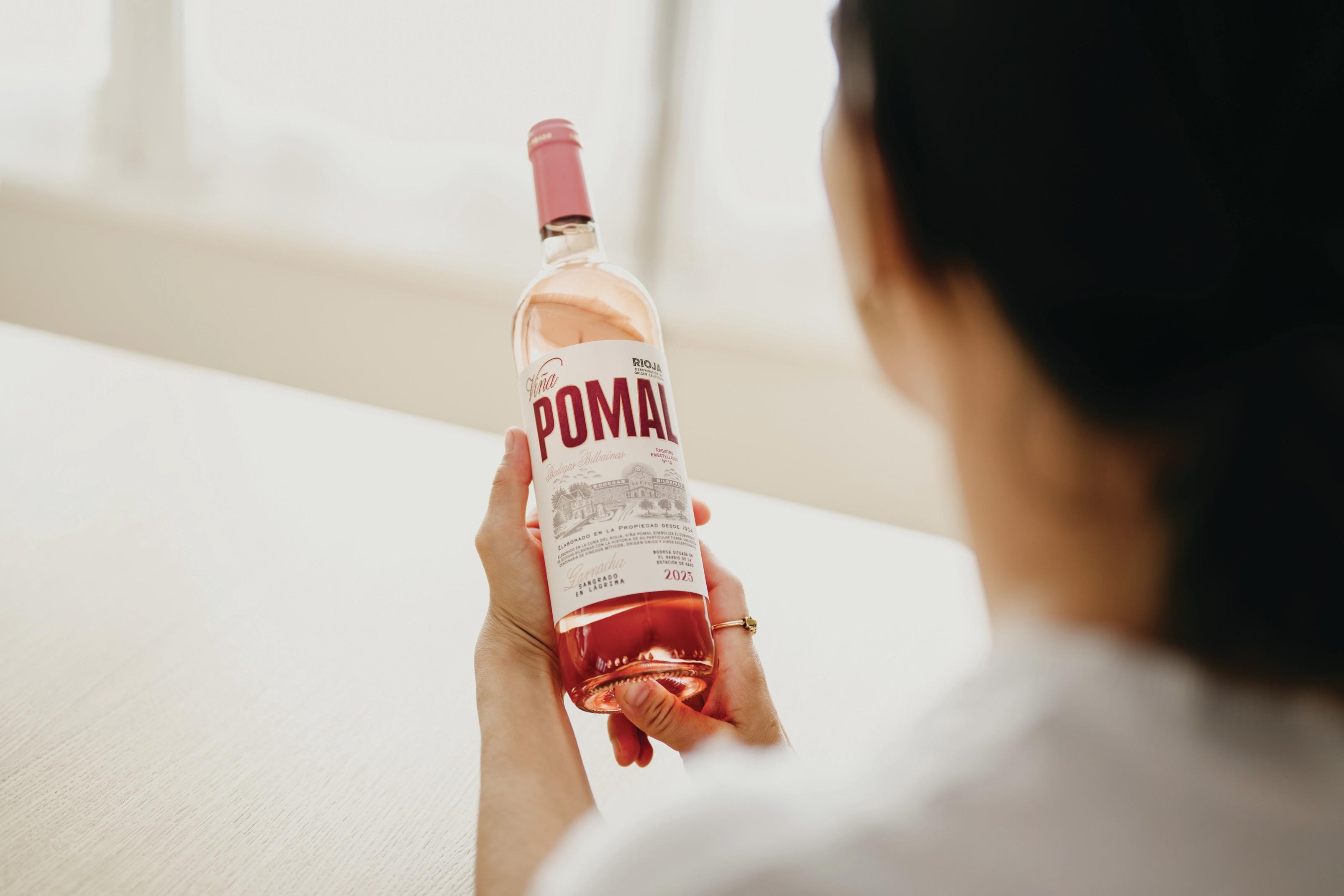
By contrast, Viña Pomal Rosado is made from Garnacha and Viura harvested together in the cool early hours, using limited skin contact to achieve a pale hue and aromatic finesse. Calvo de la Banda argues that Rioja Alta and Rioja Alavesa provide ideal conditions for this style, delivering delicate colour, intense red-fruit aromas and elegance on the palate.
Beyond style, she also emphasises versatility with food, value for money and the ability of Rioja rosé to retain aromatic intensity even when served chilled – attributes that resonate strongly with the on-trade.
Work in progress
While quality has advanced rapidly, perception remains a work in progress. For Madrid-based wine expert Michael Pope, the transformation of Rioja rosado over the past decade has been decisive. Historically, rosado was often valued for volume rather than identity, produced through sangrado (saignée) to support red wine concentration.
Today, he says, “producers are identifying specific parcels, harvesting earlier and applying cellar practices that prioritise restraint, texture and longevity”. Pope notes: “The most serious producers no longer position rosado as a casual or seasonal wine, but as something age-worthy and gastronomic – intellectually Rioja, even when visually pale.”
Historic references such as Viña Tondonia Rosado Gran Reserva demonstrate the category’s ability to evolve over decades, while contemporary wines from both established and newer producers show multiple paths towards seriousness. Sub-zone, he argues, plays a significant role. Rioja Alta and Rioja Alavesa are particularly well-suited to finer rosados thanks to altitude, cooler nights and limestone soils, while Rioja Oriental can produce compelling examples when ripeness is carefully managed.
From claret-influenced wines to very pale modern expressions, Rioja resists easy categorisation
Internationally, Pope sees growing respect among professionals, especially through blind tastings and comparative flights. When tasted without preconceptions, premium Rioja rosados stand comfortably alongside serious rosés from Provence, Bandol or Tavel. The challenge lies less with the liquid than with perception. Provence benefits from a powerful visual shorthand and lifestyle association, while Rioja remains closely linked to red wine, oak and ageing classifications.
Stylistic diversity within Rioja rosado further complicates communication. From claret-influenced wines to very pale modern expressions, Rioja resists easy categorisation. For Pope, however, this diversity is also a strength – evidence of authenticity, rather than trend-led uniformity. Vinarchy echoes this nuanced assessment. Winemakers Irene Pérez and Clara Canals point to regulatory changes, including lower permitted alcohol levels, alongside greater focus on vineyard quality and advanced winemaking techniques, as key enablers of premium rosé production.
At the same time, they acknowledge that, while perceptions are evolving, rosado still faces structural and market challenges and is “unlikely to rival Rioja’s reds in the foreseeable future”.
Critical tools
Education and wine tourism are increasingly seen as critical tools in bridging this gap. Pope highlights the impact of tasting rosado at source, where vineyard context, soils and food pairings transform abstract expectations into tangible experience. Vertical tastings and comparative flights, while rare, are particularly powerful in reframing rosado as a wine of intent and longevity.
Looking ahead, few suggest that rosado will replace Rioja’s traditional pillars. Yet many agree that it has become an essential part of the region’s long-term strategy. For Franco, fine rosé has encouraged renewed investment and reinforced Rioja’s positioning around diversity and origin.
For producers, it offers a route to premiumisation and stylistic relevance. For buyers and sommeliers, it provides freshness with substance and a trusted name with a compelling new narrative. As Pope concludes, fine rosado may remain selective rather than dominant, but it is increasingly a credible and regular part of the Rioja conversation.
Not a marketing pivot or seasonal trend, but a wine rooted in place, history and intent – and one that Rioja is uniquely equipped to deliver.
Related news
Perelada & Chivite brings ‘freshness and expressiveness in Wine Paris debut
Hallgarten roundtable: is sustainability a prerequisite for marketing success?
Beyond the barrel: why ‘diversity and uniqueness’ are Rioja’s calling cards


