Hotel bars vs independents: what’s the real difference?
By Sophie Arundel
Aurélie Panhelleux, bar operations manager at CopperBay Lancaster in Paris, explains why running a hotel bar is not as different from an independent cocktail bar as many assume – and where the real challenges lie.
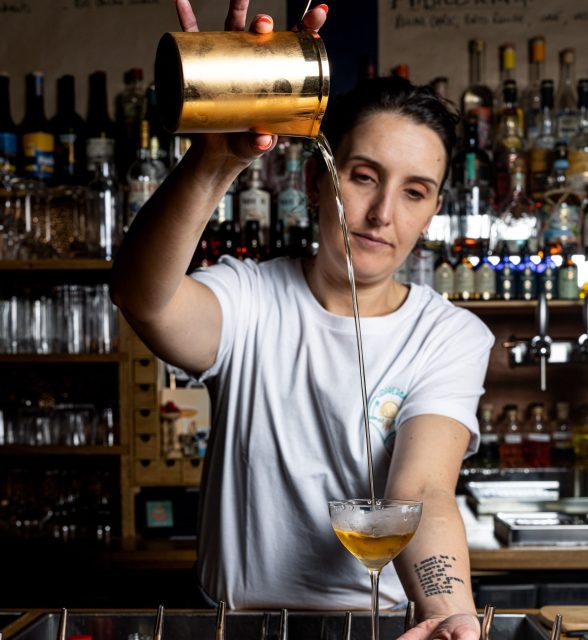
Aurélie Panhelleux, bar operations manager at CopperBay Lancaster, Paris
CopperBay Lancaster sits inside the historic Hôtel Lancaster, marking the third chapter of the CopperBay story after the original Paris bar and its Marseille outpost.
The iconic bar has launched a new cocktail menu to mark the 100th anniversary of Hôtel Lancaster, celebrating the personalities who have shaped the Paris hotel since its opening in 1925. The 100 Years menu features ten cocktails inspired by legendary guests, artists and long-serving team members, using each serve to connect the hotel’s past with its present-day bar identity.
The anniversary release also underlines CopperBay Lancaster’s ambition to operate as a destination bar in its own right. Here, Bar Operations Manager Aurélie Panhelleux reflects on the realities of running a hotel bar, creative freedom within heritage spaces, and how CopperBay Lancaster balances hotel expectations with independent bar culture.
Q&A with Aurélie Panhelleux, CopperBay Lancaster
You’ve worked in both independent neighbourhood bars and now within a luxury hotel. What are the most underestimated differences between the two?
“I think the main differences are often related to location. And there’s the number of intermediaries and the deadlines a hotel bar reports not only to an owner and a general manager, but also works closely with departments such as finance, HR, and marketing. Everything has to be well coordinated.
Budgets are also handled differently, as they are planned for the entire year, leaving little room for oversight or improvisation.
Otherwise, the overall operations are relatively similar; it’s mainly the positioning and the setting that differ. Our clientele includes both hotel guests and external customers. We have a great deal of freedom to create recurring events, as well as to design the menus, and the team recruitment process is done collaboratively.
In the end, it’s quite close to the dynamic we have in our independent bars on a daily based.”
Serving locals and travellers
How does the guest profile in a hotel bar change the way you think about service, menu design and atmosphere?
“There are several types of guests in hotel bars; The first is the in-house guest, who is staying at the hotel. They are often looking for tips and recommendations for their stay, and it’s usually easier to build a connection with them because there is a sense of recurrence throughout their visit. It’s a great opportunity to share our expertise and introduce them to local spirits, as they are also there to discover something new.
The second profile is the external guest, someone who has specifically come to discover our venue. They expect a complete experience, from the welcome to the service and the cocktails, with strong attention to detail and sometimes special touches for particular occasions.
It’s also with this clientele that we aim to demonstrate that hotel bars can be just as refined and welcoming as independent bars.”
Creativity within heritage
Independent bars often pride themselves on creative freedom. How does that translate when you’re operating within a hotel setting with its own heritage and expectations?
“I don’t think creativity is restricted in a hotel on the contrary. There are so many avenues to explore, especially in connection with its history or its location. For example, our latest menu, ‘100 Years,’ tells the story of the people who have stayed at or helped shape the hotel, and it creates a beautiful bridge between past and present. Like in any venue, the key is simply to ensure that the menu has meaning and respects a certain identity and DNA.”
The realities of hotel bar operations
What operational realities differ most day-to-day? From staffing and training to opening hours and service rhythm?
“To begin with, a hotel bar is often open all day, so the transition into a cocktail bar in the evening has to be seamless, whether in terms of menu setup, lighting, or music.
There are also multiple outlets, so coordination and communication are essential. In a hotel bar, guests are also more likely to dine or eat, so this needs to be taken into account.
The layout and distances are different as well, so strong organization is crucial the cellar or the kitchen is not necessarily located right next to the bar.”
More than a hotel amenity
With CopperBay Lancaster, how have you worked to keep the bar feeling like a destination in its own right, rather than just an amenity for hotel guests?
“This has always been a key focus, especially in France, where many people traditionally think hotel bars are only accessible to hotel guests and for a time, many even played into that idea. We wanted the opposite: to create a dynamic, cosmopolitan space where a hotel guest might end up chatting with someone from Paris.
Our identity blends two elements: CopperBay, our independent bar, and the Lancaster, the hotel itself which already creates a natural bridge for guests. Beyond that, communication and artistic direction need to be lively and carefully curated to make the venue known or rediscovered.
Another important point for me is that the bar is visible from the hotel entrance. It makes it approachable people aren’t afraid to come in and try it.”