



Hallgarten roundtable: is sustainability a prerequisite for marketing success?
Has sustainability transitioned from a matter of good intent to a commercial necessity? This was one of the questions put to panellists at Hallgarten’s Annual Tasting in London. Producers from England, Rioja and Australia described how market access, energy costs and climate pressure are forcing rapid change.
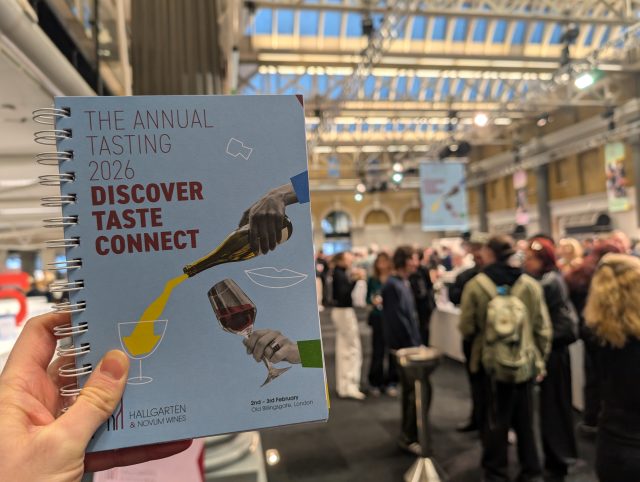
At a panel discussion chaired by Guy Woodward at Old Billingsgate, London, speakers argued that sustainability is now part of doing business, not a separate project.
Andrew Harris, wine educator at Brown Brothers Wines, said sustainability had become “a massive part” of business operations, “largely driven by our customers”. He framed it not only as environmental responsibility but as long-term continuity for a multi-generational family business.
“It’s about ensuring the business itself remains viable so that the fifth, sixth, seventh and eighth generations of the Brown family can still be involved,” Harris said.
He added that Brown Brothers had installed 2,200 solar panels across its winery operations over the past five years, with panels installed at both its Victorian and Tasmanian wineries. According to Harris, the producer’s biggest emissions output is electricity, partly because “many of our wines require chilling for much of the year”.
Those panels have reduced Brown Brothers’ energy costs by around 15 to 20%.
While the cost saving was significant, Harris suggested the commercial value now runs deeper.
“There are markets now where, if you don’t have a clear sustainability strategy, you simply don’t get a foot in the door,” he said. “You have to be credible and proactive.”
Retail demands and Scandinavia’s hard line
Pressed by Woodward on where sustainability is becoming a prerequisite, Harris pointed to Scandinavia.
“In Scandinavia, if you don’t have a strong sustainability case, you’re out,” he said, adding that some hotel groups now require full carbon accounting, including bottle weight and recyclability.
Harris said Brown Brothers is part of Sustainable Winegrowing Australia, which formalised much of what the company was already doing and provided benchmarks. He also described lowering bottle weight, waste reduction and packaging innovation as standard expectations.
For larger producers, he said, these demands are no longer optional. “Australia’s retail market is essentially a duopoly, and sustainability certification is non-negotiable,” according to Harris.
Wiston’s organic practice without the paperwork
Kirsty Goring, brand director at Wiston Estate in Sussex, spoke of the tension between certification and flexibility. Wiston’s 15 hectares of vines sit within a 2,800-hectare estate, and while the vineyard is farmed organically in practice, it is not certified.
Goring said the estate had decided that being “organic” on paper might not always reflect best practice for a specific site.
She cited a practical example. Mechanical hoeing between rows required multiple tractor passes and high diesel use. Wiston has since moved entirely to cover crops, meaning it no longer drives between the rows at all.
The estate did initially spray off aggressive grasses, which Goring acknowledged “technically isn’t organic”, but described it as the most efficient long-term solution.
Now, she said, cover crops improve soil structure, prevent erosion and support microbial life, particularly important on Wiston’s chalk slopes where erosion risk is rising with heavier rainfall.
Carbon sequestration as a quiet asset
Goring described Wiston’s broader environmental strategy as a whole estate approach rather than a vineyard only. She said the estate manages around 1,000 acres of woodland and has committed to keeping 900 acres of chalk grassland out of arable farming.
Partner Content

Since the late 1980s, that decision has sequestered approximately 300,000 tonnes of carbon, which she said is equivalent to planting nearly five million trees or powering 36,000 homes for a year.
“To a passer-by, it looks like we’re ‘doing nothing’,” Goring said, but added that chalk grassland is among the UK’s most biodiverse habitats.
Is organic certification still worth the label?
Asked whether she would like Wiston to be certified organic, Goring said the label itself was not critical.
“Because we can bring so many people to the estate and show them what we’re doing, the label itself isn’t critical for us,” she said.
She also pointed to lingering perceptions from the UK in the 1970s and 1980s that organic wines were not always the best quality, though she said this had changed. Consumers now want “the full story: environmental, social, financial”.
Biodynamics in Rioja and the visitor effect
Melanie Hickman, co-owner at Bodegas Bhilar, said the Rioja producer’s organic and biodynamic work has increasingly become a magnet for visitors, especially from Northern Europe.
“They’ll turn up at the door asking for visits because they can’t find many others,” she said.
Hickman explained that the winery did not open to visitors for years because it was run only by her and her husband. Now it is opening more often, as interest in organic and biodynamic farming grows.
She said she often speaks to visitors about biodiversity and soil life, though she joked that her husband sometimes has to rein her in.
“I truly believe the future is organic,” Hickman said, whether adopted through conscience, marketing or necessity.
Technology enters the vineyard: drones and disease pressure
The panel also discussed innovation, particularly drones.
Hickman said drones have become a practical response to fungal pressure. “For us, mildew doesn’t wait,” she said. She described how spraying by hand can mean losing time and losing the battle before a hectare is finished. With drones, she said, a job that used to take hours can take 20 minutes.
Harris said Brown Brothers is still trialling drones. He described the key benefit as reducing diesel use and soil compaction, though he said it is cost-neutral for now. Scaling to 850 hectares remains a challenge.
Climate change drives both opportunity and discomfort
As expected, climate change ran through the discussion as both a driver and a warning. To this point, Hickman said mildew pressure has increased. “Mildew that appeared once every ten years now appears every five,” she said, adding that being organic makes the problem harder.
Goring, speaking from an English wine perspective, said September temperatures have increased by around 1.5°C on average. She said this has enabled Wiston to make still wines, which would have been unthinkable 25 years ago. But she warned against triumphalism. “We’re not celebrating climate change,” Goring said. “We’re a by-product of it.”
Woodward closed by asking Harris whether cellar door visitors were asking more about sustainability.
“At the moment, probably fewer than 10% ask directly,” Harris replied. But he added that this would change. “Extremes are coming back, and awareness always follows experience,” he said.
As for each winery’s motivation to pursue sustainable practices, if it keeps the wine world moving in the right direction, does it really matter?
Related news
Why sustainability is about empowerment and finding meaning


