



Five takeaways from Barcelona Wine Week 2026
Yesterday, Barcelona Wine Week 2026 drew to a close following three days packed with tastings, talks and seminars, uniting 26,000 attendees to fly the flag high for Spanish wine. db has rounded up the hottest talking points.
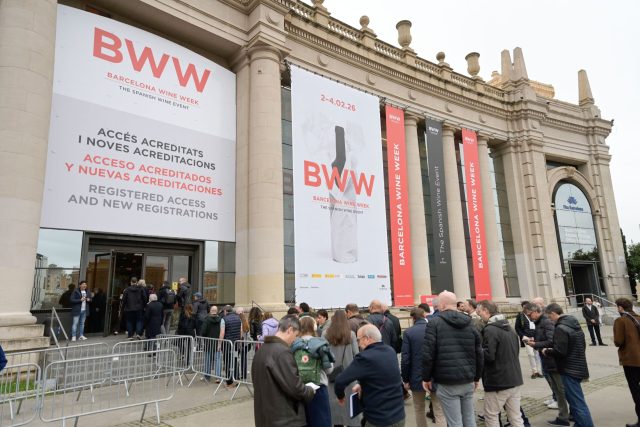
No wine was left behind at the sixth edition or Barcelona Wine Week (BWW): from rose to red, to Cava, to sherry to vermouth, the sixth edition of BWW fortified the fair’s mission of raising Spanish wine’s profile on a global stage. 1,350 wineries from 90 DOCs and quality seals – including big-brand names and boutique family-run winemakers – exhibited products at Fira de Barcelona from 2–4 February, to an eager audience of visitors – 20% international from more than 70 countries.
“The fair is working,” Jose Luis Benitez, director of the Spanish Wine Federation, tells the drinks business. He’s been part of BWW’s organisation committee since its origin. “The main objective was to have a Spanish quality wine fair, and we have reached that goal, with one third of the total number of Spanish wineries exhibiting.” And among those, nearly 13,700 business meetings were scheduled, with the number of international buyers in attendance up by 25%. There’s no doubt the event was a success when it comes to numbers, but “what is more important to us is a good image for our wines, and this fair is contributing to that,” says Benitez.
Couldn’t make it? Don’t worry. At db we’ve rounded up the top talking points shaping Spanish wine today.
1. Latin America
While key markets – like the UK, USA and Germany – cannot be ignored, Benitez says BWW also acknowledges markets with a budding palette for Spanish wine. Herein are “new opportunities”, with South America the main region on winemakers’ radars. Spurred by rising demand and shared cultural ties, the areas flagged as a crucial growth market. This is explained by data: Spanish wine imported by the four Mercosur countries – Brazil, Paraguay, Uruguay and Argentina – spiked at 187.2m litres in the 12 months to November 2025, according to the Spanish Wine Interprofessional Organisation. Both volume and value ticked up by 2.5% compared to the same period in 2024. “Latin America is our most natural market in terms of production and growth,” continues Benitez. “There is potential in those markets in which you are having growing middle classes, in which you have this occidental culture, and not only that, but culture very close to Spanish.”
Brazil in particular is a bright spot. In the 12 months ending October 2025, Brazil accounted for 75% of Spain’s revenue from wine exports to the region and 89% of the total volume exported there, indicating robust demand. That’s why BWW opted to include Brazil in its Hosted Buyers programme: “That, within Mercosur, is the most important market, with lots of cultural and historical affinity with Spanish and Portuguese culture,” adds Benitez. And it’s not just wine. El Gaitero export department ambassador, Juan De Valdes Duñabeitia, speaks of Latin America’s rich opportunities for Spanish cider, including in Mexico, Cuba and Argentina. “We are very strong in that area,” he adds.
2. No and Low
Plenty of producers were also excited to show off shiny new low and no products in their portfolios, fresh off the heels of Dry January. IWSR, which predicts 5% annual global growth for no-alcohol wine between 2024 and 2028, ranks Spain in its top 10 markets, and winemakers spoke of a surge of interest among drinkers. For instance, Diego Pinilla, chief winemaker at Codorníu Raventós, notes a huge uptick in demand for 0% wines: “Now, it’s something our consumers are demanding, so it’s very important for us,” he says.
It’s a story echoed across the board. BWW’s no and low seminar, ‘Present and Future of NO/LOW Wines: The Spanish Case’, explored the current states and prospects of the category, including tastings, technicalities and regulations. “It was totally overbooked,” says Benitez. “When you go to the booths of the different wineries, you’re seeing more and more diversity and new products, with lower alcohol and light reds and whites.” Last August, Rioja DOCa even approved an experimental programme for lower-alcohol reds, which Benitez thinks also nods to the trend for lighter wines. And there’s also a push for lighter cider, which El Gaitero’s managing commercial director Maria Cardin Blanco says are “growing and growing”.
4. The move to white
With red wine sky-falling in popularity among consumers, producers are increasingly pivoting to whites. This marks a seismic shift: “10 years ago Spain had a ratio between reds and whites that was totally different to the rest of the Western world, with 70% reds and 30% whites,” Benitez looks back. But now this is changing: “In Spain, it’s true that the white regions are doing better than the red regions nowadays. This is clear.”
Partner Content
Hidalgo flags “acidity, freshness, drinkability and low alcohol” as key trends in Spain’s white wine market. “People prefer fresher wines,” he sums up. Today, Juvé & Camps’ white wine range represents around 8% of sales. But looking forward, they expect this will double to 20%. Codorníu has also just released a traditional Blanco Rioja, tapping into Spain’s white wine groove. “In the past, there were only very drinkable white wines,” chief winemaker and operations manager Diego Pinilla, Codorníu Raventos points out. “Now, we are producing ranges that are much more complex, much more elegant.”
4. Cava innovation
Producers at BWW were eager to communicate the diverse range of occasions in which Spain’s famous fizz can be enjoyed outside of a celebratory context.
At Monday’s tasting, ‘The versatility of Cava through the best Spanish gastronomy,’ Seville restaurant, Sobretablas, chef and sommelier – Camila Ferraro and Robert Tetas – guided attendees through Cavas de Guarda Superior paired with a specially curated menu – demonstrated Cava’s capacity to shine in fine dining occasions. “We need to communicate that Cava is the most gastronomic wine, it goes with everything,” reaffirms Juvé & Camps winemaker Pepe Hidalgo. They dub its Reserva de la Familia Brut Nature “the joker in your wine list”, as “you can pair it with seafood, pasta, spicy food, aromatic food, Asian food, it’s really unique.” The dry wine “cleans the palette and helps a lot”.
Pinilla sums up the broad attitude: “In categories like Cava, consumers are looking for lifestyle, good moments to drink. These are moments like after work or dinners – moments of sparkling consumption that in the past were not so typical.”
5. Tackling climate change
Climate change remains “one of Spain’s biggest threats,” warns Benitez. “It’s a real problem, and it’s a problem you see every day.” But everyday, too, winemakers are coming up with innovative ways to adapt. These include picking earlier for lower alcohol content, with a flurry of producers also opting for ancestral grape varieties due to their steely ability to survive in tough weather. “This is happening in all the Spanish regions, with more and more support from the Spanish authorities,” adds Benitez. “You have wonderful examples in the Canary Islands, in Catalonia, in Castellón, where they are trying to introduce traditional varieties that more or less give the same profile to the wines, but adapt more to the weather conditions.”
At the fair, cooperative banking institution Cajamar Caja Rural, alongside the Spanish Wine Federation (FEV), also presented a first preview of the Sustainability Barometer of the Spanish wine sector, providing a snapshot of wineries’ sustainability efforts. The results revealed that 79% have reduced their carbon footprint by more than 10% compared to the baseline year, with 56% reducing water consumption by more than 20% compared to the baseline year, signposting a wraparound push from producers putting sustainability at the forefront.
What’s next for Spanish wine?
Speaking of what the future for Spanish wine holds, Benitez says: “It’s not a question of growing in volume, it’s a question of growing in recognition, and that will help to grow in price and then in value. We have excellent wines everywhere in Spain, but you have to explain that, and not say ‘I have wine, but it’s cheaper than Bordeaux’. No, you have wine, and maybe it’s cheaper than Bordeaux, but don’t say that. Just believe in yourself.”
Anyway, that’s a wrap. And if the excellence of Spanish wine needs to be shouted about louder, BWW is making sure that the world is paying attention.
Related news
How Tenerife’s worst wildfires in 40 years led to one winery’s best-selling bottle
Taste Spain London to immerse visitors in Spanish produce
Zamora Company to distribute Bottega sparkling wines in Spain


