



Craft brewers turn to THC drinks for growth as legal uncertainty looms
THC-infused beverages are becoming a growing revenue stream for struggling US craft brewers. But with shifting regulations and unclear federal policy, many producers fear the category could be curtailed just as it begins to transform the market. Kathleen Willcox reports.
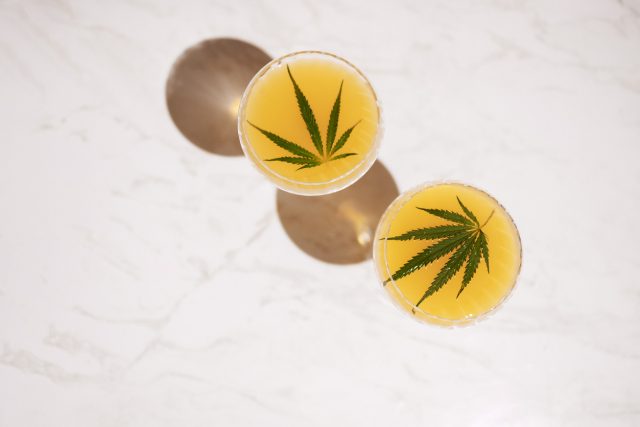
As with many drug experiences, brewers are finding that getting into the THC biz has initially delivered sky-high highs. But many are concerned that the lows are potentially apocalyptic.
The drug-fueled roller coaster ride craft brewers have embarked on amid a historic economic downturn is filling their coffers for now, but they’re facing a series of opaque legislative actions that could either extend the party or end it forever.
“THC is not our entire business, but it has become an increasingly important component of it,” says Ryan Bandy, chief business officer at Indeed Brewing Company in Minneapolis. “I’d say it is responsible for about 15% to 20% of our volume and delivers 25% to 35% of our revenue. We’ve also hired more people because our business has grown. I’d say we’ve boosted our staff by about 15% simply because of the increase in volume. Without the THC line, we wouldn’t be going out of business, but we wouldn’t be nearly as healthy.”
Craft beer closures and legislative confusion
For the second year running, there were more craft brewery closures than openings, according to the Brewers Association. In 2025, 434 breweries—including famous pioneers like 21st Amendment Brewery and Great Divide Brewing Company—closed their doors, while just 268 opened up.
Changing consumer behaviours, cost increases for materials, increased competition, lower adoption rates among younger generations and reduced alcohol consumption across the board are cited as consistent foes to brewing success.
Still, the craft brewing business is a sizable industry, with 9,778 independent brands operating in the U.S., supporting 443,000 jobs and generating $72.5 billion in economic activity.
The beer industry is about much more than just beer, too—the distributors, can and label producers, co-packers, retailers and farmers it helps support are too numerous to count, and many small businesses have been quietly impacted by the downturn in the beer business.
Many struggling brewers are finding that extending their visionary talent for flavour and fun creation via hemp beverages allows their core beer business to remain strong and stable during the downturn. The current cannabis market in the U.S. was worth an estimated $38.5 billion in 2024, and is estimated to grow at an annual compound growth rate of 11.51% through 2030.
Uncertain federal direction creates risk
But what if it gets shut down? In December, President Trump issued an executive order rescheduling marijuana from Schedule 1 to Schedule III, but that still needs to clear multiple legislative hoops before it’s official. That came on the heels of a November 2025 decision in Congress that effectively banned consumable hemp products.
Huh? Exactly.
Brewers and hemp manufacturers, and the legal experts they consult, are still scratching their heads, but the takeaway is generally: the outright ban of hemp products will not go into effect, but there will likely be more restrictions on higher-THC products, which will mean they will be available in certain state marijuana programs, but less widely available. Most experts predict that low-THC products will become legal or at least legal-ish.
In other words, it’s clear as mud, with brewers whose businesses now rely at least partially on THC waiting with bated breath for clarifications.
Selling like it’s 1999
The party, for now, is ON. Memba when releases like Alchemist’s Heady Topper and Russian River’s Pliny the Younger used to create mile-long waits and almost-instant sell-outs? Yep, those were the days. Those days may never return, but it’s safe to say that many initial roll-outs of hemp beverages are generating similar, if not identical, levels of buzz.
At Nashville, TN’s Tailgate Brewery, owner Wesley Keegan says they began seriously contemplating a line of hemp beverages seven years ago, but didn’t officially dive in until 2024 because of concerns over legal complications.
“Weed is not legal in Tennessee, but it’s legal to use hemp-derived cannabinoids, so we ultimately decided to launch the line,” Keegan says. “We are the only brewery I’m aware of in Tennessee offering THC in tasting rooms, and when we launched it became clear that there was a huge demand for it because we immediately sold out.”
It takes three weeks to craft each batch, and Keegan says they’ve been cranking out releases ever since, and they’ve introduced a range of options, from lower strength 2 mg all the way up to 10 mg.
“We are still mostly beer, and I think it’s a great misnomer to say that weed is replacing beer,” Keegan says. “It’s just a new option that people are enjoying. I hear from soccer moms who haven’t smoked weed ever that they love these as the occasional option.”
Matt Sirah, co-founder of Scofflaw Beverage Co. in Georgia, says that while they launched as a brewery in 2015, in 2024, they began developing a THC line, which quickly grew.
“We now co-manufacture THC beverages for brands across the country,” Sirah says. “The max dosage you can sell in Georgia is 10 mg, and it’s the fastest seller in the state. The growth trajectory of THC beverages is mind-blowing. It points to a material shift in consumer behaviours and consumer views on alcohol consumption across every demographic. I brought THC beverages and beer to my neighborhood halloween party. I still have all the beer.”
Partner Content


At this point, Sirah estimates that more than half of their revenue will come from contract production of THC beverages alone next year.
“Without infused beverage co-manufacturing, we would not be in business,” Sirah says. “And I’m not sure what other employment options would be available for our current employees should we be forced to close our doors.”
Essential diversification
Many brewers still see beer as their core money-maker, but rely on THC beverages as one of many tools of diversification.
“Our main business is beer, but we also do THC beverages, cold brew coffee, non-alcoholic beer, mineral water and hard tea,” Keegan says. “Our tea took off, and we went from making two to 50 pallets overnight. Luckily, we are well-positioned to ramp up the volume of various verticals.”
At Alter Brewing in Illinois, president Ken Hendricks says that THC beverages just represent 5% to 10% of their current production, but he sees the potential for growth and, more importantly, says he relies on it to counterbalance the decline in beer consumption.
“We anticipate that this year’s THC beverage growth will overshadow the decline in our craft beer sales,” says Hendricks. “I anticipate that the category could eventually represent up to 30% incremental growth for our brewery. It’s my opinion that for a significant number of the craft brewers in the country, this category could be the difference between staying in business or closing shop over the next five years.”
Boulevard Brewing Co., which was founded in Kansas City in 1989, has spent the last decade significantly diversifying its product offerings with Quirk, a line of hard seltzer, THC and hard tea.
“Everything we do is consumer-driven, but our core competency is beverage and flavour creation,” brand manager Adam Hall says. “So far, consumers have loved our THC line, which just launched this fall. So far, our initial launch has been small, but we see the opportunity as very large. If consumer adoption keeps growing, I could see the THC line growing to be 25% of Quirk’s overall production line.”
THC boom supports wider supply chain
Brewers aren’t the only beneficiaries of the hemp beverage boom.
At High Rise Beverage Co., a hemp and functional beverage company, founder Matt Skinner says they work with co-packers and distributors who have started working with THC drink producers because of consumer demand and the overall downturn in beer consumption.
“Businesses like ours bring volume that had been missing for a few years,” Skinner says. “We will celebrate our fourth year in business on Memorial Day, and we are widely available in 21 states. Many of the distributors we work with have huge networks, and we contribute a small percentage to their overall portfolio, but many of them see us and other brands in the functional beverage and THC market as the next big wave.”
Legislative hurdles and opportunity ahead
Skinner notes that the network of distributors and retailers he works with across the country hope and believe that federal legislation will soon clarify and legalise THC.
“We believe that we’ll get through this,” Skinner says.
Others agree. Sirah thinks that health concerns, if anything, will force the hands of reluctant legislators.
“We need to address the booming, unregulated black market for marijuana and the high risks associated with illicit consumption,” Sirah says. “There are a lot of very smart people and legislators on the Hill educating and advocating for the industry. The recent cannabis related executive order is a step in the right direction.”
Other, bigger brands have been preparing for the inevitable eventuality of federal legalisation for years, with tried and tested products ready to roll when the time comes.
“As a 40-year-old, established brewery, we were concerned that getting into the THC business would expose us to too much risk in the U.S.,” says Paul Weaver, Boston Beer Co.’s head of cannabis. “We set up a THC research and development hub in Canada because it’s completely legal here, and when intrinsic demand in the U.S. manifests itself in a policy change, we’ll be ready to move in there with products.”
Alcohol distribution system positioned for THC
Weaver believes that the beverage alcohol system is well-positioned to handle THC.
“The three-tier system is very effective at safely distributing intoxicating products,” Weaver says. “The demand is there. We have the product.”
They just need permission to safely and efficiently distribute it.
Related news
Pérez Cambet: 'THC and CBD drinks are the biggest threat to the wine industry’


