



Chef Q&A: Asma Khan
The chef, author and owner of Darjeeling Express in London’s Soho talks to Amelie Maurice-Jones about cumin, creating a ‘safe space’ and the challenges facing British Asian women in hospitality.
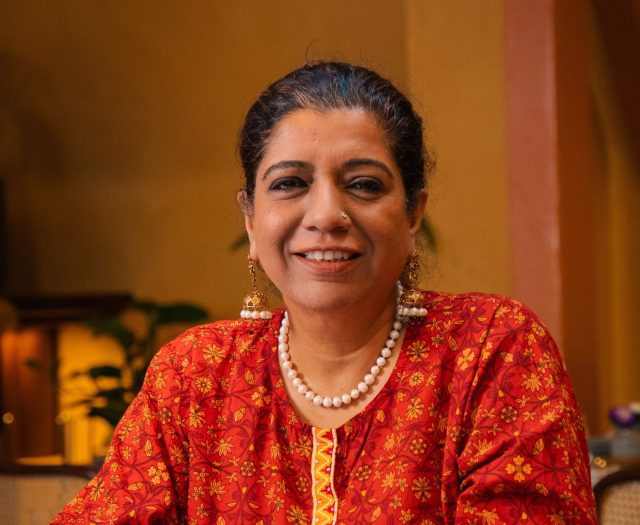
Your cookbook Monsoon came out last year. Which dish are you most excited about?
The omelette curry, because it captures the essence of Indian home cooking. It is simple, intensely satisfying and deeply flavourful, yet completely accessible. For novice cooks, it is a perfect introduction to Indian cooking. You learn how spices bloom, how balance is created and how something humble can become extraordinary. I hope this recipe gives people confidence and shows them that Indian food does not need to be intimidating to be delicious.
If you could only use three spices for the rest of your life, what would you pick?
Cumin, for its earthy flavour, boldness and incredible versatility. It forms the backbone of so many dishes and carries warmth and depth. Turmeric, not just for its colour and gentle flavour, but for its healing and anti-inflammatory properties. It has always been part of our everyday cooking. Saffron, for its delicacy and subtle sweetness. It brings fragrance and beauty to food.
What advice would you give to a young woman aspiring to be a chef today?
Believe in yourself wholeheartedly, even when the industry gives you reasons to doubt. Find your tribe, the people who will support and protect you. Build a strong support system both inside and outside the kitchen. Seek out empathetic men and true allies who understand that advocacy matters. You should never have to lose your softness to survive. Your compassion, intuition and sensitivity are strengths. Hold onto them.
Why are British Asian women still underrepresented in UK kitchens?
It is a complex issue. In many Asian households, cooking is expected of women, yet the culinary profession itself is not seen as a respectable or stable career path. On top of that, British Asian
women are often under-promoted and overlooked due to unconscious bias and systemic selection processes. There are also countless horror stories of bullying, harassment and abuse that deter women of all backgrounds from entering or remaining in the industry. To change this, kitchens like Darjeeling Express, with flatter hierarchies and a zero-tolerance approach to bullying and harassment, need to become the norm, not the exception.
Partner Content
What does creating a ‘safe space’ at Darjeeling Express look like?
It begins with removing judgement. For so many women, particularly in South Asia and across the diaspora, our lives are shaped by shame, expectation and familial politics. We are constantly monitored, corrected and told to make ourselves smaller. At Darjeeling Express, I wanted to create a space where none of that follows you through the door. A safe space means dignity at work, respect for difference and the freedom to exist without fear. It means kindness is not mistaken for weakness and empathy is recognised as leadership. My space is open to everyone, but it is intentionally built around the needs of women who have so often been silenced or overlooked.
What do you hope guests leave Darjeeling Express feeling?
Nourished, in every sense, not just full. I want guests to feel cared for and connected. Our open kitchen is deliberate. I want people to see the hands that labour, to recognise the humanity behind the food. When you witness that, eating becomes an act of shared respect, rather than consumption.
What’s one thing that urgently needs to change in the restaurant world in 2026?
There is no excuse in 2026 for chefs to continue serving out-of-season, flown-in produce. In the
UK, we are surrounded by extraordinary farmers growing beautiful ingredients. We have a duty to support them and to minimise our carbon footprint. Sustainability should not be a trend or a marketing tool. It must be a baseline.
What does being a UN World Food Programme Advocate mean to you?
Hunger should never be used as a weapon of war. Yet time and again, food is denied to civilians as a tool of control and punishment. Being a UN World Food Programme Advocate is a reminder that access to food is a basic human right, not a privilege. Cooking is political and food sits at the intersection of
dignity, justice and survival. As an advocate, I am able to use my voice to stand with those who are silenced and to insist that compassion must guide global action.
Related news
Goedhuis Waddesdon: ‘there is appetite for fine wine among the younger generation’
Fine wine market stabilised during H1 as US buyers 're-engaged'
Goedhuis Waddesdon post-merger 'genuinely excited about the future'


