



Bubbling Under: Can sparkling wine drive Argentina’s premium push?
As Argentina’s wineries seek to diversify and premiumise their ranges, how great are the opportunities offered by sparkling wine? Amelie Maurice-Jones investigates.
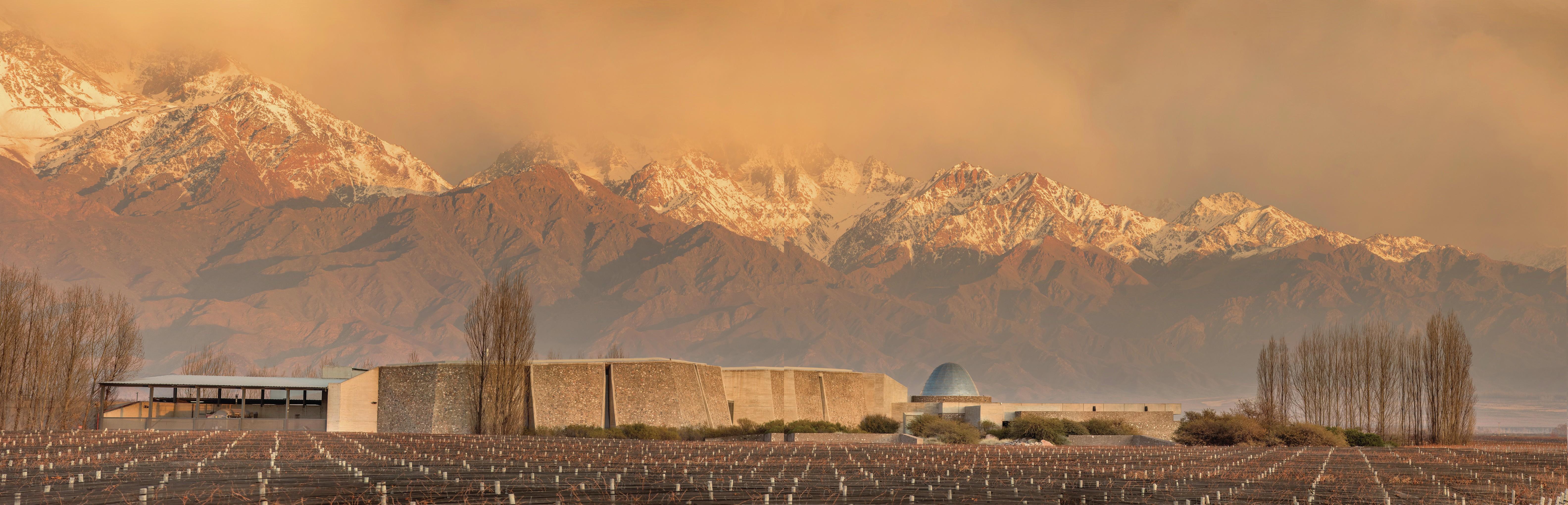
“We’re more than Malbec” was the resounding theme of Vinexpo Explorer Mendoza 2025, with Argentine producers amid the Andes’ snowcapped peaks, from Luján de Cuyo to the Uco Valley, eager to show off sparkling wines as key weapons in their arsenals. From long-aged traditional method fizz to premium cuvées and no- and low-alcohol innovations, the category is rapidly evolving. With Argentine wine sales falling 2.5% from January to September 2025 versus the same period a year prior, according to the National Institute of Viticulture, and consumers increasingly falling out of love with red wine, could bubbles be a bright spot?
“For many Argentinian wineries, sparkling wine production represents an opportunity to diversify their portfolios, particularly beyond Malbec,” explains Morgane Pont-Bruyns, head of communications at Moët Hennessy-owned Chandon, whose NV Rosé won Best Argentine Sparkling Wine at London’s Champagne and Sparkling Wine World Championships 2025. “It also allows them to tap into the premium segment of the market, enhancing Argentina’s reputation as a sophisticated wine-producing nation.” For years, Argentina has been trying to shed the ‘supermarket wine’ stereotype.
And after a week of tastings, vineyard trips and seminars, 80 buyers from across Asia, Europe and the Americas who attended Vinexpo Explorer Mendoza 2025 admitted that they had “underestimated Mendoza”, and were wowed by the burgeoning focus on premiumisation, boosted by the sheer diversity of soil, varieties and terroir. “Regions like Mendoza offer diverse microclimates and altitudes that are incredibly well-suited for growing traditional sparkling wine grape varieties like Chardonnay, Pinot Noir and even local varieties such as Semillon, Petit Manseng and Malbec, which we incorporate to express unique regional characteristics,” adds Pont-Bruyns.
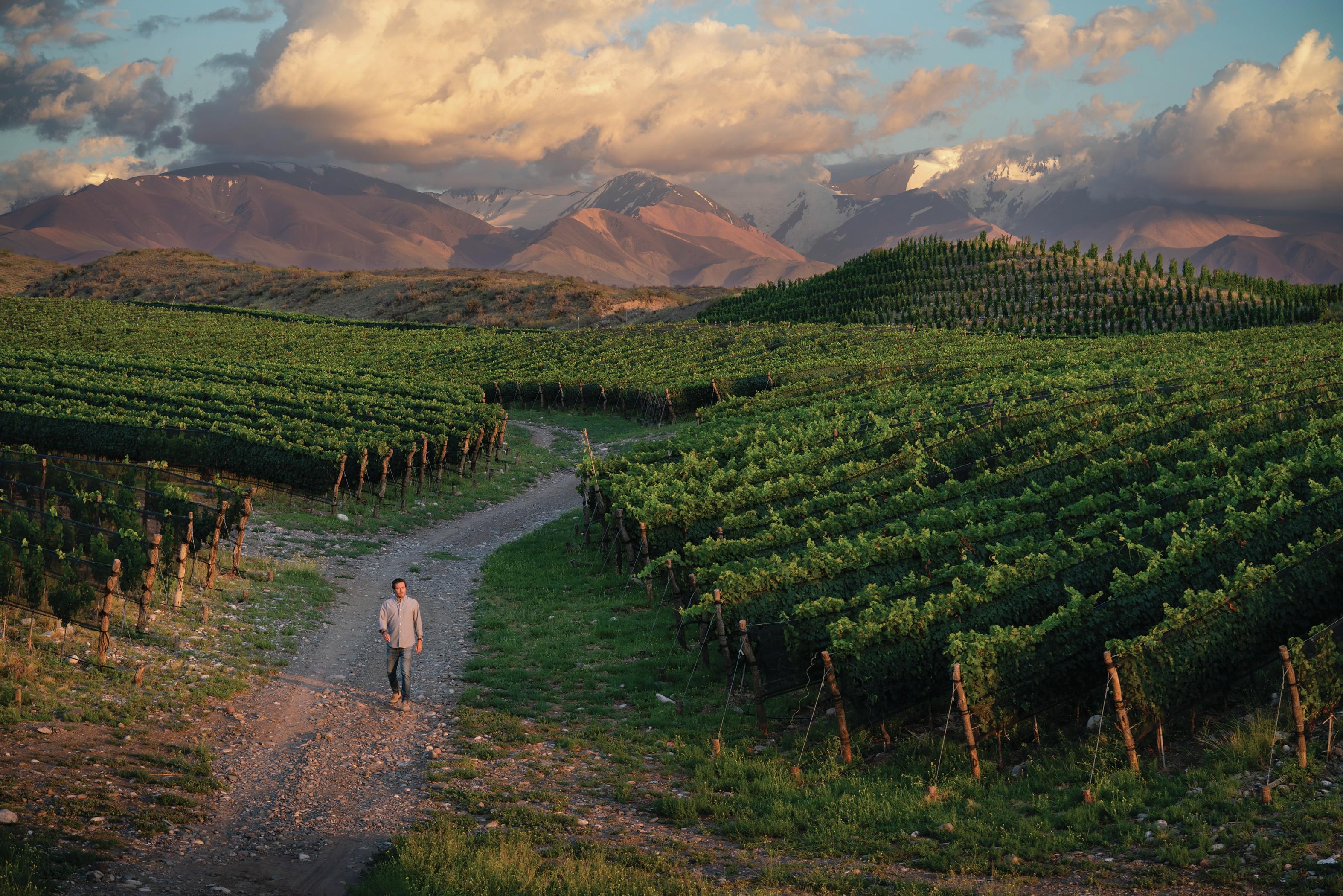
The winery owns 400 hectares of vineyards in the area, at altitudes as high as 1,700m. “The significant diurnal temperature range helps maintain the acidity crucial for making quality sparkling wines,” says Pont-Bruyns. For Zuccardi’s winemaking director Sebastián Zuccardi, a key reason Argentina’s producers are making more fizz is because they are cottoning onto the “outstanding potential” of the Uco Valley, which has enjoyed a boom in investment over recent decades. Located around 100km south of Mendoza, the high-desert appellation is defined by elevations of up to 1,700m, as well as warm sunshine, cold nights and alluvial soils with limestone, all enhanced by the surrounding snowy mountains.
Family-owned Zuccardi has been making sparkling since 1999, after Zuccardi and four friends launched the fizz-focused Alma 4 project. This prompted the family to explore cooler areas with higher natural acidity, guiding them to the Uco Valley. Today, Zuccardi has eight vineyards there, as well as its winery. “Thanks to the elevation, we can grow grapes in cool or very cool climates, on soils that provide remarkable complexity and texture,” adds Zuccardi. Cavas Rosell Boher’s Patricio Vazquez also credits the Uco region for the “freshness, precision and balance” of his boutique wines. Within the broader Mendoza region, he sees “a clear move toward more restrained winemaking, letting freshness and texture speak, rather than overt winemaking signatures”.
The same is also true beyond the Uco Valley. Travel south and you’ll eventually (after a flight, road trip and trek if you’re brave), reach Bodega Otronia, nestled in the heart of Extreme Patagonia at the 45’33 parallel – “probably the last southern frontier for growing vines”, according to its website. Both the Paico and Sierra Silva vineyards are split into parcels, with a total of 80 blocks, allowing winemakers to pick the best sites for sparkling wines. “Our work is to craft a wine that truly reflects Extreme Patagonia and to introduce this new wine region to the world – offering consumers a high-quality sparkling wine that expresses the distinctive character of our native terroir,” explains winemaker Guido Malacalza.
“Through regional specialisation, Argentina’s wine industry has expanded its frontiers across different latitudes and elevations, enabling very distinct sparkling wine profiles with a clear identity and strong sense of origin.” According to Malacalza, “this taps into a high-end consumer base eager to discover new profiles.”
He continues: “Argentine wine is going through a ‘new regions’ revolution, which is bringing new product styles and expressions to the market. A new type of consumer, while open to exploring and trying new origins, is also demanding in terms of what they expect from the wines – quality, a clear sense of identity and consistency.” So where are these consumers? Well, according to Zuccardi, they’re in Argentina itself, which consumes around 70% of total wine produced in the country, and represents a “great opportunity” as the sparkling category blooms. Vazquez adds that “the domestic market continues to grow steadily, especially in the premium segment.”
Volatile economy
However, like most of the world, Argentina is seeing an overall drop in alcohol consumption. According to Kantar, around 75% of young people in the country want to reduce their alcohol intake, and the domestic market is also challenged by high inflation and a volatile economy. On top of this, Zuccardi believes the influx of wineries entering the sparkling segment has led to oversupply. This explains why Fernando Musumeci, named Argentina’s Best Communicator 2025 by the Wine Industry Awards (IWC), called 2025 a “difficult paradox”. By that he means that, while domestic and international consumption has dropped, quality and innovation in winemaking have never been better.
Nonetheless, Zuccardi emphasises, there’s a strong wine-drinking culture among Argentine consumers, with fizz still synonymous with celebration. At the same time, people are said to be increasingly interested in freshness, which opens new doors: “I also see potential for different sparkling styles – from fresh, quick-to-market Charmat wines to traditional method sparklings with long ageing. When I talk about styles, I mean classics, pét-nats, low-alcohol sparklings and even alcohol-free options,” he forecasts.
“We are identifying potential consumers who show a clear preference for lower alcohol levels and, in some cases, a touch of sweetness. We aim to listen closely to all market voices so we can adjust our wine styles and product designs to better match evolving consumer preferences.”
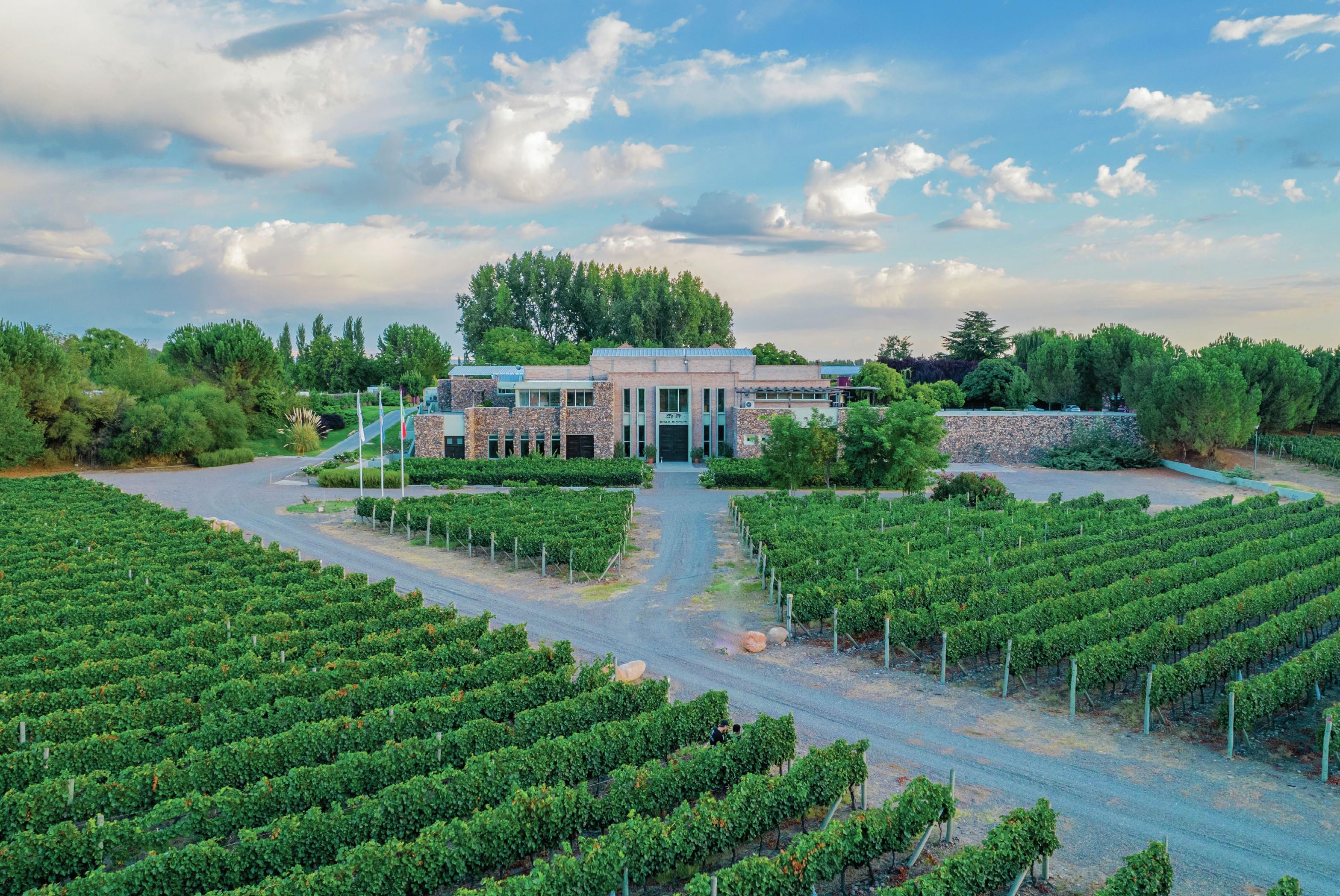
It’s a sentiment echoed by Silvio Alberto, chief winemaker and viticulture officer at Bodegas Bianchi: “I see two major trends,” he says, speaking of the domestic market. “On the one hand, there is growth in traditional-method sparkling wines, which are more complex, richer and premium, aimed at specific niches. On the other hand, there is also growing consumption of young, fresh, aromatic and easy-drinking sparkling wines, which are particularly attractive to younger consumers or those new to the category.”
And while fizz is still the tipple of choice for special occasions, Alberto thinks that sparkling wine is now consumed on a more everyday basis, which has driven category growth and bolstered quality. Today, many wineries straddle both Charmat-method and traditional-method fizz. Bianchi’s four-bottle range, for example, spans fruit-forward Estrella Amarilla Extra Brut to Bianchi Premium, which spends around 30 months on lees.
Catena Zapata also occupies the middle space in the ‘tradition’/‘innovation’ Venn diagram. Every year, the winery runs out of traditional-style sparkling wine, sold purely to Argentina’s “avid consumer base”, according to Dr Laura Catena, the fourth generation of her family to run the eponymous winery.
Partner Content

Exciting innovation
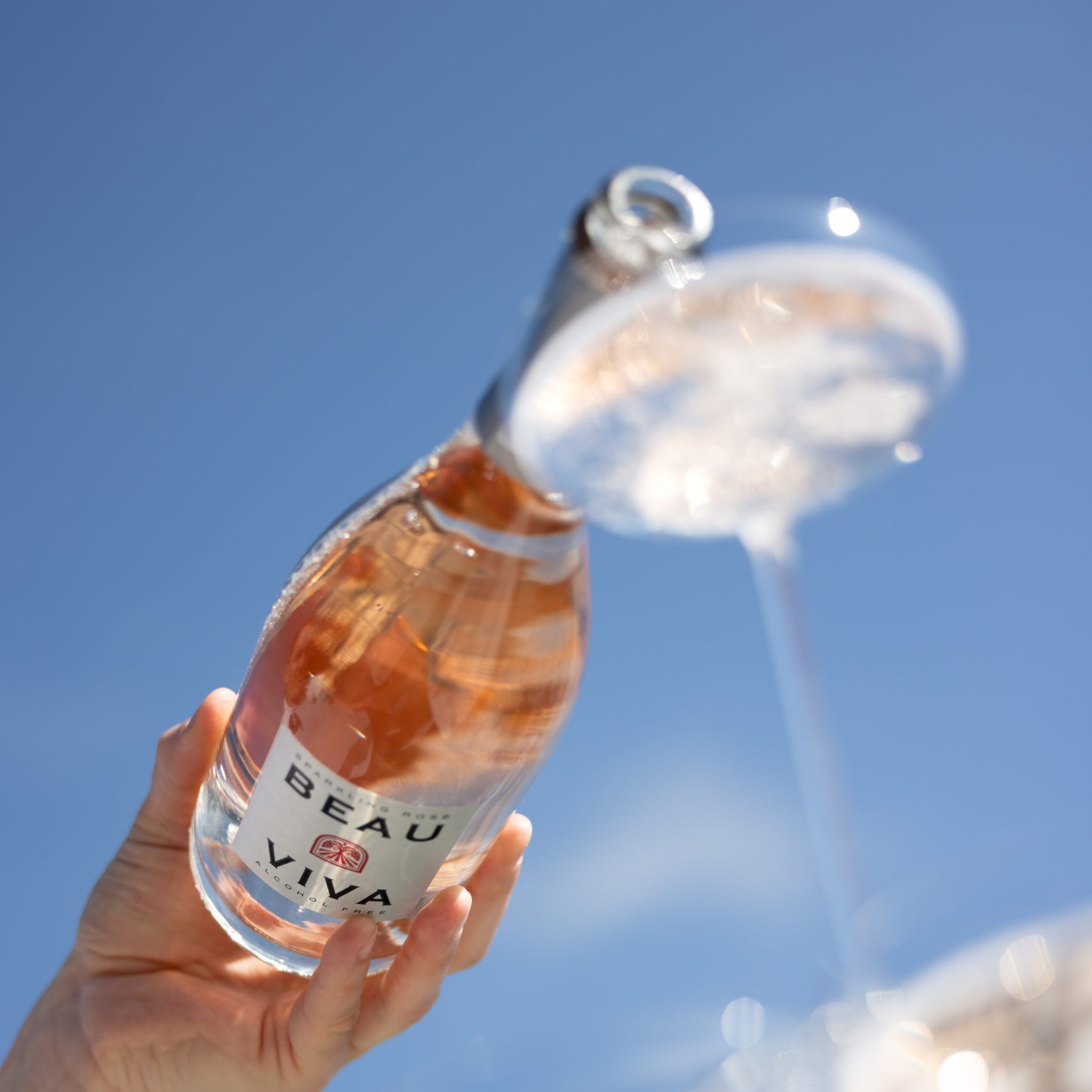
But its no-and-low Domaine EdeM sparkling range – sold domestically, but also exported around the world – is one of the most exciting innovations in Argentine sparkling today. It was launched in 2025 after five years of research by the Catena Institute of Wine organisation. Catena’s US importer, Winebow, depleted its inventories of the 0% ABV Rosae within the first six months of its release, for instance, and several Michelin-starred restaurants, including Buenos Aires’ Aramburu, stock the no-alcohol sparkling Domaine EdeM. The range is set to launch in the UK trade via Enotria this year.
“When we started EdeM, I confirmed what everybody had told me, that there were great-tasting dealcoholised beers, but no drinkable dealcoholised wine,” reflects Dr Catena. “To this day, the no-alcohol wine space is filled with dealcoholised wine from high-yielding, warm-climate vineyards. “At the Catena Institute we think that the ‘wine is made in the vineyard’ philosophy should also apply to no-and-low beverages.
“This is why we are using our highest-quality Chardonnay Vitis vinifera ‘must’ and ‘verjus’, as well as meticulously chosen natural botanicals for our EdeM, Elena de Mendoza, botanical-infused Sparkling Chardonnay, called Brunette.” So far, sales are solid, and Catena thinks the rise of no-and-low sparklings will make the broader category “very exciting”.
It makes sense that there’s space for 0% fizz in the export market, with the global non-alcoholic drinks market hitting US$1.4 trillion last year (Precedence Research). But what about the more traditional stuff? Sure, the international thirst for fizz continues to shine, with production nearly doubling since 2002 (OIV), but the pitch is already dominated by star players: Champagne, Prosecco, Cava and crémant. Can Argentina compete? Dr Catena is sceptical: “Sparkling wines are expensive to make because the technology and manual labour (méthode Champenoise) and the packaging (heavier bottles to withstand the pressure of the bubbles) is more expensive,” she says.
“I am not sure Argentina can compete on price with France and Italy on sparkling wines.” Despite this, some, while acknowledging that the market is oversaturated, are confident that the category can hold its ground. “It’s certainly a competitive category globally, but Argentine sparkling benefits from the growing interest in Argentine wines overall,” says Vazquez. “Many importers already focused on Argentina naturally expand into sparkling.”
Additionally, he flags markets such as Brazil, Peru and Uruguay, where Argentine sparkling is well-positioned both culturally and commercially. Zuccardi also thinks the South American market, where Argentina has close ties and wine consumption is developing, presents the “greatest opportunity”. For Lorena Mulet, head winemaker at Bodega Cruzat, one of Argentina’s few wineries solely dedicated to the production of traditional-method sparkling, what sets Argentine bubbly apart on a global stage is its distinct identity.
“It’s not about imitating other models, but about offering wines with freshness, balance and a very attractive quality-to-price ratio,” she says. “ From an oenological standpoint, working with earlier harvests, seeking lower alcohol levels and exploring different origins allows us to build our own styles.” In Cruzat’s case, she says that the consistent use of traditional method and the choice to specialise solely in high-end sparkling production helps to create a “clear and recognisable proposal” in export markets.
For Ole Frantzen, partner at Swedish importer Calwine, it’s possible that Argentine fizz could take off in the export market, but winemakers must raise its quality. “To make it they need an image that differs from Cava that is low-price and low-acidity,” he says. “Target Prosecco or crémant and it should not be difficult.” Frantzen adds that Argentina also needs to develop its infrastructure around production, “since today most of the wines are made in the same factories with base wines from the producers, so wineries don’t have the same heart and passion about it”.
Mulet agrees. “The category has a lot of room to continue developing in terms of style, origin and technical precision,” she says. At Cruzat, the long-term vision is “deepening our work with vineyards, ageing and new expressions, always maintaining a focus on quality.”
Shouted about
But many would argue that the quality is already there. Going forward, it just needs to be shouted about. “Argentina is a major producer of high-quality sparkling wines, yet historically promotion has focused more on still wines. Today, it is crucial to better communicate the true potential of Argentine sparkling wine,” asserts Alberto. Bodega Norton’s exports director, Patricio Watson Sworn, agrees that “with sharper positioning and consistent communication, Argentine sparkling can gain stronger visibility internationally and move from a great-value discovery to a more established category on wine lists.”
To combat the core challenges of declining consumption and strong competition, Trapiche’s chief winemaker, Sergio Casé, believes a powerful tool is “listening closely to customers”, in developing sparkling wine propositions that are “relevant, engaging and aligned with evolving market preferences. But Casé is “optimistic” about the future of sparkling wine, and thinks the category will climb steadily, buoyed by the rungs of a heightened focus on quality, terroir expression and new consumer occasions.
Trapiche is advancing the diversification of its fizz portfolio through “prudent, long-term strategy”. Casé believes in wines that “inspire emotion, express their origin and accompany new ways of celebrating, while building in an authentic and sustainable way over time.” It’s an attitude found across the board. Mulet summarises the views of many when she describes growth as “more qualitative than quantitative”, as does Vazquez, when he says Argentine sparkling is moving in the right direction through “prioritising long-term reputation”.
Zuccardi reaffirms that the opportunity does not lie in low prices, and producers should remember that they follow a natural, artisanal grape-growing process. “We must preserve the image and integrity of sparkling wine,” he argues.
The brightest stars burn out quickest, so it is through sustained focus on consistency, quality and terroir that Argentine fizz will continue to sparkle.
Related news
Bodega Norton remains 'fully operational' despite major restructure


