



Wine List of the Week: Lilibet’s
Launched last September in the same spot Queen Elizabeth II was born, Mayfair’s Lilibet’s bears the responsibility of being fit for royalty. And is it? “Entirely,” writes Douglas Blyde. “It carries the weight expected of the address while remaining generous, literate and drinkable.”
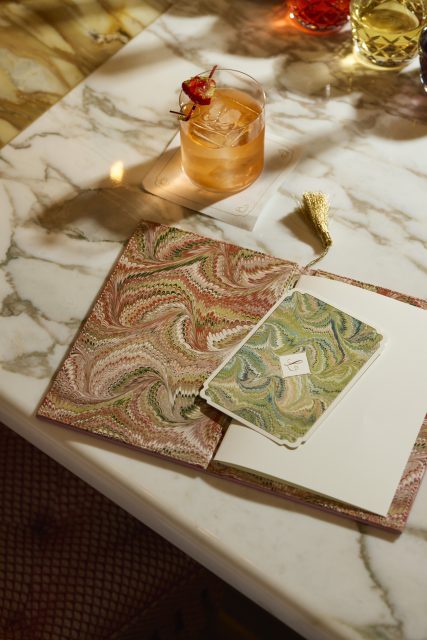
At No.17 Bruton Street, Lilibet’s leans openly into its own myth-making. “A princess who was never intended to become queen was born here.” Guests are invited, it continues, “to imagine what might have passed at this address, her earliest home… had fate not intervened.”
Enter the twelfth opening from Australian, Ross Shonhan, whose career runs through Nobu, Zuma,Bone Daddies Group, Strawfire and Netsu. “We wanted to create an enduring restaurant that will feel as relevant in twenty years as it does today,” he says.
The room wastes no time making its case. Russell Sage Studio has layered handwoven Gainsborough silks, wallpapers drawing on Bruton Street’s past, with a cabinet of uranium glass, and a French antique fireplace. Critics have largely surrendered to it. David Ellis wrote, “Here is a room that considers Versailles a touch demure”, with Charlotte Ivers unequivocal: “Nobody else is opening restaurants like this”.
Drinks
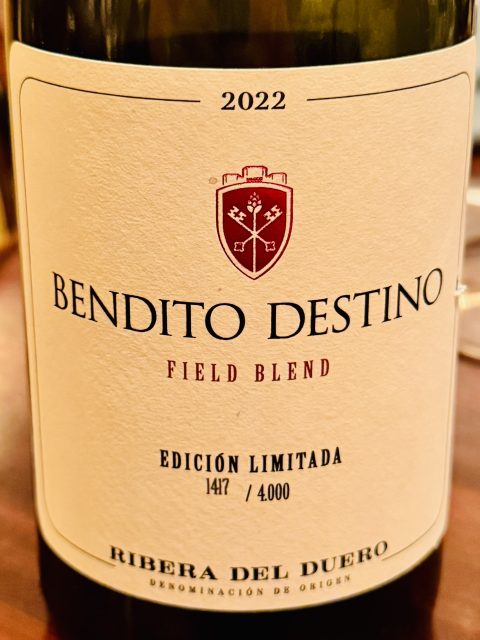
Bound in bookbinding paper, the list is by head sommelier, Anastasios Karakasis, a Tourism Management graduate whose career spans stewardship of the cellar at The Carlton Club, Dinner by Heston Blumenthal, Marcus Belgravia (RIP) and Bacchanalia. Most recently, he served briefly as GM and Head of Wine at Maçakizi, Bodrum, one of Türkiye’s most visible seasonal addresses.
White wine leads given the kitchen’s piscine intentions. Rather than defaulting to geography, bottles are ordered by mood and moment, using gently directive headings which reflect how people might actually order. Champagne opens under “Bubbles for Mischief”, led by Gosset Extra Brut, before whites divide into options for “Whispered Lunches” and “Whites that Linger”. Further in, “For Lovers, Dreamers” gathers oxidative, amber and off-beat bottles from Jura, Croatia and Georgia, and indeed Heritage, Adnali’s Skemakhi Azerbaijani Chardonnay.
Entry prices cluster around £55–£60, including Muscadet from Château de Chasseloir, Torrontés from Colomé, St Magdalener Schiava from Colterenzio, and Cretan Karavitakis – thoughtful starting points, rather than fillers. By-the-glass mirrors the same confidence, moving from £9.50 for A. Muse, Muses Estate, Viotia 2024 through Allegrini Amarone 2020, up to Ornellaia 2020 (£69).
Burgundy is handled with assurance, from reliable anchors such as Faiveley and Henri Magnien through to Marc Colin in Montrachet, with Domaine de la Romanée-Conti La Tâche 2009 (£13,900) reserved for the summit.
The B-Street Cellar operates as a second voice within the list, labelled as aged bottles and personal favourites, extending into older vintages, magnums, and names such as Rayas, La Chapelle, Haut-Brion, Pétrus, Sassicaia, and Solaia, alongside less predictable inclusions including Askaneli Brothers Saperavi Qvevri from Kakheti. Sweet wines are taken seriously, with Château d’Yquem 2008 offered by the glass (£99/100ml).
Is it fit for royalty? Entirely. It carries the weight expected of the address while remaining generous, literate and drinkable. The Port selection could stretch further to match the reach elsewhere, however, but this is a small omission in an otherwise confident list.
The bar is steered by head mixologist, Daniel Bruno, with martinis to the fore: lemon verbena, olive, the Tomatini and an oyster-shell version delivering a brisk saline snap edged with citrus and herbs. Roebuck Estates pours by the glass, agave runs deep, alcohol-free drinks are treated with necessary care, often drawing on Sir Elton John’s Zero, while Guinness attractively arrives in a glass tankard. The Cognac selection, however, would benefit from greater depth.
Dishes
With Karakasis recovering from the festive rush in San Sebastián, responsibility passed to Brazilian-born assistant head sommelier, Flavio Pinto, whose route runs from Gaucho through Dinner by Heston Blumenthal, Hakkasan, Pollen Street Social and Hawksmoor, before senior roles at Bacchanalia and CLAP. Karakasis was explicit about the trust placed in him. “Flavio is very good. I worked with him at Dinner by Heston – he was a junior somm then. I took him with me to Bacchanalia, and now here.”
Partner Content


Our vantage was the comfortably sized round table 21 set before the fire, grape plasterwork overhead, an ornate dog bowl placed neatly below for visiting pooches. To a soundtrack of Solaris by Penguin Café, lunch opened with raw Louët-Feisser oysters with engaging house hot sauce.
Worth noting for another visit, fire-roasted versions arrive à la flambadou – the southern French iron cone heated over flame, dripping aged beef fat and seaweed butter onto the shellfish – though six is the minimum order. Alongside came raw, sweet Devon scallop, sliced and said to have been dived by John Pike from his boat, Hollie Rose; a brisk tuna loin gilda; red prawn carpaccio with chilli, lime and lavosh, vivid and devoured too quickly; and silken roasted peppers dressed simply with olive oil and crisp garlic.
Pinto poured two 2023s, both placed on the list by the Greek-born Karakasis. A fragile Petritis Xinisteri from Kyperounda, Limassol, struggled to hold its ground. Then came the clear statement: Cuvée Palatia Assyrtiko from Estate Argyros, in a Burgundy bowl. Pinto raised a measured concern that Santorini increasingly favours tourism over viticulture, despite wines of this calibre continuing to appear. Even the restaurant’s scented candles, more assertive than necessary, failed to intrude on the Assyrtiko’s breadth, grip and volcanic line. “This one was fermented in stainless steel,” noted Pinto.
Drawn from the “marenarium”, a beautifully gelatinous, enthusiastically seasoned hake head, followed by sea bass fillet with a surprisingly smoky spiced tomato salsa. These were paired with a precise Macedonian Viognier, Ktima Gerovassiliou 2021. We would return for apparently famed English sea urchins, given Ross Shonhan’s fondness for them – indeed his beagle pointer, Uni, is immortalised in portrait on the stairs.
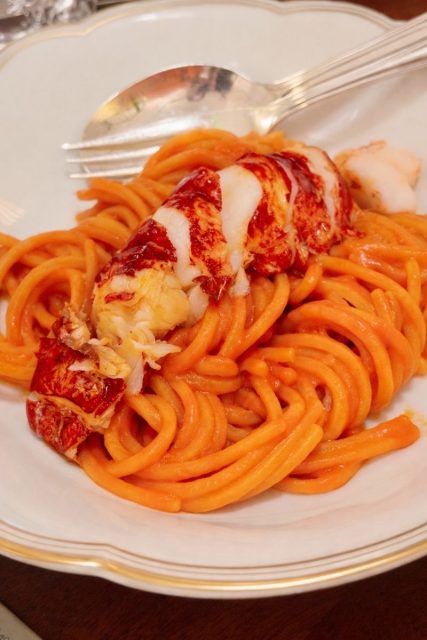
With exceptional lobster pasta, served properly al dente, Pinto poured Bendito Destino Tinto, Ribera del Duero 2022, by Terry Kandylis of Noble Rot – a sommelier turned grower, and a telling choice. Naturally made from old mixed plantings, it burst with wild berries, scorched herbs and a flicker of violet, finishing savoury. Pinto spoke too of his own next chapter: he will step away from the floor to make wine himself.
Puddings, often boozy, included the Colonel – lemon sorbet flooded with vodka – and a strawberry and vanilla cheesecake, its biscuit base handled with care, paired with Tokaji Aszú 5 Puttonyos, Sauska 2019. Diners can also indulge in a moment of deliberate mischief at this stage. “No, it’s not a typo,” the restaurant explains of the prego, a steak sandwich beloved in Portugal as a post-seafood closer.
Last Sip
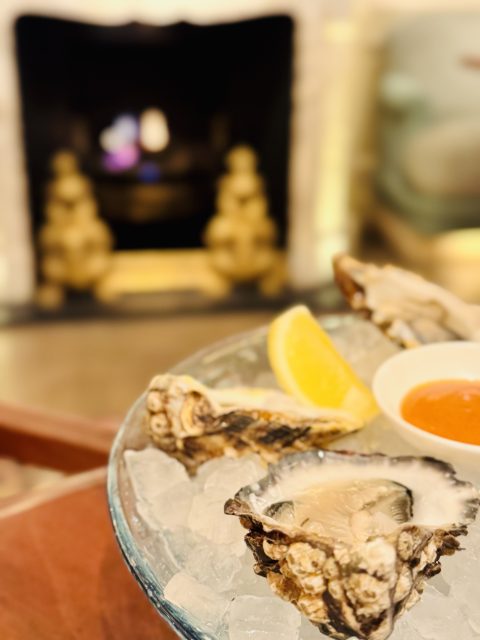
There are minor faults. Oysters would benefit from cleaner shucking; the hake head showed uneven seasoning; and dishes can arrive too fast. It is worth noting that Alex Harper, executive chef by title and formerly head chef of the Michelin-starred Harwood Arms, was not in the kitchen on our visit.
Still water and some reds arrived too warm, and wines by the glass are not poured at table – a trade-off Karakasis acknowledges: “It’s a fast-paced restaurant and this is very difficult to be done.”
Front of house, however, held the line. General Manager Nicolas Garcia, formerly of L’Atelier Robuchon and LPM, and carrying an injury, was present throughout, steadying the room. Alongside him, Pinto guided service with ease and warmth.
Taken as a whole, Lilibet’s works as an ideal local for Mayfair, built on high-quality ingredients and a clear wish to please. In approach, it sits close to LPM, more sea-led but with the same insistence on ingredient quality and social ease; the Tomatini corroborates the lineage. Echoes of the original, era defining Bob Bob Ricard, Annabel’s Club and, to a degree, Mari Vanna sit firmly in the interior design.
The eighteenth-century Georgian townhouse which once occupied this site, birthplace of a future queen, was flattened and replaced by something with all the romance of a spreadsheet. Lilibet’s cannot summon the house back, but Russell Sage’s sumptuous, unapologetically theatrical interior gives the address purpose again. Sage has even turned up on Instagram to go through the details, collar open, tie slackened, looking less couturier than a City banker who’s stayed late. It may be fanciful, but it is very much alive.
Best For
- The B-Street Cellar
- Martini miscellany
- Whole fish cookery and crustacea array
Value: 93.5, Size: 95.5, Range: 96.5, Originality: 98.5, Experience: 98.5; Total: 96.5
Lilibet’s – 17 Bruton St, London, W1J 6QB; 020 3828 8388; lilibetsrestaurant.com
Related news
Muse by Tom Aikens launches summer wine nights
Dorothy’s brings all-day dining culture to Mayfair
Zachys to auction 'staggering' cellar of New York's most historic Italian restaurant


