



Wildfires threaten the Itata and Bio Bio wine regions
Winemakers in Chile’s Itata and Bio Bio valleys are on alert as fast-moving wildfires spread across the centre-south of the country. A national state of catastrophe has been declared as growers prepare to defend vineyards amid extreme conditions.
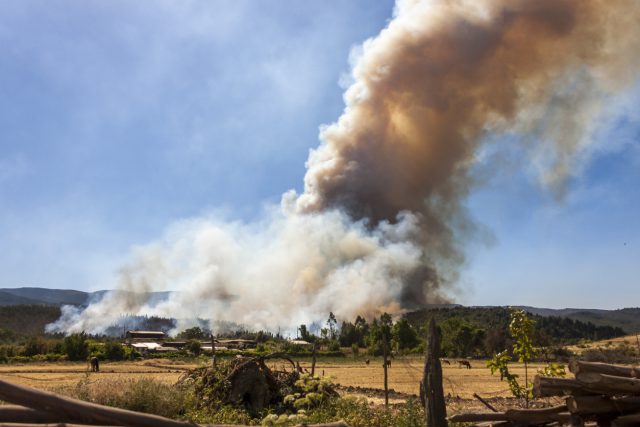
President Gabriel Boric has declared a state of catastrophe, as authorities and voluntary firefighters battle multiple blazes fuelled by extreme heat and strong winds. As of Monday, 19th January, officials report at least 19 deaths and tens of thousands of residents evacuated (with some reports placing the figure above 50,000). Vast areas of housing and forestland have been damaged or destroyed, particularly around Penco and Lirquén, close to Concepcion, Chile’s second-largest city.
Chile’s National Forest Corporation, CONAF, reports that over 20,000 hectares have already been consumed as firefighters attempt to contain more than 20 active fires across the affected regions. Esteban Krause, CONAF’s regional director, described the fires as “completely out of control”.
Vineyards brace for potential losses
While the worst destruction has hit populated coastal areas, the winegrowing hinterland is on edge. Vineyard damage has already been reported in small holdings in Ranquil and Ñipas in Itata, and producers are bracing for further flare-ups.
the drinks business spoke to several producers over the weekend, many of whom had water tanks strapped to pickup trucks and hoses at the ready, prepared to defend vineyards, homes and wineries should the fire fronts advance.
Memories of 2023 mega-fires still fresh
For growers in the south, the trauma of recent seasons is still raw. The February 2023 mega-fires across Itata, Maule and Bio Bio devastated rural communities and affected over 430,000 hectares of land. Several wineries and many vineyards were destroyed, and producers also suffered heavy secondary losses from smoke taint. Many small growers who managed to salvage fruit struggled to sell grapes in the aftermath.
Partner Content


Producers in the region argue that the crisis cannot be separated from the surrounding landscape of extensive plantations of pine and eucalyptus — highly flammable monocultures that can accelerate fire spread under wind and heat. These plantations were actively incentivised by the Chilean state under a law introduced in 1974, which offered subsidies and other support to expand forest plantations.
“No more pine and eucalyptus,” says Itata and Bio Bio winemaker Roberto Henríquez, who describes the region as being drowned by monoculture forestry — a landscape that brings “poverty for many, and wealth for very few.”
“Climate change is always mentioned,” adds Zjos Vlaminck, owner of A los Viñateros Bravos in Itata, who lost vines in the 2023 fires, “but the real cause of the mega fires is the destruction of our natural ecosystems by forestry plantations. If we don’t stop reproducing these highly flammable landscapes… the fires will keep coming.”
Waiting on weather relief
For now, producers are watching the weather, monitoring alerts, and hoping that a change in wind and temperature will temper the raging fires.
Amanda Barnes MW is the drinks business´s regular South America correspondent and author of The South America Wine Guide.
Related news
How Tenerife’s worst wildfires in 40 years led to one winery’s best-selling bottle


