



Why Türkiye could follow Greece’s path to wine success in London
Since its launch last November, Canary Wharf’s Nora has been championing Turkish wines, spotlighting ancient varieties and innovative producers. Consultant sommelier Donald Edwards tells Amelie Maurice-Jones why Türkiye could emulate Greece’s success on London wine lists.
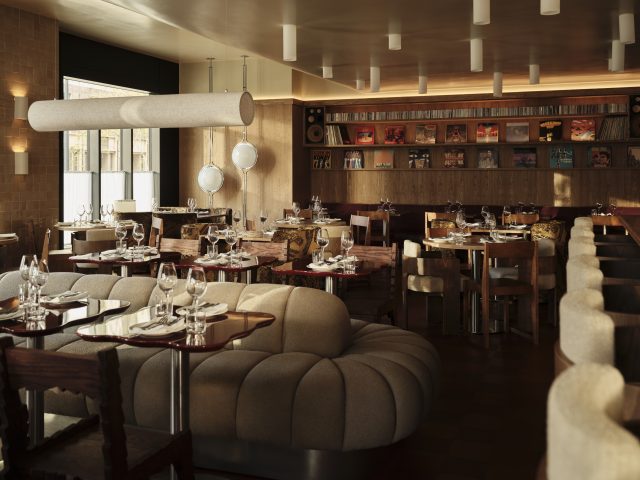
“The goal was to create a list that puts Türkiye front and centre,” explains consultant sommelier Donald Edwards, who curated Nora’s wine list, “much the same way a traditional list would have France or Italy as the focal point and then other neighbouring countries’ wines that work to frame and give context to the main focus.”
Nora’s only been open two months, having launched in London’s Canary Wharf last November. The wine list celebrates producers from the former Ottoman region, including those preserving ancient Turkish vines, recalling the historic Byzantine Empire. Nora’s wine list begins at viticulture’s genesis, shining a light on the region which bridged the winemaking cultures of Georgia and Greece, and revived the land’s ancient Roman vineyards.
Edwards, of Butterworth and Penzer, spotlights his favourite bottles: “I’ve become very enamoured with old vine, dry-farmed Sultaniye. For a predominantly table variety, it can be incredibly good. The Heraki Akuarela, for example, sits somewhere between an Albarino and Swartland Chenin Blanc.” Of the reds, there’s Çal Karası – the same variety as Cretan Liatiko. “It’s lighter with a bright fruit-forward, almost floral edge that often presents almost like the platonic ideal of a Julienas,” he summarises. But overall, old vine, high altitude Ereçis Karası is his favourite of the listed new wave red varieties.
There’s also Yaban Kolektif’s Rosé, a saignee from three different red ferments, which is aged in a mixture of stainless steel and demijohns, and the “traditional, almost old school” Urla’s Bogazkere which makes for a “brilliant winter wine with an Adana”, and then Heraki’s Akuarela Sultaniye, which is “legitimately one of the more exciting wines I’ve tried in ages.” He adds: “If you told me it was something new that Adie Badenhorst was making, I’d have believed you straight away. Thompson Seedless has no place being this good.”
Winemaking challenges
At Nora, wines from old vines are especially sought as their low yields and large root architecture means they are able to reflect the nuances of terroir into the wines produced from their fruit. Varieties such as Ereçis Karası from close to the Syrian border date to the birth of modern Türkiye .
But today, Turkish winemakers face unique obstacles, from heavy taxation to an Islamic-leaning government that discourages drinking, leading to challenges in stocking bottles. “Quite apart from the general stifling of wine-making innovation across the country, winemakers are forced to pay large amounts of duty up front,” explains Edwards. This is a particular issue for Pasaeli, whose Sidalan Pet Nat is the restaurant’s house pour. “It’s very difficult for Seyit, the owner, to increase production, as there is a special caveat for sparkling wines whereby the duty needs to be paid in advance of making it.”
On top of this, from 2024, alcohol producers have been required by law to provide financial collateral to cover any tax or administrative fines that the producer may face in the future. All producers must stump up a deposit of between 5 million Turkish Lira (£130,500) and 50 million Turkish Lira (£1.3 million), with the sum seized if any future fines are left unpaid.
Partner Content


“This can be for anything as trivial as a rival winery spotting that you’ve posted a picture of a wine on Instagram and reporting you as advertising the wine,” according to Edwards.
Why wine?
Besides, many Turks opt not to drink wine with meals, but instead go for the anise-flavoured spirit, raki. Why did Nora keep wine as its focus? “The plan was to show a different side to Turkish gastronomy and with that we wanted to show how the food worked with their very excellent domestic wine production,” the sommelier explains. “Personally I love raki and the way it’s integrated into Turkish eating and drinking culture is wonderful,” he continues. “That said, I don’t think London is quite ready for 70cl bottles of raki on tables to be drunk through the meal.”
It seems, however, that they are very ready for wine: “So far the reaction has been incredibly positive,” enthuses Edwards. Still, Turkish wine is still something of a novelty in London, with Isa Bal MS’s two-Michelin-starred Trivet considered a gusty and masterful outlier in its championship of Turkish wine. But is the city gaining a palette for the stuff? “If the number of people I’ve had in my inbox asking for recommendations is anything to go by, then I think so,” Edwards reasons. “It’ll take some time, but I can see Türkiye emulating the success of Greece in the London wine scene.”
Perfect pairings
He guides us through several pairings: the restaurant’s quid with Pul Biber sauce goes well with Prius’ Narince Chardonnay. “A bit of a cheat this one as it’s sort of starter size, but I loved this charred squid drowning in pul biber (red chilli flake) butter,” he says, with the ripe, almost Viognier-esque fruit giving the spiced butter a “wonderful platform” to shine.
Next is mackerel with grilled herb sauce – a dish which conjurese aromas of summertime Istanbul. “I love the way the oily fish and sharp, almost bitter herb sauce work with the Yaban Kolektif’s Gök,” he says. “The wine itself possessed an almost oily texture with just a touch of something phenolic at the back of the palate (three days of skin contact before pressing). A very special wine.”
For dessert, there’s the pistachio baklava – a lighter version of the syrup-drenched classic. “I pair this with Kyperoundas’ Commandaria,” he continues. “It’s the pride of Cyprus, a wine that’s been consistently made for getting on for a millenia. Air dried Xynisteri grapes are pressed into ex Chardonnay barrels and then aged for six years, making a wine that’s as complex, delicious and alluring now as it presumably was when Richard Lionheart served it at his wedding.”
He then offers his two cents for home cooks: “I find the wines very food friendly, but if you were to settle down to cook some of the brighter herb heavy Iranian dishes you’ll likely be winning. Some of the lighter reds, Kalecik Karasi, Cal Karasi and Papaskarasi, would go brilliantly with a drier Pakistani style curry or grilled meat.”
Related news
Pubs bustling in January despite drop in drinking


