



Tokaj is ‘not a historical reenactment society’
Beloved by everyone from Louis XIV to Thomas Jefferson, Tokaji has earned its place as an established fine wine. Yet recent events marking International Aszú Day show where the wines can thrive in the 21st Century.
Marked on 10 December every year since 2017, International Aszú Day is one of the many dates in the calendar dedicated to a particular type of wine. It is, however, one of the most unusual.
It does not recognise a single grape, as is common, nor does it explicitly reference a place. That distinctly Hungarian word ‘aszú’, however, betrays that we are talking about the Tokaj region, and by extension will predominantly discuss its flagship grape, Furmint.
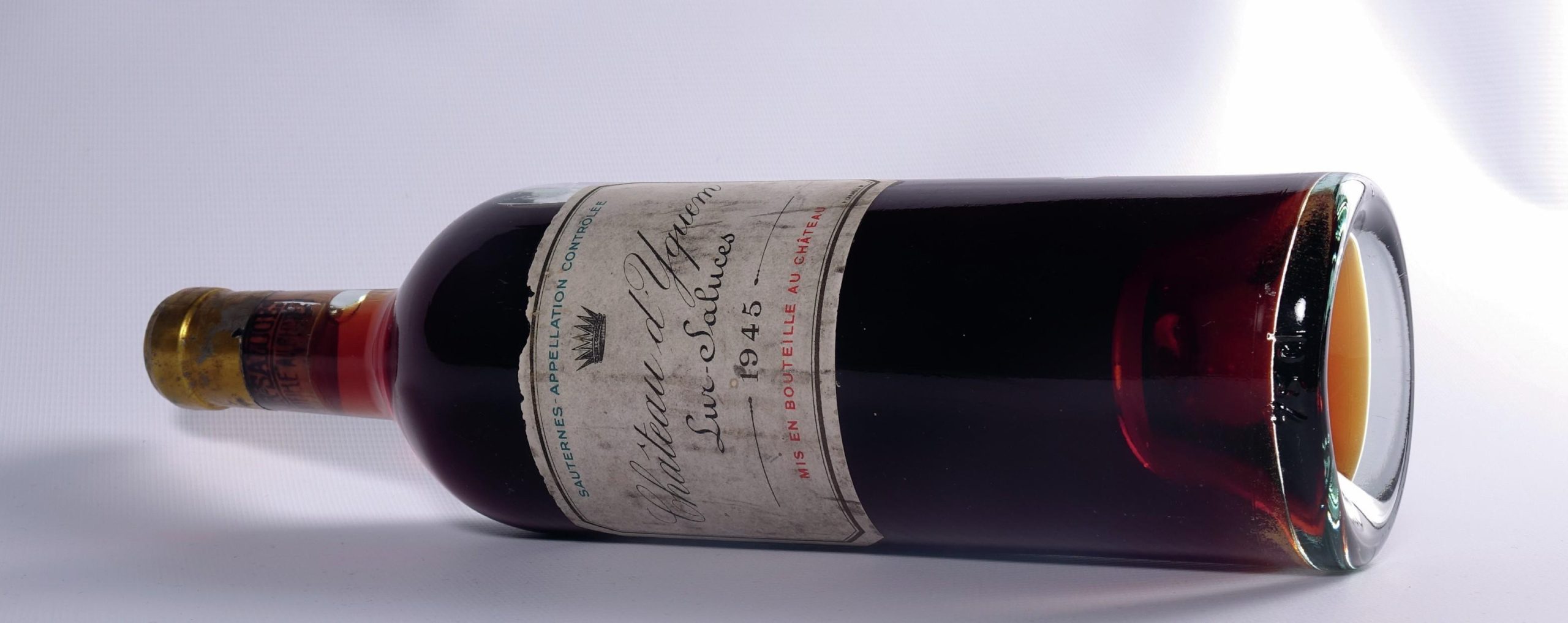
You may think such a day is superfluous. After all, this is one of the ‘grand dames’ of the fine wine world. It boasts a vineyard classification system dating back to the 1730s: the oldest in the world. It was supposedly a favourite of Louis XIV of France and featured heavily in Thomas Jefferson’s cellar.
This year, however, with Tokaji-accompanied meals and pop-up tastings, Wines of Hungary made the case that the region is just as relevant to modern wine lovers as to famous figures.
As Charlie Mount, managing director of Royal Tokaji, commented during the day’s celebratory lunch: “We are not a historical reenactment society.”
In fact, the day’s activities served as an indication of where Tokaj sees itself in the global wine market.
Tokaj is not a mass market wine
Although the visibility – particularly of dry Tokaj – has shot up in fine restaurants and independent shops in recent years, Tokaj is not ubiquitous. You will not find rows and rows of the wines down a supermarket aisle.
For many regions, geared towards quantity, that would be an issue. For Tokaj, however, it is part of the charm.
As Mount recounted, the region’s Hungarian hectarage amounts to 5,500 hectares of vineyards. It is not miniscule, but certainly it is of a small scale in the world of wine. The Douro, for instance, has around eight times as much.
That has its advantages. As he commented: “We only need to find 1% of drinkers in any market.”
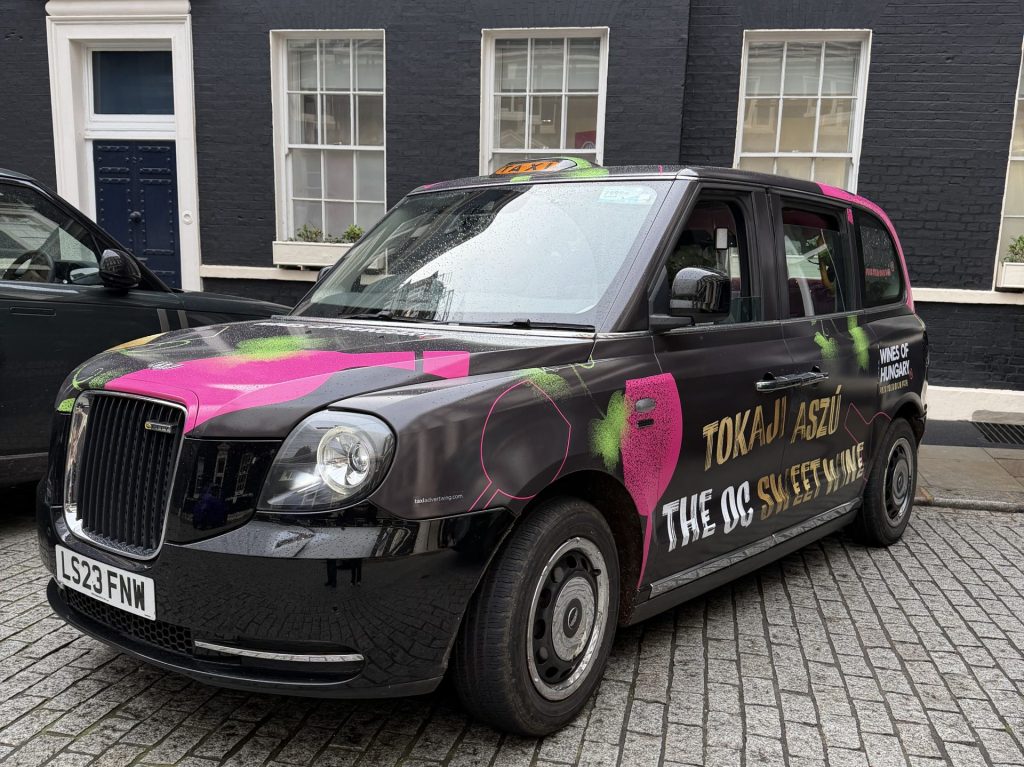
Thus the day’s activities could focus on quality rather than scale. Intimate meals at London’s famed Noble Rot restaurant or a branded taxi whisking participants between pop-up tastings: this was a day which sought out the right spaces for Tokaj, rather than trying to feature it everywhere.
Partner Content

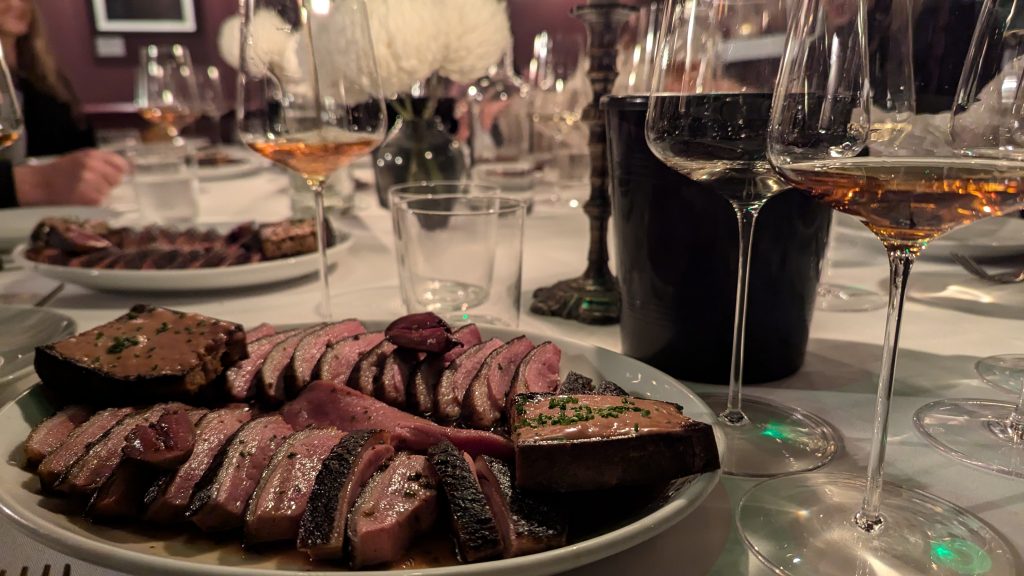
Tokaji was shown to have a place in the modern world, but it is a refined one. Fittingly for the festive season, it was cast as a wine for savouring and celebration.
“This year, we wanted to take aszú out of the cellar and into the cultural conversation – showing how it aligns with modern tastes and creative gastronomy,” commented a representative from Wines of Hungary. “London is the perfect stage for that, and we’re excited to bring the spirit of Tokaj to the city this December.”
Tokaj banks on its quality
Indeed, that sense of bringing Tokaj to the best in modern tastes suggests the second key thread that ran through the day: Tokaji is high-quality wine. That may, to a db reader, seem obvious, but the case made was that Tokaji is not just a great sweet wine, but a great wine full stop.
Quality was certainly signposted by the meal’s venue: aside from the fitting name, Noble Rot is known as one of London’s premier haunts for lovers of wine and food.
It was also evident in the starting drink. Although bending the spirit of International Aszú Day slightly, the lunch began with dry Tokaji served from a magnum. That choice of bottle was a clear statement of intent; after all, the cry of ‘it tastes better in magnum’ is a common refrain among wine lovers.
Yet when, after excursions into late harvest and szamorodni wines, when the aszú arrived it was with an emphatic declaration: this is fine wine.
The complexity in the glass – for instance, a 2014 Tokaji Aszú 5 Puttonyos scented of orange zest, peach crumble and beeswax – argued persuasively. But the day also highlighted that Tokaj stands apart, even from other great sweet wines.
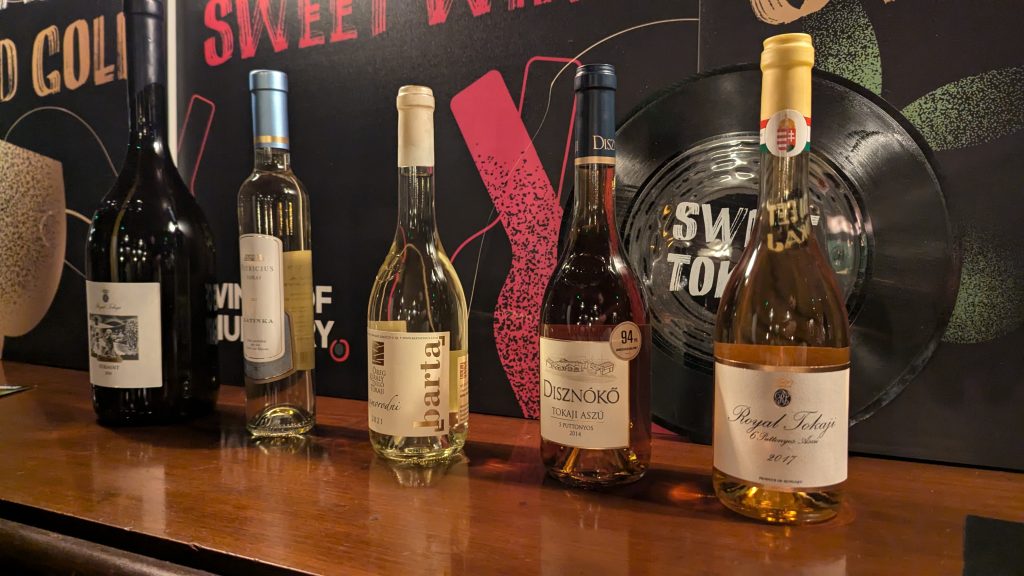
“If it could come from anywhere else,” commented Mount, “it is not a fine wine. This could only come from Tokaj.”
He highlighted that the region’s unique microclimate means that grapes for aszú have lost 80% of their moisture. That means a greater degree of concentration than other botrytis-influenced wines and therefore necessitates a unique production method. Rather than pressing the grapes and attaining their profile from the juice, the grapes are so dry that they are macerated in must or a base wine.
That is a point of difference, and one which lets Tokaji wines stand apart on the global stage. Their audience in the 21st century is likely those that appreciate the region’s singular approach and esteemable quality.
And, of course, nothing could highlight that better than eszencia. The meal ended with a drop of the golden, unctuous nectar, a wine unlike anything else in the wine world.
It is certainly not the sort of wine one would drink everyday, but that is precisely the point. Tokaji will not feature in every shop in the country, but as a quality proposition, Wines of Hungary is ensuring it is on wine lovers’ radars.
Related news
Wines of Hungary targets Korean consumers for International Aszú Day
Wines of Hungary makes central Europe the centre of attention


