



Napa growers stay cautious as California declared drought-free
Napa Valley grape growers say long-term resilience remains their priority after California was declared drought-free for the first time in 25 years. Scientists and industry analysts caution that improved water conditions do little to offset the deepening crisis in the North American wine market.
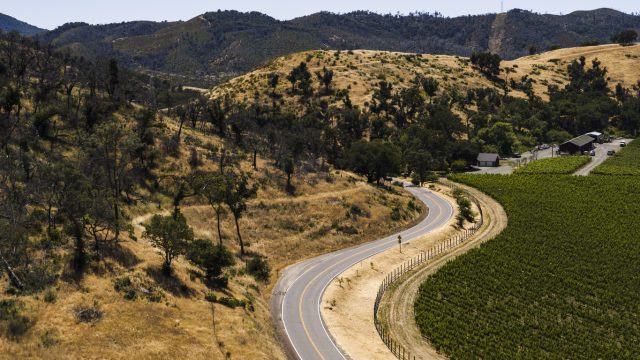
“The Napa Valley Grapegrowers’ mission is to cultivate viticultural excellence while protecting the natural resources that make Napa Valley unique, and this designation does not change how our growers operate day to day,” Justin Leigon, vice president and partner at Pina Vineyards Management and vice president of Napa Valley Grapegrowers, told the drinks business.
He added that Napa growers have long invested in water conservation, data-driven farming and long-term planning under California’s Sustainable Groundwater Management Act and local groundwater sustainability programmes. “As a result, our focus remains on resilience, efficiency and environmental stewardship over the long term,” he said.
Leigon’s comments come as California was declared 100% drought-free for the first time in 25 years, a milestone that has drawn national attention while also prompting warnings against complacency.
California reaches drought-free threshold
The latest US Drought Monitor report, released on Jan. 15, 2026, classified the entire state as free from drought. The last time California reached this threshold was Boxing Day, 2000.
The monitor combines rainfall, snowpack, soil moisture, reservoir levels and streamflow data, which are reviewed by hundreds of scientists and water managers before publication.
Scientists urge caution
Hydrologists and climate scientists stress that California’s water system cannot be judged on rainfall alone. Jay Lund, professor at UC Davis’ Centre for Watershed Sciences, told The Mercury News that the drought map provides a broad snapshot but lacks nuance in a state that depends heavily on reservoirs, canals and groundwater.
Partner Content


“The pros of the Drought Monitor are that it gets very widespread distribution. It helps people think about droughts,” he said. “The cons are that it can be a little simplistic, particularly in California, which has such complex water systems and is a huge state.”
Daniel Swain, a climate scientist with the University of California Division of Agriculture and Natural Resources, added that winter is only half over and conditions can shift quickly. He said that there had been no significant rain in the Bay Area for 10 days, with none forecast for the following 10 days.
Market distress
For wine growers, the improved water outlook arrives during a severe industry downturn. As reported by the drinks business, falling consumption, oversupply and weak demand are driving restructuring across the US wine sector.
Constellation Brands is to shut the Mission Bell winery in Madera County, leading to the loss of about 200 jobs, while Treasury Wine Estates has written off the goodwill of its Californian interests due to weakening market conditions.
Growers face particularly acute pressure. Stuart Spencer, executive director of the Lodi Wine Grape Commission, told Barron’s that the current climate represents the worst market conditions seen in a lifetime. Between October 2024 and August 2025, California growers removed 38,134 acres of vineyards, according to Natalie Collins, president of the California Association of Winegrape Growers.
Despite these reductions, an estimated 30% of Sonoma Valley’s 2025 harvest went unsold.
Related news
California wine giant Gallo to close 28ha Napa site
‘Anytime we are not in a drought is positive’: California Wine Institute


