



Juice makers migrate into growing non-alcoholic beer category
British soft drinks company Cawston Press has acquired the 0.5% ABV beer brand Loah for an undisclosed sum. The move, which places the juice business firmly into the no and low alcohol segment, has been made to help the business tap into “multiple drinking occasions”.
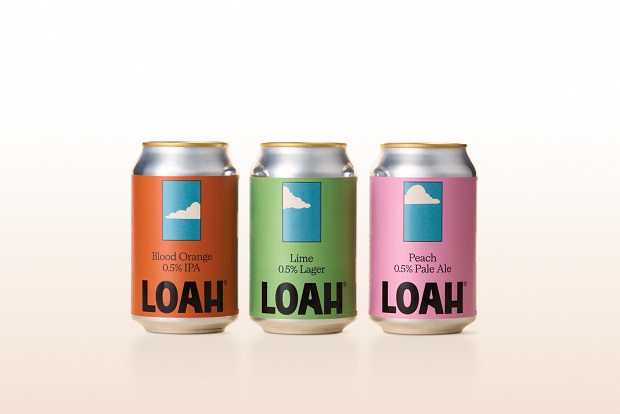
Loah was founded in 2020 by Hugo Tapp and Will Hedley and features a range of three non-alcoholic fruit-forward beers including a peach pale ale, blood orange IPA and a lime lager,
According to Cawston Press, Tapp will continue to lead the Loah brand and shall continue to oversee brewing as well as marketing and developing the brand as it is integrated into its new owner’s supply chain and distribution network.
Beer is the hero of the no and low category
The no and low alcohol category in the UK has experienced a boost to low-alcohol volumes in the past few years, caused by duty changes and beer-focused ABV realignments. As a result, the total UK no and low market is expected to have more than doubled in 2024 versus 2023. Beer continues to be the hero of the no and low story. Data shows non-alcoholic beer grew 20% in 2024 vs 2023.
Last year, IWSR figures revealed that alcohol-free beer accounted for more than 2% of total beverage alcohol market sales in the UK, highlighting just how big a part the subcategory is beginning to play in the overall drinks sector. This has meant that with both growing popularity and increased availability, each of these factors are driving growth.
The IWSR now estimates that global volumes of no alcohol analogues – including no alcohol beer, wine, RTDs and spirits – grew by +9% in 2025. The category is forecast to expand by 36% by volume between 2024 and 2029, reaching more than 18 billion servings by 2029, equivalent to two servings for every person on the planet.
IWSR head of no and low alcohol Susie Goldspink said: “No-alcohol analogues like no-alcohol beer and wine are an increasingly popular way for drinkers to moderate their alcohol intake. By mimicking the taste and appearance of alcoholic beverages, drinkers who want to moderate can participate fully in occasions without feeling left out.”
Strategic
Speaking about the acquisition, Cawston Press managing director Steve Kearns said: “This move is a true reflection on consumer drinking habits today. The lines between soft drinks and no/low alcohol are blurring and this makes Loah a great strategic fit for us – it’s a brand built on fruit, flavour, and quality, just like Cawston Press.”
Partner Content


Echoing the trend, Tapp explained: “Over the last five years, we’ve watched no/low-alcohol beer shift from a token presence to a dynamic category. Working with Cawston Press will allow us to take our beers to the next level, with a reformulated range that tastes better than ever. Joining the Cawston family gives Loah the chance to reach real scale while staying true to its mission: to make alcohol-free beer more fruitful.”
According to data gathered from a recent KAM report, analysts uncovered that 76% of British drinkers are “actively moderating” their alcohol consumption. The report describes this as a “continued cultural shift” towards conscious drinking and called this phenomenon a “duality”.
Mindful drinking
In an assessment of the findings, the analysis from the data also identified that there were “high numbers both consuming alcohol and moderating” and observed that this “indicates that people aren’t abandoning alcohol, but are approaching it with more intent”. This means that “brands that support more flexible, mindful drinking behaviours will be best positioned to stay relevant”.
Club Soda founder Laura Willoughby MBE also told db recently that non-alcoholic beer should be sold as a functional drink.
Willoughby pointed out: “Once you take the alcohol out of beer, it’s one of the healthiest things that you can drink: it’s not an ultra-processed food, it’s naturally sugar-free; it’s low in calories, it’s rehydrating and full of vitamin B12; its actually a functional drink.”
Looking at the opportunity that the category presents, Kearns assesses how the potential for the style offers a lot of flexibility for drinks companies as well as consumers looking for something that meets their needs whatever they are doing and wherever they happen to be.
Kearns added: “We see real opportunity to help build Loah through our established grocery and impulse distribution channels, whilst extending the portfolio we can offer to on-trade customers, helping operators create interesting, independent-led menus crafted to serve multiple drinking occasions.”
Related news


