



‘It all feels slightly surreal’: Wild Idol hosts first ever non-alcohol sparkling back vintage dinner
Premium non-alcoholic winery Wild Idol hosted the first ever non-alcohol sparkling back vintage dinner at Claridge’s in London last week, underscoring the growing role low and no-alcohol wines can play in fine-dining experiences. CEO Paul Beavis reflects on the journey to date.
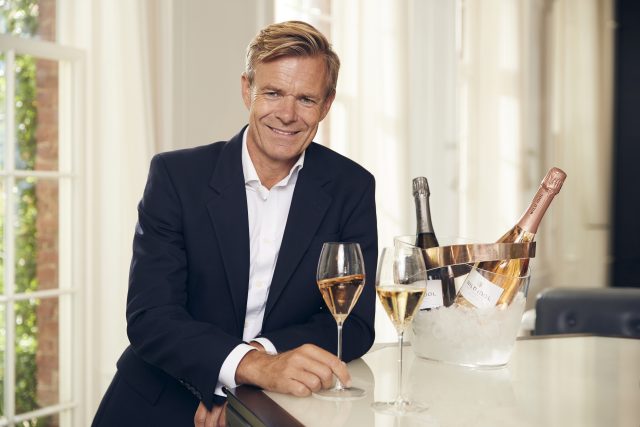
The event, which is part of Claridge’s Wine Dinners series, took place on 21 January – the tail end of Dry January, with roughly 32% of UK adults abstaining from alcohol for the first month of the year (Alcohol Change UK).
Held in the hotel’s private dining rooms, the Wine Dinners programme, under the guidance of Claridge’s director of wine Emma Denney, takes guests through the histories, crafting processes and tasting profiles of a single producer’s wines, paired with a curated menu designed by culinary director Simon Attridge.
Wild Idol’s time in the spotlight saw a menu of hand dived scallops, roast free range chicken and chocolate souffle tart paired with Wild Idol’s 2022 to 2024 Brut and Rosé vintages. It was a special moment for CEO Paul Beavis, who founded the company 4.5 years ago. It’s the first time the producer has hosted a wine dinner anywhere in the world. “This is insane,” he kicks off the evening by speaking to the table, “it all feels slightly surreal, really.”
Non-alcoholic wine and premium dining
And Wild Idol’s dinner at Claridge’s signals a growing respect for non-alcoholic wines in fine dining. It’s a movement felt across the country: alcohol-free wine brand Eisberg recently teamed up with Michelin-recognised Manchester restaurant Erst for instance, launching a sober supper club, designed to show how alcohol-free drinks could operate as considered pairings rather than simply an alternative. Wild Idol is also becoming the tipple of choice at premium spas, from Coworth Park in Ascot, to The Emroy in London, further strengthening non-alcoholic wine’s position in the luxury market.
After spending 36 years in the wine trade, including 20 years as Champagne Lanson’s managing director, Beavis embarked on a bold new project – “I decided I’d like to try and make what I feel is one of the best alcohol-free wines in the world.” A man on a mission, he spent over a year travelling, sourcing the best grape varietal for alcohol free.
“The vision was not to fill it, or confect it or build it with different and artificial flavours, but to allow the ‘wilderness’”, he explains, which is the reason the winery doesn’t blend different vintages. “For each stage of vintage, to reflect the style of wine you’d be drinking.”
A journey of growth
When he started, he pitched the idea to 95 sommeliers. “You can only imagine what the French sommeliers were thinking,” he recounts the stories to chuckles round the table, “who’s this English bloke going ‘look, I need to tell you that this is amazing and one day people are going to be drinking alcohol free like you wouldn’t believe?’”
But now: “Three and a half years later, we probably work with about 90% of those sommeliers.”
Partner Content
Producing a non-alcoholic wine with ‘true vintage character’ was a fairly unique idea. “Nobody would have ever thought you’d be tasting a back vintage of alcohol free, because when we started in 2021, it was a real confusion,” Beavis looks back. “Where do we get the best grapes from? Do we buy grapes? Do we invest in wineries?”
Grape expectations
This led him to make a Chardonnay in England and a Müller-Thurgau in Germany. “It’s evolved,” says Beavis. A “very stable grape variety” grown in the Rhine-Hesse for around 145 years, “Müller-Thurgau became the best varietal from a natural flavour,” he adds. Then, Beavis went on to produce some magnums – in order to track the evolution of the wine over time.
“A magnum in alcohol free ages faster, but in alcohol it ages slower,” he says.
Beavis heralds the ‘24 vintage as his favourite: “It had the right sunshine, the right levels of rain, the moisture,” he explains. “Everything was really good”. On the other hand, ‘25 turned out to be a “tight vintage” – where a lack of sunshine led to tighter grapes which didn’t open up effectively. “The goal here is more that crunchy fruit that actually cleanses a palette,” the CEO explains.
Establishing a style
Despite only having produced wine for a few years, Beavis believes Wild Idol has developed a distinctive style.
“There will always be that clean acidity in the mouthfeel,” he says, and hopes that due to this, people won’t drink 6 to 7 glasses and think “wow I’m chewing on a wine gum”. The bubble is also “absolutely critical,” he adds, with the wines aiming to emulate a finer Crémant-esque bubble, at 5.4 bar pressure.. “You don’t want a bubble to hide the flavour,” he says. “Conversely, you don’t want a non-bubble, because it will actually get your palette ready for food.”
When asked his biggest ‘pinch me’ moments by the drinks business, Beavis recalls when he sold his first six bottles. Another one? This dinner.
“We’re almost writing the blueprint now for what the alcohol-free sector is going to be like in the future,” he states.
Related news
Winter calls for classic cocktails and warming serves at ECC Chinatown
Weyborne: ‘England is the new El Dorado of the sparkling wine world’
Paul Biwand: why London’s bar scene beats Paris for openness and innovation


