



How smoothie beers are helping to boost sales
A polarising beer trend is boosting beer sales in the US. But what is a smoothie beer and how can it help the brewing sector? db looks at how one niche beer style has taken off on a global scale and is now reaping the success of consumer demand.
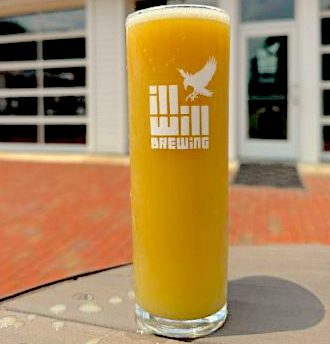
The divisive trend for smoothie beers has become globally recognised following Ohio-based Ill Will Brewing seeing success with the unique style of brew.
Addressing the rise in sales, particularly thanks to the newly-positioned beer style, Ill Will Brewing co-owner Kathy Schorejs told local press: “We grew last year, which not a lot of breweries (can say). We were up 27% for the year.”
‘People are seeking something different’
Ill Will Brewing co-owner Brian Lalama agreed that the trend had taken off and explained that it was because “people are seeking something different”.
Describing what makes a smoothie beer, he hinted that the key difference between any traditional beer and a smoothie beer is the mouthfeel and noted that smoothie beers are thick, rich, foamy and flavourful. “We take extreme pride in producing them,” Lalama added. Despite this beer style being new to Ill Will Brewing, the trend was already circulating to some degree long before this.
The trend, which is the continuation of an arc that began about a decade ago when goses and kettle sours grew in popularity alongside fruit-infused beers and draws on the addition of culinary ingredients to make beers that have as much bite as they do body. Breweries in the US like Oakshire Brewing and Decker Brewing became known for their smoothie sours and db identified how the sub-category grew because consumers started to appreciate, and no longer fear, the different kinds of flavours found in hazy beer and unfiltered natural wine without being put off by drinks having a cloudy appearance.
Initially, Ill Will Brewing began with just one smoothie beer named Cats and Dogs. Now, 90% of the brewery’s sales are from smoothie beers. Lalama explained that the first smoothie beer’s name originated from the term “fighting like cats and dogs”. Indeed, this is a beer that gets people arguing. According to Lalama the brewery uses “tongue-in-cheek humour at life’s agitants” and will then “name all our beers ill will synonyms or concepts or terms or villains – anything that is ill-willed in nature”.
Pairing beer with why you need a beer
He said that the brewery had, rather than follow the usual routes to pairing beer with food had actually looked at life itself and why people felt like they needed a beer and gone from there.
Lalama explained: “We pair beer with why you need a beer. Say for example social media has become too toxic and there are people who need to go. You can come in and order Unfriended” and pointed out that the smoothie beer was based on the same premise. As such, Cats and Dogs “was a wild, wild hit. I thought it would be a hit but not to the degree it was. It was far and away our most popular beer”.
The brewery now features a raft of smoothie beers that either delight or gain opposing views from beer lovers. There is Mimosa, a pineapple-orange smoothie, and 800# Gorilla – a rum-barrelled banana and caramel sour weighing in at 8% ABV. Describing the smoothie beer style, Lalama said: “Essentially, it’s an entirely different space. We’re in a very unique niche market we created for ourselves. It is polarising to some folks who consider themselves staunchly traditionalist. They find this to be an abomination of a beer concept.”
Partner Content


But could it assist the ailing beer sector? Potentially. As Lalama suggested, it doesn’t matter how it is badged.
Becoming ‘the differentiator’
He explained: “It is beer, but if you don’t want to consider it beer, we don’t care – as long as it is delicious. So what if it is not beer? We get heckled quite a bit. I find it astonishing that so many people spend so much brain effort on whether it is beer or not beer. Call it a beer, call it a cocktail – we don’t care. You can get a lager at every corner store, brewery, restaurant. You can’t get (a smoothie beer) everywhere.”
Schorejs reiterated that sometimes taking the non-traditional route is “the differentiator” and pointed out that the sector needs “to continue to reinvent [and] differentiate because the entire industry is struggling”.
As a response to challenging times, she said that nowadays breweries needed to consider: “Do you do the same thing or do you try to set yourself apart?”
According to Lalama, when a brewery makes a standard lager it is “not going to have a line”. But, he insisted, comparably, “this style of beer creates excitement and buzz”.
International distribution
Plus, distribution is international only” and added: “We make a very expensive product” and admitted that it costs the brewery a lot to make a can of it which limits distribution, wholesale and retail options, but then creates demand too. As a result, the brewery sells a single can for US$9. Looking at where the trend is taking off, globally, Lalama revealed that consumers in China and the UK are absorbing the steep-priced smoothie beers, but also said that South Korea is also part of its distribution and the Netherlands is being added soon. Other markets interested include Denmark. Amplifying the trend, distribution contacts in China suggested that the brewer add certain herbs for potential new smoothies, so the team has started incorporating shiso and blending the mint-ginger flavour with peach, kiwi and lime specifically for the Chinese market.
Developing palates
Schorejs observed how expanding the style has “really developed our palates and created all these new products”.
How popular is the brewery’s smoothie beer line? Lalama said: “Every single Saturday the room is filled” and now “we are considered a worldwide leader in this style”.
A chocolate-peanut butter smoothie sold well, and yet the brewery has highlighted that it tries to avoid repeating flavours. This happens to be one area where Lalama claimed he receives “an extreme amount of heat” and reminded that beer drinkers can be very precious about what they consider to be legitimate, but there was one way the people who considered that it wasn’t for them could deal with the trend – by ignoring it entirely without getting het up or critical.
Lalama levelled: “It’s okay if you don’t think it’s beer. Don’t think of it as beer, don’t consider buying it. Why do you spend your time just attacking us, just because we’re willing to do something different?”
Related news
Garage Beer makes another ‘culturally relevant’ move
Heineken loses latest appeal in Greek beer competition battle


