



European Parliament move stalls EU Mercosur trade deal, warns wine sector
The EU Mercosur trade agreement would remove tariffs and cut red tape for European wine exports to South America. But a new legal referral could delay ratification by up to 20 months, leaving EU wine producers facing millions of euros in continued costs.
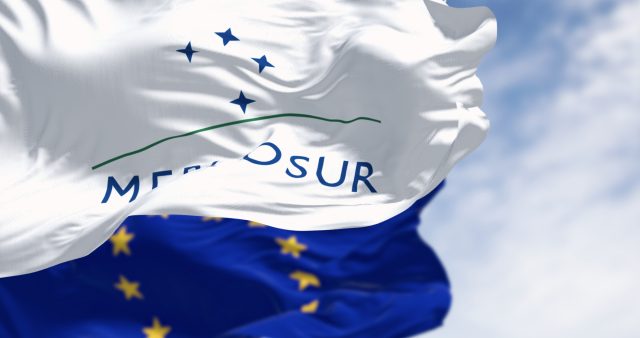
The European wine sector has criticised a decision by the European Parliament to refer the EU–Mercosur Partnership Agreement to the Court of Justice of the EU, warning it will delay a trade deal designed to eliminate tariffs and non-tariff barriers on exports to South America.
In a statement issued on 21 January 2026, the European Committee of Wine Companies (CEEV) said it was “disappointed” by the vote, which asks the Court to assess whether the Agreement is compatible with EU Treaties. According to CEEV, the move could postpone ratification by 18 to 20 months, creating “unnecessary uncertainty for businesses”.
What the EU Mercosur agreement means for wine
The EU–Mercosur Agreement is a trade deal between the European Union and the Mercosur bloc of South American countries, including Brazil, Argentina, Paraguay and Uruguay. For wine producers, it would gradually eliminate tariffs of up to 35% in Argentina and 18% in Brazil, Paraguay and Uruguay, while also reducing red tape linked to import procedures, testing rules and certification requirements.
CEEV said the European Commission had already provided “detailed explanations” confirming the Agreement’s full compatibility with EU Treaties, making the Parliament’s decision to seek a legal opinion particularly frustrating for the sector.
“Time is money,” the organisation said, noting that EU wine companies exporting to Mercosur markets faced more than €43 million in tariffs in 2024 alone. This figure does not include additional costs linked to complex import procedures and other non-tariff barriers, which CEEV said continue to hinder access to the Brazilian market.
Partner Content




A high-potential but underdeveloped market
Mercosur remains a relatively small but fast-growing destination for European wine. In 2024, EU wine exports to Mercosur reached €238 million, representing just 1.3% of total EU wine exports. Brazil accounted for €205 million of that total.
According to CEEV, EU wine exports to Mercosur have doubled over the past 10 years, yet significant potential remains untapped due to tariffs and regulatory barriers. The trade deal would open access to a combined population of 270 million people, including 212 million in Brazil alone.
The Agreement would also protect 145 EU wine geographical indications, covering denominations such as Champagne, Prosecco, Port and Jerez, while aligning EU market access conditions with those of competitors such as Chile and Argentina by reducing tariffs on EU wine exports to 0%.
At a time of “increasing geopolitical and economic challenges”, CEEV said the vote represented a missed opportunity to strengthen and diversify EU trade relations without delay. The organisation argued that the EU–Mercosur Agreement would not only enhance the competitiveness of European wines abroad, but also reinforce the EU’s role in promoting open, rules-based trade.
CEEV represents EU wine and aromatised wine companies accounting for more than 90% of EU wine exports, with members drawn from 13 EU Member States as well as Switzerland, the UK and Ukraine.
Related news
VIK 2022: ‘the beginning of a journey toward self-sufficiency’


