



Enough with the diktats: why 2026 should be about choice, not restriction
After a year dominated by no and low rhetoric and wellness absolutism, the drinks industry may be ready for a reset. In an uncertain world, 2026 could be the year we stop policing pleasure and start talking about responsible enjoyment.
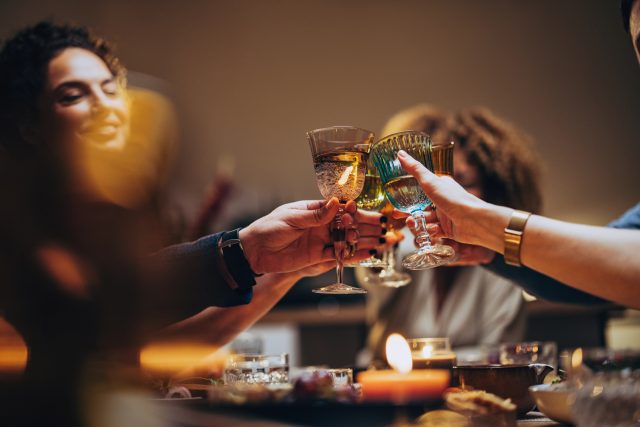
By the end of 2025, the message had become hard to miss. Drink less. Drink differently. Or don’t drink at all. No and low was everywhere, often framed not as an option, but as a moral upgrade. Health narratives dominated, Gen Z was repeatedly declared “over alcohol”, and moderation slid quietly into restriction.
Yet as we head into 2026, the mood is shifting. Not towards excess, but towards something more pragmatic – and arguably more sustainable: freedom of choice, personal responsibility and enjoyment without judgement.
In a world shaped by political instability, economic pressure and rapid technological change, it is perhaps unsurprising that consumers are questioning rigid rules around how they should live, eat, socialise – and drink. The question for the drinks industry is whether it is ready to move with them.
From Dry January to French January
A useful counterpoint comes from France. This January, Vins et Sociétés launched French January, positioning it not as a rejection of alcohol, but as an expression of the French art de vivre.
The campaign promotes an approach that is free from diktats, free from judgement and respectful of individual choice. It explicitly includes those who enjoy a glass of wine with a meal and those who choose not to drink at all. Conviviality, the message goes, excludes no one.
Crucially, French January is not anti-health. It supports consumption guidelines and moderation. What it resists is the idea that abstinence is inherently virtuous, or that enjoyment requires justification.
It is a subtle but important distinction – and one that feels increasingly relevant beyond France.
The argument has form. In 2021, db covered the controversy sparked by leading French oncologist David Khayat, who warned that a culture of constant denial damages self-esteem, advocating balance – and the enjoyment of wine – over what he called imported “diktats”.
Gen Z, myth versus reality
The debate around restriction often leans heavily on Gen Z. They are drinking less, statistically speaking. That much is true. But as db reported earlier this year, the reasons are far more complex than the headlines suggest.
Rabobank analyst Bourcard Nesin’s research shows that Gen Z’s lower alcohol consumption is driven primarily by economics, demographics and life stage, not a wholesale rejection of alcohol on health or moral grounds. Many simply have less money, fewer social occasions and are under the legal drinking age. When measured as a share of income, their alcohol spend mirrors that of millennials at the same point in life.
Partner Content
The idea that Gen Z is uniformly sober, or ideologically opposed to alcohol, does not stand up to scrutiny. Nor does the assumption that no and low products are the inevitable end point of their relationship with drinking.
Yet much of the public narrative continues to flatten these nuances into a simple story of abstinence and virtue. It is a narrative that risks alienating consumers who want flexibility, not labels.
A wider cultural shift
This tension is not limited to the drinks sector. In a recent piece for The Guardian, writer Oliver Burkeman argued that the obsession with self-improvement, optimisation and self-denial has become counterproductive. His proposal for 2026 was disarmingly simple: stop trying to fix yourself, and spend more time doing what you actually enjoy.
The article struck a chord because it tapped into a broader fatigue. Consumers are tired of being told there is something wrong with them – their habits, their diets, their choices – and that salvation lies in ever tighter rules. The pendulum, culturally, appears to be swinging away from prohibition by stealth and back towards balance.
Within that context, alcohol looks less like a problem to be solved and more like one element of social life that, when approached responsibly, can still have a place.
Responsibility without restriction
None of this is an argument against no and low. Those categories play an important role and meet genuine consumer needs. The problem arises when moderation becomes moralised, and choice becomes constrained by narrative rather than regulation.
For the drinks industry, 2026 presents an opportunity to reframe the conversation. Not as “drink more” or “drink less”, but as drink consciously, or not at all – and feel no pressure either way.
That means resisting lazy generalisations about younger consumers. It means acknowledging that enjoyment, pleasure and conviviality are legitimate motivations, not guilty secrets. And it means trusting adults to make informed decisions without constant supervision.
In the Chinese zodiac, 2026 is the Year of the Horse, associated with freedom, momentum and forward motion. It is a fitting metaphor. After years of tightening reins, perhaps this is the moment to loosen them slightly – not to encourage excess, but to allow space for authenticity.
Responsible consumption does not require joyless rules. Sometimes, it simply requires letting people get on with living.
Related news
Cru World Wine sees huge demand for its 'community-ownership' share offer
'Fantastic time to be a whisky drinker’ as Hedonism launches own-label range
Aldi launches rosé colour swatch as shoppers reject the ‘wrong’ shade


