



Daou Vineyards: building a billion-dollar wine business
The story of DAOU Vineyards is one of outsiders – two Lebanese-born brothers from a non-wine background who used a tech fortune to create a standard-bearer for Paso Robles Bordeaux blends, before selling up to Treasury Wine Estates. Richard Woodard reports.
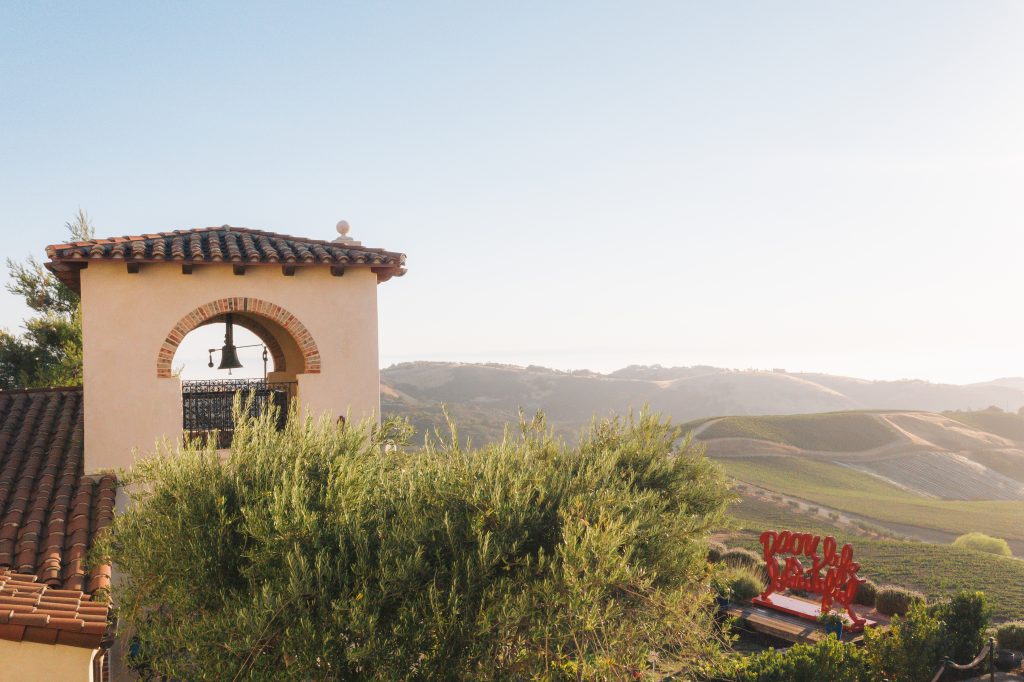
Porto-born José Santos was working for a yeast manufacturer in California when, in July 2010, one of the company’s sales reps took him to see a “very small” client high in the Adelaida District AVA of Paso Robles. “You will probably be mad at me,” she warned.
The winery in question was DAOU Vineyards, founded three years earlier by brothers Daniel and Georges Daou. “Daniel was asking all these stupid questions,” recalls Santos. “But after a while, I realised he was asking very pertinent, out-of-the-box questions. I really connected with him.”
The two stayed in contact, but it was another 12 years before Santos joined DAOU, where he is now senior winemaker. It’s an unconventional career progression in keeping with the unlikely arc of the DAOU story.
Daniel and Georges Daou’s early childhood in Beirut was cut short in 1973, when a missile fired at the start of Lebanon’s civil war sent shrapnel tearing through the family home, seriously injuring both brothers. Two years later, they and their parents fled to France. Then, in the early 1980s, Daniel and Georges relocated to UC San Diego to study computer engineering and electrical engineering.
They founded a tech company, DAOU Systems, focused on hospital computer systems, took it public in 1998, then sold up. “They retired very young, with the opportunity to pursue their dreams,” says Santos. In Daniel’s case in particular, those dreams revolved around making wine, a passion he had kindled in France, then pursued by making wine in his garage in rural San Diego from a one-acre plot of Cabernet Sauvignon.
It took a while for those dreams to progress further. Eventually, in 2007, the Daous were drawn to a “hidden gem” in Paso Robles – rare calcareous-clay soils, steep slopes and the highest elevation in the region at 2,200ft – a site which they soon renamed DAOU Mountain.
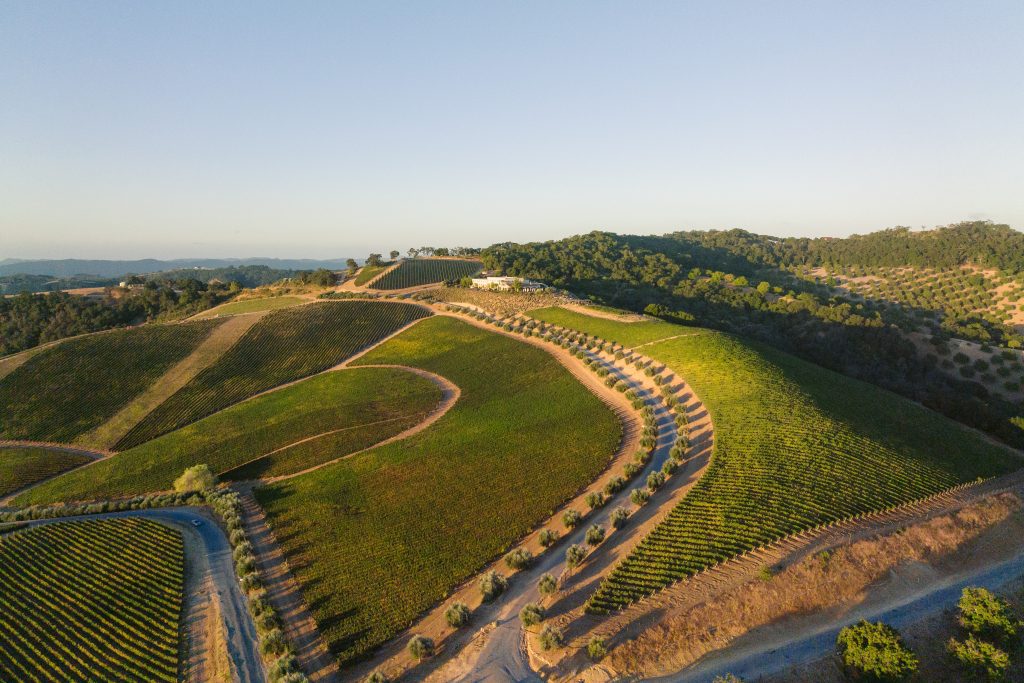
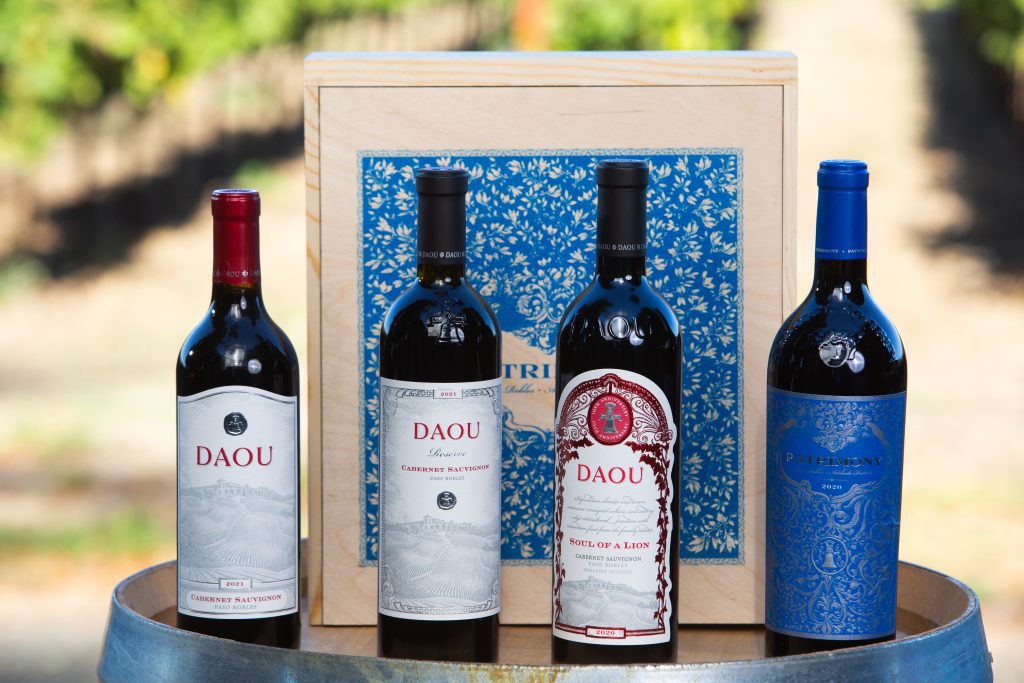
DAOU today makes a range of different wines from estate and bought-in fruit, including a Reserve Chardonnay from the cooler-climate Willow Creek AVA, and a Reserve Cabernet Sauvignon priced at around US$50. The company’s Paso Robles Cabernet, meanwhile, is the best-selling wine of its type within the US$20–US$30 price bracket in the US.
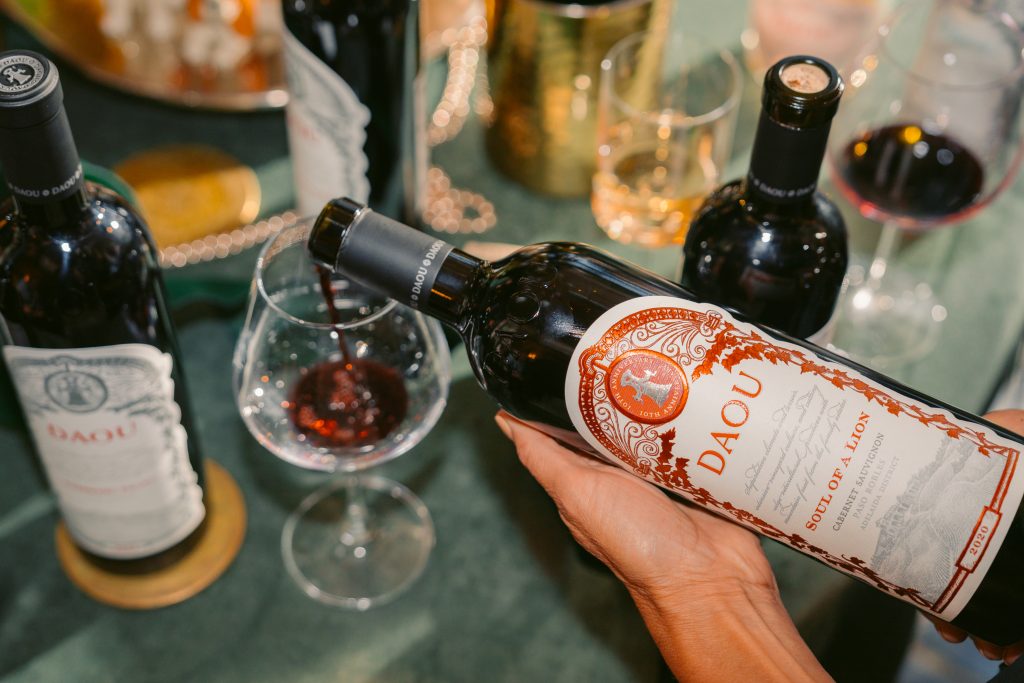
Then there is Bordeaux blend Soul of a Lion (SOAL), which retails (current vintage 2022) on the DAOU website for US$150 a bottle. “When Daniel wanted to become a winemaker, this is the wine that he wanted to make, and this is the wine that kind of put Paso on the map and changed Paso,” says Santos. The region had previously been dominated by Rhône varietals, but SOAL played its part in engineering a shift towards Cabernet.
In 2013, when making SOAL, Daniel Daou identified a few barrels of superior-quality Cabernet, bottled them separately and created Patrimony – now a US$275, 100% Cabernet Sauvignon aged for 30 months in 100% new French oak, using thicker staves (27mm versus 22mm) to reduce oxygen ingress and prolong the maturation process.
Partner Content
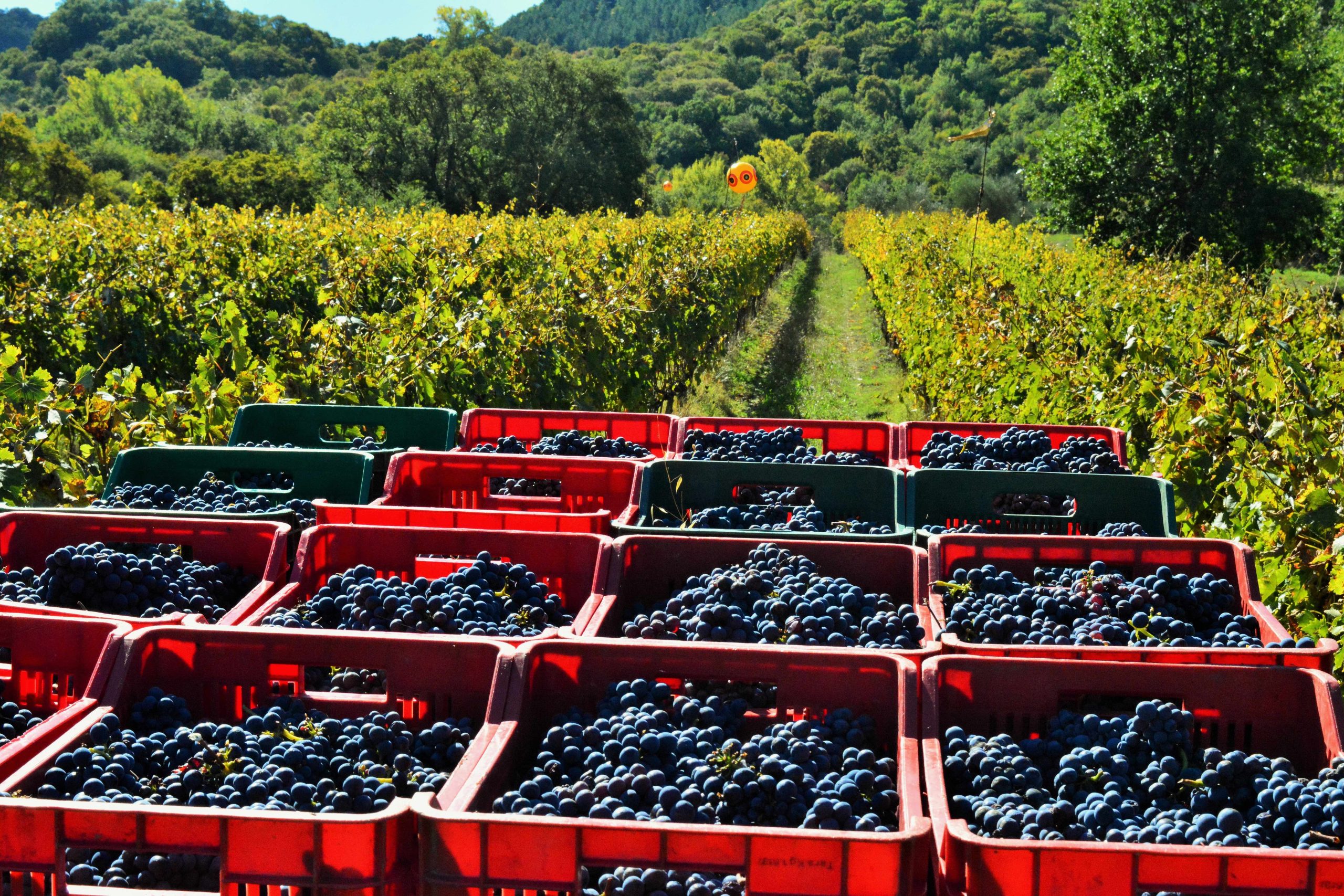
Paso Robles is a large region (you could fit Napa and Sonoma inside it) with a reputation for a pretty scorching climate. Santos feels that’s a simplification – AVAs such as Willow Creek and Templeton Gap enjoy more temperate conditions – but, even at DAOU’s high altitude, alcohol levels can soar: SOAL 2018 was characterised as a ‘cool’ vintage at 14.7% ABV; 2020 and 2022 – the latter marked by a 10-day heat spike towards harvest – weighed in at 15.2%.
Nonetheless, Santos maintains that a number of factors contribute to preserving freshness in the DAOU wines, including significant diurnal temperature shifts – it can be 35oC at 4pm, but only 14oC–16oC the following morning. There’s also an almost fanatical focus on phenolics, and how they relate to the sensation of the wine, with monitoring carried out from vineyard to winery and cellar. “For us, [phenolics] mean texture, they mean that the wine is in balance or not,” explains Santos.
But if there is one single secret to DAOU’s success, it may be its yeast – the very topic that brought Santos to the winery in the first place. Using 10kg of grapes from its vineyards, the winery identified 24 different strains in six genetic groups. Two were chosen and trialled, and the winner – rather prosaically named D20 – is used to ferment every DAOU wine, except for rosés and aromatic whites. It’s even used to make the tasting room pizzas.
What does D20 do? “It doesn’t allow the fermentation to get stinky or stuck,” says Santos. “It allows us to complete the fermentation and extract the full potential of the grapes, by just being a spectator and doing nothing else. It also allows us to ferment at very high temperatures, which helps extraction.” Perhaps even more crucially, the yeast enhances acidity – Santos says the winery never has to acidify its estate-grown fruit.
DAOU Vineyards entered a new chapter at the end of October 2023, when it was announced that the business was to be sold to Treasury Wine Estates (TWE) for a total of US$1bn (US$900m initially, plus an additional earn-out of up to US$100m), with both Daniel and Georges staying on after the completion of the deal.
The obvious benefit of TWE ownership relates to the internationalisation of DAOU’s sales. Even today, two years after the deal closed, 80%–85% of these occur in the US market, but there are plans to build DAOU’s presence in Asia and Europe. The latter will focus on the company’s Paso Robles Cabernet Sauvignon, Reserve Chardonnay, Reserve Cabernet Sauvignon and Soul of a Lion, plus new launches such as Reserve Merlot in Denmark (one of the company’s biggest European markets).
Practically speaking, the takeover meant that, in April 2024, the estate cellar could be moved from the top of the mountain, where space was running short, and the business could make use of a nearby TWE facility from the 2024 harvest.
But more broadly, it’s clear that what started out as a family passion project had mushroomed to become a victim of its own success, thanks to what Santos describes as “explosive growth” in the 2019-21 period. “The biggest impact from Treasury was giving us the backbone and the structure to accommodate this business and move forward in a much more consistent way,” he adds. “We had grown so much that we were bursting at the seams.”
Related news
Queen Camilla gives speech at Vintners Hall
Master Winemaker 100: Alberto Stella
Australian Vintage sales dip 1.7% as turnaround plan targets stronger second half


