



Wine List of the Week: Lita
Proper bottles, food-friendly cocktails and a wine list mapped by nature are what makes Lita, Marylebone, shine, discovers Douglas Blyde . In a city dense with templated lists, superstar somm Kristina Gladilina’s newly-developed wine list reads as a “lived document rather than a compilation”.
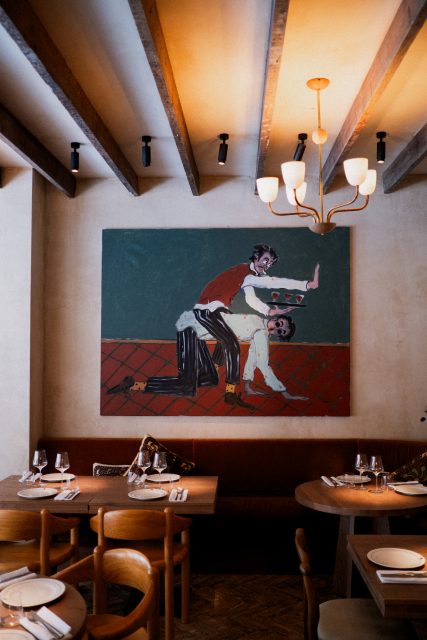
Lita occupies the footprint once taken by Crazy Pizza. Critics pounced early. The Observer pictured an “orgy of tongue and groove, dovetail and pocket” while Michelin noted the open kitchen’s forward drive and granted a star. On TripAdvisor, Trallingdoc issued “five stars for flavour, one for value”, which still tallied as a win. Glen Harris, the buoyant GM, moves through the room with a natural ease, while Jack Penny’s canvases catch hospitality’s shifting moods.
Two developments define this season. One is the newly rebuilt wine list by Kristina Gladilina. The other is the arrival of culinary director Kostas Papathanasiou, whose time at Frantzén in Stockholm, and earlier at Pollen Street Social, The Ledbury, and The Fat Duck, brings refinement.
Drinks
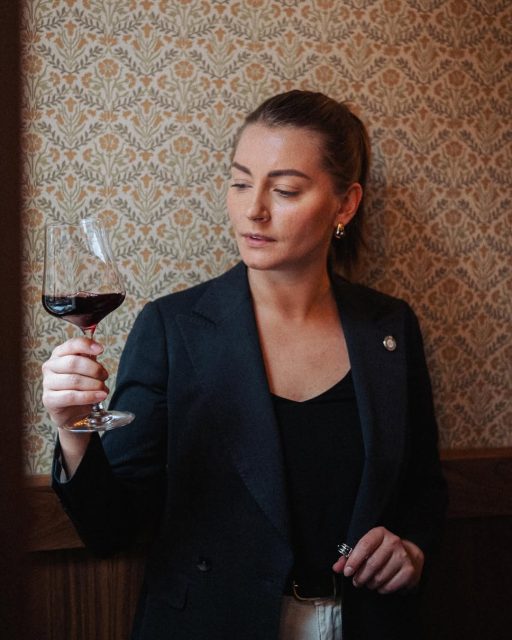
Gladilina arrived in the UK three years ago. Fourteen years in wine has taught her exactly where guests tense. “Most lists look like a dark forest of letters,” she says. “Then they see three-digit prices and recoil.” Her solution was to clear the undergrowth without lowering ambition. “I see value, but the guest might not, so why would they pay more?” She avoided flavour tags which flatten nuance, sidestepped price ladders, and grouped wines by character shaped by natural forces rather than borders.
Hence the new list runs across Sun, Salt and Stone; Salt of the Earth; Rivers, Lakes and Heights; Sunlit Shores; the Golden Slopes of Burgundy; and finally Cellar Rarities – her “playground”, as she put it, “because if I stopped seeking, my enthusiasm would dry.” The Art of Effervescence reflected her upbringing in the vicinity of Saint Petersburg, where Champagne sits with food. Agrapart’s Les 7 Crus anchors the chapter. Casa Coste Piane brings artisan Prosecco; Breaky Bottom Grace Nichols adds English heritage; Flavien Nowack and Emmanuel Brochet Le Mont Benoît leads into richer territory; Rare Rosé 2014 and Marie-Noëlle Ledru Cuvée Goulte 2006 provides the flourish.
Salt of the Earth whites are designed, she said, “to make the mouth salivate”: Muscadet, Txakoli, Ribolla, Savagnin, Saint-Bris. Rivers, Lakes and Heights added Friuli, Soave, L’Insolite, Nova Domus, and Domaine de Chevalier. Sunlit Shores captures Mediterranean brightness: Château La Mirande Picpoul at £40, which some guests misread as too modest; Roditis “Kyrenia”; Etna Bianco from Contrada Sciaranuova; and Palladius.
The Golden Slopes stands apart. “Chardonnay is like chicken,” she says. Roc Breïa by Théo Dancer opens before the ascent through Guffens-Heynen, Sauzet, Pierre-Yves Colin-Morey, Roulot, and Thomas Morey. Cellar Rarities close the whites with Yquem 2010 in 75ml measures. Rosé runs from Tondonia to Picaro Clarete and Dominio del Águila, with a £65 Tavel which raises eyebrows. Earthy scents, she notes, still unsettle many drinkers; Chinon proves her argument.
Bright and Vibrant opens the reds, nudging guests past a Pinot-only comfort zone, with Comando G’s La Bruja 2023 and Ceritas Hellenthal 2020. Mediterranean Reds and Spiced Warmth bring Naturalis Historia 2009 and Eisele; deeper bottles follow via Amarone Sant’Urbano and Pintia. Claret culminates in Pichon Baron 1989. Burgundy shifts constantly. Final rarities include Viúva Gomes 1967 (650ml), Petrus 1983, and equally-priced Pergole Torte 2004 and 2006. By-the-glass begins at £9 for Vermentino.
One sommelier was hired on handshake alone. The bar, under Danil Sidorenko, splits into Garden and Harbour, eight cocktails rising to ten by the year’s end, each marked with a pictogram. Drinks are built to sit with food, not against it, hence their savouriness. Espresso comes from “Special Guests”, and the tea programme is unusually assured.
Partner Content
Dishes
Corpulent sardines on toast arrive first: sizeable, neatly cleaned and carrying a faint Basque smokiness which edges toward eel. They pose a test for any wine, yet Valentini’s Trebbiano d’Abruzzo 2020, via Coravin, steadies matters cleanly. This was the Abruzzese biotype, fermented in old botti and given a controlled veil of oxidation which lent that Jura-leaning savour and near-sherry accent. Its almond-skin nuance cuts through without effort. Matters broaden from here. Fuentes bluefin remains a signature, brightened with gremolata and horseradish. The Trebbiano continues to hold its line, its subdued nuttiness working across the dish. The long-cooked Aylesbury duck strozzapretti, prepared for more than a day, follows in familiar form, though Papathanasiou places beside it a dish of wild mushrooms with lardo, which brings cosy, aromatic height and a silkiness which almost echoes the tuna when taken with the Trebbiano.
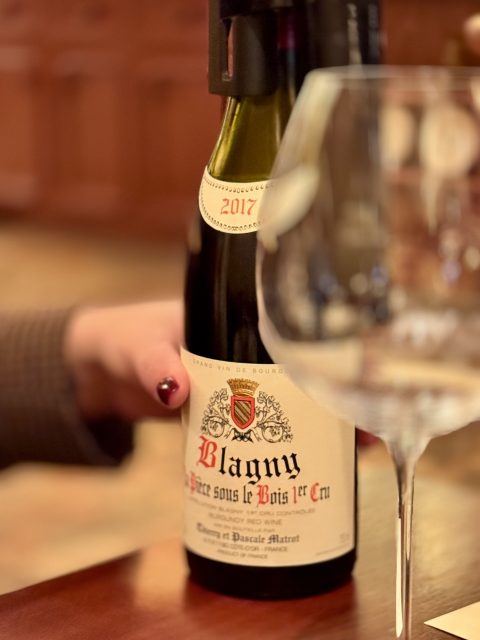
The tuna itself, cut close to a tartare, also finds a measured partner in Barolo Brunate 2017 by Claudio Boggione, drawn from the higher, sand-tinged slopes above La Morra. Blagny 2017 by Matrot follows, which Gladilina noted could also appear as Meursault Rouge. It brings smoke, cherry skin and a faint iron line, all of which meet London’s dish of the moment, the veal sweetbread – now given crisp edges from the grill – with poise.
The monkfish course, served with Caracol dos Profetas 2024, shows the clearest shift in the kitchen’s direction. A former bone-in, spice-leaning version has been replaced with a cleaner, more unified plate: pearlescent fish, beurre blanc and clams. António Maçanita’s wine, named for a Madeiran poetic society known as “the Prophets”, brings salted citrus, fennel seed, and enough phenolic grip to stand with the dish.
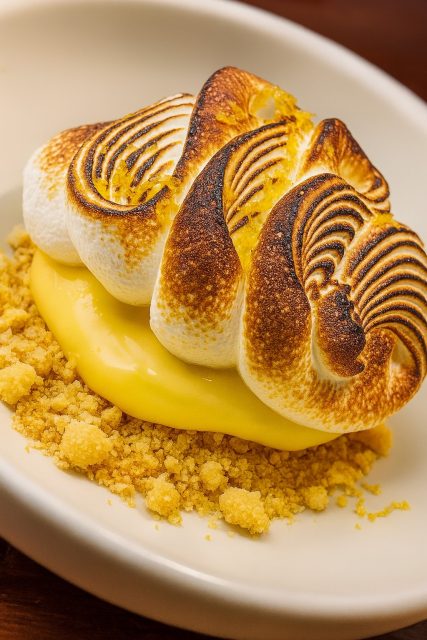
Desserts maintain the sense of gentle recalibration. L’Archiviste 1985, a Rivesaltes drawn from single-year stocks preserved in southern cellars, adds a warm, earth-edged sweetness to a brown sugar custard tart whose depth almost brushes miso. Joh Jos Prüm 2021 then cuts through an Amalfi lemon meringue with Earl Grey ice cream in a clear line.
During the meal, Cognac envoy, Yohann Pinol pours L’Époque Baroque XO, the extraordinary blend he and Tatiana Kharchylava shaped blind from Grande Champagne eaux-de-vie spanning twenty to fifty years. It moves from candied orange to violet, then dark cherry and mint, a small lesson in how well-judged age can bring depth without weight.
Last Sip
A once-reported rent of £275k a year reminds you where you are. Parties should take the private room; bookings of four can request table ten, the booth set between the bar counter and kitchen counter which offers a vantage without placing one on display. Gabriel Glas is a minimal frame for most wines. Chartreuse makes a steady close. In a city dense with templated lists, Gladilina’s reads as a lived document rather than a compilation.
Best for:
- Long lunches with proper bottles
- A list mapped by nature
- Food-friendly cocktails
Value: 92, Size: 96, Range: 96, Originality: 97.5, Experience: 97; Total: 95.7
Lita – 7-9 Paddington St, London W1U 5QH; 020 8191 2928; reservations@litamarylebone.com; litamarylebone.com
Related news
Areni Global: 'We have to find a way to make wine consumption safer' for women amid spiking fears


