



Who won what and why at The DB Green Awards 2025
We bring you a full report on all the winners of The Drinks Business Green Awards, which were announced at a ceremony in central London last night.

Now in their 16th year, the awards remain the only dedicated industry accolades celebrating everything eco-friendly in the alcoholic drinks world. And they build on almost two decades of in-depth coverage of environmental and ethical developments by the drinks business, beginning with its inaugural ‘green issue’ in 2007 and expanding ever since.
This year’s judging process, led by a panel of expert industry figures who scrutinised scores of submissions, confirms that – alongside innovative niche operators – the trend toward environmentally responsible drinks production continues to accelerate among leading and large-scale brand owners and wine producers, including Jackson Family Wines, Familia Torres, Viña Concha y Toro and Moët Hennessy.
As for why this shift is gathering momentum, operational savings may account for some of the motivation. Yet it is clearly not the sole driver, since the financial benefits of adopting greener practices typically materialise only after considerable upfront investment.
This is especially evident in vineyard management, where producers transitioning to organic or regenerative farming often must purchase specialised equipment and enlist external expertise to support the change.
So why pursue it? Beyond the fact that many environmentally attuned operators are guided by owners who feel a genuine responsibility to leave their corner of the planet in better condition, db is increasingly seeing leaders in the drinks sector embrace sustainability as a way to differentiate their brands and forge stronger connections with their consumers.
Put simply, environmental stewardship has evolved into more than a production ethos; it now provides a strategic advantage in brand positioning.
For example, communicating the details of soil management can serve as a compelling marketing message – even for a luxury brand housed in a heavy bottle.
It is precisely this type of best practice that The Drinks Business Green Awards aim to recognise and promote, inspiring others across the trade to adopt more sustainable approaches to production, logistics and retailing.
With that in mind, our task is to highlight the companies, individuals and brands excelling in this space today – the people and projects whose achievements you will discover below.
So scroll down to see who won what, and why, in The Drinks Business Green Awards 2025.
Best Logistics and Supply Chain Green Initiative
Winner: Sogrape
 Sogrape’s role as a wine producer, rather than a logistics company, made its entry into this category stand out. Our judges praised the business for “attacking the problem [of climate change] from several sides”, and looking outside the box to improve every part of its business. Sogrape has made huge strides to reduce its transport emissions through the use of biomethane trucks, replacing air and road routes with sea freight, increasing its backhauling efficiency and sourcing locally, all aspects which the judges praised.
Commendation: Ellis Wines

As a relatively small fish in a large pond, our judges were highly impressed with the “huge investment” Ellis Wines has made in improving the green credentials of its logistics and supply chain. They praised the courage it must have taken to be one of the first to transition from diesel to hydrotreated vegetable oil (HVO) trucks, describing it as a “feel good story” and deserving of applause.
Green Launch of the Year
Winner: Viña Artesano

Viña Artesano’s celebration of Argentinian biodiversity won over our judges, with one applauding how the new range “leans into a critical element of wine’s future”. They were impressed by the thorough work behind the brand, with university support and replicable results bolstering its scientific credentials. However, they equally highlighted its connection with consumers thanks to branding that emphasises biodiversity and “a great story running through the launch”.
The shortlist:
- Brother’s Bond Bourbon
- Emiliana Organic Vineyard
- Viña Artesano
Organic Initiative of the Year
Winner: Emiliana Organic Vineyard for its vermi-compost scheme

In selecting the Organic Initiative of the year, our judges were impressed by a scheme that takes a well-established regenerative initiative and performs it on a truly impressive scale. They praised Emiliana Organic Vineyard’s vermicompost scheme for the specificity of its approach, as well as for its collaborative approach that extends to the local community. It has resulted in a programme that enriched more than 4.5 million kilograms of composting material last year. In the words of one of our judges: “Team worm – here we go.”
Renewable Energy Implementation Award
Winner: InchDairnie Whisky
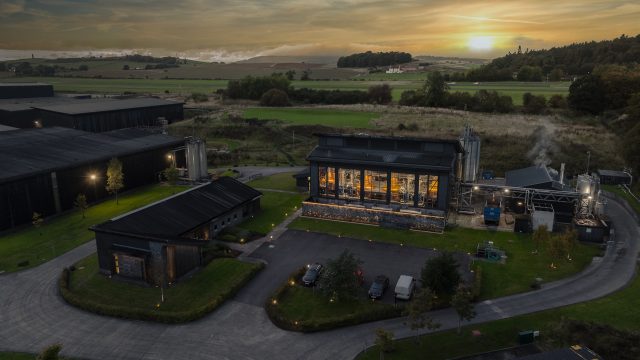
Taking home the award for Renewable Energy Implementation, InchDairnie Whisky won over our judges with its ‘overarching, interesting and new’ approach to renewable energy. With a focus on energy and resource efficiency – seen in enhancing boiler efficiency, recapturing heat during cooling and making biogas from by-products – InchDairnie Whisky “went far beyond” a box-ticking sustainability exercise and is offering inspiration to the wider spirits community.
Commendation: The Castle & Key Solar Energy Project

The Castle & Key Solar Energy Project secured a commendation from our judges for its rigorous implementation of a renewable energy project. Although solar panels are seen around the world, this project stood out for the quantifiable results already achieved and the clear-sighted future orientation of the scheme.
The Water Management Award
Winner (wine): Domaine Lafage

The judges applauded the thorough nature of Domaine Lafage’s entry, which they said “left no question unanswered” and went into great detail regarding how their ‘impressive” approach to water-smart viticulture was implemented and why. Most of all, they were impressed that the extensive R&D into Lafage’s vineyard irrigation has resulted in more fruit on the vine, making it a commercial win as well as an environmental one. They also loved that the producer is feeding its findings back into into the local Rousillon government’s Water Resilence plan, meaning its benefits will reach beyond Lafage’s estate.
Winner (spirits): Suntory Global Spirits
 While the judges acknowledged the colossal size of the company and the relative ease with which it could part with $1 million compared to some other operators, the panel was bowled over by the “incredibly impressive” investment into the Closed Loop Cooling systems at two of Suntory’s Scotch whisky distilleries, resulting in a combined water usage saving of 2.5 million litres per day. They also noted Suntory’s obvious commitment to its ambitious goal to cut total water usage by 50%, as it is on track to fulfil this five years ahead of time (by end of 2025, instead of 2030).
The shortlist:
- Domaine Lafage
- DGB
- Familia Torres
- Suntory Global Spirits
The Amorim Sustainability Award for a Producer:
Winner: Concha y Toro
 This year, entrants in the Sustainability category faced tough competition with a number of impressive entries. But it was Chilean winemaking powerhouse Concha y Toro that wowed the judges with its large-scale, comprehensive and well-organised approach to sustainability. Our judging panel praised Concha y Toro for “leading the way” towards a greener future and “ticking all the boxes” when it came to shaping its sustainability approach to the particulars of its climate and surroundings.
Runner up: Grupo Avinea
 Our judges were highly impressed with Avinea’s approach to sustainability, commending it for being “one of the companies doing this properly” and “touching every corner of sustainability” with its approach, which included a waste recovery programme, community projects, energy efficiency programme and upcycling scheme with local prison inmates.
Commendation: Downton Distillery
 Downton Distillery not only impressed the judges with its “agile” and “thoughtful” approach, but left them with a smile on their faces thanks to the “clever marketing behind its serious messaging”. The judges were particularly impressed with its Orchard Spirits Range, which uses surplus fruit to produce brandies, and for its innovative ‘bottle for life’ refill scheme.
The Amorim Sustainability Award for an Organisation:
Winner: Porto Protocol
With more than 250 members in 21 countries, representing 1.2 billion litres of wine and 75,000 hectares of vineyards, the Porto Protocol Foundation’s sustainable impact is immense. Having expanded its climate talks, launched the Unpacking Wine and Zero Waste Bar Guides, and introduced science talks to connect academic research and vineyard practices, the judges were keen to recognise the “active improvement” that Porto Protocol Foundation’s work is achieving in the drinks industry. They praised this strong entry for its “really impressive” work on waste and packaging, as well as its efforts to give back by making all of its resources publicly accessible.
Commendation: New Zealand Winegrowers
This year marked the 30th anniversary of Sustainable Winegrowing New Zealand, a huge milestone for the country and its winemakers. The judges wanted to join in the celebrations, commending this entry for its “ongoing”, “important” and “laudable” efforts to improve sustainability across New Zealand.
The shortlist:
- Downton Distillery
- Grupo Avinea
- New Zealand Winegrowers
- The Porto Protocol Foundation
- Viña Concha y Toro
The Amorim Biodiversity Award
Winner: Grupo Avinea

While the entries in this category all impressed our judges, they were unanimous in their final decision to award Grupo Avinea for its approach to biodiversity. The wine producer has developed a system to discover and map biological soil crusts, has increased biodiversity through better understanding of native plant species, and has launched student projects to engage local communities with the surrounding wildlife. It’s no surprise, then, that one of our judges asked themselves: “what more could someone ask of a business trying to promote biodiversity in the land they use?”
The shortlist:
- Emiliana Organic Vineyard
- Matrizviva by Grupo Avinea
- Tapada De Coelheiros
The Amorim Special Award
Winner: The VSPT wine group
Partner Content
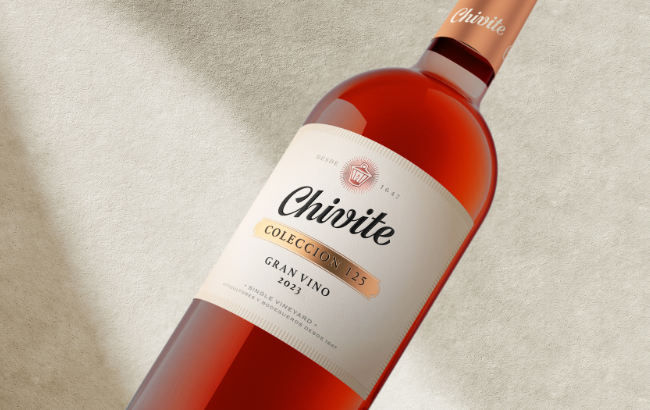
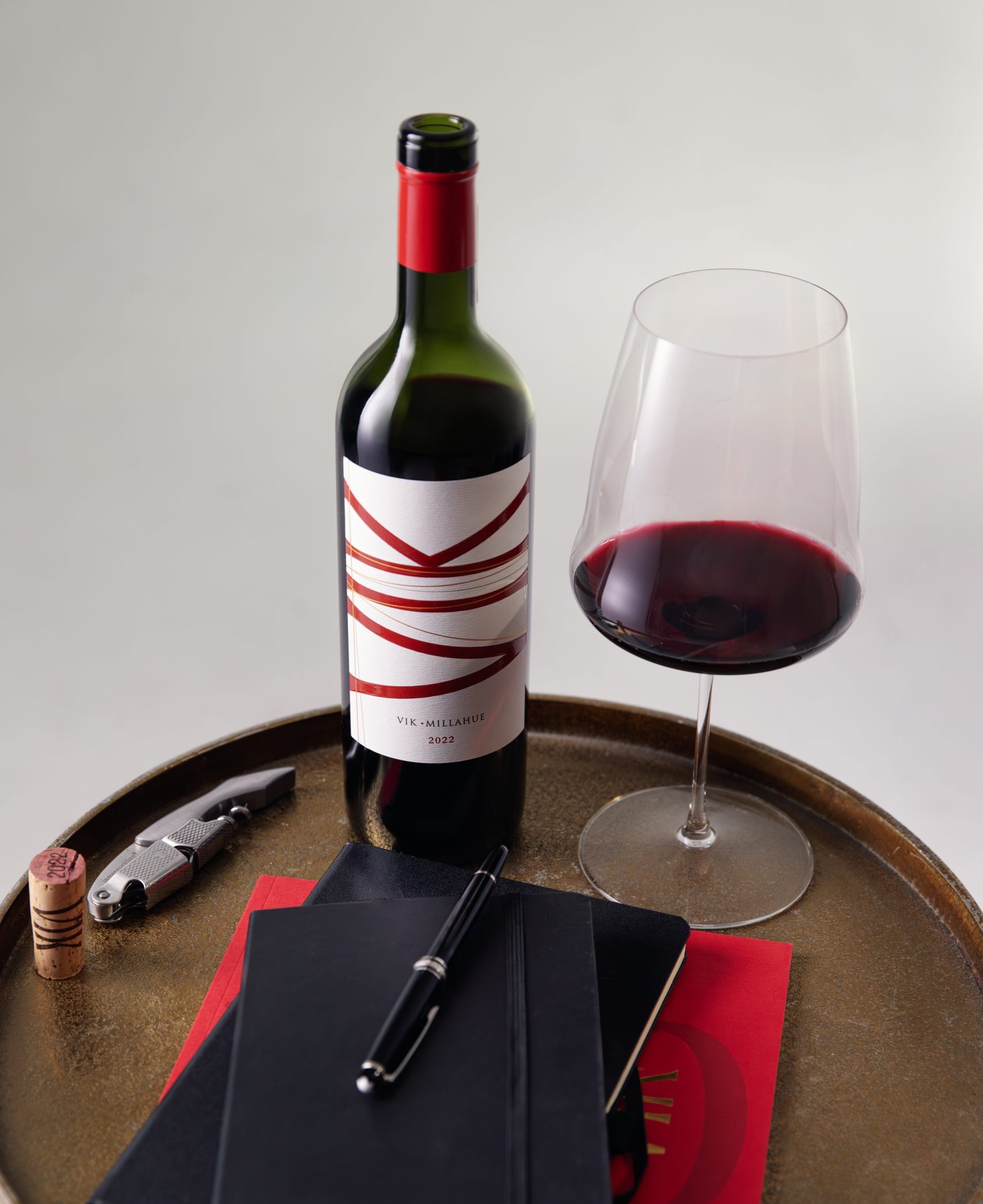

The Amorim Special Award was given to major Chilean producer The VSPT wine group for adopting regenerative viticulture, protecting biodiversity and investing heavily in clean energy, among many major green initiatives that have been spearheaded by the company’s chief agricultural officer, Juan Cury Cuneo.
Ethical Company of the Year
Winner: DGB Charitable Trust for ‘Travelling Classrooms’

Hands-on, practical, and admirable, as well as clear and costed was how the judges described our winning entry in the Ethical Award category. Called Travelling Classrooms, the initiative was funded by South Africa winemaker DGB, and involves two custom fitted 15m trailer trucks that travel across the winelands every day visiting rural schools, which are underequipped and overcrowded. With the vehicles containing a mobile computer and library classrooms, the idea is to bring equipment and teaching to those who need it most, helping over 5,000 primary school children and 153 teachers from 19 regional primary schools each year.
Runner up: Bodega Argento

Coming a very close second to our winner, the judges chose to give a runner-up award to Bodega Argento for its wide-ranging ethical initiatives to empower its workers and support rural communities in Argentina. Among the many causes supported by the wine producer have been an emergency healthcare fund for employees, and an Artisan Garden Network that enables workers to grow organic vegetables on-site, and more recently, in three rural schools too, engaging 270 children and 30 teachers in composting and regenerative agriculture.
Commendation: Fecovita

The judges also wanted to commend another Argentine producer, Grupo Fecovita, for its huge ethical reach, as a cooperative bringing tougher 5,000 small producers in Mendoza. From technical training to support in regenerative agriculture, as well as flexible work policies for mothers, the jduges felt that Fecovita was doing much for its employees, and at scale.
The shortlist:
- Bodega Argento
- DGB Charitable Trust for ‘Travelling Classrooms’
- Fecovita
The Green Packaging Award
Winner: Champagne Telmont

Of all the entries, the judges felt that Telmont’s bottle lightweighting and glass colour switch from clear to green had the potential to make the “broadest and most meaningful change” due to Telmont’s desire for its super-light 800g Champagne bottle to be made “the industry standard”. One judge also pointed out that Telmont has made the move before the official recommendation for Champagne bottle weight has been released, making it “quite a brave move”. There was some discussion over whether consumers would notice the 35g weight difference, or whether indeed it was necessary/desirable for them to notice. The first 800g Telmont bottles came to market in spring 2025.
Commended: Grapur

The judges also wanted to commend Italian wine brand Grapur for its 300g wine bottle implemented from the 2024 vintage, with label and closure made from ocean-recycled plastic. They described the packaging design as “bright, creative and fun” with shelf stand-out. One judge said: “There is an element of creativity, and we need creativity right now.”
The shortlist:
- Grapur
- Château Galoupet
- Champagne Telmont
- Freeman Vineyard & Winery
Green Retailer of the Year
Winner: The Wine Society

This year, The Wine Society stood out for its remarkable, green-focused achievements in the past 12 months. Among these were the removal of 250 tonnes of glass by an increase in lightweight wine bottles, as well as ditching 850kg of plastic/metal capsules. Other notable eco-developments over the past 12 months include the plantation of more than 400 trees and three miles of hedgerows as part of its Climate and Nature Programme, now in its second year. The retailer is also trialing electric delivery vehicles while it has rolled out new requirements for its wine producers on safe and fair working conditions in the supply chain, as well created a programme of support.
O-I: Expressions Green Company of the Year
Winner: Domaine Bousquet

In an exceptionally tough category, Argentine wine estate Domaine Bousquet won for its extraordinary achievements over the past decade and particularly in the last 12 months. The judges were wowed by the winery’s recent achievements, both as Argentina’s largest exporter of certified organic wine and a recognised leader in Regenerative Organic practices. Praising its breadth of sustainable practices, and science-based approach, Domaine Bousquet gained the title of Green Company of the Year for covering every base. That included lightweight packaging, carbon reduction, biodiversity enhancement, social equity, and transparency, which together demonstrated a holistic approach to sustainability. As Domaine Bousquet see it, the company’s role is to create “The Greenprint” for global wine production—and, in doing so, to secure a better, more resilient future for all.
Runner Up: Emiliana Organic Vineyard

Coming an extremely close second to this year’s winner was Emiliana Organic Vineyard, which was praised by the judges for being such a powerful green leader in wine production. Especially impressive was the launch last year of the producer’s new sustainability roadmap, The Future is Organic, which defines its commitments through 2030, including a commitment to maintaining 100% of our vineyards certified organic (1,150 hectares, producing 12 million litres annually).
Commendation: Hallgarten & Novum Wines

The judges were keen to commend Hallgarten Wines for its Eco Standard, which has far-reaching effects, and attempts to define a global standard for sustainability, with meaningful targets and recognition. Not only that, but all suppliers are held accountable, encouraging eco-minded change among producers worldwide.
Commendation: Susana Balbo
 The judges also wanted to comment Susana Balbo for having a clear environmental and ethical strategy, and with impressive results, with recent moves seeing the producer collaborate with local schools, convert to regenerative agricultural practices, as well as reducing water and energy use.
The shortlist:
- Domaine Bousquet
- Emiliana Organic Vineyard
- Hallgarten & Novum Wines
- Susana Balbo
Green Personality of the Year
Winner: Stephen Cronk

This year, the judges were delighted to recognise Maison Mirabeau’s Stephen Cronk for being a driver in regenerative viticulture (RVF) and for helping to make it “a global movement” through his founding of the RVF Foundation. This is especially impressive because he does not hold a sustainability-specific role (eg. director of sustainability for a company) but has nonetheless made it his mission. The judges said he should be rewarded for his “formidable effort and personal investment” in the cause, which is one that he is “absolutely convinced is the right thing to do”. They also said that more people are starting to realise that ‘organic’ does not necessarily suit every region and that RGV offers a more realistic approach.
Lifetime Achievement Award
Recipient: Tony Cleary MBE

This year’s lifetime achievement award went to someone with a long track record in the UK wine importing and contract bottling sector Tony Cleary MBE. Although he has led the Lanchester Group for over four decades, it was in 2008 that his environmental journey began, with an ambitious investment in solar energy – well before it became commonplace.
He went on to pioneer renewable technologies across the UK wine sector, from installing on-site wind turbines, to introducing the UK’s first geothermal mine-water heating system for commercial warehousing.
Meanwhile, His commitment to low-carbon packaging – most recently the UK’s first 300g Bordelaise Air bottle – has driven major emissions reductions across the supply chain, alongside long-standing leadership in bulk shipping.
His impact is measurable and profound: over £13 million invested in renewable technologies, more than 100 million kg of CO₂ prevented over the lifetime of the Group’s energy assets, and a global first in integrating wind, solar, geothermal and forthcoming battery storage at scale within a single wine business.
Thank you to our sponsors…

DB would like to thank our set of sustainable producers for the drinks at the awards ceremony, which was held at Home House in London on 2 December.
They included Chateau Galoupet for the Provençal Rosé, Mulline Vintners for the Syrah, Argento Estate for the Organic & Fairtrade Pinot Grigio, Emiliana for the sparkling white and rosé, as well as Cabernet Sauvignon, Pinot Noir and Syrah, and Wild Idol for the 0% sparkling rosé.
DB would also like thank its line-up of partners for the Green Awards, which included Portuguese cork producer Amorim; UK Champagne and fine wine importer Pol Roger Portfolio; and leading bottle manufacturer, O-I Glass.


Finally, DB would like to thank our brilliant set of judges.
Related news
#WeekInPictures: casks, new openings and the Green Awards
The Drinks Business Green Awards shortlist 2025
db receives record number of entries for this year's Green Awards


