



Beyond the price tag: what’s in store for the ‘new’ Napa?
With a new generation of consumers unsold on eyewateringly high price tags, Roger Morris finds out how Napa Valley is preserving its luxury leadership position.

For most of this century, well-off wine drinkers and collectors have used two benchmarks in purchasing great red wines from Napa Valley, especially Cabernet Sauvignon and its blends – how many points the wines received from top reviewers, and by how much the bottles are likely to increase in value in the years ahead. In many cases, the auction market value of these wines will have appreciated even as they were being tucked away into buyers’ cellars.
But the world wine market at all levels has stumbled recently, and new generations appear less enthralled by excesses. Instead, they are searching for alternative luxury appeal in Napa Valley wines – qualities not strictly tied to the wine’s market value.
Many producers, even those who also make highly-rated, highly-priced red wines, are saying: “Yes, we can offer alternatives,” whether those be variations on how wines are made, which grape varieties are used, or how and where wines are being sold.
There is no doubting that, for most of the current decade, a ‘luxury’ Napa Valley wine was defined as a 99-point Cabernet costing several hundreds of dollars a bottle – if you could find one. Due to the fact that many of these wines are sold directly to collectors, comparative SRPs are not always available, but Screaming Eagle, for example, sold at about US$900 a bottle for the 2012 vintage and shot up to US$3,000 for the more recent 2022.
Opus One rose from US$220 to US$490 a bottle in the same period, and Cardinale climbed from around US$369 to US$425.
How we got here
A young John Williams was the first and only employee at Warren Winiarski’s start-up winery, Stag’s Leap Wine Cellars, when Time magazine flashed the news in 1976 that Napa Valley wines had bested those of Bordeaux and Burgundy at a tasting in Paris. Winiarski’s 1973 Cabernet Sauvignon had taken first prize in the red wine category.
Williams, who co-founded Frog’s Leap Winery five years later and is still its owner today, recalls: “Warren came running down to the winery with a copy of Time and said: ‘You’re the one who has to sell the wine when people come. The winery was only one building at the time, so we rolled a barrel to the door and waited.”
Napa’s age of innocence was officially over.
However, Williams believes that two less frequently chronicled events that took place at about the same time changed how the valley’s wines would be made in the future. “All the wines that won in Paris were dry-farmed, as there was no irrigation in Napa Valley,” he says, “but drip irrigation had just been invented in Israel, and Andy Beckstoffer soon introduced it in a vineyard in Carneros. Farmers were paid by yield back then, and drip irrigation produced more grapes – so irrigation quickly caught on.”
Grapes fattened by water resulted in more alcohol, beginning the trend towards big, fruit-forward wines so loved by critic Robert Parker and consultant Michel Rolland. Soon afterwards, Australian viticulturist Dr Richard Smart introduced the Smart-Dyson trellising system in California, which further ripened grapes or, as Dr Smart put it, “turned sunlight into wine”.
Paris made Napa Valley famous and rich, but it also indirectly encouraged a change in style.
Of course, Williams isn’t the only winegrower who doesn’t irrigate vines or have trellising that gets maximum sunlight. Nor is he the only one to grow organic grapes, although he helped pioneer that movement, Today, an estimated 15% of Napa Valley’s grape production is organic, and that is becoming increasingly important to younger wine consumers who want to “drink healthy”, and who are also attracted to the concept of sustainability. In the Napa Valley, that has translated to wine producers now re-evaluating other traditional practices in vineyard and winery, including spontaneous fermentation, preserving less productive old vines and reconsidering various forms of polyagriculture.

Need to know: Zinfandel is winning friends in high places on the Napa circuit
For example, Canard Vineyard still farms Zinfandel vines planted more than 140 years ago, well before Prohibition, at a time when Napa Valley was made up of diverse farmland. These dry-farmed vines still yield what the winery calls “a small quantity of incredibly elegant fruit, which goes into our highly coveted Estate [about US$53 a bottle] and Estate Reserve Zinfandel [about $104],” both sold out to its mailing list.
With many estates today growing cover crops, the sight of sheep grazing between vine rows during the winter is common in Napa. But some growers are going much further into biodiversity. Inspired by plantings at Château Cheval Blanc and at Champagne Ruinart in France, Ram’s Gate winery in the Carneros sub-region that Napa Valley shares with Sonoma County planted 500 fruit trees among 30 acres of vines in spring 2025. Its sustainability manager, Caine Thompson, points to culinary benefits as well as biodiversity gains. “We have a winery chef,” Thompson says, “and he’s excited about what he can do with the fruit trees.”
Diversity in winemaking
Napa legacy winery Silver Oak has produced highly-rated Cabernet from its founding in 1972, using the spicy characteristics of American oak barrels instead of French casks. Observers wondered for years when the Duncan family would switch. They didn’t – in fact, they doubled down on their American oak preference by acquiring their own cooperage in Missouri in 2015.
Bouchaine Vineyards president and winemaker Chris Kajani is one of several producers to have replaced oak entirely for some varieties. “Clay amphorae are perfect partners for Riesling and Gewürztraminer,” she says. “They lend a beautiful mineral backbone that reins in the florals and balances the juicy, vibrant palate. And our Pinot Gris thrives in concrete eggs,” creating “a luxurious texture, adding depth and richness that plays beautifully against the wine’s mineral character. The vessels don’t just shape flavour—they shape personality”. Even before the natural wine movement, many wineries took the risk of allowing spontaneous fermentation with ambient yeast rather than cultured yeast.
Cross country: wineries are blending grapes from all over California to ensure best quality
The spice of variety
While Bordeaux varieties continue to dominate production, Zinfandel, adopted by many as California’s native grape, has many friends in high places. When AXA Millésimes purchased the renowned Outpost Winery on Howell Mountain, director Christian Seely asked former owner Frank Dotzler to stay on as general manager. He also asked if Dotzler really wanted to continue making high-scoring Zinfandel from vineyards that could be planted to Cabernet. Dotzler did, even though his Zin sells for much less per bottle (and he additionally produces a varietal Grenache).
Syrah and other Rhône varieties have also found prominent advocates in the valley. At Pott Wine, Aaron Pott offers a varietal Syrah, as well as making Mondeuse, a Savoie varietal. Robert Mondavi has long offered a Moscato d’Oro, Chappellet a Chenin Blanc, and Matthiasson Wines a Semillon. And such variations in offerings are increasing.
Blending benders
Just as Bordeaux dominates single varietal production, grapes from that region also dominate Napa Valley blends. But here too there are prominent outliers, many using Syrah, which of course is prohibited in blends in Bordeaux itself. AXR offers a Fab 4 blend, which mixes Petite Sirah and Zinfandel with Bordeaux varieties, while Syrah (48%) is dominant in Lewis Cellars’ The Big Blend, along with 21% Merlot, 18% Cabernet Sauvignon, 7% Cabernet Franc and 6% Petite Sirah.
Salvestrin, which owns a chunk of the highly-regarded Dr Crane Vineyard, is more Super Tuscan in its leanings. Its Retaggio blend is 43% Sangiovese, 43% Merlot, 9% Cabernet Sauvignon and 5% Cabernet Franc. And these aren’t entry-level reds, as each sells for in excess of US$70 a bottle.
In cooler Carneros, Bouchaine, known mainly for its Pinot Noirs and Chardonnays, has what it calls an Alsatian Blend – Riesling, Gewürztraminer, Pinot Blanc and Pinot Gris. “The inaugural 2023 vintage sold out in under a year—almost before we could blink,” Kajani says.
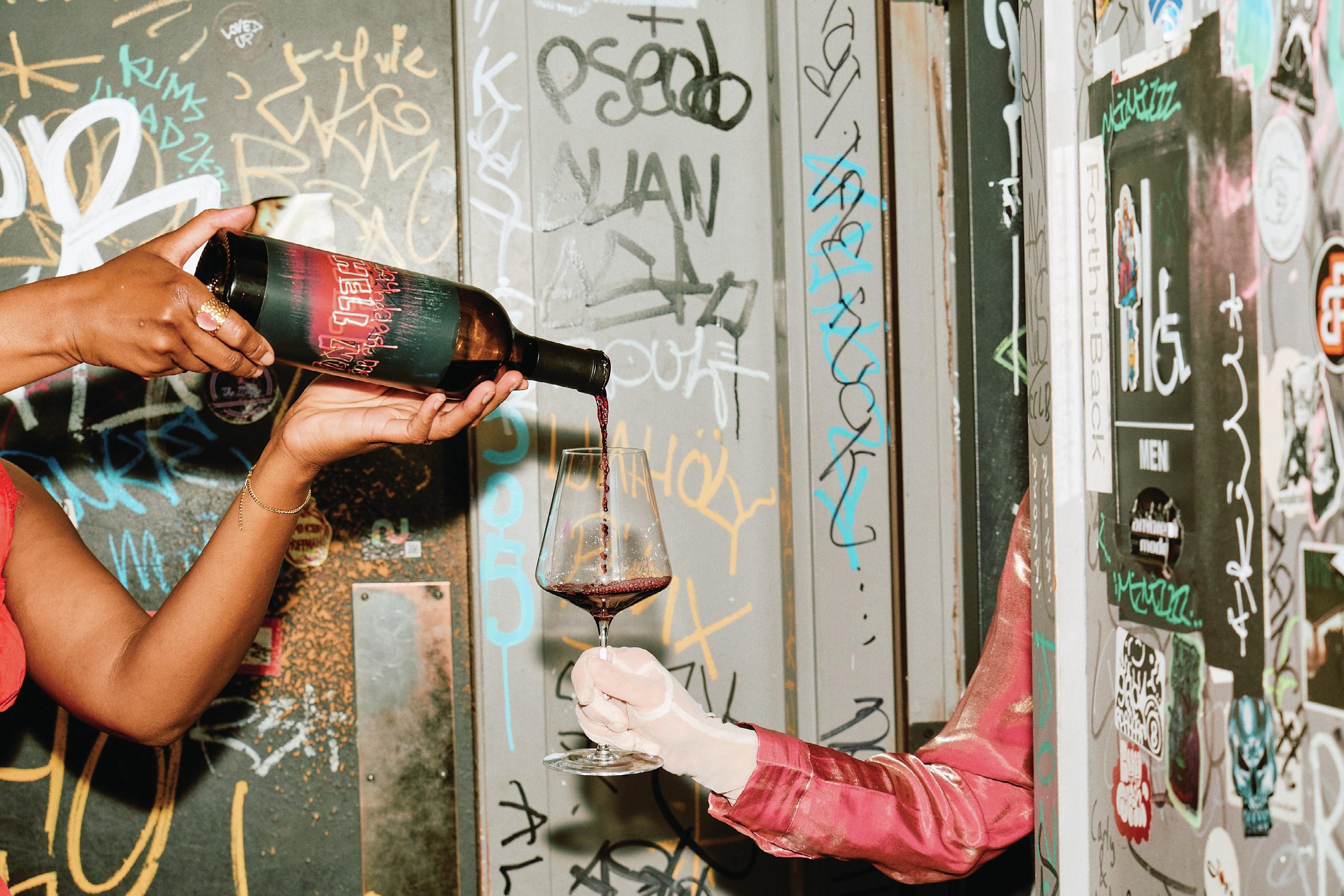
Sons of anarchy: Orin Swift challenges the typical luxury aesthetic with its wine labels
Although they may have to label wines by the generic ‘California’ rather than the prized ‘Napa Valley’ as their place of origin, many Napa Valley vintners have become intrigued with blending their grapes with those from elsewhere in California, whether of the same or of different varieties. For example, Frog’s Leap’s Flycatcher red blend combines grapes from five AVAs and consists of 36% Zinfandel, 15% Cinsault, 13% Petite Sirah, 13% Carignan, 10% Tempranillo, 9% Merlot and 4% Syrah (the Napa component).
We’ll have seconds
Having both an estate or ‘first wine’ and a second wine of the same variety or similar blend is not unusual in Napa, but is still less common than it is in Bordeaux. In some instances, Napa second wines consist of grapes deemed not worthy of the estate wine, but increasingly they are simply different expressions. Sometimes they are grapes from different parts of the estate, or their cellar treatment is different from the first wine, or their blending components are chosen to present a different appeal versus the estate wine.
To use one example, the historic Beaulieu Vineyard – BV – from Rutherford, now owned by Treasury Wine Estates, has as its icon wine Georges de la Tour Private Reserve (US$180), pioneered by the late André Tchelistcheff. But BV also offers several other red iterations, including its longstanding Rutherford Reserve Cabernet Sauvignon (US$80) and Tapestry Reserve (US$65), a blend, each perfectly lovely, but with a different appeal.
“Georges de la Tour is in the classic style, with great structural backbone,” says winemaker Nate Weis, “but the Rutherford Reserve is more forthcoming and opulent, while Tapestry shows its components – the tobacco notes of Cab Franc and the black fruits of Malbec.”
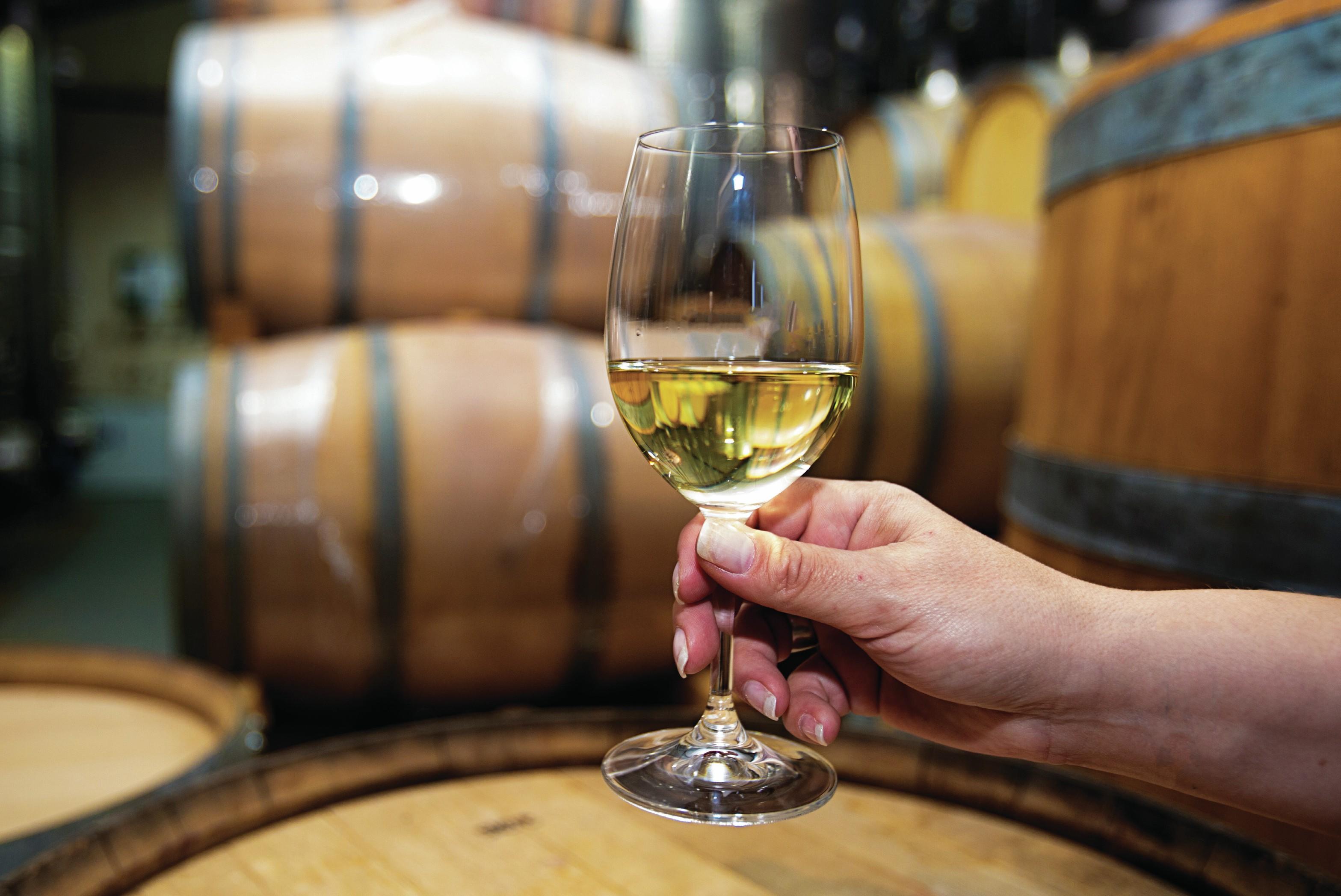
Glass action: Sorèlune offers Chardonnay by keg for restaurants to serve by the glass
It’s not always just what’s in the bottle that appeals to consumers. How the wine is presented is also important. What is its cultural aesthetic? Does it have an attitude?
David Phinney, profiled in the November issue of db, has made a career out of selling very good wines below market prices in bottles with odd-looking labels – the macabre scenes gracing The Prisoner, now owned by Constellation and the largest-selling luxury red blend in the US, or the often humorous packaging of Orin Swift, now owned by E&J Gallo. By contrast, Sharon Harris, owner of Rarecat, proclaims: “The Rarecat lifestyle is a curated blend of past and present, eclectic, meaningful and made for a life filled with joie de vivre.” Harris personifies this in her relationship approach to club members who visit. “I was never any good at selling SKUs,” she says. “People sit down with me, and we start talking about what’s going on in business of wines. Of course, we talk about the wine, but we talk about our lives. They want to laugh, they want to have a conversation. How simple is that?”
Plans A, B and C
In addition to its classic Napa varietals, Rarecat offers its clientele under the same label its proprietary wines made in Bordeaux and in Champagne, overseen by Harris but made in France through “partnerships and connections”. By contrast, The RD WInery Collective produces its own wines, but also leases its facilities to a group of small producers – modern garagistes – who don’t have volume or resources to own wineries. And Sorèlune has high-end wines in traditional formats, but it also offers beautiful Chardonnay keg wine for restaurants to sell by the glass.
“Restaurants are looking for creative ways to delight their guests without compromising on quality,” says Sorèlune owner Nova Cadamatre MW. “We built Sorèlune to answer that call. This Chardonnay offers the elegance and pedigree of a single-vineyard Napa Valley wine, but in a format that manages costs and delivers freshness, glass after glass.”
They and others continue to try business models that will attract a discerning but changing clientele.
“Many years ago, I learned that it’s not just what’s in the bottle. It’s what happens when you open the bottle,” Harris says. “What can we do to make that special? The great power of wine is that it’s a social elixir.”
And, today in Napa Valley, the nature of that elixir is continuing to evolve.
Related news
Calmére Estate sale signals renewed investor confidence in Napa Valley


