



‘Using helicopters would have crippled us financially’
As the cost of using helicopters to fight frost “doubles in price”, the owner of Central Otago producer Akitu tells db how new wind fan technology saved its “near perfect” 2022 vintage.
Speaking to db as he prepared to release his 2022 vintage reds (A1 and A2), Andrew Donaldson, owner of New Zealand winery Akitu, said that a change in the way he fights frost has made a dramatic difference to his finances.
Located on Lake Wanaka in New Zealand’s South Island, Akitu is “right up against the viticultural edge of the Southern Alps”, said Donaldson, where viticultural conditions are extremely challenging. “We’ve been having more frequent frosts, though not quite as severe as previously,” he explained. The cold weather has taken its toll on volumes, which are small to begin with in Central Otago. In fact, 2025 was the lowest-yielding vintage in the region since 2010.
A key factor in the success of the winery’s latest commercial releases (the 2022s) was a game-changing wind fan that Akitu installed at the end of the 2021 vintage. “It has a new blade design, which makes it unbelievably affective” Donaldson told db.
Money saver
It also saved him a bundle of cash.
“It was the first year we’ve not flown a helicopter since we started, which is fortunate as helicopters have doubled in price since Covid,” he said.
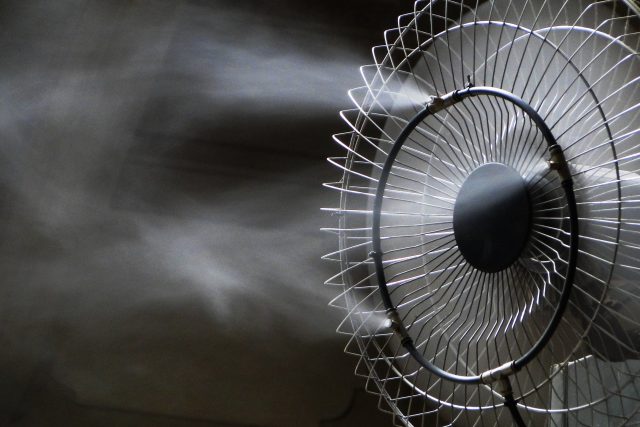
Standing 12 metres high, the “big, chunky, four-bladed” fan is “quite a beast”, and tilts in different directions as it rotates, which Donaldson says gives it “a more complex vortex”.
The fan is also retractable, meaning it can be folded down when not in use, and while the energy required to power the machine is not exactly meagre, the fan “burns a hell of a lot less diesel than a helicopter using gas,” the winery owner claims. Indeed, according to one New Zealand manufacturer, running a wind fan for one hour can use around 12 litres of diesel, roughly the same as the hourly fuel consumption of a new LandRover travelling at 60mph.
According to Donaldson, last year “we used the fan for 163 hours. If we had used the helicopters, we would have had them out for two thirds of that time which would have been crippling financially.”
Frost fighters
As db reported last year, wine growers are experimenting with myriad ways to battle frost, from crop candles to water sprinklers. However, others are choosing to abandon traditional anti-frost measures altogether, as they are not able to charge high enough prices for their wines to offset the cost of frost-fighting.
Joshua Smith, sales consultant for TBX Tow and Blow Frost Fans, based in Hastings, New Zealand, agrees with Akitu’s Donaldson that helicopters are becoming prohibitively expensive to operate. He told db: “Helicopters are very expensive and offer inconsistent area protection. As frosts are often at night, they can’t see the exact area they are trying to cover, and they normally try to do too big [an] area, therefore allowing frost to settle in and do damage.”
“Once a wind fan is set up for frost protection, that machine is 100% consistent in its timing and protection. The machine consistently rotates at a set speed and is set to focus on a specific area, which means you have a very high chance of having an 100% frost-protected crop around the fan or area it is set to protect.”
20 year old vines
Ensuring adequate frost protection was all the more important for Akitu’s landmark 2022 vintage, which marks “20 years in the ground for our Pinot Noir vines,” said Donaldson.
The producer has learned a few things over those two decades, and subsequently made important changes, including switching much of its vineyard over to cane pruning. “With our vines now 20 years old, we’ve ended up with some quite long spurs developing and have been converting all of our B block to cane pruning, which is proving to be really successful. It costs more but it’s much easier to manage throughout the year,” he said.
“We don’t irrigate much so the vine roots are really far down. We’re not really seeing the competition for water from other plant species.” As such, Akitu has been able to reduce its thrice-yearly under-row herbicide applications to once per year.
According to Donaldson, there has been “a lot of talk” in Central Otago of tilling “not being quite the panacea that everyone thought it was”, and he told db that Akitu intends to eventually go “mow and no-till”.
Partner Content



Top pours
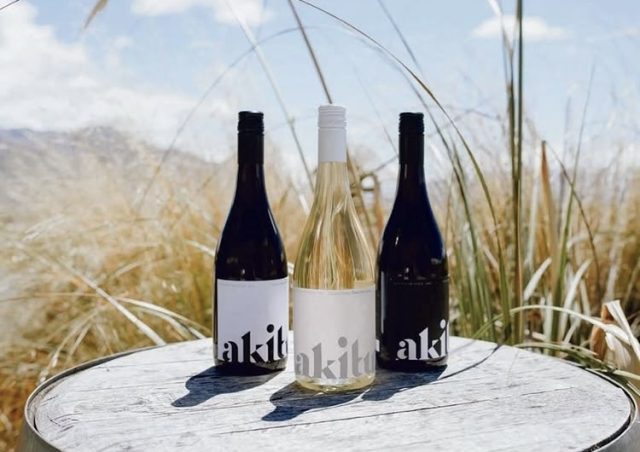
Akitu produces a flagship Pinot Noir by name of A1, and a second Pinot Noir, A2.
“I don’t need people to talk about it, I don’t need people to write about it, I just want people to pour another glass,” Donaldson said of the “generous, approachable, succulent” A2. The wine’s mouthwatering savouriness and hint of spice, paired with beautifully soft tannins, means that “hotels just love it. We stay on some wine lists for two years,” he revealed.
For A2, five different Pinot Noir clones are used from seven different vineyard parcels, and the wine (about 33% whole bunch pressed in 2022) sees 10% oak.
Comparatively, Akitu’s top A1 wine, aimed at the premium on-trade, is “very closed and tight to begin with” but unfolds to express intense aromas of “red cherry, wild herbs, graphite, and florals, developing into tobacco, liquorice, and earthy minerality with time”. On the palate, there is “dark cherry, plum, and Doris plum fruit.”
“We pick by block and by clone, and we ferment by block and by clone,” Donaldson explains. Yields are small, about 4.5 to 5.3 tonnes per hectare, but “that’s what gives that edginess to the wines,” he said. “We do think they are quite distinctive within the Central Otago portfolio.”
A1 (about £34 at retail) and A2 (£45) are available at UK venues including Limewood Hotel, 28-50, Benares Restaurant Mayfair and The Pig hotels at Bridge Place and Brokenhurst, as well as The Woodspeen Hotel and Sky Garden Fenchurch Restaurant.
White rabbit
A third wine has also caught the attention of UK sommeliers. Akitu released its inaugural Pinot Noir Blanc in 2019, telling db “it’s something we’re surprised more people aren’t doing.”
Donaldson explained that the white Pinot Noir came about as “a bit of a dalliance really” and quipped that he decided to make it because “when we went to tastings, everyone was showing their whites first and I didn’t have one to show!”
Since then, Akitu has upped its production for this white wine from 350 cases for its inaugural vintage to 413 cases for the 2024 (on shelf now). In terms of winemaking, the producer has also “pulled back slightly on the combination of oak – so less partial fermentation in old oak barrel – and a little less lees, as I think we went a little too far with it in the 2023,” Donaldson said of this 13.4% ABV Pinot Noir Blanc.
Grapes for the wine are sourced from the 777 Pinot Noir clone, “an earlier ripening clone, normally harvested 2.5 to three weeks earlier than the reds.”
According to Ciara Wong, brand manager at Mentzendorff, which represents Akitu’s wines in the UK, the Pinot Noir Blanc “is made for relatively early drinking – recommended to drink one to two years of vintage, but it’s made as a white wine and could arguably be aged for three to five years.”
Mentzendorff currently has Akitu Pinot Blanc on the lists at establishments including Dorian Restaurant Notting Hill, Gouqi Restaurant Trafalgar Sq., Roka, and The Woodspeen Hotel.
Related news
Classic New Zealand Wine Trail gets NZ$991k in tourism push
Why New Zealand's Sato Wines is quiet about its 'natural wine' identity


