



Under-the-radar red wine proves Austria’s versatility
Sometimes overshadowed by famous white grape Grüner Veltliner, Austria’s red wines offer just as much quality and versatility. Moreover, they can stand apart as a truly unique contribution to the world of wine.
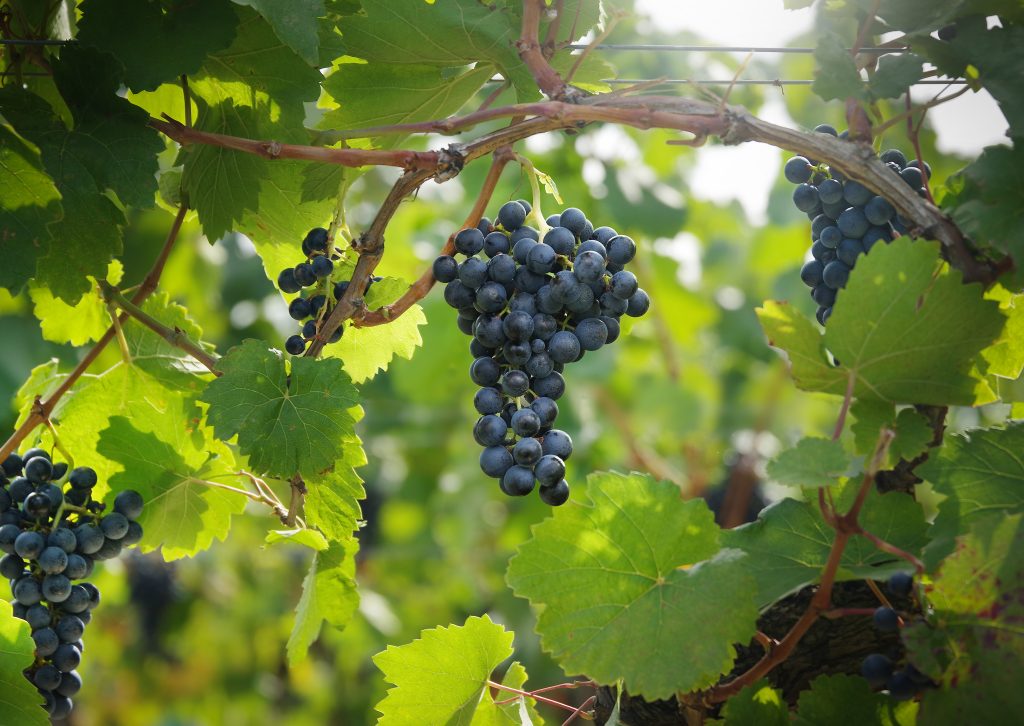
For the informed millennial or Gen Z consumer, Austrian wine likely has a ring of cool about it. The bottles have been making regular appearances in Michelin-starred restaurants for well over a decade, while three of the UK’s ‘big four’ supermarkets have an own-label Austrian bottling.
That is a remarkable turnaround for the nation, which hit a nadir of scandalous bad PR in the 1980s. Any consumption of Austrian wine today rightly can be celebrated by its producers – a victory of quality that has won over wine drinkers.
Yet the Austrian revival has become entwined with its most common grape variety. Grüner Veltliner, as a native grape that matches modern tastes for fresh, food-friendly white wines, is often the flag-bearer expression in the UK market.
There is, it should be stressed, much to commend Grüner Veltliner. Yet its ubiquity runs the risk of obscuring other great Austrian wines. In particular, the reds deserve their moment in the limelight.
Terroir for black grapes
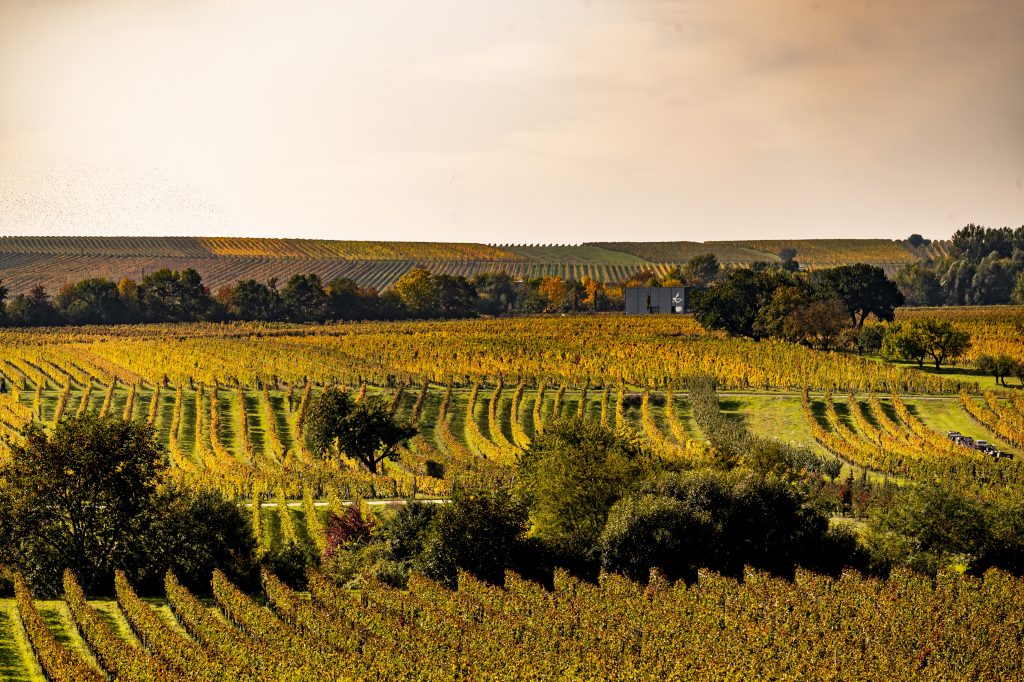
Austria’s associations with the Alps, skiing and Christmas markets may give the impression that it is a cool country, but that is too much of a simplification in the precise world of winegrowing. More than anything, Austria is a deeply continental country, with a climate that shows great variety.
It is largely to the east that black grapes thrive. Warm air from the Pannonian Plain across the border in Hungary helps the grapes to ripen, revealing plush fruit character but also ensuring ripe and satisfying tannins.
That is particularly true in Burgenland. Slightly to the south of Vienna, it is less influenced by cold winds from the north than Niederösterreich. Hence Burgenland is better known for its red wines than the Griüner Veltliner or Riesling that thrive further north.
Soil types also have an impact, though they are immensely hard to generalise. Austria sits at the centre of Europe, and is deeply influenced by its most dramatic geological formation: the Alps. Hence, its vineyards show great diversity.
There are many in Austria, however, that seem ideally positioned for red wine production. Black grapes tend to like warm soils – stones that warm in the such rather than clay that stays cool. In Burgenland, 60% of soils have a marked gravel component, often with thin topsoil above, and so red grapes often find ideal conditions for full ripeness.
Two flagship varieties
Grüner Veltliner may be Austria’s best-known viticultural export, but it has black grapes that likewise offer a unique proposition to the consumer. Zweigelt and Blaufränkisch, in particular, lead the charge.
Zweigelt is Austria’s most widely planted black variety. Not only that, but it is evidence of a strong tradition in the country of creating new varieties. It was bred in the 1920s – a crossing of Blaufränkisch and St Laurent – and is found across the country. In particular, it boomed in popularity towards the end of the 20th century, cementing its place at the heart of Austrian wine production.
The grape is distinguished by its firm tannins (which need the continental heat to ripen fully) and bold fruit profile reminiscent of Morello cherry. The wines are frequently drunk young, though increasing use of barriques is proving its versatility.
Blaufränkisch, meanwhile, may have been surpassed by its offspring in terms of plantings, but it is still a hugely respected variety, both at home and abroad.
Partner Content



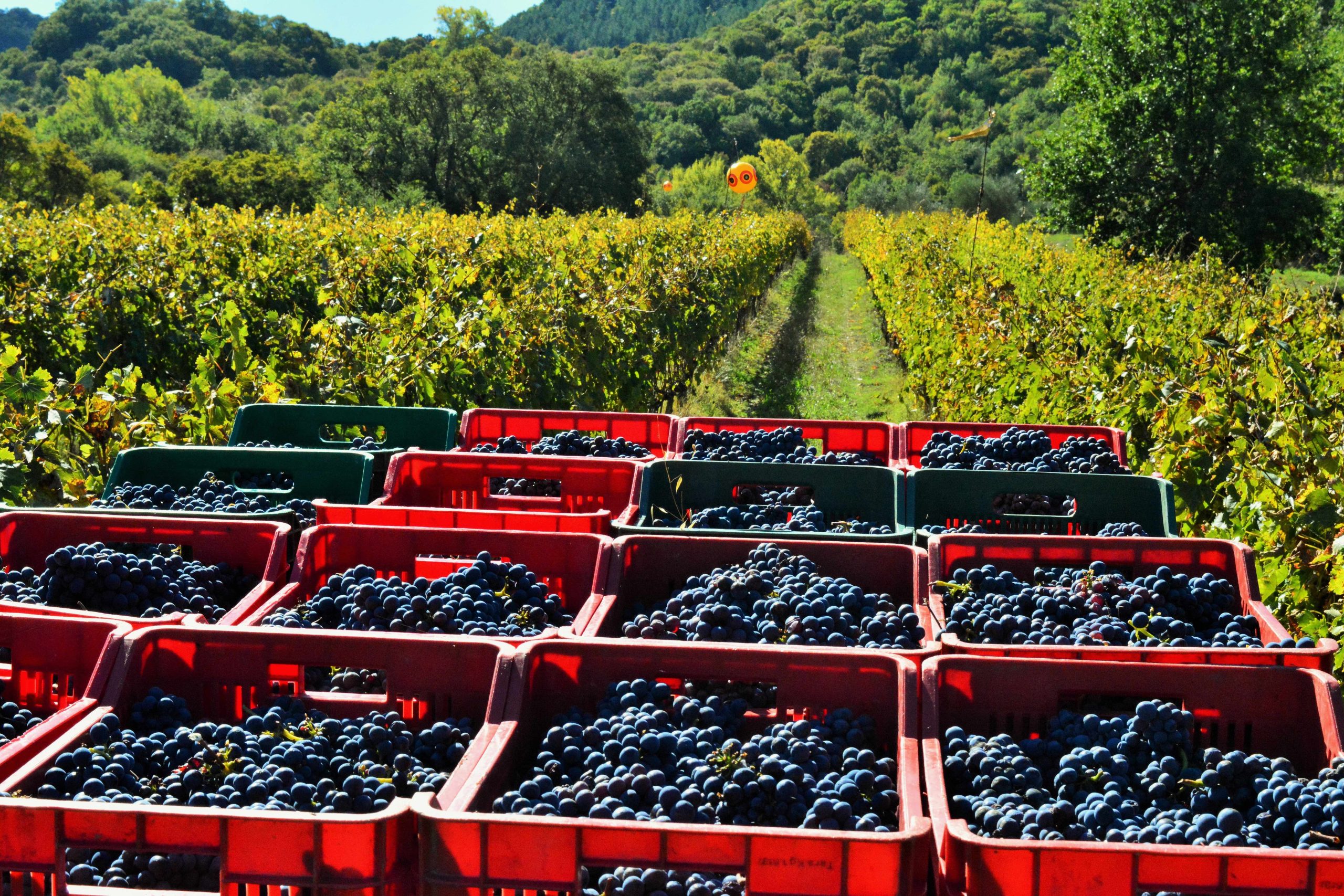
Since it buds early and ripens late, it is more particular than Zweigelt, and hence its production is largely concentrated in the warm climes of Burgenland. Yet it rewards producers with a compelling mix of fresh acidity, spice and body. Indeed, the elegant structure means that ambitious producers will age the wine both in barrel and bottle to accentuate its character.
Food pairing potential
The old adage of ‘what grows together, goes together’ certainly holds true in Austria. The national cuisine is an ideal starting point in exploring its wines.
For instance, the combination and freshness and spice in a mature Blaufränkisch will both cut through and stand up to roast beef with crispy onions. Austria’s famed paprika dishes, on the other hand, work well with juicy, fruity Zweigelt.
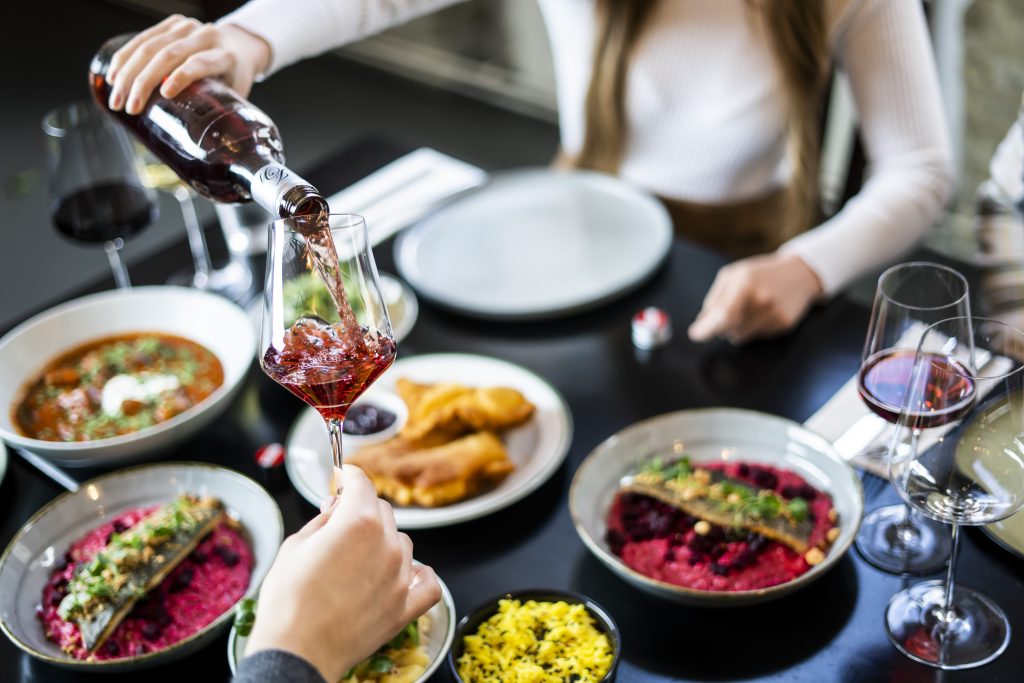
Yet Austria’s borders should not be the limit for food pairing. Grüner Veltliner is an acknowledged match for many Asian cuisines: its acidity cuts through richness, while it can often mirror a spicy profile in food.
Austrian reds, equally, can face up to such bold flavours. Salt and pepper squid, for instance, finds a match in the pepperiness of a young Blaufränkisch. The juicy cherry quality of Zweigelt, on the other hand, is a fine pairing with Sichuan dishes.
Blaufränkisch with moussaka, Zweigelt with pulled pork, either with rich vegetable dishes: the pairing potential is immense. And that is before you consider, of course, their propensity for chilling or Austria’s wide range of red blends. For red wine lovers, Austria offers a wealth of opportunities – adventurous consumers are starting to take advantage.
A pair of Gold medal-winning Austrian reds from our recent Autumn Tasting are featured below.
Keringer Zweigelt Reserve 100 Days 2022
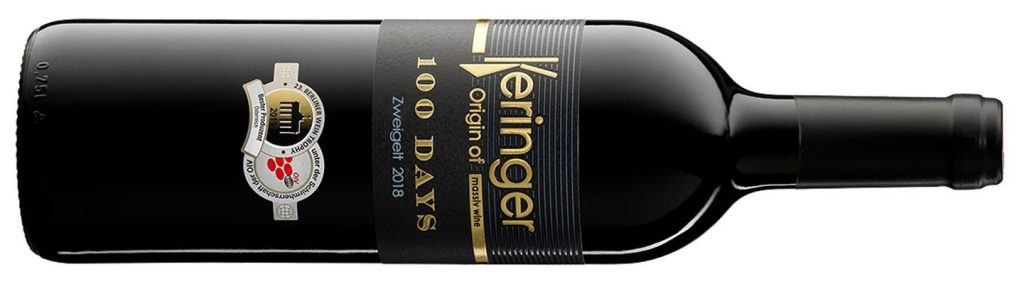
- Producer: Weingut Keringer
- Region: Burgenland
- Country: Austria
- Grape variety: 100% Zweigelt
- ABV: 14.5%
- Approx. retail price: £17
Keringer, based in the town of Monchhöf near Neusiedlersee, proves that this part of Burgenland can produce high-quality red wines. Deep ruby-hued, this one has mixed berry fruit with cigar box overlay and hints of capsicum and peppermint. Dry and mid-weight, the palate flavours are framed by crisp acidity and grippy tannins. Very spicy and warming, the wine shows good length and would match seared venison loin with Indian spices. (Patricia Stefanowicz MW)
Weingut Kollwentz Cuvée Red Steinzeiler 2021
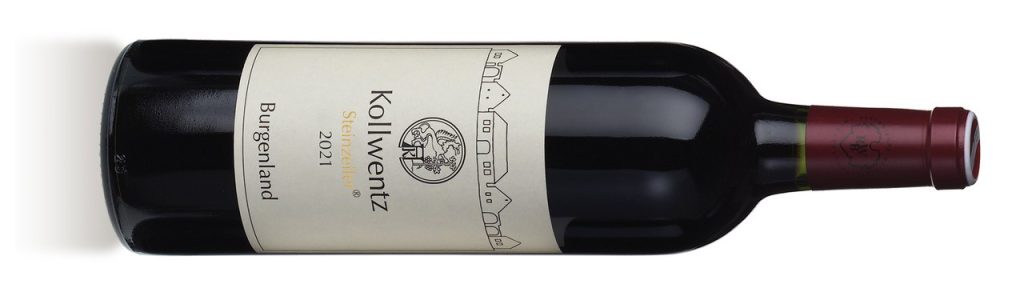
- Producer: Weingut Kollwentz
- Region: Burgenland
- Country: Austria
- Grape varieties: 80% Blaufränkisch, 10% Cabernet Sauvignon, 10% Zweigelt
- ABV: 14%
- Approx. retail price: £69
Steinzeiler derives its name from the rocky calcareous soils on the southern slopes of Leithagebirge.This expressive wine has a deep ruby colour and damson and blackberry fruit, with plenty of smoky oak and hints of Christmas pudding, dark chocolate and Indian spices. Dry and richly-fruited, the palate shows crisp acidity and dense, linen-textured tannins. Savoury and spicy but youthful, so the wine needs a bold dish such as lamb shanks with sticky dark gravy to show at its best. (Patricia Stefanowicz MW)

Related news
Ashley Graham launches Lucci Lambrusco
Fine wine acting 'more like property' than a collectible asset


