



The most interesting conversations db had in 2025
Our series of ‘Big Interviews’ this year encompassed conversations with impressive producers, presidents and distributors across the globe. Here are our top takes from some of our most illuminating chats with the trade.

Sebastian Tramon on modern slavery in the wine trade
We kicked off the year by speaking to the head of sustainability at Chilean wine producer Emiliana Organic Vineyard, who revealed the pressure involved in fronting green operations for the world’s biggest organic winery. “It’s an honour, but it means that we can’t make any mistakes,” he told the drinks business.
Interestingly, Tramon also divulged that the Nordic monopolies he had been speaking with had been particularly interested in “worker wellbeing” when deciding which sustainable producers and brands to list. “There’s a big focus on worker wellbeing, which is an important piece of the puzzle and often overlooked,” he said. “I was in a meeting with monopoly representatives from Norway, Finland and Sweden recently and they were talking about modern slavery in the wine industry with regard to vineyard workers not getting paid properly in South Africa, Italy and even France. You can’t take care of your land, plants and animals, and not your people. It doesn’t make sense.”
Tramon also insisted that conventional wineries “using chemicals that damage people and the environment” should be “more heavily scrutinised about what they’re doing, how they’re doing it and what products they’re using”, and stressed that to be truly sustainable means relentless flexibility: “Nature is never static. It’s not a factory. You can’t control it or its output. You have to work closely with it and constantly observe it in order to find new solutions.”
Lamberto Frescobaldi on Trump’s “business sense”
The Unione Italiana Vini (UIV) president proved overly optimistic in his assessment of Donald Trump’s tariff strategy when db spoke with him in February, predicting that Trump’s business sense would ultimately dissuade him from trying to punish wine producers, in the EU. “I’m not so pessimistic about him introducing sanctions, because if you have sanctions, it naturally brings inflation to his country – one of the things which cost the Democrats the election was inflation, and one of Trump’s goals is to lower inflation,” Frescobaldi told db.
He also had his glass half-full with regards to the war in Ukraine, noting that, in the event of peace, the post-war reconstruction of Ukraine could provide a shot in the arm for Europe as a whole: “A lot of things will have to be rebuilt, and when you are building things, the economy receives a boost, which gives a great opportunity for Europe. So the world is not finished!”
Finally, Frescobaldi stressed the cyclical nature of demonising a particular food group, most recently, alcoholic beverages. “Some years ago, everyone was against red meat, then chicken, then milk – a cappuccino was considered deadly for you – and now it’s alcohol,” he said. “We have to be careful and avoid being excessive, but if we don’t have those social moments with wine, life can become very boring.”
David Parker on why data is “the great equaliser” in wine
The president of the National Association of Wine Retailers in the US and CEO of fine and rare wine vendor Benchmark Wine Group, explained to db why data is a “great equaliser”, and insisted that for this reason every drinks company should invest in getting to grips with it.
As owner of The Wine Market Journal, a vast collection (currently more than 2.5 million entries) of data that tracks every single trade of every wine sold by the major auction houses in Europe, Asia and the US, the journal makes it possible to see at a glance “exactly what’s trading and for how much”. Parker said that he sees such data as being essential to “democratising the rare wine industry”.
“Data is the great equaliser between buyers and sellers,” he said. “Rare wines are very thinly traded products, so you want to see every single trade of that wine.”
Parker also told db that there is a safety to dealing with high net worth individuals as they tend to be “more insulated from economic up and down turns, as well as from misinformation”. However, he stressed that as soon as any government (whether left or right wing) gets involved with the wine industry, “things get complicated.”
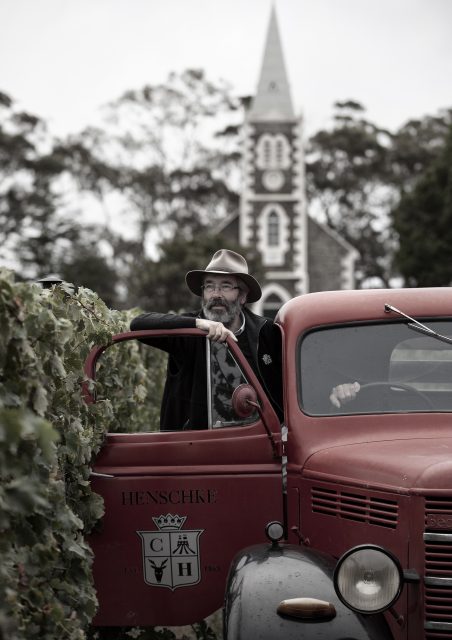
Stephen Henschke on the superiority of screwcaps, even for fine wines
The South Australian wine producer, and recipient of the Winemakers’ Winemaker Award 2025, Henschke told db that he was taking the somewhat radical approach of bottling all of his wines under screwcap.
“In my early years as an Eden Valley winemaker I was frustrated by how quickly my Rieslings were developing in bottle under cork,” he said. “After continual frustration with cork, my first bottling of our Riesling under screwcap in 1996 proved its superiority beyond doubt. Trials and analysis by The Australian Wine Research Institute have validated my results, and from the 2021 vintage onwards, all Henschke wines will be bottled with Stelvin closures.”
This is a big deal given that most vintages of Henschke’s top Shiraz wine, Hill of Grace, sell for about £600 per bottle (the current 2021 release, available from May 2025, is priced at £675), which gives some idea of this wine’s iconic status. While the 2021s are drinking beautifully now, Henschke says they are showing “impressive potential for long-term ageing over 30-plus years, under ideal cellaring conditions”. The 2021 vintage, he stresses, “will be a standout of the decade”.
Rob Symington on why the Douro wouldn’t be “commercially feasible” without Port
Rob Symington, the former co-CEO of Symington Family Estates, and now UK MD for Berry Brother & Rudd, declared to db that he was prepared to “make himself unpopular” by speaking out about the serious social and economic challenges facing the Douro. “It would be much easier for me to keep my mouth shut, but we buy from 600 growers, so we’re entwined with the health of these communities.”
“Historically, the Douro region evolved around Port, so there was a fixed market for Port grapes, and the rest was a free market,” he said. “Now that still wines account for about half of the region’s production, things need to change, and fast.”
The high price of Port grapes today is “artificially subsidising still wines”, he says. “If it wasn’t for the higher prices we pay for our Port grapes, then the Douro region wouldn’t be commercially feasible.” It also means that table wine grape growers receive a pittance for their fruit. “It’s a scandal; a serious problem for Douro communities and for the still wine category,” he continued. “Even though we, as a company, benefit from the lower prices for still wine grapes, as a region we are setting ourselves up to fail if things carry on the way they’re going. We are teaching people around the world that Douro wines are cheap, which is not the case.”
Producers who are buying grapes exclusively to produce still wines are ” benefitting because they’re paying an artificially low price for those grapes,” Symington added. “So there’s definitely some vested interest [from some parties] in the region.”
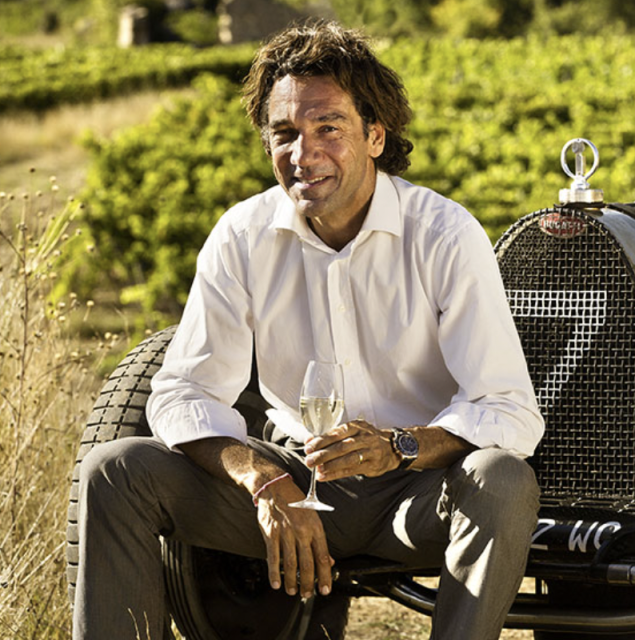
Jean-Claude Mas on why selling French wine in France is a nightmare
The founder and winemaker of Domaine Paul Mas in the Languedoc revealed the complexities of trying to sell wine to his domestic market.
“France is a very conservative country in any sense, and when it comes to wine they are even more conservative,” he told db. “People are really opinionated. They think that Bordeaux is better than Burgundy; Burgundy is better than the Loire. They are not open to the world. Historically, the Old World has been very producer-focused; wine being one of those obscure things where you have to be initiated.”
The New World, on the other hand, “is more about trying to make the wine more appealing to consumers, but not treating them like ‘if you don’t like this wine it’s because you don’t know about wine’.”
Explaining why the domestic French market has never been the priority for Domaines Paul Mas, he described trying to sell wine in France to “like trying to sell a hamburger to Americans. There’s too much competition.” Added to this, selling wine in France is “very costly”, he said, and “the Languedoc doesn’t have such a good image in France. It ended up being so complicated and so expensive that going to the French market was, for me, a no-go.”
Instead, the success of Domaines Paul Mas began in Japan. “Without Japan I wouldn’t exist,” Mas said, explaining that his strategy for marketing wine is “best expressed” in this market, which drives sales of both value-for-money wines and top-end cuvées.
Adrian Bridge on why “inaction” is the death knell of any wine business
The CEO of Port and still wine producer The Fladgate Partnership told db that despite the many challenges facing the wine trade today “you have to embrace the change and the opportunities to come. The alternative is to sit right in the middle of the road, wondering which way to jump – and that’s going to be tougher.”
“That’s what businesses have to do; not necessarily fight it, but absorb what’s happening and adapt.”
Bridge admitted that his attitude likely harks back to his career in the Army and especially his Sandhurst training. “If you’ve got a situation, you deal with it. You may not have perfect data to make the right choice, but you make the choice based on the available data,” he said. “One of the issues that is probably true in the world today is that everyone’s waiting for all the perfect data in order to make the perfect decision. But that’s virtually impossible, and that tends to lead to paralysis.”
Stressing that there is no room for being a rabbit in the headlights, he added: “One of the things about running a company that’s 333 years old is you might be up in the middle of the night thinking: ‘Oh, my God, I’ve got this problem.’ But then you think: ‘Well, hang on. Over the last 333 years, this company has faced all sorts of geopolitical issues, including being invaded by a foreign nation. And yet we have come through that.’ And we probably managed that because we’ve been focused on what we’re trying to do and getting on with it.”
Partner Content

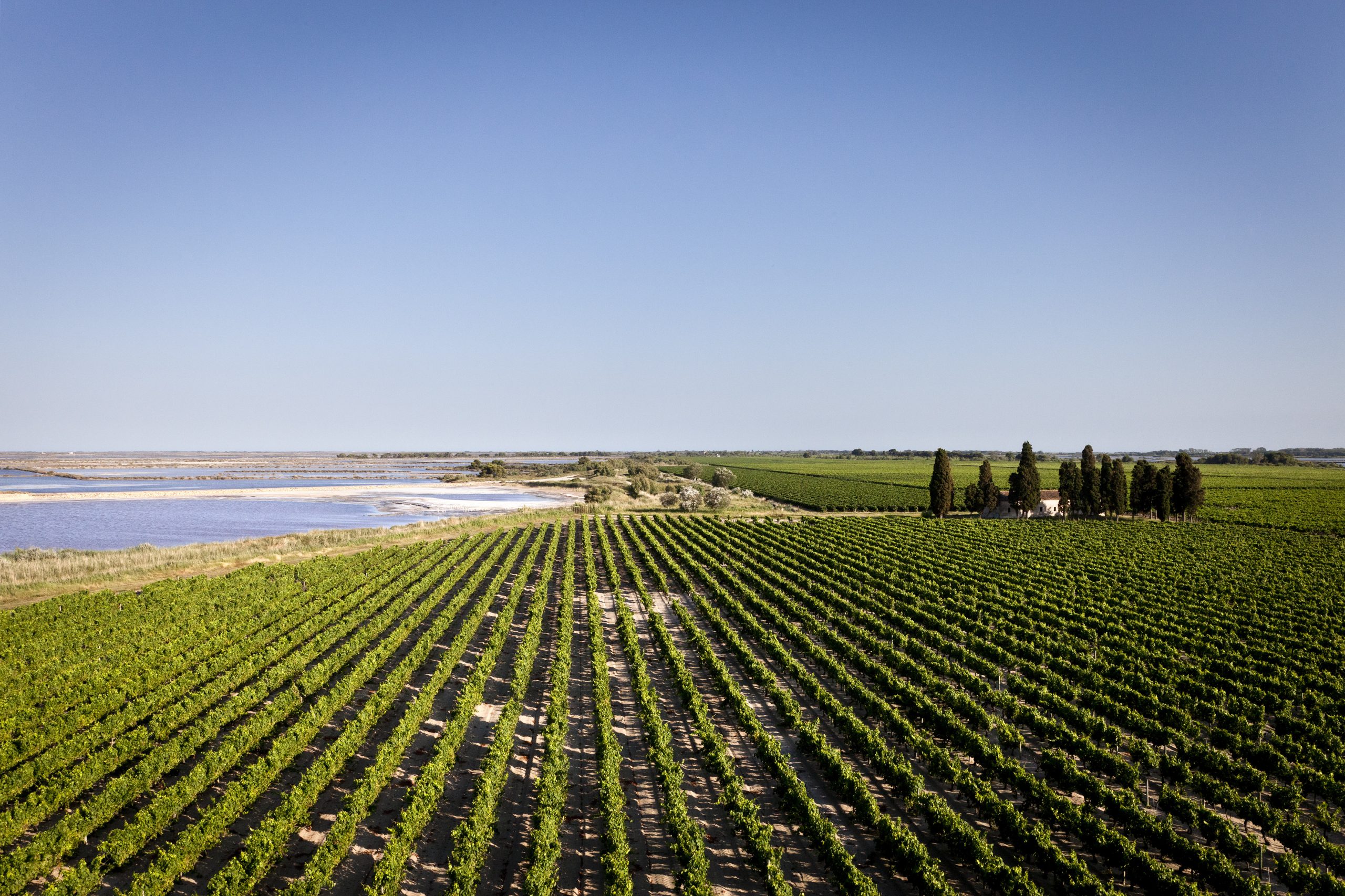
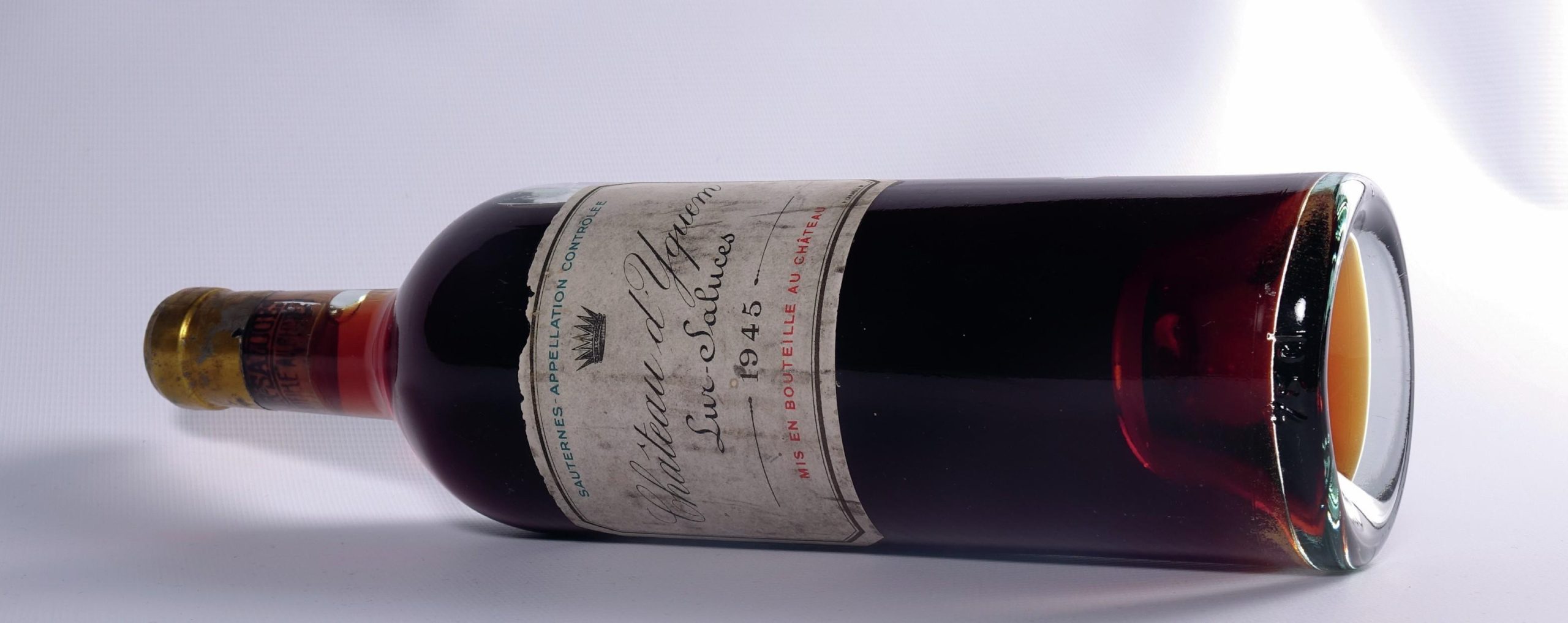
Nicolas Joly on his simple test for determining what makes “a good wine”
Describing the approach of many conventional winemakers, biodynamic guru Nicolas Joly, told db that “Modern wineries are like hospitals when they should be nurseries”. By this he was referring to the fact that winemakers often try to fix or manipulate what the vineyard provides rather than gently birthing a wine.
The Loire winegrower also shared his simple test for determining what makes a good wine: “I just ask people to open a wine and try it for a few days or even weeks. What is its capacity to resist oxygenation? In most cases, the life sources are not there.”
Joly further revealed how he discourages producers of substandard wine from his Return to Terroir movement, where interested parties must have their wines approved by a tasting panel of their peers, including Joly. “If their wine isn’t good, we just ask them to keep resubmitting. It gets a bit embarrassing, but usually they get the message.”
Joly insisted that his goal remains simple: “to bring knowledge so that people can capture the intangibles of a place with all its nuances. For 40 years, I’ve been saying the same thing. Today, some people may be listening.”
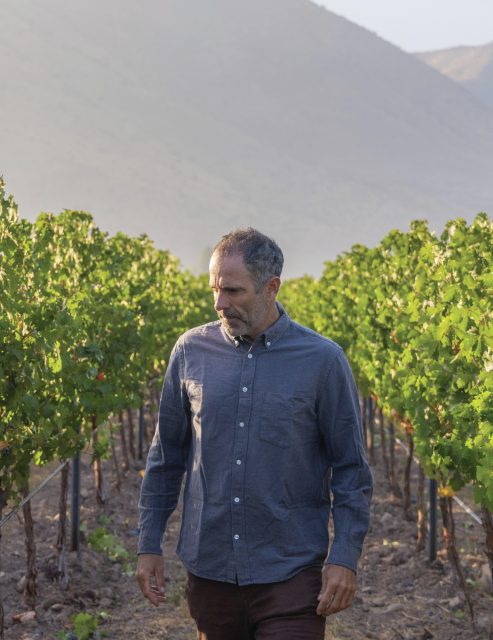
Sebastian Labbé on why fine wine consumers increasingly want bottles to “drink now”
The head winemaker at Chile’s Vina Santa Rita told db why he exerts a lot of time and energy on ensuring his icon wine Casa Real serves a dual purpose, reflecting a wider consumer trend.
“The main ambition is to try to have a Cabernet that has the concentration, the texture, the grip and the structure, but which is easier to approach at a younger stage,” Labbé explained. “I think nowadays, when we launch wines into the market, they need to be ready to drink, but also have the double function to have two or three decades ahead of them in terms of ageing.” For this reason, it’s important to “make wine slightly fresher and more vibrant nowadays”, but added that the 2005 Casa Real is “a wine worth giving a go after two decades.”
Rather than “explosive and exuberant” wines, the modern taste is for something “much more delicate and precise. And I think that is what wine connoisseurs really value,” he said.
“I don’t have a crystal ball to see the future – sometimes I wish we had. But one thing that we cannot buy is time – and there are no shortcuts in winemaking. We need to go through step by step and year by year. And I always say that, in this job, we only have one shot a year. That is what makes it very difficult.”
Rafael Calderón on why logistics matter, no matter how good your product is
The MD of Grupo Avinea, the largest organic producer in Argentina, highlighted one major red flag in the nation’s wine business, namely the need for greater investment in the roads and ports surrounding Mendoza.
Calderón explained that, like many companies, Grupo Avinea tends to use Chilean ports rather than Argentine ports, because “they are cheaper, easier and closer. You need to cross the mountains to reach the main Argentine ports, and our closest is 1,000km from Mendoza,” he says. “So there is still work to be done.”
The former Wines of Argentina boss also detailed why so few Argentine producers trade in their own domestic currency.
“The main issue in the past was the instability in Argentina,” he said. “For long-term planning, any business needs stability and, in the wine trade, especially in the premium sector where the product has a longer life cycle, planning is essential. You need to understand long-term demand, and to have at least some ideas for future growth. Otherwise you will end up with shortfalls.”
The last few years have seen many Argentine businesses abandon the native peso due to the devaluation of the currency. According to Calderón, Grupo Avinea currently trades in US dollars, Canadian dollars or euros, depending on the market and, he stressed: “It will stay like this for the foreseeable future.”
The nation’s new economic policy is “helping to establish stability”, he added. “Things are changing quickly, but it takes time. Argentina is not an easy country.”

Dave Phinney on why it’s codswallop that wine consumers “are all dying”
Speaking to db, the founder and winemaker of Napa Valley label Orin Swift called BS on the constant speculation that the older generation of wine consumers are all shuffling off this mortal coil, leaving producers with no one to sell to.
“I think it has been way overstated that all the wine consumers are ageing and dying,” Phinney said. “Everyone is fixated on the next generation of wine drinkers, but let’s take care of the people who got us here. Consumption is actually up in the 30- to 50-year-old category. What I never want to do is pander to anyone. If I was to look at the research and say: ‘We want to go after 25-year-olds,’ that’s disingenuous. I try to focus on making wine that we can be really proud of.”
Phinney also stood fast in his conviction that Napa wines needn’t be prohibitively expensive.
“I’m always pushing for the lowest price possible,” he said. “You have to have a ‘Louis Vuitton’, but there’s also room for The Gap or J.Crew or whatever. We can’t all be touting the same luxury brands… To me, ‘winning’ looks like a bunch of douchey hedge-fund guys drinking the wine and hearing them say: ‘These guys at Orin Swift are such idiots – they could have charged us twice the price!’”
Tyrone Reid on not treating the Middle East like a meal ticket
The CEO of Middle Eastern hospitality giant MMI & Emirates Leisure Retail Group issued a caution to any brands hoping to treat the market as a meal ticket, telling db that the UAE has “very high expectations” compared to other global regions.
Cultural understanding and an appreciation of diversity “is critical” in the market, and competition is fierce.
“Yes, the UAE’s hospitality and tourism scene is evolving at an extraordinary pace – from world-class hotels and Michelin-starred dining to new lifestyle destinations – which certainly creates opportunity, but it’s not automatic,” he said. “In a market like this, every brand has to earn its place.”
“Brands need to deliver genuine quality, authenticity and experiences to succeed. It’s a competitive environment, and that’s what makes it so exciting,” he reiterated. “The brands that thrive here are those that listen, adapt and add long-term value – not just those that sell products”.
Cracking the nut, he said, “comes from respecting local nuances, investing in compliance and building genuine partnerships”.
db looks forward to many more rewarding conversations with the trade in 2026, and would like to wish a very merry Christmas to all.
Related news
Garcés Silva: fresh thinking from Leyda
Christie's to sell Burgundies from renowned British collector Ian Mill KC


