



Shape shifter: a deep dive into Chinese Marselan’s many looks
Since its arrival in China in 2001, plantings of Marselan have grown exponentially. On a trip through China’s viticultural hubs, Anthony Rose discovers the different faces of this burgeoning grape.

When Marselan first appeared in China’s Hebei Province at the start of the 21st century, it arrived without baggage or back story in a wine industry searching for identity. In a country where Cabernet Sauvignon, with its 60,000 hectares, dominates vineyards and import shelves, Marselan’s emergence represents an experiment and an opportunity. Amid falling domestic consumption and imports, the grape has quietly taken root, with many producers now backing it as China’s potential vinous signature thanks to its adaptability, broad quality range and appeal to Chinese palates.
In 1961, while working at France’s Institut National de la Recherche Agronomique in Montpellier, Paul Truel (1924–2014) created Marselan by crossing Cabernet Sauvignon and Grenache. It was named after the southern French coastal town of Marseillan, near Domaine de Vassal, the research vineyard of the INRA. Truel’s goal was to develop a grape variety combining the disease resistance of Cabernet Sauvignon with the yield potential of Grenache.
Officially registered in 1991, Marselan today has only one certified clone, 980. At first, no one was quite sure what it was or where it might fit. Not born great like Cabernet Sauvignon or Pinot Noir, it would need to have greatness thrust upon it if it were to compete at the top table of internationally recognised varieties.
In that sense, a comparison with Argentina’s Malbec is more apt than with the classics. Like Pinotage or Carmenere, Marselan began life with something to prove — and the possibility that it might eventually become China’s unique selling point soon began to emerge.
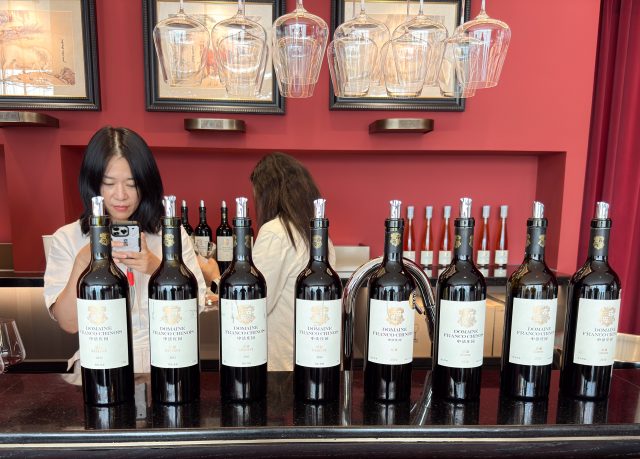
Marselan arrived in China in 2001 when 2.75ha were planted at Domaine Franco-Chinois in Huailai, an hour’s drive north of Beijing. After a slow start, plantings of Marselan in China have started to motor, from around 560ha in 2018 to an estimated 3,300ha–3,500ha today. Its appeal lies partly in its resilience – small berries, deep colour, soft tannins, good disease resistance in humid conditions and high heat tolerance – and partly in its adaptability. It performs across China’s broad climatic range, from the humid coast of Shandong to the arid highlands of Ningxia and Xinjiang. As Julien Boulard MW notes in a research paper: “Significant climatic and growth rate fluctuations lead to dramatically varying fruit development and consequently distinct wine styles.”
Marselan’s viticultural advantages are clear. Thanks to its thick skin and loose bunches, it’s more resistant to rot and powdery mildew than Cabernet Sauvignon, and retains higher acidity. Growers praise its high yields, ease of management and tolerance of climatic variation — crucial in a land of continental extremes.
The common trellising systems — Single Dragon Cordon or Chang Zi — allow for flexibility in burying vines over winter. In the winery, its naturally supple tannins invite gentle handling; oak can add complexity, but most producers are cautious not to overwhelm its delicate fruit. The result is a grape of flexibility and intrigue, capable of yielding both affordable, fruit-forward wines and more serious, structured examples with ageing potential.
A grape of no fixed abode, Marselan’s blank canvas has encouraged enthusiasm and imitation. “All the regions now have Marselan,” says Anita Cheng from Domaine Franco-Chinois. “It’s easy to grow, productive and fruity even at high yields. Professionals are promoting it — and when you get the message, you believe it.”
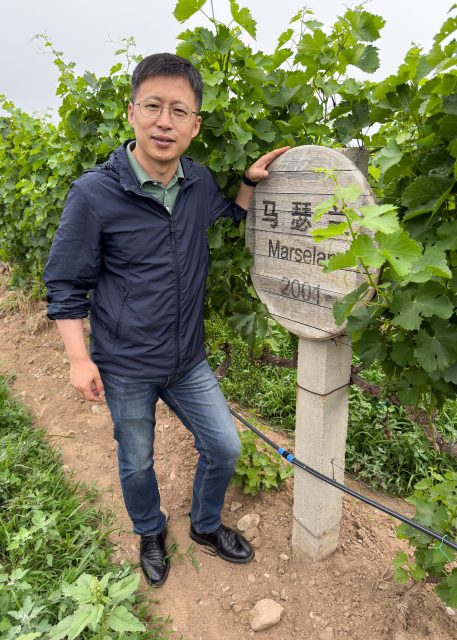
Desheng Zhao, the experienced winemaker at Domaine Franco-Chinois, calls Marselan a “superstar in China”. Its vivid purple colour, fruit-forward profile and soft texture appeal to consumers still discovering wine. In blind tastings, Zhao has seen Marselan outperform Cabernet Sauvignon, suggesting real quality and ageability, though humility and patience remain his watchwords. “We need to wait and see.”
In the industry, Marselan is prized for its adaptability and colour. “It’s easy to grow, and gives better yields — 10 tonnes per hectare compared with seven tonnes for Cabernet Sauvignon,” says Gao Chengjun of Great Wall Wine. “If the temperature’s high, you get a full-bodied style; if lower, more fruit and freshness. It gives greater consistency and can withstand climate variation better than Cabernet Sauvignon.” In his view, Marselan tends to be more balanced and elegant in Hebei than in Ningxia and Xinjiang, where it becomes sweeter and more powerful.
Truel was born on 27 April 1924, inspiring Beijing-based wine writer Jim Boyce to launch World Marselan Day on that date in 2018. According to Boyce, who is keen to make it a fun day, his aim was “to bring wine consumers into the fold with a variety that’s fruity, soft and easy-drinking, making it more attractive for newcomers than, say, some highly tannic Bordeaux. But it can also offer the quality and complexity that appeals to aficionados.”
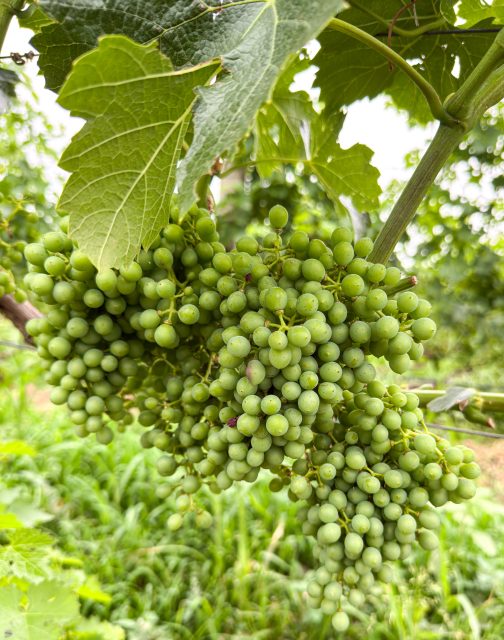
Consumers have responded enthusiastically to Marselan’s saturated hue — deep purple, rich in anthocyanins — which many associate with both quality and health. Yet its newfound popularity carries risks. In the rush to embrace something bright, shiny, and new, there is a temptation to overproduce. As some winemakers warn, without consistent quality and regional definition, Marselan could become a curiosity rather than a national emblem.
Nowhere are Marselan’s ambitions more visible than in Ningxia and Huailai — two regions that showcase both the grape’s potential and China’s evolving wine landscape. In Ningxia, in the foothills of the Helan Mountains, Lucas Yang of Domaine Pu Shang and his wife, Jing Jiang, bought 70 mu (4.67ha) of land in 2009. Initially considering planting trees, they eventually chose grapes – and Marselan in particular – influenced by developments in Huailai and seeking differentiation from Ningxia’s dominant Cabernet Sauvignon. They now have 11.3ha of Marselan and 4ha of Cabernet Sauvignon, Malbec, and Petit Verdot, planted at a density of 3,330 vines/ha and yielding roughly 6,750kg/ha.
Ningxia as a semi-arid region, with 3,000 heating degree days, a diurnal variation of around 15°C, and with only 200mm annual rainfall, relies heavily on drip irrigation. At Pu Shang, the trellis is high, the vines tilted at 45 degrees to facilitate winter burial. Summers are hot – a temperature of 38°C is common, with occasional spikes to 40°C. At 1,135 metres altitude, the soils are sandy, with large riverbed stones. After manual harvest and vineyard sorting, fruit is de-stemmed, cold soaked, fermented in stainless steel and matured in oak – 90% French, 10% American, around 30% new.
Lucas Yang’s Marselan is a bold, high-octane expression – rich, powerful, glossy. For Yang, its appeal lies in its “glamorous aromas” and “complex, full body”. The 2022 vintage, at 15.8% ABV, shows how ripe the variety can become under Ningxia’s fierce sun. The style is forceful but has clearly struck a chord with consumers and judges alike.
Partner Content

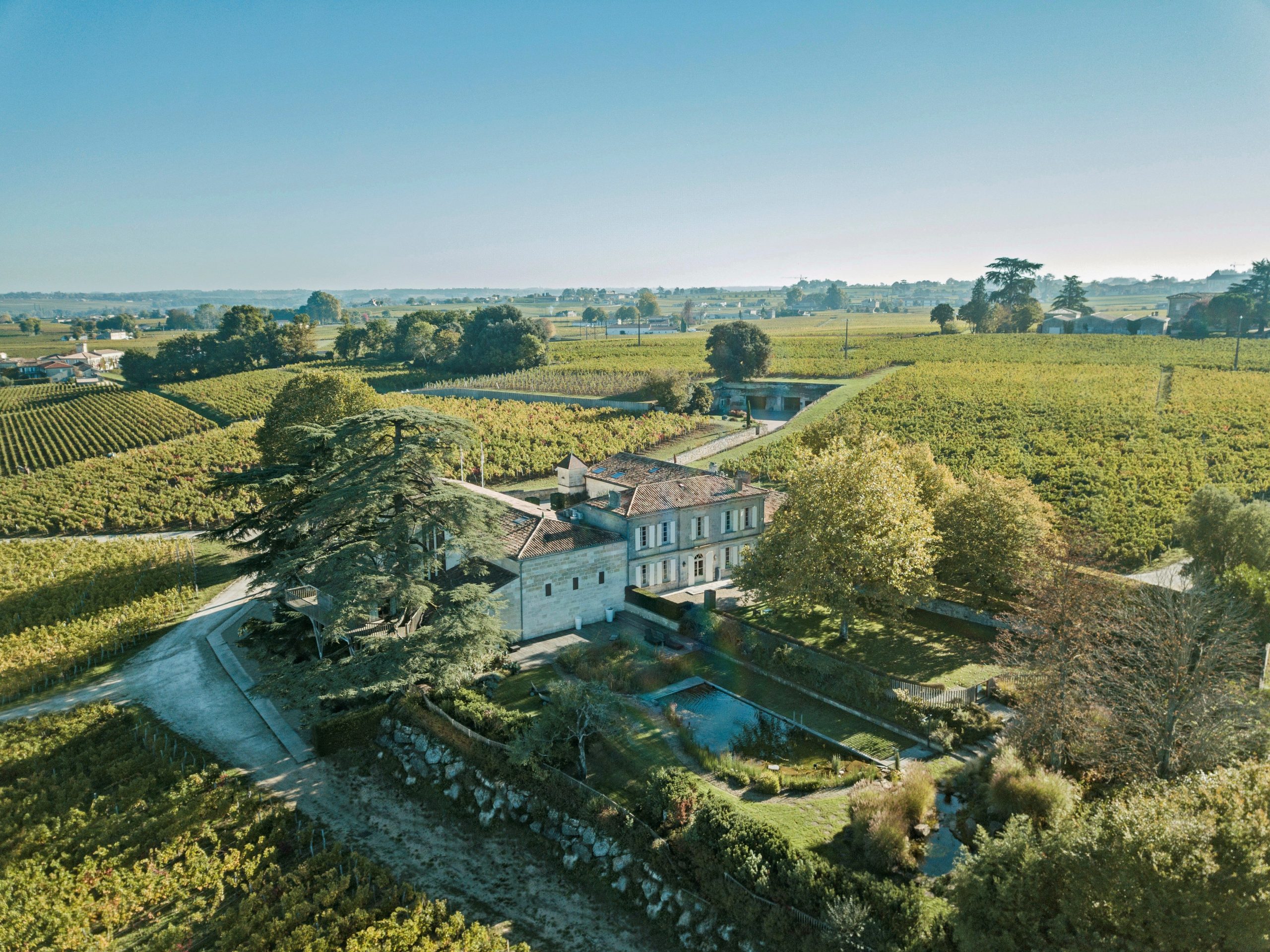
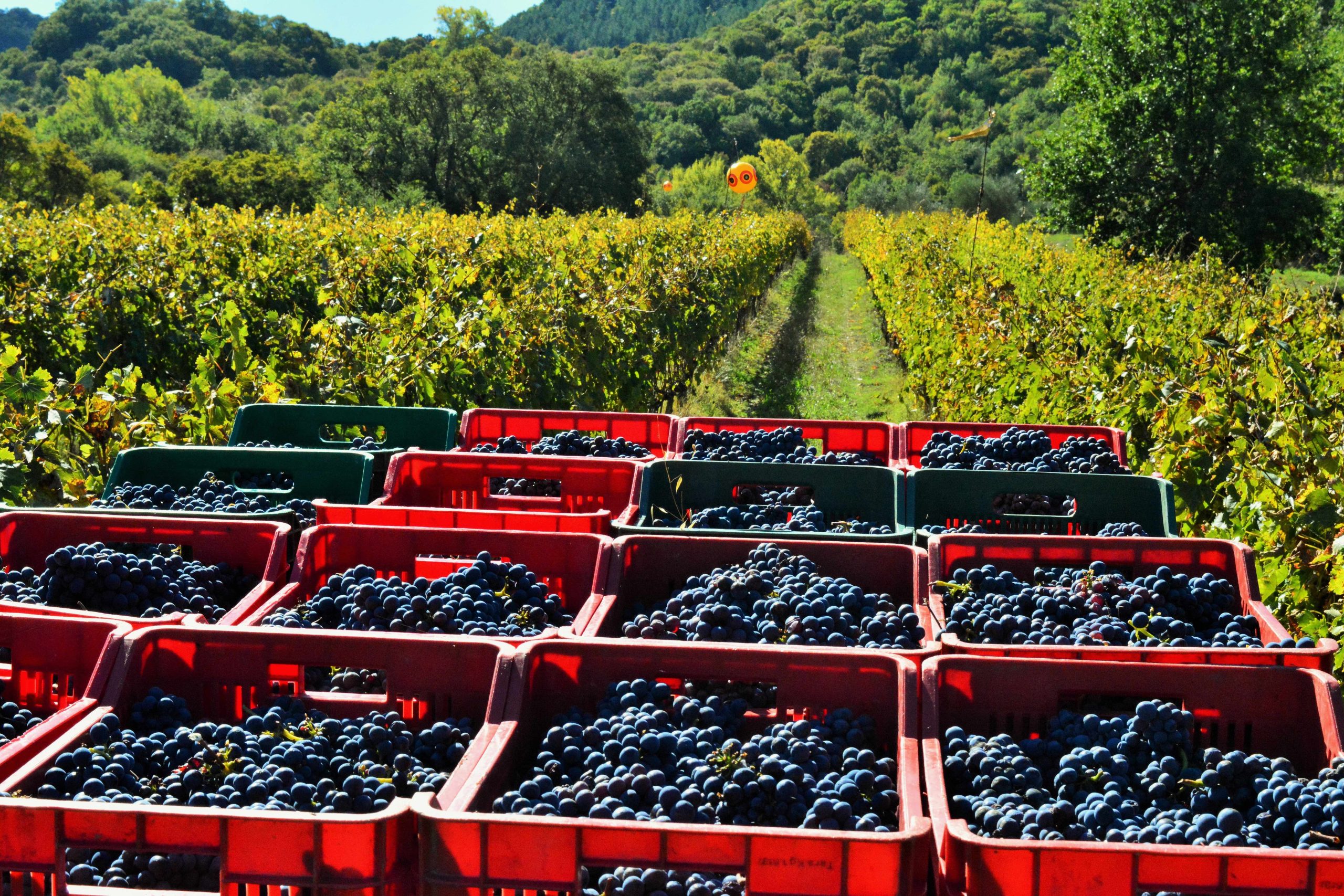
“It’s important not to look at the numbers,” Lucas Yang says. “Each winery should maintain its own style. I’m not ready to adjust alcohol just to please; my aim is balance.”
What began as a design project has become a CNY30 million (HK$33m) winery producing up to 80,000 bottles, all sold domestically.
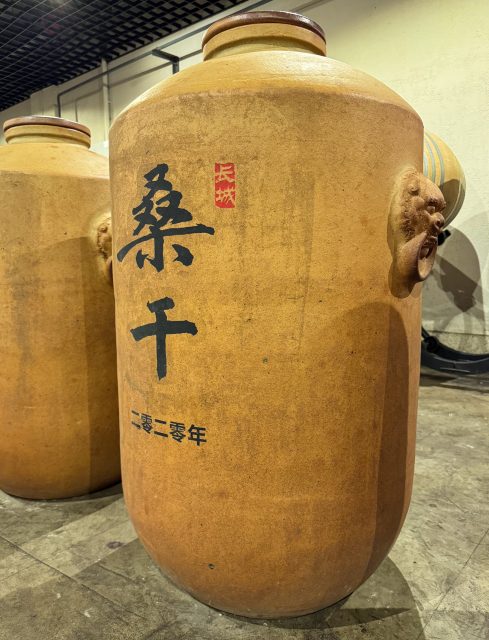
Huailai, in Hebei Province, northwest of Beijing, offers a more tempered expression of the variety. When relations thawed in 1997, China and France agreed to collaborate on agriculture, with French technical expertise flowing into China. An agreement was signed in Paris in 1999, leading to the creation of a Sino-French grape cultivation project. After a national survey of potential regions — analysing rainfall, climate, altitude and soils — a demonstration farm opened in 2000. The first vintage was made in 2003.
Renamed Domaine Franco-Chinois in 2005, it became a sister winery to neighbouring Canaan Winery after a 2010 acquisition, and today comprises 23ha. Winemaker Desheng Zhao has been there from the start. Sent to Bordeaux in 2002 to study viticulture and oenology, he also completed a Master’s degree in biotechnology (wine) from China Agricultural University that same year.
Huailai has a temperate, semi-arid continental monsoon climate with distinct seasons, abundant sunshine and significant diurnal temperature swings. Annual rainfall averages 300mm–400mm. Generous sunshine (3,030 hours per year) and moderate rainfall foster balanced sugar and phenolic development while preserving natural acidity. The region’s alluvial sandy-loam soils, with limited organic matter and humus, help control vigour, resulting in yields of around 6-7 tonnes per hectare.
Domaine Franco-Chinois’ vineyards sit in a dry, windswept valley between the Yan and Taihang mountains, moderated by Guanting Lake – conditions ideal for wines of freshness and poise. After stainless-steel fermentation and a week of post-fermentation maceration, its Marselans are aged up to 18 months in French oak. The four Réserve Marselans I tasted impressed. The youthful 2017 was smoky, cedary, dark-berried, and well balanced, with another decade of ageing ahead. The 2015 revealed delightful floral fragrance and spicy, peppery, almost Grenache-like fruit. The 2014 was fragrant, spicy, concentrated and savoury, while the 2012 Réserve had aged beautifully, combining ripe cherries and a subtle tapenade note with a satiny sheen.
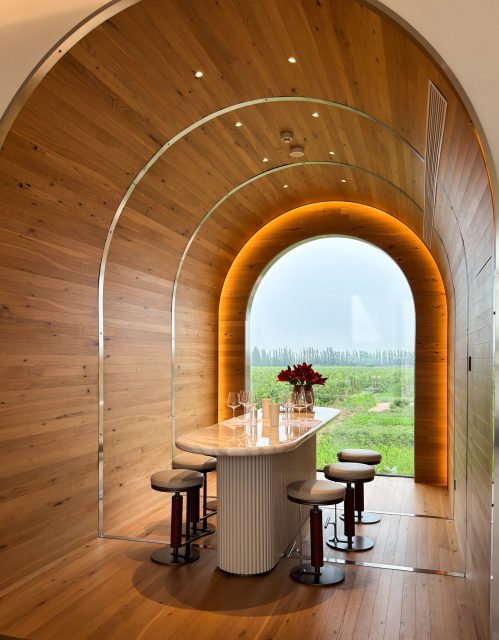
Nearby, Domaine Amethyst tells a parallel story. Founded by entrepreneur Shusen Ma, the winery planted Marselan in 2009, and today produces richly coloured, aromatic reds from 40ha – 25% Marselan alongside Cabernet Sauvignon, Cabernet Franc, Merlot, Chardonnay, Gewurztraminer and the Hungarian variety Cserszegi Fűszeres, reflecting the owner’s business ties with Hungary.
Set in a basin surrounded by the Yan mountains south of Guanting Lake, Amethyst is sheltered from excessive summer monsoon rains from the south and winter winds from the northwest. The soils are sandy loam, and irrigation comes from underground reserves. “Climate change is a factor here,” says veteran winemaker Jiang Yanjun, who has worked in wineries for 40 years. “We’re seeing higher sugar accumulation and lower acidity. Twenty years ago we had to chaptalise; now we need to acidify.”
Jiang describes Marselan as “a grape with great potential – fruity, balanced and resistant to disease”. Having spent 11 years at Tiansai Vineyards in the Xinjiang region, he notes the contrast: “The pH in Huailai is good; here the wines are more elegant and balanced than in hotter, drier Ningxia or Xinjiang.” Tasting his Marselans from 2022 to 2014, vintage variation was evident, with the 2022 and 2017 standing out for their aromatic depth, black-fruit concentration, supple tannins and overall balance. The 2017, at 14.5% alcohol, was fresher and more harmonious than the powerful, Grenache-like 2019 at 15.5%.
A short visit to Chateau Nubes reveals an ambitious hotel-and-art-gallery-cum-winery on a farm originally intended for corn, sorghum and wheat. Owner Cheng Zhao switched to grapes after finding the sandy clay loam too poor for those crops. He built the winery from stones dug from the land and planted his first vines in 1999 – 50ha of Cabernet Sauvignon and Syrah. In 2015 he added a 3.3ha trial plot of Marselan with vines from Domaine Franco-Chinois. His first Marselan vintage, in 2020, offers juicy ripe cranberry fruit, supple tannins, and fresh acidity.

Further west in Huailai, Great Wall Wines’s vineyard manager, Gao Chengjun, observes: “You can get many different styles of Marselan depending on the climate and soils.” His views echo Jiang’s at Amethyst: “In Ningxia and Xinjiang, sugar is higher and acidity lower. In Huailai, where it’s cooler, you get fruity aromas and a fresher style that’s more balanced, not too strong, but with good ageing potential.” He sees three types of Chinese consumer: a small group of experts who know Marselan, a group starting to recognise it, and the majority, who have never heard of it.
Under chief winemaker Chen Jiawei’s guidance, Great Wall experimented with single-varietal Marselan. The first was the 2019 vintage. The 2020 and 2021 vintages were not deemed strong enough for a solo bottling, so the winery discontinued it as a standalone wine, blending it into reds for better balance. Marselan now forms part of the flagship 5 Star Series G12.
At Great Wall’s smaller sibling company, SunGod Great Wall, Marselan plays a more prominent role. Winemaker Chen Jiawei believes Marselan is “a very good variety for the Chinese climate. The wine has colour, fruit and soft tannins – highly suitable for the Chinese market. Hebei (Huailai) and Ningxia are best. In Hebei the wine is more elegant; in Ningxia, which is warmer, it is fuller-bodied and higher in alcohol.”
The first Marselan vintage, the 2022, is ripe and sweet-smelling – somewhere between an Andean Malbec and a Californian Zinfandel – with bright acidity to counterbalance its hefty, sweetly ripe fruit. The jury is still out on whether Marselan will become China’s signature variety. As Boulard cautions: “It is too early to draw definitive conclusions about Marselan’s quality potential, but the recent positive results at wine shows, combined with limited producer experience, suggest that with more mature material and greater expertise, quality should continue to improve.”
It is clear that Marselan has given Chinese winemakers belief that red wine need not conform to Bordeaux-like stereotypes, and a shared sense of purpose across China’s fragmented wine map; an evolution now carried forward jointly by producers refining the grape, and consumers eager to embrace a homegrown success story.
Related news


