



Readying Robert Mondavi Winery for a new generation
One of the pioneers of Napa Valley winemaking, Robert Mondavi Winery is bringing its unrivalled heritage and pedigree to the attention of a new generation of trade partners and consumers, as Patrick Schmitt MW found out at an event in London last month.
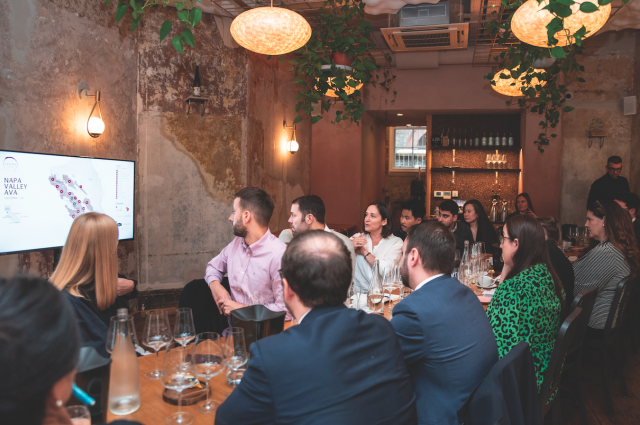
Even the strongest brands risk losing market share if they stop advertising – as much as a 16% decline in year one, and a 25% drop in the following 12 months, according to a study from the Ehrenberg-Bass Institute published in 2021. Such a report is relevant to anyone managing a famous name in wine, and one that Robert Mondavi Winery has presumably taken seriously, as this revered producer embarks on a drive to raise its profile among a new wave of wine professionals, as well as to promote its winery transformation and 2026 reopening.
As part of this move to cement its global reputation, the winery worked with db on an event to ascertain the levels of awareness for Robert Mondavi and its range, as well as to find out the messages the modern wine consumer wants to hear, seeing if they tally with the estate’s evolution, particularly the direction it is taking in the UK.
Such a move is noteworthy for a brand with the status of Robert Mondavi Winery – which takes its name from its legendary founder, a man who put Napa Valley on the world stage, invented the term Fumé Blanc and brought the great names of Bordeaux to California, and its wines to Europe.
But what is the perception of the top wine estates of the US in Europe today, particularly those from the Napa Valley? We put that question to a series of panellists in London. Zuma’s group head of wine Jennifer Wagoner was the first to comment. Speaking about her customers, wherever the restaurants are based, she said that opting for California was often a stylistic decision.
“When guests are asking about California wine, they are looking for something that’s really powerful, and fruit-forward and concentrated,” she began. However, she then recorded a new desire for wines from the same region with “a little bit more restraint”, as well as sensitivity to the environment.
That move plays into the hands of Robert Mondavi Winery which, she said, “has always been an iconic producer when it comes to that”, referring to the estate’s elegant wines and sustainable approach.
Similarly, for Emma Denney, director of wine at Claridge’s: “When we get guests asking specifically for Napa, what they are asking for is big Cabs.” And, when it comes to whites, “a Chardonnay with opulence”, while for Davide Bottoni, who is head of wine at 45 Park Lane, it’s more about “big brands”, with names like Opus One selling very well – the high-end Cabernet blend started by Robert Mondavi in partnership with Baron Philippe de Rothschild of Château Mouton Rothschild.
Beyond Napa’s top names, be it Robert Mondavi or Opus One, is there an interest in specific sites, even single vineyards, such as To Kalon, one of the most valuable vineyards in the US, based in Oakville? While the wine buyers believed that such a site does have kudos, and garners interest, sales of vineyard-specific wines tend to be “sommelier-driven”.
For Master of Wine Michelle Cherutti-Kowal, wines from this particular site deserve greater recognition, especially outside the US, where it holds iconic status.
‘Highest beauty’
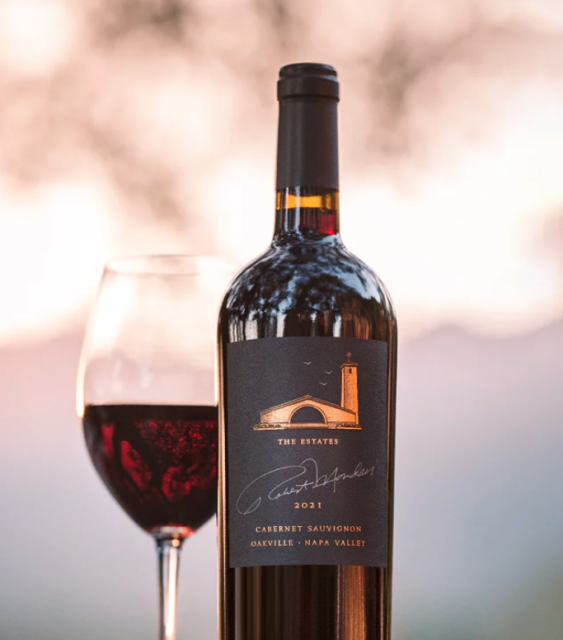
The name, To Kalon, meaning “highest beauty” in Greek, was first used by pioneering vigneron Hamilton Crabb when he purchased land there in 1868 and established his To Kalon Vineyard Company the same year. Today, the vineyard is largely owned by Constellation Brands, with significant portions managed by the Robert Mondavi Winery. Importantly, the site has played a key role in establishing
Napa Valley’s international reputation for fine wine, surviving phylloxera, and the Great Depression, as Cherutti-Kowal emphasised.
Robert Mondavi winemaker Laura Díaz Muñoz pointed out that even the great educational institution that is UC Davis – with its famous, 90-year-old Viticulture and Enology Department – owns a bit of To Kalon vineyard, which it uses for research purposes. Working with Napa Valley growers, she said that the university is looking at ways to mitigate the impacts of climate change on the vines, considering new training systems, as well as netting, to shade the plants.
Looking at the land that Robert Mondavi owns and manages, which amounts to around 180 hectares (of a total 213ha), Muñoz recorded that not only has some of the vineyard been replanted, as well as sub-divided into blocks, but it has also moved to organic management – a shift that started in 2020, ensuring that the Mondavi portion of To Kalon has been certified organic since 2023.
She also pointed out that there are differences in the vineyard according to location and gradient, with parcels closest to the Mayacamas Mountain range, which forms its western border, being more gravelly, and therefore free-draining, compared to those nearer the famous Highway 29, that runs south to north through Napa Valley, where there is more clay and loam in the soil.
The result, Muñoz explained, is that those wines using Cabernet Sauvignon grapes from nearest the mountains tend to be more “concentrated”, with “great tannin structure”, mainly as a result of lower yields.
Fine whites
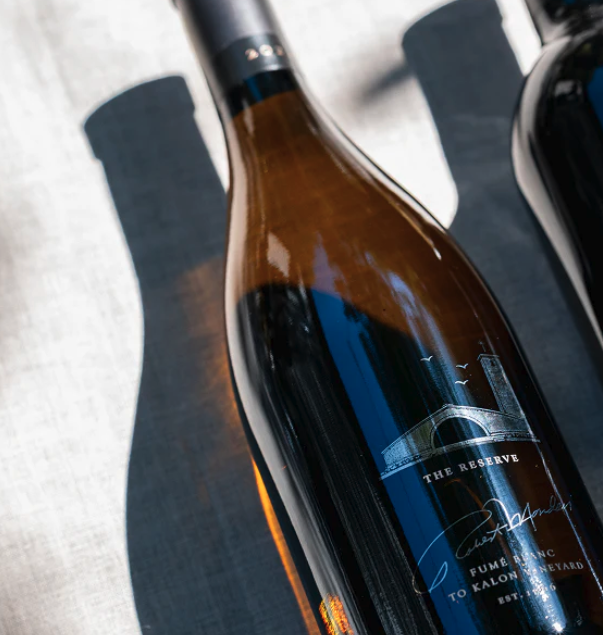
Also within the To Kalon vineyard, which benefits from the cooling influence of fog from the San Pablo Bay, is white grape Sauvignon Blanc. Muñoz said that the vineyard “is not that warm”, particularly compared to sites in the centre of the valley, making it “very good” for making fine whites along with structured reds. “Cabernet Sauvignon is more in demand, but we have around 5% of Sauvignon Blanc planted [in To Kalon], which is also very important, and produces wines that we are very proud of,” she added.
Indeed, it was barrel-influenced Sauvignon Blanc – made like the great white Bordeaux wines from Graves – that Robert Mondavi himself pioneered and promoted under the term he invented for the wine style, which was Fumé Blanc. Coining the expression in 1968, he used it to market his rich but dry whites, unlike sweeter and lower-quality Sauvignon Blancs others were peddling at that time. However, he didn’t patent the term, allowing rival wineries to employ it, in keeping with his approach, which was to be an ambassador for the wines of Napa Valley, not just the produce from his own property, stressed Muñoz.
“He knew that helping Napa Valley would help himself as well, and he was a very good promoter… he travelled a lot, especially to Europe,” she said. As part of this, he was exposed to and greatly influenced by the wines of France, and in 1978 hired a French winemaker, Geneviève Janssens, who is still involved in the business. “She has been with the company for 40 years, and I think that’s instrumental to understanding why our wines have this style, which is about restraint, and why this has been consistent,” commented Muñoz.
That applies to the all the wines, white and red. As for complexity and intensity, that can be traced to site, viticulture, picking times, old vines – such as a Sauvignon Blanc block dating back to 1945 – as well as winemaking.
And it was the topic of cellar techniques that was then discussed by Muñoz. Having worked at a few wineries, including those in her homeland of Spain, she described the approach at Robert Mondavi as being “Old World traditional”, which sees much of the winemaking done by tasting and observing.
“We pick different sections of the vineyard blocks by tasting, tend to pick a little bit earlier, and we don’t do very warm fermentations,” she said, adding that fermentations are also long in terms of time, at around 30 days. “We don’t want quick, warm fermentations that extract a lot of colour and tannin. It’s nerve-racking [overseeing a long, slow fermentation], but if you extract the tannins slowly, they are softer and more polished.”
Long cellaring
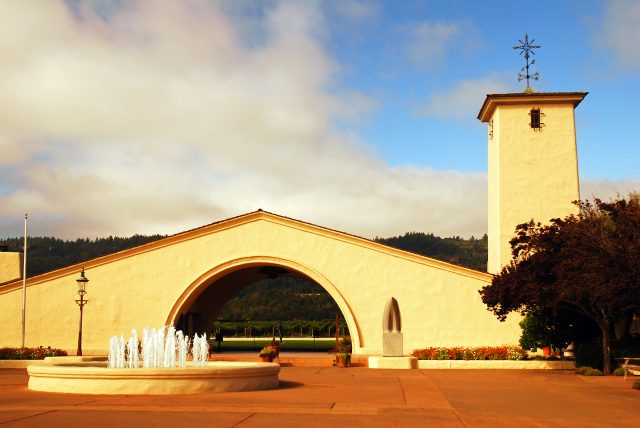
It’s also part of a drive to produce fine wines – be they white or red – that are approachable in their youth, but that can age for long periods, so they exhibit greater complexity and appeal following cellaring for 10 years or more. That prompted the panellists to wonder if Robert Mondavi would consider “late releases” for the trade, allowing library stock to feature on restaurant wine lists in a mature state?
Muñoz was quick to confirm that the winery does hold back stock and can release wines at various stages of development for customers, on request.
Turning the focus towards the top-end reds, specifically the flagship Robert Mondavi Winery ‘The Reserve’ To Kalon Vineyard Cabernet Sauvignon, such were the intense, fruit-forward flavours that the attendees were surprised to learn that the wine had spent 21 months in almost entirely new oak barrels.
Muñoz explained: “We are very careful with the coopers we work with, meeting them every year and tasting the different profiles of toast, working very closely with them to make sure the flavours from the barrels don’t overpower the fruit,” adding: “And the fruit expression from the fruit coming from To Kalon is very distinctive as well, with a lot of berry and floral notes, and we don’t want to hide that.”
In terms of the varietal blend, this wine is dominated by Cabernet Sauvignon, but also contains Petit Verdot and Cabernet Franc. The latter grape “is getting very popular in Napa – it’s kind of the cool kid on the block – and we actually make 300 cases of pure Cabernet Franc, which is only available for sale at the winery”, according to Muñoz.
As for the 2022 vintage of ‘The Reserve’ To Kalon Vineyard Cabernet Sauvignon, which was a very warm year, she said that the winery increased the proportion of naturally acidic Petit Verdot to 7%, “which is going high for us”.
Speaking about the wine, Muñoz commented: “For me, the texture of the tannins is beautiful: they are powdery, and they are firm.” Such a fine and dry structure to a youthful Cabernet was praised by all, before Muñoz surprised the attendees with a back vintage. “It’s a 1975 Robert Mondavi Cabernet Reserve,” she announced.
The approach was different then, Cherutti-Kowal said: “While the 2022 vintage was picked in September, this, the 1975, was picked in mid-October, into November, and has an abv of 13% [compared to 14.5% for today’s releases].” She continued: “And the brix [which measures the sugar content of the grapes] was 23.6, which is extraordinary, if you consider that today it would be around 30.”
This prompted the attendees to consider the impact of climate change on the vineyards and the resulting wines in Napa since the 1970s and, in particular, during the course of this century. “I would say between seven to 10 years the impact of climate change has exponentially increased, with heat events that are longer in time – so it’s not one day or two above 40oC, but three or four days,” said Muñoz.
Then there’s the length of time the fog rests in the valley. “I remember there used to be fog from the bay that will stay until 11am–12pm, so it was still cold when we were having lunch, but now, sometimes it’s 9am and the fog is gone – and that is our air conditioning,” she said.
Change in management

It’s for this reason that there has been a change in vineyard management in Napa, moving from exposing the Cabernet Sauvignon grapes to shading them, not just by allowing a large leaf area to develop, but also by using nets and machines that spray a light mist over the bunches. “We are using misters, which are super-efficient at cooling down the cluster area at times of heat events – when temperatures go above 95oF they start releasing a mist from our irrigation system,” she said, before noting that it was an efficient way to cool the grapes, and uses minimal amounts of water.
Finally, moving to the subject of consumer trends, the attendees noted that people under 30 are not only drinking less, but shifting from wines to other drinks, while becoming increasingly price-sensitive. Aware of the challenge, Muñoz said that one method employed by Robert Mondavi Winery is to make the visitor experience at the estate in Napa as “engaging” as possible, which follows a three-year renovation project, transforming its hospitality centre. When it opens in May, the winery will introduce a varied and thoughtfully curated program of experiences, from music events and cellar tours to culinary pairings, all designed to encourage tourists to visit.
That, coupled with the estate’s move to organics and a high-quality, restrained style of wine, should prove an ideal basis to attract a new generation of drinkers. However, it was clear that the producer still needs to talk about its prized source area – the To Kalon vineyard, and the old-vine Bordeaux varieties that are deeply rooted in it. As one of the world’s greatest vineyards, this special place deserves greater levels of awareness, particularly in the UK.
Thankfully, following the event, Robert Mondavi Winery had recruited a raft of new trade professional wine ambassadors to help it raise the profile of this unique place, and spread the word about the producer’s renaissance.
About the event
The discussion and tasting was held at Apricity in London on Tuesday 11 November, featuring the following people:
Chairs
• Sarah Neish, editor, the drinks business
• Michelle Cherutti-Kowal MW, wine educator
Mondavi representative
• Laura Diaz Munoz, winemaker
Panelists / Attendees
• Queena Wong – Curious Vines
• Davide Bottoni – Head of Wine, 45 Park Lane
• Jane Masters MW – Majestic Wine
• Matteo Furlan – Head of Wines, The Dorchester
• Jennifer Wagoner – Zuma
• Sergio Lutri – Assistant Head Sommelier, Caprice Holdings
• Keith Lyon – Assistant Head Sommelier, The Savoy
• Jonathan Wright – Head Sommelier, Four Seasons Ten Trinity
• Gergely Szabo – Enotria
• Jiachen Lu – Head Sommelier, CORD by Le Cordon Bleu
• Francesco Di Fonzo – Head Sommelier at Kerridge’s Bar & Grill, Corinthia London
• Leonardo Barlondi – Head Sommelier, The Grill at The Dorchester
• Emma Denney – Director of Wine, Claridge’s
• Alex Notman-Watt – Enotria
• Kadek Swijana – Head Sommelier, Four Seasons
Key findings from the event
Advertising & Brand Strategy
- Even strong brands risk significant market-share loss (16% in year one, 25% in year two) if they stop advertising.
- Robert Mondavi Winery is investing in marketing to strengthen its global profile and connect with new wine professionals.
- The winery partnered with db for an event to assess brand awareness and modern consumer expectations.
- Mondavi has appointed Enotria to expand UK distribution into top restaurants and retailers.
Perception of Napa & Robert Mondavi Winery
- Napa wines are often associated with powerful, fruit-forward styles, but there is growing demand for more restraint and sustainability.
- Robert Mondavi Winery is seen as iconic, especially for elegant, environmentally sensitive wines.
- Sommeliers note that consumers often seek “big Cabs” and “opulent Chardonnay” from Napa.
- Big brands like Opus One (co-founded by Robert Mondavi) continue to sell strongly.
To Kalon Vineyard
- To Kalon is one of the most prestigious vineyards in the US, with high recognition among wine professionals but less so with general consumers outside the US.
- Vineyard-specific wines from To Kalon tend to be sommelier-driven.
- UC Davis and Robert Mondavi Winery manage parcels of To Kalon; the site is central to Napa’s international reputation.
- Mondavi’s portion has been fully organic since 2023 after replanting and sub-dividing blocks.
Viticulture & Climate
- Vineyard conditions vary across To Kalon: gravelly, low-yield areas near the Mayacamas Mountains produce concentrated Cabernet; clay/loam near Highway 29 produces different expressions.
- To Kalon is cool enough for high-quality Sauvignon Blanc, which represents around 5% of plantings.
- Climate change impacts: hotter heat events, shorter fog presence, increased need for shading, netting, and mist-cooling systems.
Heritage & Winemaking Approach
- Robert Mondavi pioneered Fumé Blanc (oak-influenced Sauvignon Blanc) in 1968; he didn’t patent the term to benefit Napa as a whole.
- French influence (via longtime winemaker Geneviève Janssens) contributes to the winery’s restrained style.
- Winemaking approach is “old world traditional”: earlier picking, long/slow fermentations, low extraction to achieve polished tannins.
- Wines are crafted for both early approachability and long aging potential; the winery can offer late releases for trade.
- Despite 21 months in new oak, the Reserve To Kalon Cabernet shows balanced, fruit-driven character due to careful barrel selection.
Comparing Past & Present
- A 1975 Mondavi Cabernet showed lower alcohol and later harvest dates, highlighting climatic changes over decades.
- Modern vintages reflect warmer conditions and evolving blending decisions (e.g., higher Petit Verdot for acidity in 2022).
Consumer Trends & Future Plans
- Younger consumers (<30) are drinking less wine, are more price-sensitive, and are shifting to other beverages.
- Mondavi is focusing on making the Napa visitor experience fun – concerts, renovated hospitality centre – aimed at engaging younger audiences.
- The brand’s shift to organics, restrained winemaking, and storytelling around To Kalon aims to attract new drinkers.
- The event helped recruit new wine-trade ambassadors to elevate awareness of To Kalon and the winery’s renaissance, especially in the UK.
Related news
Robert Mondavi unveils Napa estate following three-year transformation


