



hors Bordeaux: a tasting tour through the platform’s top international expressions
La Place de Bordeaux rose to success trading wines from the French region, but at ProWine Shanghai this year, the drinks business editor-in-chief Patrick Schmitt MW revealed why expressions from around the world have secured a place on the platform.
A few years ago, deciding on a theme for a masterclass on the international wines handled by La Place de Bordeaux would be easy: Bordeaux blends from outside Bordeaux. In other words, great red wines made with the great red grapes of Bordeaux – Cabernet Sauvignon and Merlot – but from regions such as Napa, Tuscany and Maipo, as opposed to Pauillac or Pomerol.
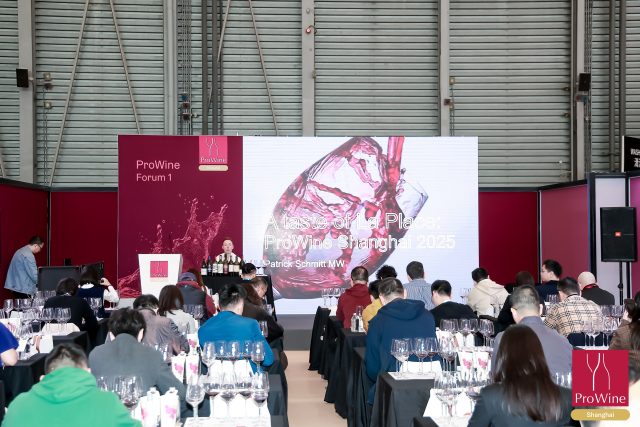
But nowadays it’s not so simple. That’s because the wines handled by La Place – the French system of global fine wine distribution – are so varied. And hence, db Asia’s event about the great non-Bordeaux brands of La Place, which was held at ProWine Shanghai on 12 November, featured sparkling, white and red wines, and from a range of grapes. Indeed, as part of the event, attendees, who included trade professionals from Mainland China, were presented with Champagne, as well as fine Chardonnay from Mendoza, along with Malbec from the same region, then Carmenere from Chile, and Cabernet from the same country, followed by this grape from Australia, California, China and, yes, one benchmark from Bordeaux.
Such diversity is remarkable if one considers that not much more than a decade ago, the only international brands handled by La Place were Almaviva and Opus One – Cabernet blends from Chile and the US respectively, and then Masseto – Tuscany’s pure Merlot made by the Frescobaldi family.
But such variation reflects the fact that the production of high-end drops is possible in places way beyond the borders of the classic wine regions of Europe, and the consumer of fine wines is open to trying new things. Not only that, but it shows that the négociants of Bordeaux recognise the commercial opportunities of selling such wines, and the ability of placing them into the hands of the trade and private consumers, wherever they may be.
Essentially, La Place is a tripartite structure, comprising the producer, the négociant and – often overlooked – the courtier, who acts as an intermediary between the property and the négociant. The structure evolved historically because the châteaux that made the wine didn’t want to get involved in selling it, and neither did the aristocratic owners of these properties want to deal with the négociants – who were deemed below them socially. Hence the role of the courtier, who acted as brokers. Today, around 300 négociants exist to sell wine worldwide, with a broad network of customers.
While it was established to sell Bordeaux worldwide, in 1998 La Place started to work with wines from other parts of the wine world, when the négociants started selling Almaviva, then Opus One in 2004. That development came about because both these brands were linked to Château Mouton-Rothschild; they were joint ventures with the First Growth. The real change came, however, in 2009, when Italy’s Masseto was released on La Place – a wine with no connection to Bordeaux, except for its use of Merlot.
Such was the success of this addition, with Masseto rising in status and price as a result, others followed suit. They joined La Place not only to increase distribution, but also to grow in fame by association – they are distributed alongside established great names, particularly during a campaign around September. Indeed, with about 150 wines from outside Bordeaux now being distributed via La Place, the releases are made during a period lasting more than a month, and hence it has become known as the autumn campaign – in contrast with the release en primeur of Bordeaux in the spring (which mostly deals with wine futures – wines before they are bottled).
But it’s not just the success of Masseto’s move to La Place that explains the rise in the number of wines on the system of distribution. It’s also the impact of Covid-19. During the pandemic, with its lockdowns, the difference between a single importer model in each country vs the La Place de Bordeaux distribution network was brought into light. For instance, if Covid meant that restaurants were shut, and if that’s what their distributor was serving, then producers were unable to reach their consumers. However, they can turn to La Place, because instead of having a single importer distributor, there is a pool of négociants with access to the trade and private consumers, wherever they are. Consequently, it’s said that La Place has capillarity: the capacity to be able to find demand and fulfil it.
Nevertheless, not anything will work. La Place is primarily a tool for distribution, it is not an agency that provides PR or marketing services. That means that to sell well via La Place brands need to be famous and desirable – and that way, they will be pulled through the system.
As noted above, in the past, because the customers buying from négociants were used to acquiring Bordeaux, when sourcing wines from outside of the region, they tended to opt from something stylistically similar – structured, age-worthy reds based on Cabernet or Merlot. This situation has markedly changed in the past few years. Essentially, the type of wines sold via La Place is diversifying in line with the broadening of the fine wine market. There’s an expectation that this will continue to do so. Fine wine demand is starting to mimic consumption trends at lower prices, where there has been a shift from reds to whites. As a result, great, cellar-worthy whites – and sparkling wines – are increasingly being disseminated by the négociants of Bordeaux. This was also why db Asia – for the first time this year – found itself presenting Champagne and Chardonnay at its masterclass on the great hors Bordeaux on La Place.
The event began with a Champagne – one under the brand Barons de Rothschild, the Rare Collection Blanc de Blancs from the 2012 vintage, which was an exceptional year. Launched in 2005 as the first joint Champagne venture between the three branches of the Rothschild family: Château Mouton Rothschild, Château Lafite Rothschild and Château Clarke (Edmond de Rothschild Group), the first bottles of Barons de Rothschild fizz sold in 2009, with a Chardonnay-focused style. As for sourcing, that is particularly from the Côte des Blancs, with over 90% of their grapes coming from Grand Cru and Premier Cru classified parcels.
In line with a lot of the hors Bordeaux handled by négociants, the production of the Rare cuvée is tiny, with just over 6,000 bottles made annually. So, while the number of brands being handled by La Place has increased, in volume terms, the difference is fairly minor.
Our next wine was also niche in terms of production, while being something very different for La Place – a white wine from Mendoza. Made by respected Argentine producer Familia Zuccardi, it is called El Camino de Las Flores, after the vineyard used to grow the grapes, which borders a dry stream where native flowers bloom in the spring. The site is special because it is planted at an altitude of 1,360 metres in the Uco Valley at the foot of the Jaboncillo hills, called cerrilladas, in Gualtallary Monasterio – an area considered a grand cru in the country, and well suited to Chardonnay thanks to the caliche content in the soil. Youthful – being from the 2024 vintage – it was fresh and lively, and also notable for high-end Chardonnay in that it was made and aged entirely in concrete vessels – no oak was employed in its production.
The next wine was from the same producer, but red, also distinctive, and from another great site in the Uco Valley, Altamira. Hailing from the 2021 vintage, and called Finca Canal Uco, it hails from a small plot planted in 2007 on silty and sandy soils over a limestone base, and was the first vineyard planted by the Zuccardi family in the Uco Valley. Notably, like the Chardonnay, the Malbec sees no oak during its production and is aged entirely in raw concrete vessels. The result is something pure, with intense black-fruit flavours and a dry edge, with a note of crushed rocks on the finish, but no sweet vanillin from barrel influence.
Then, changing country, but staying with a red wine from South America, we tried what many would declare as the world’s best Carmenere-dominant blend: Clos Apalta from DO Apalta in Chile’s Colchagua Valley. The wine, which was from the 2021 vintage, is made by respected winemaker Andrea Leon, with the support of famous consultant Michel Rolland, and has been heralded as the finest Clos Apalta ever made, such is the balance between intense, fully ripe, fleshed red and dark berry fruit and bright acidity, along with dry fine tannins, to make this generous wine surprisingly mouth-watering. Although the blend contained a touch of Cabernet and Merlot, the core grape, Carmenere, is not often deemed to be the basis of truly great and cellar-worthy reds. But, as Clos Apalta showed, when handled with care and from the best sites, it can produce incredible results.
The same is true with Cabernet Franc, which is often considered something of a second-class variety compared with Cabernet Sauvignon in Bordeaux. But our next wine, which was a Cabernet Franc-dominated blend from Millahue in Chile’s Cachapoal Valley, highlighted the quality potential of this grape. Made by Vik, with 79% Cabernet Franc and 21% Cabernet Sauvignon, and 26 months in barrels made by toasting the staves with fallen oak branches from woodland on the estate, the wine was wonderful, with layers of red and dark berry fruit, as well as notes of dark chocolate and cedar from the ageing process, and a lovely brightness on the finish. Created in 2004 by Norwegian entrepreneur Alexander Vik and his wife, Carrie, the Vik estate is a relative newcomer to the world of fine wine, but is gaining a reputation for greatness.
In contrast, Montes was next – a pioneer of high-end winemaking in Chile when it was founded in 1987 – although the wine on show was a fairly new addition to this great producer’s range, and its first wine to feature on La Place, when it launched with négociants in October 2022. Called Montes Muse, just 6,000 bottles were produced from the relatively cool 2019 vintage, using Cabernet Sauvignon from Chile’s Alto Maipo Valley, and made to celebrate winemaker Aurelio Montes’s 50th vintage.
After this we had another varietal Cabernet Sauvignon, and, like the example from Alto Maipo, a wine from a great terroir for the grape, but in a different continent. Hailing from Australia, it was the top expression from Wynns winery in Coonawarra, using fruit from the 2020 vintage. Called John Riddoch Cabernet Sauvignon, the wine takes its name from a Scottish pioneer who was a key figure in the development of Coonawarra as a wine region in the late 19th century, and founder of the Wynns winery, which takes its name from Samuel and David Wynn, who bought Riddoch’s estate in 1953. This wine was the first Australian wine to be distributed on La Place de Bordeaux, featuring initially in the September 2021 campaign.
Next, we headed to the homeland of Cabernet Sauvignon, showing a left-bank Bordeaux from the brilliant property that is Château Pichon Baron. From the outstanding 2022 vintage, this was the latest in-bottle release from the estate, which is considered to be making wine of First Growth quality, although classified as a deuxième cru. In 1987 the château was bought by AXA, which focused on extensive renovations and improvements, including replanting vineyards, building new cellars and modernising equipment. Today it is one of the stars of the region, and one of the great Cabernet Sauvignon-dominant blends of the world.

While this provided a delicious benchmark from the Old World, our next wine did the same for the so-called New World, as a Cabernet-dominant blend from the Knights Valley in California. Made by the highly respected but relatively under-the-radar estate Peter Michael Winery, it was a 2021 expression called Les Pavots, which is French for ‘The Poppies’, and named by Sir Peter Michael’s wife after the wild California poppies that grow at the Knights Valley ranch. The vineyard is planted on the slopes of Mount Saint Helena, and the source of the producer’s proprietary blend of Cabernet Sauvignon, Cabernet Franc, Merlot and Petit Verdot, which it has made since the 1989 vintage. An outstanding fully-ripe but beautifully-balanced wine, it is now on La Place for more global distribution and higher visibility. The winery was founded by Sir Peter in 1982. Today, his son, Paul, and his wife, Emily, are managing the estate, following Sir Peter’s vision that the ranch and winery remain under family stewardship for 100 years.
As for the final wine of the masterclass, considering it was a tasting for China’s wine trade, we felt it was fitting to end with a wine from that country. That drop was the only wine to feature on La Place that hails from China – Ao Yun. Made by Moët Hennessy, the wine is a Cabernet Sauvignon-dominant blend from the Himalayan foothills of Yunnan province, and was created to be a world-class wine from China. Featuring Bordeaux grapes along with a touch of Syrah, the 2021 vintage that was poured used varieties from some of the highest vineyards in the world, located between 2,200m and 2,600m. Appropriately, Ao Yun means ‘flying above the clouds’.
The vineyards, which are now 25 years old, are found either side of the Mekong river valley, and are farmed organically using an indigenous form of agroecology practised in the region for centuries by well over 100 local families, who tend the vines without the use of any mechanical intervention. The high UV levels present at this kind of altitude produces thicker skins, riper pips and a high ratio of physical matter to juice. But partial shade offered by the mountains is also crucial. This reduces direct sun exposure by around 30% daily, extending the ripening period and hang-time, while helping to ensure that the pip tannins achieve full ripeness without excessive potential alcohol levels. The result is a wine with elegance, despite featuring plenty of fleshy red and dark berry fruit.
With that tasted, attendees had started in Champagne and finished in China, while being taken from Coonawarra to Colchagua, Sonoma to Mendoza, as well as to Bordeaux as a benchmark. In the space of a little over an hour, they had experienced the diversity of not just La Place, but fine wine production today.
Related news
Master Winemaker 100: Cynthia Ortiz
Château du Tertre partners with Ulysse Cazabonne to launch 'iconoclastic' white blend


