



Premium wine demand surges in key Latin American markets
Premium wine producers are reporting double-digit growth across Latin America. As traditional markets flatten, wineries are increasingly pivoting to regions where young, affluent consumers are driving a new wave of interest.
The model for building and maintaining a successful wine business used to be simple: make good wine, market it intelligently and watch your sales grow.
That is a slight oversimplification, but not by too much. Between 1960 and 2010 in the U.S. alone—what quickly became the world’s biggest and most powerful wine market—wine consumption rose from 0.90 gallons per person or 53 million total table wine gallons to 2.57 gallons per person, or 707 total table wine gallons, according to the Wine Institute.
That’s an increase of 1,233.96% in total wine consumption over 50 years. But.
Then the growth levelled off. Last year, the U.S. consumed 2.54 gallons per person, for a total of 717 million overall, down from 2.65 gallons and 764 gallons respectively in 2023.
Sales became a lot less predictable. Sometimes a grape or wine style would become a Zeitgeist darling, and producers in that sector would reap the benefits. (But how long will the party last? It’s often boom one year, bust the next).
Producers look to new markets
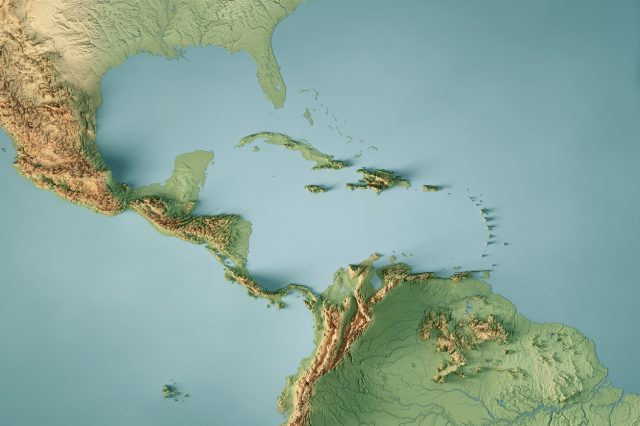
In recent years, it has become increasingly clear that it’s essential for vintners to not just tweak marketing tactics to appeal more to certain demographics in established markets like Europe and the U.S. (especially amid tariff challenges), but to seek out new markets in Africa, India, and also, certain pockets of Latin America.
Broadly speaking, there’s a “strong demand for expressive, fruit-forward styles,” says Kamara Snow, vice president and general manager of Southern Glazer’s Wine & Spirits Travel Retail Sales and Export Division. “We’re seeing robust growth in wine exports across Central and South America and Mexico, driven by evolving consumer preferences, expanding middle class demographics and a rising appetite for premium and boutique wine experiences.”
Spanish producers find cultural alignment
Amid a downward consumption trend worldwide that has “intensified recently,” Enrique Murillo, international managing director at González Byass, based in Jerez de la Frontera, Spain, says that Latin America has become a growth opportunity, especially for them and other Spanish producers “due to the similarities in culture and language. Many Spanish wineries are looking for opportunities in Latin America due to declines in traditional markets.”
González Byass has had a presence in Latin America since the 1970s, and Murillo reports “significant growth in sales in Chile, the Dominican Republic, Colombia, Brazil and Ecuador in the past five years.”
There is a clear evolution, but there is a lot of work to do.
Tariffs pose hurdles but interest is rising
“In Brazil, which has a population of 212 million, consumption per capita is less than 2 litres a year,” Murillo says. “High tariffs mean that imported wines are three times the price of locally produced wines. That makes it difficult to attract new consumers among the middle class.”
But despite the challenges, Murillo notes that there is an increasing interest in the culture of wine, especially among female and younger consumers.
Murillo is bullish on sales in the future, especially as the EU negotiates free trade treaties.
“There is optimism with regards to the Mercosur Agreement, a landmark free trade deal between the E.U. and the Mercosur bloc, Argentina, Brazil, Paraguay and Uruguay,” he says, noting that loosening restrictions in Brazil could be especially helpful.
Sparkling wine brands enjoy double-digit growth
Enore Ceola, CEO of Freixenet Mionetta USA, and EVP North America, notes that exports have surged across Latin America, with double-digit growth in Mexico, South America, Puerto Rico and the Dominican Republic.
“Similar to what we saw in the U.S. 10 to 15 years ago, consumers there are realising that every occasion is a good occasion to pop a bottle of Freixenet, Segura Viudas, Mionetto or other sparkling wines,” Ceola says.
Producers adapt to volatile emerging markets
Spanish producers aren’t the only ones seeking and finding growth in Latin America.
Partner Content


Mathilde Chapoutier, director of global sales at M. Chapoutier, which is present in 116 countries, notes that overall, their sales have remained strong, but adds that adapting to “evolving markets and current trends” has required additional analysis and focus.
Part of that is paying greater attention to the LATAM region, where they have been exporting wine for more than 15 years.
“Over the past 10 years, we have observed a general market opening and growing interest in wines in certain emerging countries, such as Honduras, Ecuador and Peru,” Chapoutier says. “Those are complex regions, marked by political and economic instabilities, making the wine trade relatively volatile.”
Across all of Latin America, Chapoutier says “young consumers and a growing middle class are increasingly interested in wine culture, particularly through the pursuit of quality and authenticity.”
Premium focus drives success
About 70% of M. Chapoutier’s sales in the LATAM zone are in Mexico, Brazil, Panama, Uruguay and Paraguay.
To ensure greater success in the 20 countries M. Chapoutier exports to in the LATAM region, they focus on high-end restaurants in urban and tourist-friendly areas, where demand for premium wine is high.
Social media accelerates wine discovery
Meliza Jalbert, director of international sales at Hope Family Wines in Paso Robles, CA, says the growth across Latin America has been “notable” as they “invest in digital storytelling and influencer engagement.”
Puerto Rico and Ecuador in particular are showing notable growth this year at 9.5% and 28% respectively, while Mexico remains the largest distribution market in the LATAM zone for Hope.
“Consumer behaviour across these regions is evolving as younger audiences are increasingly curious to explore higher-quality wines, often driven by social media,” Jalbert says. “Looking ahead, we’re focused on strengthening partnerships, expanding visibility in key accounts and continuing to invest in education and storytelling.”
Tourist destinations become key entry points
Wine is growing, but from such a small base, it’s still niche across the LATAM region.
“Wine primarily attracts affluent and educated customers, while overall market consumption continues to favour beer and spirits,” Chapoutier acknowledges. “We aim for maximum distribution, whether through accessible brasseries or retail chains that are open to introducing our terroirs. However, the core of our strategy has always been—and will remain—focused on the restaurant sector. Whether bistronomic or fine dining, we are committed to positioning our wines in contexts that emphasise the pleasure of tasting.”
At the same time, Chapoutier says they are strengthening their presence in urban and tourist areas like Brazil, Riviera Maya, Mexico City, Catarina and Pernambuco, through premium placements in luxury hotels and gourmet restaurants, where the demand for French wine is growing by leaps and bounds.
Others agree that expanding where the money most obviously is, especially when the market is new, is the best way to guarantee growth.
Mexico emerges as a promising long-term play
“My export strategy has always been to follow the relationships, not the hottest in-demand markets,” says Joe Lange, international sales director at Lodi’s LangeTwins Winery, which sells in 29 U.S. states and 18 export markets, including Mexico, which it entered in 2023.
Still, he notes that the complexity of the market broadly, and their newness in the Mexican market means that targeting resort areas is essential.
“Selling on-premise to resorts and restaurants in Los Cabos and Riviera Maya has provided a good base level of sales, and has also tested the market so we can hone our portfolio offerings,” Lange says. “Moving into 2026, the hope is to move into other key markets in a bigger way, like Monterrey, Mexico City and Guadalajara.”
Since landing in the market two years ago, Lange has worked in Mexico on the ground six times, and is impressed with the “passionate sommelier community, who wants to expand their offerings of interesting wines from brands with a story. And the trade seems to skew younger here, which I think lends itself to more openness to wine regions like Lodi.”
Producers emphasise diversification amid uncertainty
Lange says he believes that Mexico, and other markets with growing young, middle-class populations, will always be ripe for producers offering relative value, quality and authenticity. But this market, he fears, is unlike any the world of wine has contended with in recent memory.
“While I remain cautiously optimistic, it feels as though in no other time has the wine industry been more caught in the middle of global events, most completely out of our control,” Lange says. “Diversification will be our mantra, as much as we can manage, so when one market is cut off—like Canada—we can survive and stay nimble.”
Related news
Beer considered to be the ‘most American’ of drinks
Relighting a passion: wine and America on a milestone anniversary


