



Chef Q&A: Si King
The Hairy Bikers chef talks to Amelie Maurice-Jones about pies, his recent ‘Cask & Crust’ collab with Cask Trade, seven-minute eggs – and why he’s happy to have Dave Myers living ‘rent-free’ in his head.
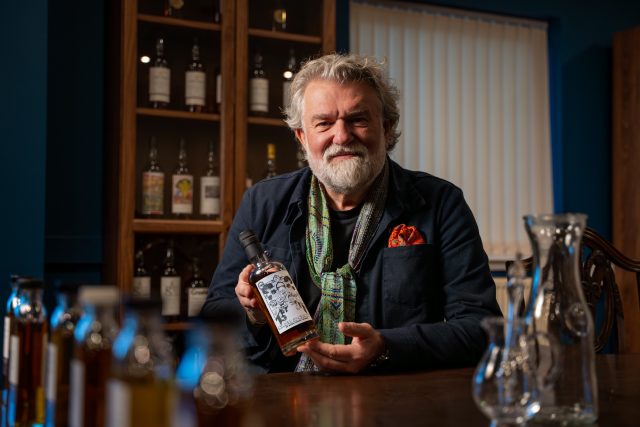
Recently, you joined forces with Cask Trade for the ‘Cask & Crust’ project, launching a limited-edition whisky line to pair with bespoke pies from your Sunderland-based Propa! brand. Why are whisky and pies the perfect match?
Pies are a comfort food and part of our national identity and culture, as is whisky. We had great fun working through the flavour profiles of the whisky, then matching them to pies – I can’t think of anything better.
Apart from pies, what else could whisky pair well with?
It will go with most things – we just don’t often think about pairing it with food. You get notes of caramel and fruit, there’s vanilla, there’s spice, there’s blossom. It’s as nuanced as the distiller, water and terroir from which it comes. But it’s a different application to wine – you wouldn’t have a bottle of whisky with dinner. First of all, you’d be pissed as a newt, but it’s special; we have a different relationship with it.
Any food and drink pairings that really missed the mark?
We did an orange dumpling to go with this wonderful duck dish, and we matched a Côte-Rôtie with it. The dumpling came out and it was like a squash ball, because the acidity had latched onto the starch. It was a complete and utter disaster. Not only texturally was it a train crash, but when you put the flavours together, we’d got it completely wrong.
What’s one piece of cooking advice you always ignore?
Seven-minute eggs. You take the egg, put it in cold water and bring it to a boil, and in seven minutes you have this lovely egg. Absolute nonsense. Also: “Don’t drink while you’re cooking.” I love a dram when I’m cooking. I’ll only have one, because otherwise I get focused on the flavours of the whisky rather than what I’m making.
What’s one thing people always get wrong about British cuisine?
Partner Content
That it’s boring and basic. It absolutely isn’t. Our cuisine is as multicultural as it comes. There’re very few places in Europe where I can get a really authentic curry or Thai. We have one of the best palettes of produce, even post-Brexit, and it’s wonderful.
Are there any regional dishes you wish had more of a spotlight?
Panhaggerty. It’s a leftovers dish, but it’s cultural and changes house-to-house. Panackelty is Wearside, panhaggerty is Tyneside. And woe betide you if you get that wrong. You can’t serve panackelty in Newcastle, and you can’t serve panhaggerty in Sunderland. They’re exactly the same, but you’d be hung, drawn and quartered because of the rivalry between Tyne and Wear.
How do you honour Dave Myers today?
We had 25 years together cooking, so there’s not a day that goes by that I don’t honour him in some way. He’s part of the make-up of what I do – he doesn’t stop being your best mate because he’s not with us any more. The reference point for the kitchen is the Hairy Bikers, and the 35 books we produced (I don’t know what went wrong, because other TV chefs, like Delia Smith, bought a football club, and we’re two books ahead of her!). Every time I pick up a knife, I’ll go: “All right mate.” He’s always there, living rent-free in my head, quite rightly as he should.
Where’s the craziest place cooking has taken you?
Namibia was pretty crazy, because we had to cross the desert on our motorcycles, which was mostly off-road. The BBC said: “Make sure you interact a lot with the locals,” and there was nobody there. We were looking for the Himba and the Damara people. But they’re nomadic. We were cooking bobotie and curries, and there was nobody to cook for. It was mad. The most colourful was India. It was the most remarkable cuisine – diverse, different, fresh and mostly vegetarian. Food is a joy, because it reflects
character, personality and cultural nuance, and all of it is what we embraced – which is part of the reason that I’m this shape.
Has the meaning of success changed to you throughout your career?
Success should be defined not by the amount of money you’ve made, but the amount of smiles you’ve put on people’s faces. There was a lovely moment where this lady came up to us and she said: “I do like you two,” and Dave said: “Why’s that?” And she said: “Your programmes just take you out of yourself, and it’s like going on holiday with your two best mates.” That’s success to me.
Related news
Areni Global: 'We have to find a way to make wine consumption safer' for women amid spiking fears


