



Can Korea’s oldest alcohol become as trendy as K-pop?
With makgeolli cropping up in corners of Hong Kong’s Korean dining scene, Joyce Yip finds out whether the prevalence of Korean pop culture can lend its success to the country’s century-old tipple.

Korean rice wine maker Jiranjigyo launched in 2020 after Jaehyun Lim’s father – a retired policeman – returned to his hometown of Sunchang to farm figs. When supply trumped demand, the Lims took a course in vinegar-making, and soon, alcohol production.
In the same year, the Lims took home a Korean Sool Silver Award – a national competition hosted by the Ministry of Agriculture, Food and Rural Affairs and the Korea Agro-Fisheries & Food Trade Corporation to improve the quality and competitiveness of Korean alcohol (sool).
In 2023, Jaehyun Lim left his career as a magazine editor to join the family business and pursue the “easy and happy life” his parents were living.
Since his involvement, Lim has launched chamomile- and fig-infused expressions of makgeolli, as well as one release, No.3, made in collaboration with a sushi restaurant in Seoul.
Currently, Jiranjigyo makes 15 million litres of alcohol annually. The vast majority is sold domestically, with just 1% exported to international markets including Singapore, Paris and Hong Kong.
Made by fermenting cooked rice, water and nuruk – a starter containing yeast and bacteria – makgeolli is a cloudy alcohol with an ABV of between 6% and 9%. Dating back to the 7th century, makgeolli commanded close to 80% of national consumption for long periods of history. A shift came in 1988, when the Seoul Summer Olympics brought lagers and beers from the West and a new trend in alcohol began. In 2002, national makgeolli consumption was down to 4%.
But by 2009, makgeolli began to make a comeback in Korea, thanks to craft brewers and cool marketing, as well as the government’s looser reins on rice usage and, subsequently, liquor sales and production laws.
Post-pandemic, demand soared from Korean fine dining restaurants hoping to complement their dishes with homegrown tipples. Bars exclusively serving traditional Korean alcohols have also cropped up in cool neighbourhoods like Gangnam and Itewon in Seoul.
As Korean soft culture gains popularity – thanks to trending entertainment like Netflix series Squid Game, Oscar-winning film Parasite and Coachella-headlining K-pop band Blackpink – can the country’s traditional alcohol make a name for itself overseas?
Makgeolli made an on-screen appearance in Netflix reality competition show Culinary Class Wars – a South Korean cooking competition where 100 chefs compete for a cash prize. Chef Edward Lee, the show’s first runner up, showcased a makgeolli cocktail in the competition.
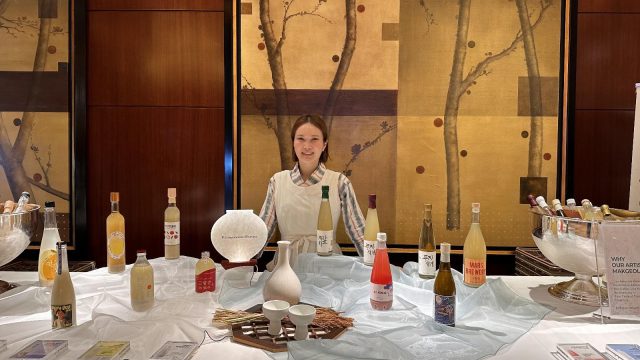
But Sky Oh, founder of Fermentation Heaven, a Korean alcohol distributor in Hong Kong, isn’t hopeful that this will be the spirit’s big break.
More often than not, “Korean dramas feature beer rather than traditional alcohols”, she says, and even in the context of Culinary Class Wars, where the focus is on the kitchen, “nobody is crazy about the drinks menu”.
Partner Content


Since 2023, Oh has been bringing all sorts of premium makgeolli – including Jiranjigyo – to Hong Kong; some traditional, others infused with fruits or mugwort, and more nuanced expressions similar to white wine and sake.
Oh distributes her alcohols through high-end Korean or Japanese restaurants like Hansik Goo and Mosu as well as online. She also attends and hosts regular educational events around town.
Oh says education is still paramount, even amongst Koreans.
“Koreans grew up with cheap, commercial makgeolli that are packed with artificial flavours; so they’re surprised to taste our premium stuff,” she says, adding that her target audience falls into the 30- to 40-year-old bracket.
Bob Kim, senior sommelier at Korean fine dining restaurant Mosu in Hong Kong, only introduced makgeolli on his drinks list six months ago, jokingly attributing the delay to his “arrogance” and “trauma with makgeolli-induced hangovers in college”.
“I can pair Korean cuisine with my knowledge of wine, there are tons of varietals; but after tasting a few [premium makgeolli], I had to put down my ego,” he said.
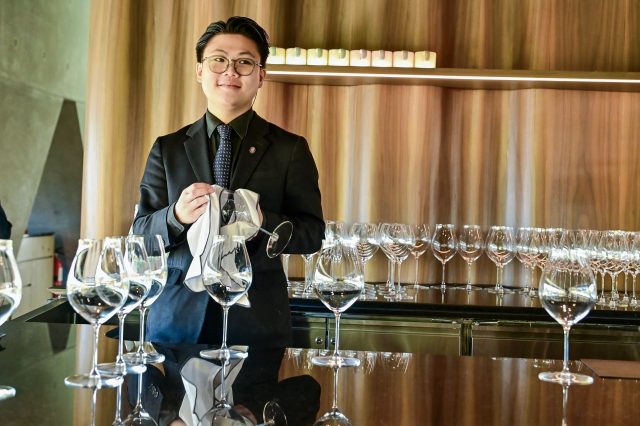
Aside from lower awareness compared to wine and sake, the major obstacle to promoting makgeolli at Mosu is that it must be kept under 5°C and drunk within a week after opening. Kim serves an average of 25 bottles a month.
Currently, traditional Korean alcohols aren’t regulated in the country – something Oh and Kim hope can change in the future.
“People can’t differentiate between premium versus commercial makgeolli; without a clear definition, it’s very hard to promote the quality stuff,” says Oh.
Kim agrees, though he’s wary of what impact harsh regulations could have on the burgeoning category.
“Eventually, I am sure there will be regulations; perhaps the new wave of makgeolli makers is setting the foundation of what’s to come, but we also have to be careful to not lose our identity,” he says.
Related news
Canadian MP moves to scrap law banning inter-province wine sales
How to impress the DB Awards judges
Fabergé egg linked to rare Irish whiskey set worth more than £2m stolen


