



Behind the label: Alto Adige and the question of language
Alto Adige’s complex cultural history is precisely what makes this winemaking region so unique. But with both Italian and German grape names permitted on the label, is its bilingual identity a head-scratcher for consumers? Eloise Feilden finds out.

Alto Adige’s history is as rich as its soils are fertile.
Also known as Trentino-Alto Adige or Südtirol, the region isn’t just famed for its wines, but also its apples. Südtirol’s orchards are responsible for 15% of Europe’s apple supply, and 2% of global production.
Now an autonomous region of Italy, located in the northern part of the country, its nationality has changed hands near countless times throughout history.
Part of the Holy Roman Empire until 1806, Bavaria briefly ruled the region in the early 19th Century, until the Treaty of Paris in 1810 saw Südtirol returned to Italian rule. After Napoleon’s defeat in 1815, the region returned to Austria, and so it stayed for the next 100 years or so.
But the 20th Century was no less tumultuous for the region, which experienced an Italian annexation during WWI, a fascist ‘Italianisation’ regime under Mussolini, Nazi occupation during WWII and, finally, a deal between Austria and Italy to grant it considerable autonomy, though under Italian rule.
Having ping-ponged from nation to nation, its cultural heritage is both rich and diverse. The region has a population of nearly 1.1 million, of whom 70% speak German as their mother tongue and 26% speak Italian. The remaining native mountain communities tend to speak the local dialect – Ladin.
Its politics, too, are defined by this complex history, and the composition of the region’s governing cabinet is reflective of the proportion of the German, Italian and Ladin language groups.
Questions of identity have trickled down to the region’s wines.
On a visit in September for the biannual Alto Adige Wine Summit, I noticed a discrepancy between wine labels from different producers.
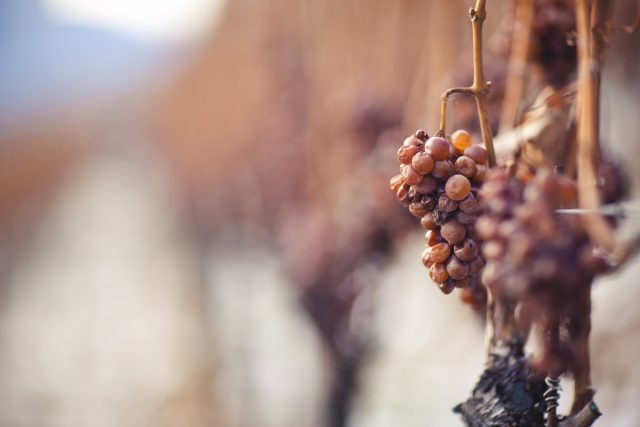
Put simply, winemakers who are part of the local German-speaking population tend to label their wines in German, using German grape names, while those of the Italian-speaking subgroup label in Italian, with Italian grape names on the front label.
Herein lies a fundamental struggle for the region’s winemakers – how to create a unified identity without a unified approach to language.
When I quizzed the local governing body about this – named Südtirol Wein/Vini Alto Adige to cover all language bases (you can see a theme developing here) – a representative broke down the local regulations pertaining to wines with protected designation of origin (aka DOC or IGT wines made in the region).
“Specifications allow and legally protect the indication of origin in both German and Italian, reflecting the historical context of our small wine-growing region,” the representative said. Translated into layman’s terms, the region has protected the use of either German or Italian grape names on the labels of all its wines.
Take Pinot Nero, for example; under Trentino/Alto Adige regulations, wines made with this grape can also be labelled in German as Blauburgunder or Spätburgunder. To confuse matters further, for the purpose of exports, the wine may also be labelled as Pinot Noir.
And with around 20 different varieties cultivated in the region, labelling can get complicated.
Wolfgang Klotz is sales & marketing director at Cantina Tramin. He said the winery approaches each wine label individually. “We orient ourselves by the reference commonly used for each grape variety,” he said. “Locally, for example, we say ‘Ruländer’, yet this variety has only limited relevance among local wine lovers. It is primarily appreciated abroad, which is why we refer to it as ‘Pinot Grigio’, in line with the practice of other Italian wine-growing regions. The situation is the opposite with ‘Gewürztraminer’, whose name is well established both nationally and internationally. For this reason, we refrain from using the Italian designation ‘Traminer Aromatico’.”

Partner Content
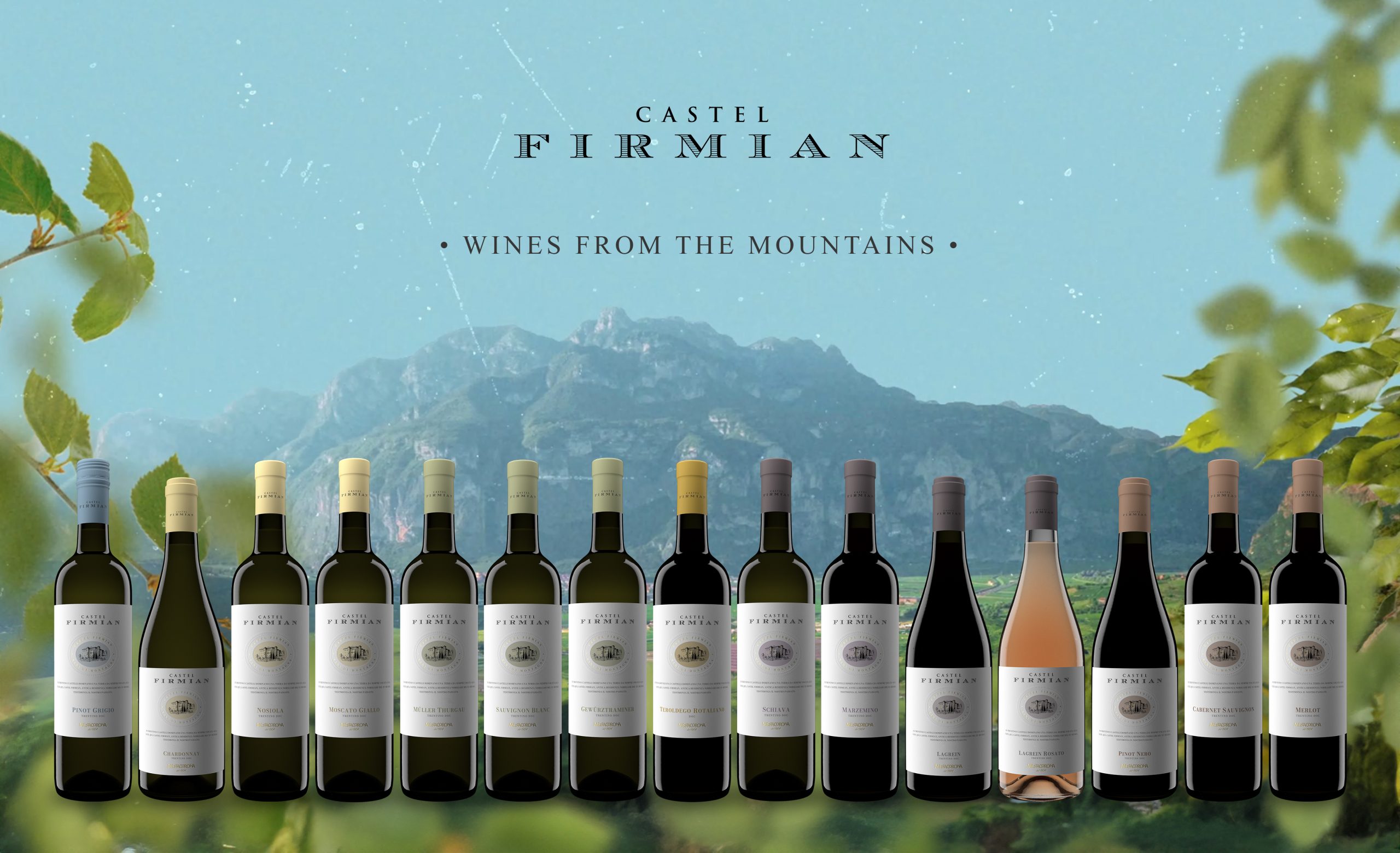
So, for Cantina Tramin, the rule of thumb is: use the name consumers are most likely to recognise.
But not all producers take the same approach. Cooperative producer St. Michael-Eppan Winery, for example, uses the German name Vernatsch, rather than the more widely-recognised Sciava, for wines made with this native grape.
Likewise, Cantina Colterenzio uses the German grape name on labels of wines sold locally and in the German market, but switches to Italian for wines sold in the US.
So does the lack of labelling cohesion create a barrier for consumers who are unaware of Alto Adige’s complex cultural background?
A representative from family winery Weingut Ignaz Niedrist admitted that the winery has received feedback noting that its use of German grape names can be confusing for export. However, they argued that the use of German ties in to the family’s personal story.
This is often the case for local producers; bound to the rich cultural heritage of their home, family histories and personal preferences sway them towards either the German or Italian labelling.
Indeed, grape variety names, and their associated languages, hold deep cultural significance in Alto Adige, and many producers wish to preserve long-held local traditions.
But for those with an eye to export markets, bilingual labelling can provide a solution. “There is no legal obligation to provide bilingual labelling, but many wineries choose to do so voluntarily – for reasons of consumer transparency or to emphasise regional identity,” the Südtirol Wein/Vini Alto Adige representative explained.
“The same principles apply to the back label. Language choices may be adapted to target markets, provided that mandatory information—such as allergen declarations—meets the legal requirements of the respective country.”
The name Blauburgunder holds “considerable local significance”, said Tramin’s Klotz. The winery therefore uses this name on its labels as well as Pinot Nero.

Though there are some exceptions: “In some countries, such as the United States, specific legal requirements must be observed. To comply with these, we print separate labels. There, we use exclusively the designation commonly recognised as ‘Pinot Noir’,” he explained.
Despite the potential confusion for consumers, and the extra legwork for producers printing different labels for different markets, many see Alto Adige’s bilingual identity as its superpower.
Klotz explained: “Due to its geographical location, Alto Adige/Südtirol has always played the role of an important transit and connecting hub between Southern and Central/Northern Europe. This position has fostered the development and maintenance of close social and economic relations with neighbouring regions in Austria, Switzerland, Germany, and Italy.
“The multilingualism of our population represents a particular competitive advantage in this context. It enables direct communication in the native language of our partners and thus strengthens both tourism and economic exchange. Our sector also benefits greatly from these conditions.”
Indeed, beyond domestic sales, Italy and Germany are the biggest markets for Alto Adige wine.
Plus, the local consorzio is working hard to build understanding and recognition for the region internationally. Now in its fifth edition, the Alto Adige Wine Summit brings together international trade and media to highlight the regions distinctness and build its reputation overseas. The 2025 edition opened its doors to a new audience, inviting sommeliers, wine dealers and experts from the food world to experience the region and its wines, inviting the trade to learn the rich history and culture of the region, and better understand what’s behind the label.
Related news
Garcés Silva: fresh thinking from Leyda
Christie's to sell Burgundies from renowned British collector Ian Mill KC


