



Champagne Tsarine: a young brand with big plans
Enguerrand Baijot, in charge of Champagne Tsarine since 2023, explains to Michael Huband how it has built its brand of affordable luxury, despite being a relative newcomer in the world of Champagne.
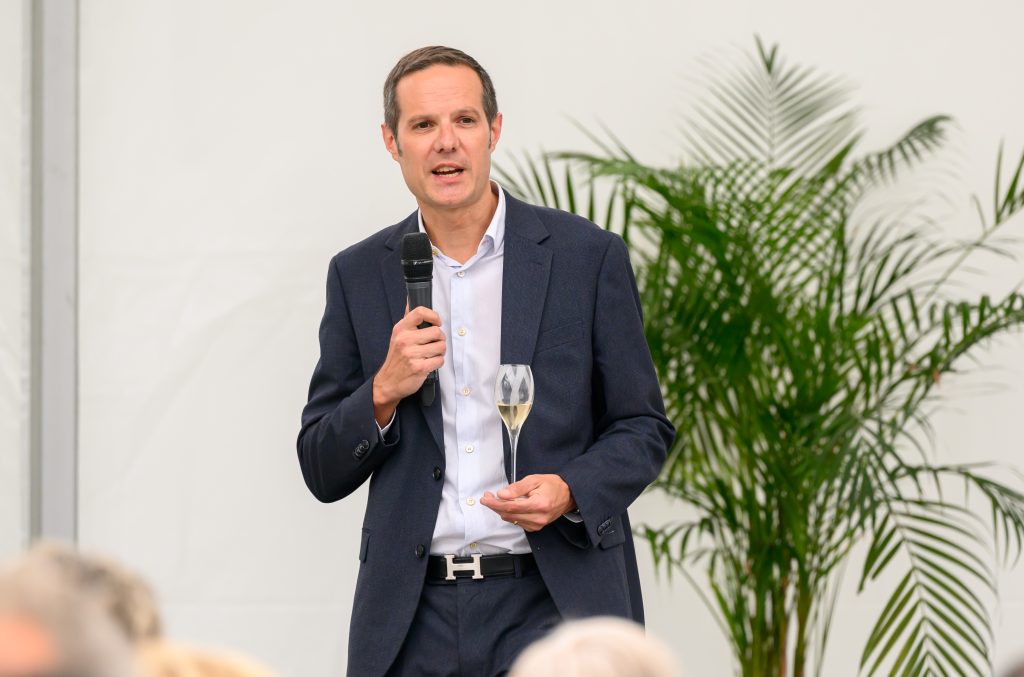
Champagne can be a tough, contradictory category to work in. On the one hand it has the weight of history, with many houses boasting centuries of prestige and cuvées that might barely change for decades. On the other, it must constantly adapt to its time, taking any and every opportunity to meet the demands of a new era. More than any region, it has to press forward without abandoning what has built its reputation.
Enguerrand Baijot certainly knows that. As president of Maison Chanoine, he is responsible for two brands within the family of Lanson-BCC, the ‘pure player’ group solely made of Champagne houses, which also includes Maisons such as Philipponnat, Boizel and, of course, Lanson. Despite their common heritage, the two have very different stories and positioning.
Champagne Chanoine Frères is the more archetypal Champagne brand. Dating back to 1730, it is the second oldest house in Champagne. Its core tenets are tradition and expertise; Enguerrand Baijot highlights that it has kept ‘Frères’ in its name as a reminder of the fraternal and crafted mind that has been kept at the heart of Champagne Chanoine Frères for almost three centuries. Its wines, made in a more robust style and led by Pinot Noir, are classically Champenois.
The other bucks the trend. It is a relative newcomer, built on a template of freshness, elegance and balance. Without centuries of tradition to back it up, Champagne Tsarine has had to chart a new path in a crowded market.
It thus stands apart from the crowd in Champagne. From its characteristic curves to its market approach, Champagne Tsarine is providing a new blueprint for cracking a difficult market. In nearly 30 years, it has already made substantial progress, and Enguerrand Baijot’s ambitious plans give no indication of that stopping.
Agile from the beginning
“Life is about encounters,” according to Enguerrand Baijot, and the early story of Champagne Tsarine certainly attests to that. Launched in 1996 by Philippe Baijot – Enguerrand’s father – it was the product of uncertain times, canny branding and a serendipitous encounter.
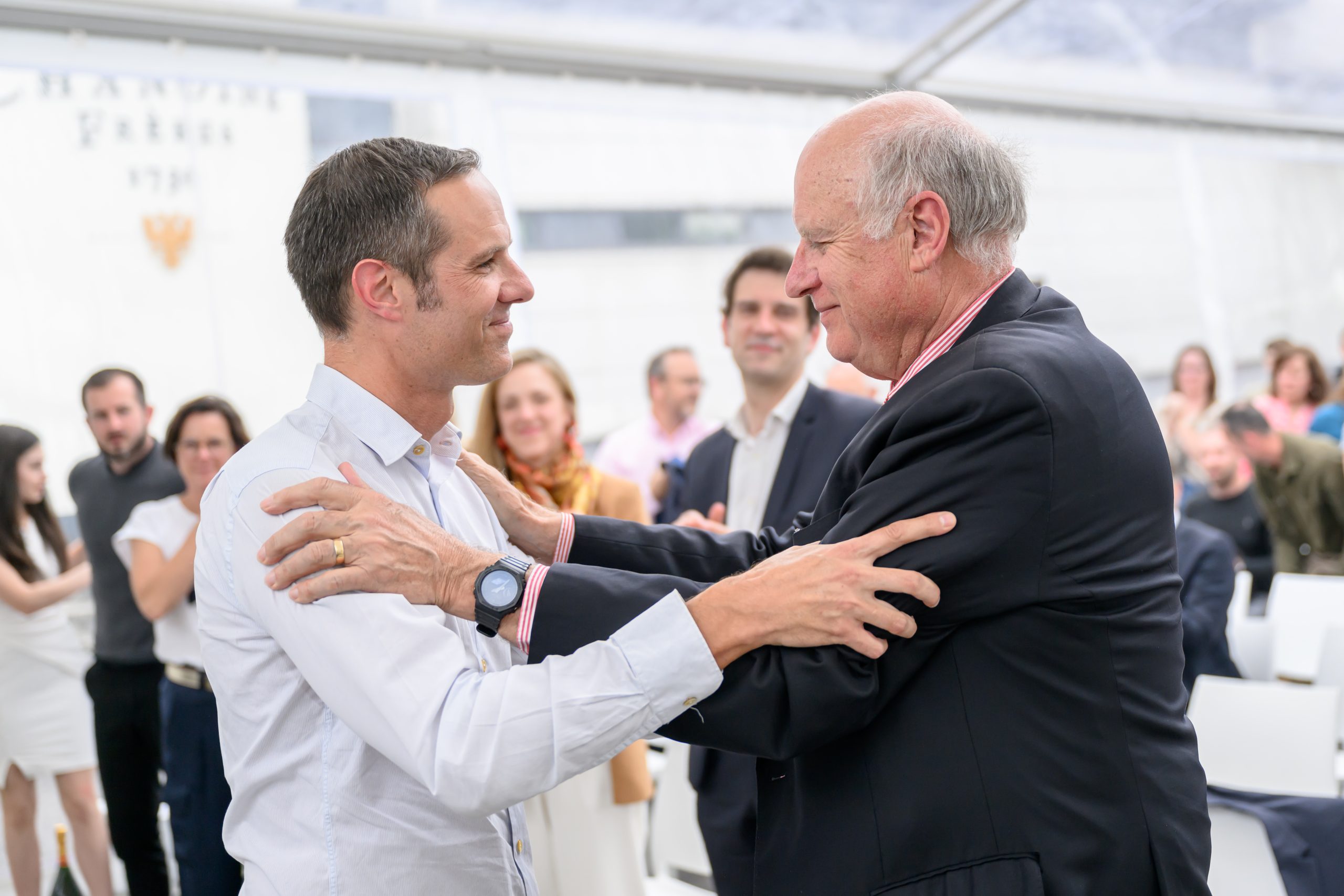
The early 1990s were a tough time for the Champagne industry. A series of shocks, including the Gulf War, a global recession and increased competition, meant that the high demand of the late 1980s suddenly evaporated. These caused consternation for many in the region, but proved a golden chance for Philippe and his business partner Bruno Paillard.
Having set up business in 1991 with the revitalisation of Chanoine Frères – at that point, a house not being used to its full potential – the duo set out with acquisitions and brand creations. Over the decade, they welcomed Champagne Boizel and Champagne Philipponnat to the fold, as well as creating Champagne Tsarine. “When you are small,” comments Enguerrand Baijot, “a crisis means opportunity.”
This agility suited them well. In bringing in further houses, they could craft a portfolio matched to their needs. Whether an established brand with wide reach or an iconic producer with single vineyard prestige, each added a new and complementary facet to the company. It is evident speaking to Enguerrand Baijot today: without centuries of tradition dictating a direction, he can respond to what consumers want.
An artisanal brand
In building Champagne Tsarine as a brand, business sense was once more at the forefront. The name, for instance, was already registered for a Champagne line, but was not being used. Philippe bought that brand, enticed by its femininity, its sense of history and the way the word transcended languages.
”We had no history, and we had no presence,” admits Enguerrand Baijot, “and so we needed something to start with and to distinguish ourselves from the rest of the competition.”
The brand’s second distinctive quality, however, was born of both careful planning and a serendipitous encounter. Philippe was certain he wanted an eye-catching flacon. He had not planned where he would find inspiration.
Much of the Champagne Tsarine DNA was born at a dinner in Reims. It was not anything poured that night that caught Philippe’s attention. Instead, he found himself drawn to an old wine decanter with beautiful curves sitting on the shelf above him.
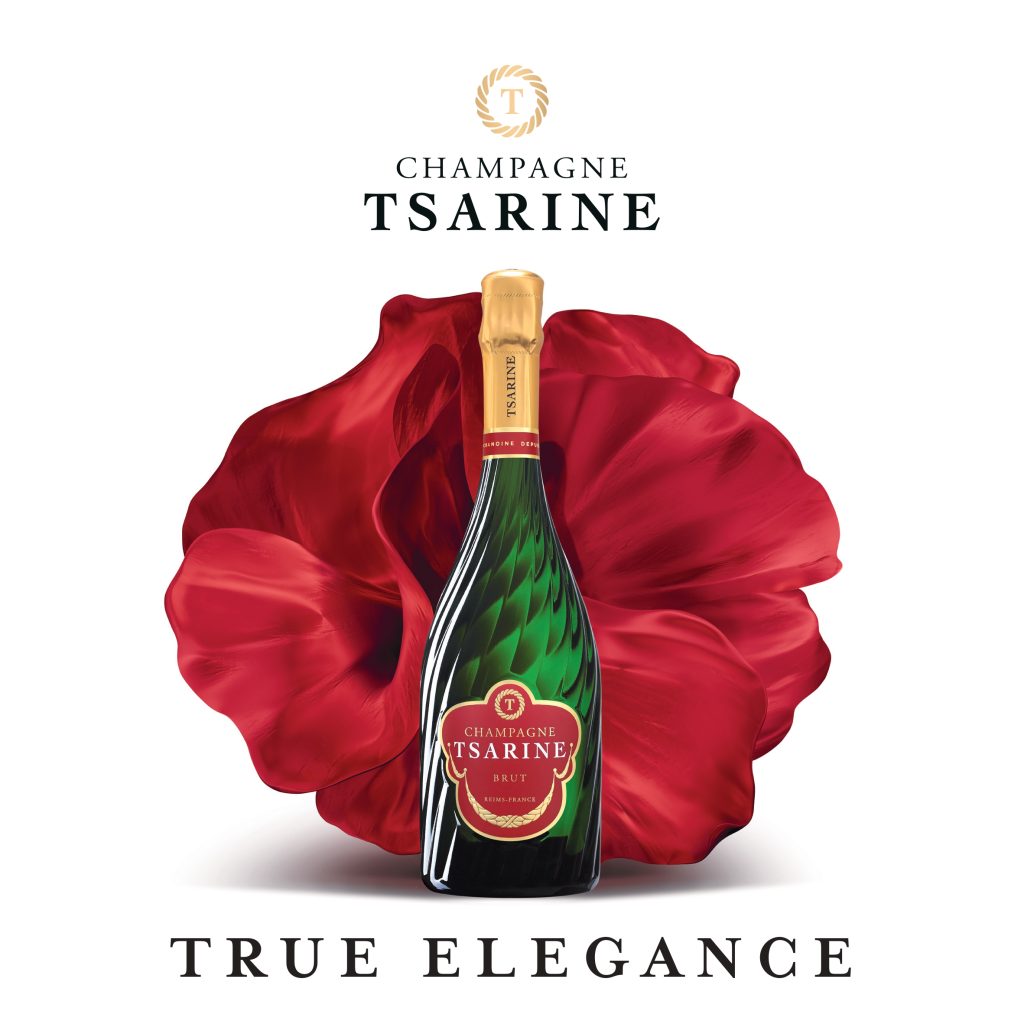
“He asked the sommelier at the time to borrow that decanter. On his way back home, he stopped by the office and started to sketch the decanter around a bottle of Champagne” explains Enguerrand Baijot.
“At that time, in 1996, all bottles of Champagne were shaped the same way,” he continues. Such was the departure from Champagne norms that Champagne Tsarine had to turn to a glassmaker in Venice to create its distinctive flacon, partnering with him for its first 10 years. Though now produced locally, the bottle remains a key talking point: “You have a few other special bottles of Champagne, but Tsarine remains unique.”
Made for drinking
Nearly three decades on, Champagne Tsarine has grown into its unique identity. Enguerrand Baijot, who became president of the company two years ago, is using those original brand tenets to reach new heights. Under his leadership, it is focusing on pleasure and engaging consumers around unique experiences, rather than honing in on oenological technicalities..
“Champagne is all about pleasure,” he extols. “The pleasure of sharing, the pleasure of being together, the pleasure of celebrating: that’s why to me, hedonism is a key element of Champagne. As long as there is joy in this world, there will be room for Champagne.”
He says it with commitment, centring Champagne in life’s emotional richness rather than simply understanding its business potential. Yet this philosophy also guides his positioning of the brand. The phrase ‘affordable luxury’ comes up repeatedly, with Champagne Tsarine aiming to bridge the gap between a premium product and accessibility.
That means, for instance, avoiding common brand partnerships that associate Champagne with high end gastronomy. He highlights that it is a very niche segment of wine buyers that would truly invest in that narrative and so, if not a lost cause, it would be an unnecessarily long battle.
Instead, in part inspired by the fluid curves of its signature bottle, Champagne Tsarine has associated itself with music and with movement.
“A good brut Champagne needs to please everyone” comments Enguerrand Baijot. He backs that up with an events strategy, for example, that partners with medium-sized music festivals. Not only is music a pretty much universal pleasure that brings all kinds of people together, it allows Champagne Tsarine to promote itself at elegant and festive events which do not break the bank: affordable luxury in action.
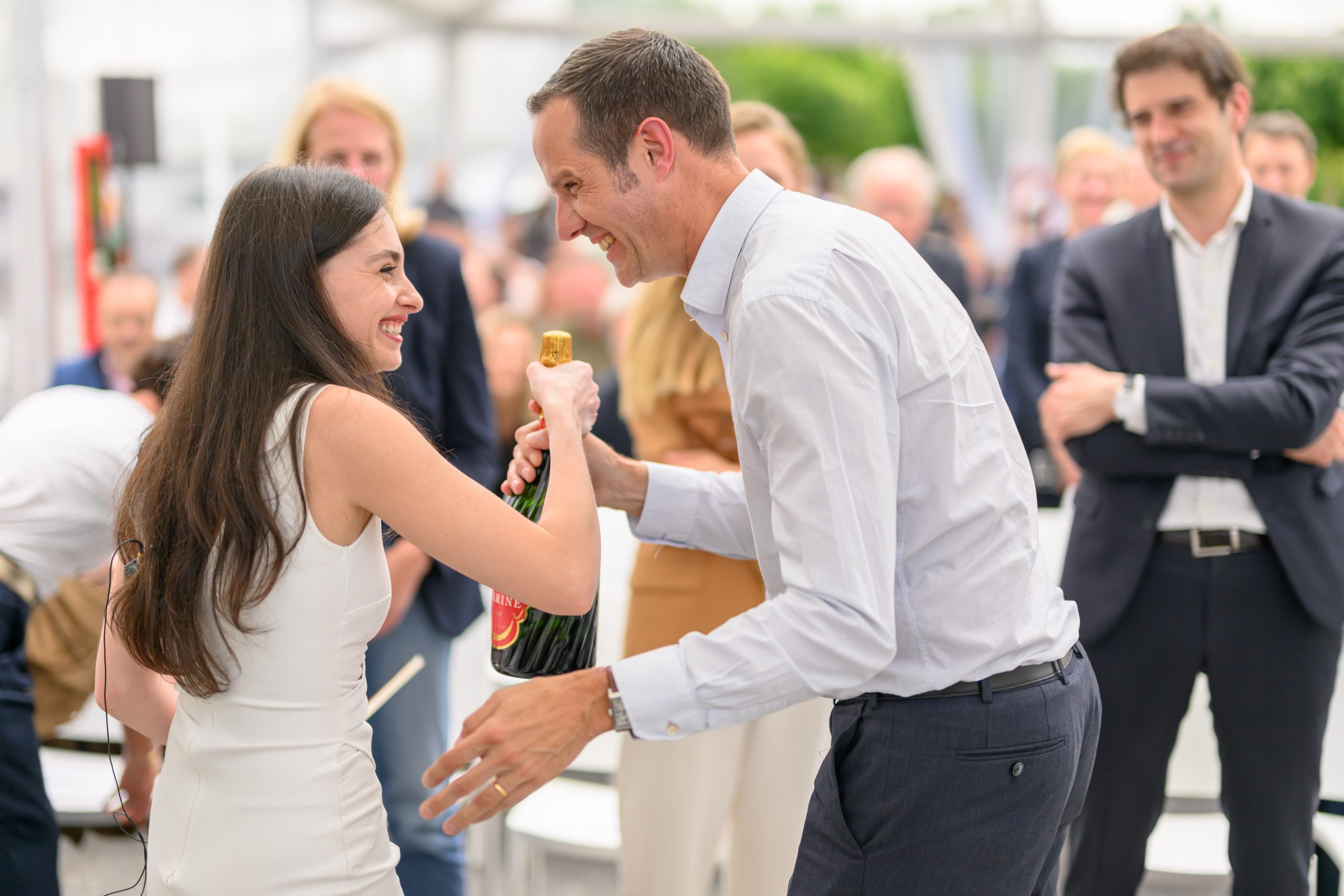
Likewise, violinist Esther Abrami, Champagne Tsarine’s brand ambassador, helps democratise the category. Although chosen for her talents, visibility and elegance. Enguerrand Baijot also highlights her unconventional approach to involve people in classical music, especially through digital platforms.
“She’s definitely very disruptive in the category,” explains Enguerrand Baijot. “She brought a lot of newcomers into her art, and I think it’s something we should take inspiration from.”
Developing the brand
With these strong foundations, Champagne Tsarine is now looking to further expand its reach in the global Champagne market. In particular, with its approach having been a hit in France, the aim is to drive global consumption.
Enguerrand Baijot is central to that. Rather than parachuting into a senior role, he built up a CV with global companies. When he did return to the family business, in 2005, he worked around the world as a sales representative and built up his experience, only returning to the Champagne headquarters in summer 2019 after his father retired.
He knew that he had to be certain that Champagne would be his calling. “When you enter a family business, it’s not like any other,” he comments, “It’s for life.”
Having made that decision, he is bringing his global perspective to the brand. Its oldest export market, the US, was opened just 10 years ago, with all its other international endeavours less than five years old. Yet Champagne Tsarine is now identifying its 15 top target markets for rapid expansion. The aim is to maintain its domestic presence, but grow export markets so that they make up 50% of sales by 2030.
It is bold, yes, but backed up by Champagne Tsarine’s long-term trajectory. Its focus on affordable luxury, including a price point that keeps it competitive on the off-trade and means it can be offered by-the-glass in the on-trade, opens up opportunities. Its successes – for instance its Gold medals at The Champagne Masters 2025 – highlight its quality. Its branding, meanwhile, makes sure that consumers will not forget it.
“That’s what a truly international brand is about; it’s a brand that can fit anywhere,” explains Enguerrand Baijot. “People ask me: ‘Are you more retail or on-trade?’ and my answer is you need to go everywhere. Both channels go hand-in-hand.”
With finesse, elegance and freshness at its core – not to mention its standout bottle – as its calling cards, Enguerrand Baijot has a quiet confidence that Champagne Tsarine can, indeed, find itself everywhere.
“The main challenge is to bring the product to people’s lips for the first time,” he comments. “Once you’ve had a great experience with Champagne Tsarine, you’re going to want to repeat it again and again.”
Related news
10 things to look for when drinking rosé wine


