



‘New World prettiness but Old World class’: Glenelly’s fine line
Glenelly cellar master Dirk Van Zyl is in the unusual position of not only making wine, but selling it too. He’s also instigating quite a radical change of approach at the prestigious Stellenbosch estate, as Richard Woodard discovers.
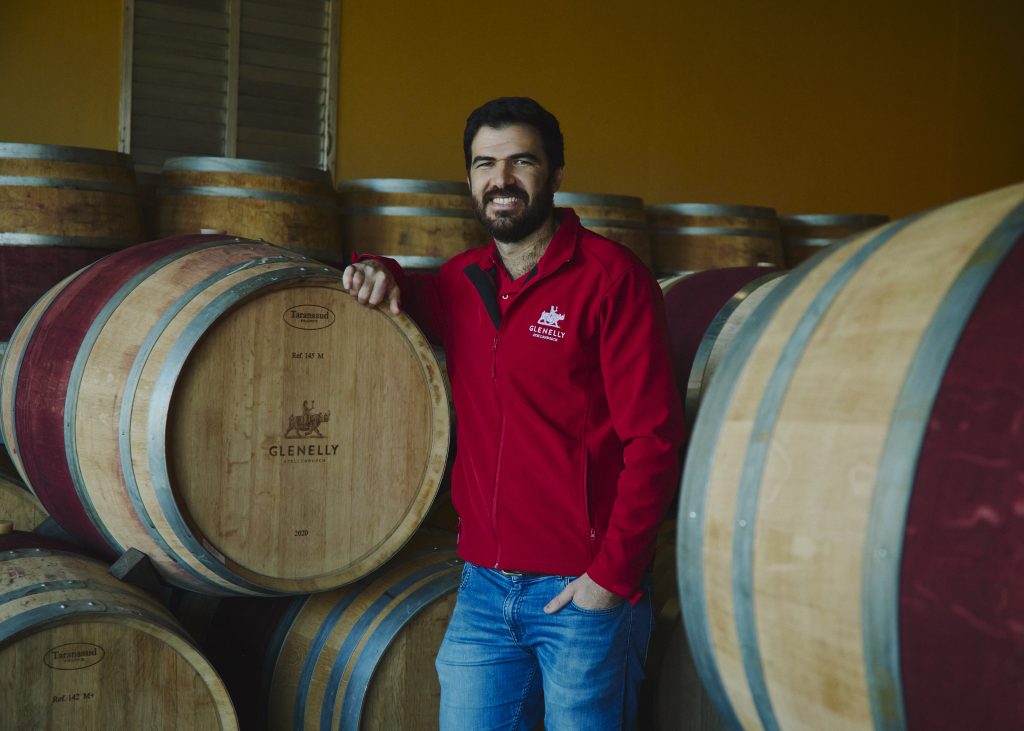
For most winemakers, the closest they get to selling their creations is the odd tasting or masterclass for trade and press. Not so for Glenelly’s Dirk Van Zyl, whose full job title is cellar master and African sales manager – roles he inherited from his predecessor, Luke O’Cuinneagain, when he joined the Stellenbosch estate in August 2022.
“It was a huge challenge at first, but I’m definitely a far better winemaker because I have to do that,” he says with a smile. “You get a bit more honest feedback on your wines when you have to sell them. We don’t make wines in a vacuum – it’s not like we make them and they just walk off the farm. They have to work in the market.”
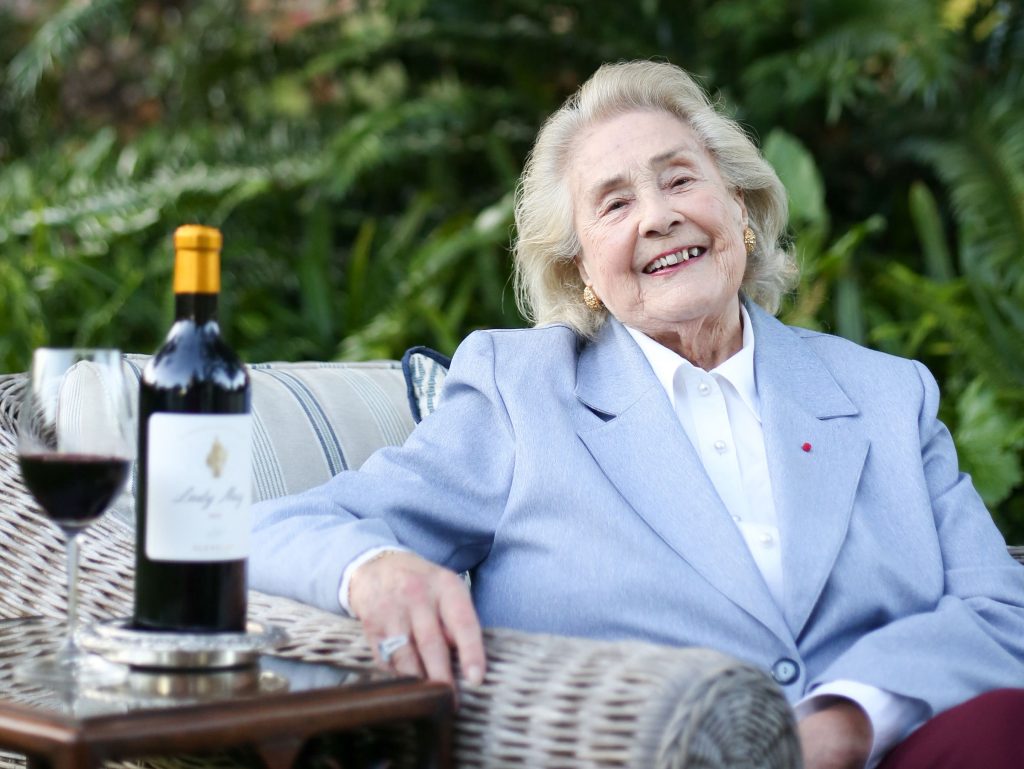
When Van Zyl joined Glenelly – a former plum farm acquired in 2003 as the ‘retirement project’ of the remarkable May-Éliane de Lencquesaing, who celebrated her 100th birthday this year – he wasn’t, at first, in a rush to fundamentally change anything. “It’s easy to go into a new place and say: ‘This doesn’t make sense, this doesn’t make sense, this doesn’t make sense and I’m going to change everything,’” he explains. “But you don’t want people tasting the wines and saying: ‘Oh, this is Dirk’s wine and that was Luke’s wine.’ You don’t want that.”
Over time, however, he began to have his own ideas about the approach needed for Glenelly’s wines, among them a fresh (by Stellenbosch standards) Estate Reserve Chardonnay, an Estate Reserve red blend and, at the pinnacle of the range, Bordeaux blend Lady May.
“For me, the biggest gain was to be had on tannin profile and maybe freshness, which I find in the most inspiring Bordeaux wines,” explains Van Zyl. “They have this effortless tannin that you struggle to get with South African wines – there’s a forcefulness to them.”
Partly this is prompted by the general move to drink wines younger, he adds. “You don’t want hard, brutish tannins when they’re younger, so you have to wait 10-15 years before you want to drink them.” But it’s quite a balancing act, given that, as Van Zyl acknowledges, wines like Lady May will be judged 10-15 years down the line. “We’re on that knife edge of producing wines that are good when young, but can be aged.”
So, starting with the 2024 vintage and going “full-on” in 2025, Van Zyl has done away with pre-picking analysis, relying on his own palate and instincts instead. “All winemakers like to tell you that we pick on taste, but then you get scared when you see the analysis and you don’t pick on taste – which is stupid to me,” he says.
Instead, he goes into the vineyards and tastes every morning, making picking decisions based on “where the tannins are and where the fruit ripeness. But there’s risk involved, because you can be wrong”.
Some of the results have been startling. A plot of Petit Verdot close to Van Zyl’s home, which analysis would have had “on all counts unripe”, was picked two weeks ahead of schedule, and came in at 13%, “very vibrant, very bright, with tannins”, he says. “There’s acidity, vibrancy, life to it – perfume and none of that heavy-handed, broad-shouldered element.”
If you think that’s surprising, wait until you hear about the Syrah. “We’ve changed it quite drastically,” says Van Zyl with more than a hint of understatement. Instead of the typical 14%–14.5%, his 2025 Syrah came in at 12.8%–12.9%. Merlot? 12.9%. He even has a parcel of early-picked Chardonnay at 10.8%, albeit only a fraction of the final blend.
“Pick too ripe and the wines are often quite pretty in their youth, but then get sweeter and jammier before the fruit falls away and you just have the tannin,” he explains. “I want to pick nervously ripe fruit – it’s all about capturing a bit more vibrancy and freshness.”
The philosophical shift continues in the winery, with cooler ferments (20oC–22oC, compared to 26oC–28oC previously), with extraction frontloaded to the early stages, when alcohol levels are lower, before being scaled back. “We never chase extraction at the end,” says Van Zyl. “What you extract then is harsh, bitter, coarse tannins. I said to someone the other day: in the past, we looked at extracting tannins; now it’s more about shaping tannins.”
Partner Content

We’ll have to wait a few years to taste the results of these changes: the current Lady May release is 2020, while the Estate Reserve red is on 2017, with 2018 to follow by the end of this year. “That’s the advantage of working for an old French family,” says Van Zyl wryly. “They understand that wine does need quite a bit of time.”
The Estate Reserve red is, he says, “like the rugby-playing brother to Lady May” – a blend of all the red varieties on the farm that shows tighter-grained tannins. “It’s a Bordeaux blend with a dirty little secret, and the dirty little secret is Syrah,” says Van Zyl, although he is pulling back on Syrah as he doesn’t want it to be “the loudest voice in the blend”.
And Lady May? “This is Glenelly,” he says firmly. “The reason we exist as a farm is this wine first and foremost. Our first question always when we make any decision is: ‘How does this allow us to make better Lady May, and to make more of it?’” By design, this is no micro-cuvée: “The response from May, if you say it’s 6,000 bottles, it’s: ‘Who cares?’ Anyone can make a great wine if it’s 6,000 bottles. We have this aspiration to grow in quality and quantity, to be established as a flag bearer for South Africa.”
A stride towards that status was made with the 2015 release, which “to some extent… put Lady May on the map”, says Van Zyl, setting the blend’s Cabernet-dominant template (69% that year, normally 70%–90%). “It’s so encouraging how well these wines are ageing even from relatively young vineyards [planted in 2004-5].”
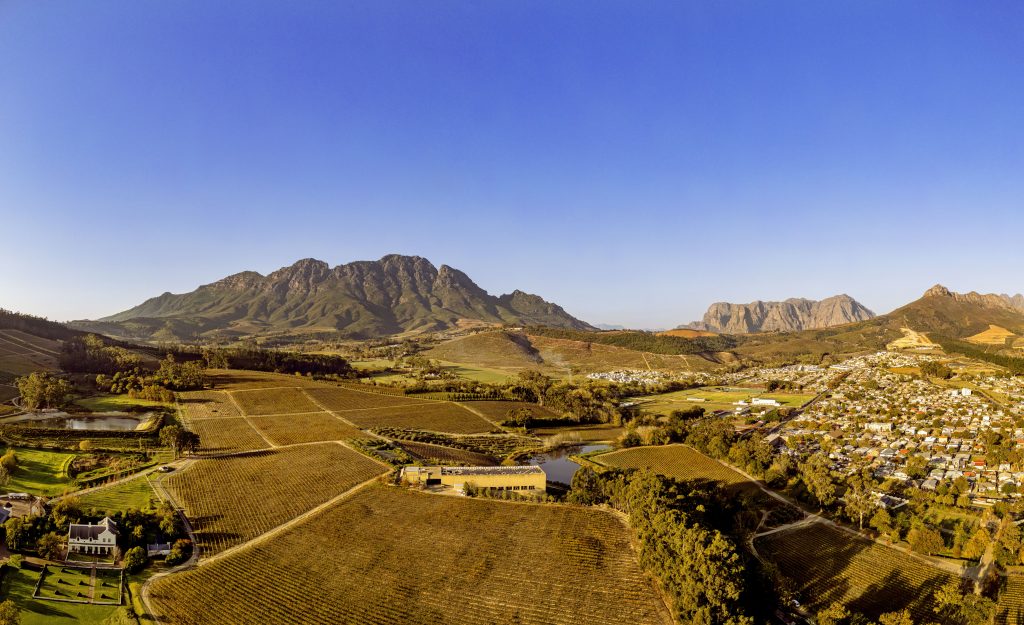
The key to Lady May’s pursuit of elegance is an emphasis on sites on lower, southeast-facing slopes, with reduced levels of solar radiation – close to an hour’s less afternoon sunshine. Components and final blend are aged for one year each, with 40%–50% new oak, before spending three years in bottle before release.
In all of this there is, perhaps inevitably, some influence from the Médoc. “We take inspiration from the great wines of Bordeaux, but we don’t try to copy them,” says Van Zyl. “We look for structure, elegance, finesse – that integrity that you get from the Old World. I think South Africa is quite uniquely situated in the New World: we can make wines that have a foot on both sides – New World prettiness, but Old World class.”
That approach is accentuated in a cool vintage like 2019, when rain caused a two- to three-week pause in picking. “If you got your timing wrong in 2019, your wines were terrible,” Van Zyl recalls. “But if you got it right, you had this beautiful acidity, finesse and freshness. Blends fared better than Cabs in 2019 – the Cabs were quite awkward, but the blends were at a different level. You can see why they blend in Bordeaux.”
The new Lady May release, from 2020, is something of an outlier thanks to the relatively small proportion of Cabernet Sauvignon in the blend – 59%, alongside 23% Merlot, 13% Cabernet Franc and 5% Petit Verdot. This was quite a warm vintage but, says Van Zyl, “almost forgotten” thanks to Covid-19 and the high regard afforded to 2021. “It was almost lost in the middle,” he adds. “What I love about this 2020 is that it satisfies to some extent accessibility in relative youth, but also gives this ageability that we need with this wine. It’s more open than 2019, but there’s a tension to the tannin that you know this wine is going to go and not fall over any time soon.”
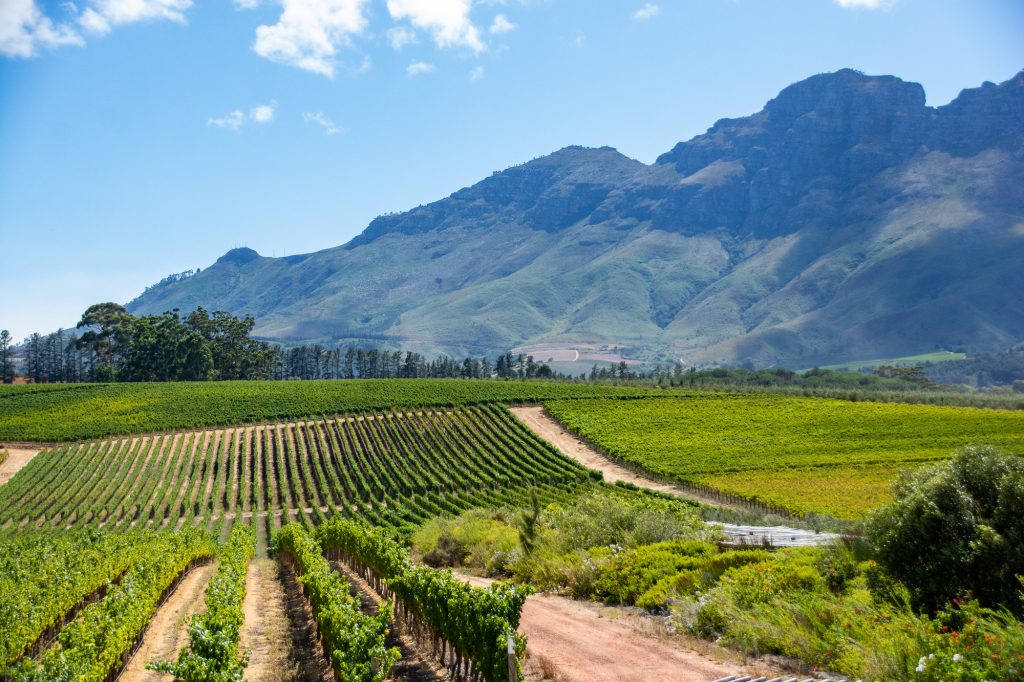
Glenelly’s 57 hectares of vineyards, 80% of them planted in the space of two years between 2004 and 2005, are nearing their peak. But Van Zyl has already embarked on a replanting programme that will run until 2040/45, “so we don’t run into the position in 10 years from now of replanting 30% of the property”. The plan is for more Cabernet Sauvignon (up to nearly 60% of the estate), less Syrah and Petit Verdot, a little more Cabernet Franc and about the same for Merlot and Chardonnay.
Between long-term replanting programmes, changing up the winemaking approach and hitting the road to sell his own wines, Van Zyl certainly has plenty to keep him occupied – but he wouldn’t have it any other way. “Every year when we finish harvest, we make a list of things we can change for the next year,” he says. “I tell my wife: if I ever come home and say I’ve made the perfect wine, then I need to go and get a different job.”
Related news


