



Michelle Brampton: ‘WSET is not just education, but also connecting the trade’
Michelle Brampton, CEO of WSET, believes it belongs at the heart of the global drinks trade. She explains how new projects, from short courses to digitisation to inclusivity groups, are taking it there.

Having joined WSET in early 2022, Michelle Brampton saw the global drinks education charity through the tail-end of Covid uncertainty and into a challenging, rapidly changing environment for the global drinks trade. She also joined during a period of huge growth and opportunity; WSET now enrols around 120,000 candidates each year, with courses available in more than 70 countries.
Having spent 19 years at Treasury Wine Estates, she brought with her a keen sense of how WSET can support the global industry. Moreover, she has made culture, sustainability and a student-centred approach the hallmarks of her tenure. With a multitude of projects now underway, db caught up with her to see what comes next in WSET’s growth journey.
What does success look like for WSET?
It’s a number of things. As well as the leading provider of drinks education globally, part of our vision is to be at the heart of a sustainable and inclusive drinks industry. My view is that we can play a really important role, not just in the education of people within the trade, but also in connecting the trade with best practice and in educating consumers that enjoy the product.
When I say a sustainable drinks industry, I don’t just mean from an environmental point of view. I mean, in general, how do you sustain an industry that’s under pressure from a lot of different angles? The ability for us to be the connector and to bring people together for a better outcome for everyone is really important to me.
The inclusivity part is that I strongly believe that for the industry to thrive it needs to innovate. To innovate it needs to have diverse thought and it needs to represent its consumer base, to be able to deliver what a consumer wants.
What has proved different in moving from a wine producer portfolio to a drinks education charity? And what have you brought from it?
It’s completely different. It has the joys of being in the trade that I love, but it’s very different in the way that it thinks about its product and its consumers. A lot of people that work at WSET are really passionate about education and the impact that it has. Treasury Wine Estates was a highly branded commercial organisation and very dynamic in lots of ways, whereas I think education is more thoughtful and considered.
Historically, WSET has been less commercial in its thinking, and that’s something that we’ve worked through. It does need to be commercial to be able to fuel improvement in educational impact and the social impact work that we do as well.
What I’ve brought from Treasury, really, is an understanding of the importance of culture. Creating a culture in an organisation where people feel more empowered and engaged brings a different outcome, and I strongly believe that culture inside an organisation emanates outwards. We’re looking for a more flexible and more customer-centric approach that’s ever more engaged with our students and providers to understand what’s needed.
How is WSET developing its product offering?
Our courses and qualifications will always be important. We are making sure that they are relevant and agile, adapting to what the trade needs for globally consistent qualifications which add value. For instance, we are launching an updated Level 3 Award in Wines in 18 months, that will contain more sustainability information.
We have breadth, from the very structured courses all the way through to bite-sized learning. We have a YouTube channel full of enrichment opportunities, whether those are webinars or industry talks hosted by experts and alumni. We are also expanding into short courses that can be bolted onto qualifications, and are scoping one around environmental sustainability at the moment. We can’t fit everything into a curriculum!
How has WSET ensured both trade professionals and enthusiasts can access its qualifications?
Students are now 50:50 trade and consumer, and the consumer base is growing. It’s interesting, because the feedback we get is that there’s credibility in the qualifications because the trade values them.
Fundamentally, people in the trade are consumers as well, so they’re looking for similar knowledge. I think what our qualifications offer is a structured way of understanding similarity and difference. It’s useful to give a student confidence to be able to understand and explore the category.
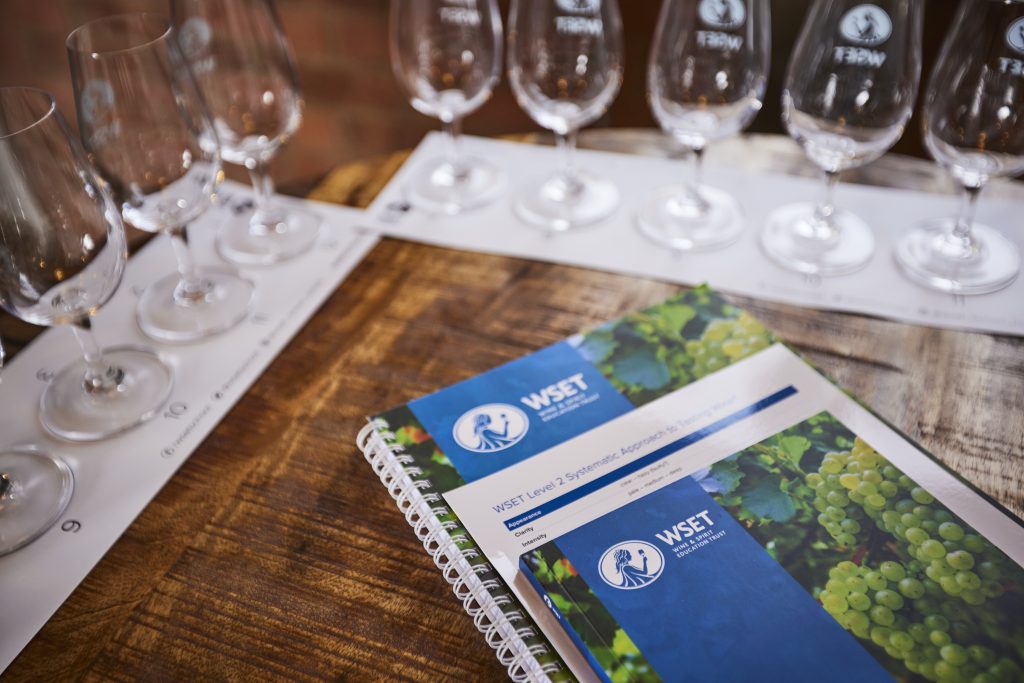
To benefit everyone, in the last few years, we’ve brought in instructional designers, who take the content and make it easier to learn and understand. We already go way beyond what a lot of awarding bodies would do in that we create classroom content and support for educators. We want people to succeed!
What is WSET doing to ensure students can succeed all around the world?
We are in challenging times at the moment, but we still see a huge opportunity in the US. We’ve seen a massive uptick in business in India in the last couple of years. Then there are a few key Asian markets which are underrepresented; I would say South Korea, China and Singapore. I think those markets have potential.
From a social impact point of view, we’ve been working across multipple markets. We recently ran a project in Angola to support people in the on-trade, with support from Sogrape, one of our partners. We’ve also worked with the Black Cellar Club to support young black people in hospitality getting qualifications in South Africa.
As we refresh courses, we’re making changes to our lexicons, to adapt them for a more global audience. But I think also, there’s a real desire to connect the trade with a common language. In some countries with other languages, WSET qualifications are taught in English as a way to learn the language and be part of a global wine trade.
Why has digitisation been such a big project for WSET over the last five years?
Covid definitely exposed the challenges of a paper-based organisation. We are currently on a digital transformation journey. We have launched digital certificates and we’ve just started piloting on-screen exams. That will be followed at some point in the next couple of years by on-screen marking.
I guess through the pandemic, as well, learning changed for everybody. There was a realisation that you could learn at home. What we have seen since Covid is that people still see our courses as very sociable spaces where they want to taste with others. But by now offering online courses, we’re recognising the diversity of learning styles, trying to accommodate people to make it easier.
What is WSET doing to promote sustainability, both environmental and social?
As mentioned before, we’re auditing what’s in our courses and updating them with sustainability material, as well as scoping a sustainability short course. Internally, we are focused on what we can do to make an impact ourselves. Digital certificates are a good example, reducing paper use and shipping around the world, but also, when we had the London school refurbished, we made sure that was done in an environmentally friendly way.
We are working with our partners to deliver a growing social impact programme which increases accessibility to our qualifications supporting underrepresented communities and promoting greater inclusivity within the drinks industry. Last year we supported over 1000 students through initiatives in 14 countries including Brazil, India, Angola and the Salomon Islands.
Internally, we have a number of employee community groups from an LGBTQIA+ group to a group for those of Spanish origin to a volunteering group.
And of course, we established Drinks United, a collaboration between WSET, WSTA and The Drinks Trust. That’s about helping the industry, the people and the businesses within it to have a safer and more inclusive industry where everyone feels safe and supported. Just recently we had an event hosted at Diageo where we had 80 people, including CEOs and MDs, talking about all issues from allyship to recruitment.
Is there anything else we should look forward to in the coming months and years from WSET?
Within the next year, we’re excited about refreshing our brand and our website, ensuring that our renewed identity reflects our commitment to inclusivity, innovation and sustainability. WSET has probably been historically viewed as an exam providing organisation, and our purpose and mission are now much broader than that. This is an opportunity for us to really get that message out there.
As much as we’re focused on refreshing the wine courses, growth-wise, beer is still a big opportunity for us. It’s not even been available two years yet, so it’s a key part of the brand refresh, talking about ourselves in terms of drinks education, not wine and spirits education.
In the next five to 10 years, the big aim is to become more agile in what we produce and in how our students and the trade engage with us. From qualification refreshes to digital content to bespoke and short courses, it’s going to be interesting, an exciting new chapter!
Related news
Why Mayfair's BiBi Lates is worth staying out for
Cru World Wine sees huge demand for its 'community-ownership' share offer
Goedhuis Waddesdon post-merger 'genuinely excited about the future'


