



Masterclass proves the UK should look out for Lisboa
With a rich history and a diverse selection of keenly-priced wines of huge personality and character, the Vinhos de Lisboa region is definitely one to watch.

However long you’ve been working in the world of wine, there are still many discoveries to be made. But while it’s not unusual to unearth a new niche source of fine wine, or a native grape variety you had never heard of, it is rare to find something large that’s still in an emergent state, and yet highly relevant to our market today.
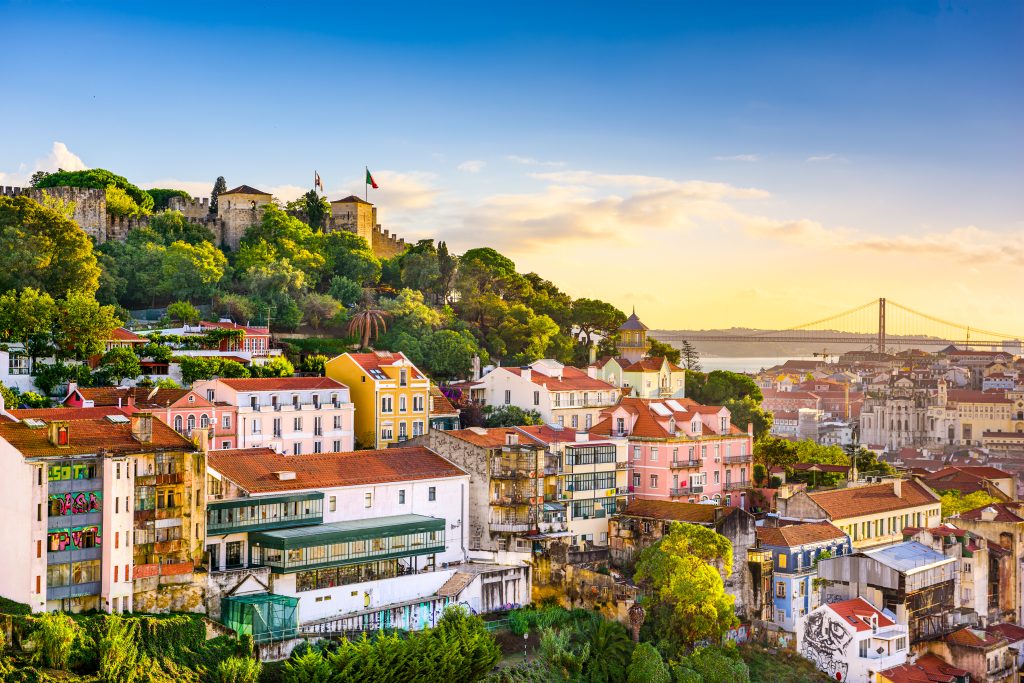
But Portugal’s Vinhos de Lisboa (Wines of Lisboa) is just that. Many will of course know the capital city, Lisbon, that the region is named after, and that its vines lie not far beyond the urban centre’s boundaries. But it’s safe to assume that few are fully aware of the scale, quality and variety of this relatively new umbrella wine area. Do they appreciate how well-placed it is to sate today’s calls for affordable, fresh wines with personality? And have they considered the opportunity for the future, as an area with a relatively benign climate, that is, relative to areas of a similar latitude, where drought and heatwaves are having a negative influence on wine quantity and quality.
It was these points that Patrick Schmitt MW stressed at the outset of a masterclass on Vinhos de Lisboa for the wine trade in Manchester last month, building his introduction to the region around its key strengths – the area’s long history of winemaking, its appealing styles, its diverse selection of grapes – including many native varieties – its impressive price-to-quality ratio, and its maritime-influenced climate, providing cooling winds and consistent rains in a period of increasing weather extremes.
At the outset, Schmitt also drew attention to the location and geography of the region, which runs along the Atlantic coast, backed by mountains, spanning an area 150km long and 40km wide, starting north of the city of Lisbon. Over this space, Vinhos de Lisboa comprises vineyards on sand dunes by the sea to those on the rocky, sunny slopes, such as the Serra de Montejunto, which reaches 666m at its peak.
Acting as an umbrella region, Vinhos de Lisboa incorporates as many as nine DOs – Bucelas, Colares and Carcavelos, along with Torres Vedras, Alenquer, Obidos, Arruda, Encostas d’Aire and and Lourinha. It holds the position of Portugal’s largest single wine-producing area in volume terms, yielding around 66 million bottles annually from 10,000 hectares. As much as 80% is exported to around 100 countries, with the UK ranking among the top two biggest markets.
Formed in 2009, Vinhos de Lisboa is a fairly new brand for this area, once called Estremadura, and forms a logical association with the capital city it extends from. Indeed, associating with Lisbon is a sensible move – this is a city that’s booming, with almost 20m visitors annually, not just for the sites and food, but also for the surfing. Indeed, nearby Peniche is home to the world surfing league, while the Nazaré Canyon north of Lisbon is home to the world record for the largest surfed wave.
Despite the relatively recent name change, there’s nothing new about viticulture in this part of Portugal. Not only has wine been made in the region for more than 2,000 years, with the Phoenicians and Carthaginians establishing vineyards in the area before 200BC, but it has strong historical connections with England, particularly Lisboa’s DO Bucelas, where an ancient native grape still grows – Arinto.
Importantly, General Wellington, during the Peninsula Wars (1807-1814), stationed his troops here, and the famous figure – who defeated Napoléon Bonaparte at the Battle of Waterloo – discovered the whites of Bucelas. After the war, Wellington brought back these wines to the UK, and even introduced then to King George III – who claimed that the Arinto of Bucelas cured him of kidney disease.
Meanwhile, the Victorians adopted it, calling it Portuguese hock, and it was the first wine to be imported by The Wine Society, just over 150 years ago.
But what about the appeal of Vinhos de Lisboa today? Well, the area still includes Arinto, with its refreshing, relatively low-alcohol character – or richer, age-worthy, oak-influenced form too – but extends beyond it. One can find a range of excellent whites from native grapes, as well as international varieties, while the reds range from the fresh and acidic to the rich and fleshy, depending on the grape variety and source area – particularly the distance from the cooling Atlantic.
In terms of the varieties, as Schmitt pointed out, Arinto’s reputation ought to be elevated to one of the world’s great white grapes, with the natural acidity of Riesling, and yet, like Chardonnay, an affinity for barrel-ageing. Also of great interest is the relic white grape of Vital and, in reds, another ancient grape, Ramisco, which grows ungrafted in the sandy seaside soils of Colares. Also among the reds, are quality wines made from Touriga Nacional, Castelão and Alicante Bouschet. Several international varieties perform very well in Lisboa too, including Chardonnay and Syrah, while masterclass attendees were served an excellent Merlot.
Beyond these, the area is home to the fantastic fortified sweet wine of Carcavelos, and amazing Lourinhã brandy, from the bounded region of the same name.
So, this is a part of the wine world with much appeal right now, but what of the future – is that rosy too? Well, it’s Schmitt’s view that this is a place to back for the long term, even as the climate in Southern Europe becomes more challenging for viticulture. That is because Vinhos de Lisboa is home to ancient grapes that have survived so much change over the centuries – including beating phylloxera, such as the aforementioned ungrafted vines in Colares. Then there are the native white grapes of Arinto and Vital, that retain freshness in warm conditions.

Furthermore, with this region facing the Atlantic, the vines are moderated by cooling breezes – and there’s reliable rainfall. While continental Europe appears to be suffering from heatwaves and extended periods of drought, this part of Portugal benefits from the moderating impact of the vast Atlantic.
So, in short, Vinhos de Lisboa is a place for keenly-priced wines with personality, loved locally by diners, tourists and surfers. It’s also an area with a rich past, featuring longstanding and strong British connections. It’s also a place with a seemingly assured viticultural future, due to the presence of its well-adapted native grapes and the giant air-conditioning unit that is the neighbouring Atlantic.
Related news
Driverless tractors to GPS planting: how one New Zealand winery is paving the road to success


