



Margaux is back… above all in the 2022 vintage
The annual round of ‘top 100 wines of the year’ declarations from some of the world’s leading critics make for interesting reading, db’s Bordeaux correspondent Colin Hay writes, highlighting not only is Bordeaux is well and truly back, but Margaux is leading the way.
As the temperature drops, the nights close in and Keats’ season of mists and mellow fruitfulness draws to a close (if it did not escape us altogether), we realise that the end of the year is on its way.
And should we forget, we have the great unveiling – the annual round of ‘top 100 wines of the year’ declarations from some of the world’s leading critics and the publications they write for.
These always make for interesting reading, and this year, their message is clear and comes in two parts.
Firstly, Bordeaux is well and truly back. It takes first place for the Wine Spectator (with Giscours 2022 topping the charts) as it does for James Suckling (with d’Issan 2022) and Jeb Dunnock (with Larcis Ducasse 2022) and also fills seven of the top 50 places for Vinous and nine of the top 50 places for Jeb Dunnock.
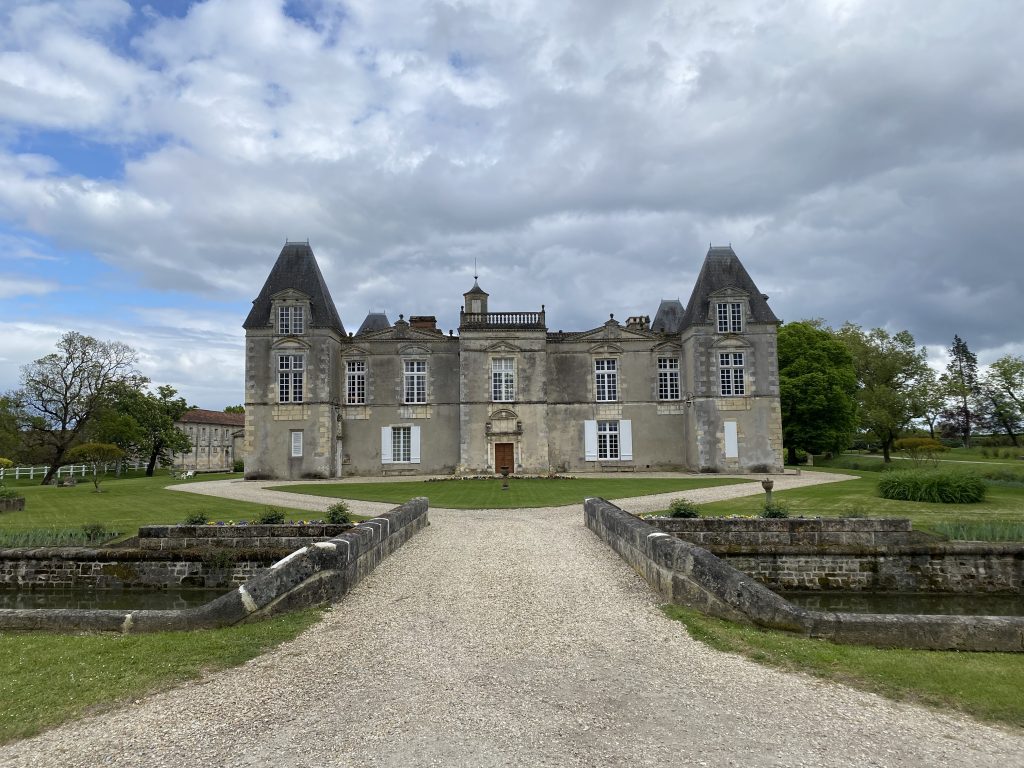
No less significant in this is the return of Margaux as an appellation. Châteaux d’Issan and Giscours, as we have already seen, take the top places in the seasonal charts for James Suckling and the Wine Spectator respectively, with Giscours itself appearing in no fewer than three of these end-of-year league tables. Brane Cantenac appears in two listings (third, and highest-placed Bordeaux, in the rankings for Vinous and tenth for Jeb Dunnock).
That is interesting. For Margaux has so often in recent years been cast as the larger, less consistent and just qualitatively inferior cousin of its increasingly more illustrious Médocain near neighbours. And there is some truth to this – or, at least, there was. For, as I have noted before, Margaux had somewhat lost its way.
Losing its way
In the 1980s its wines typically fell in price relative to those of Pauillac and St Julien and, along with Saint-Émilion, that encouraged a certain change in style. Both appellations embraced the turn to greater ripeness, more extraction and the use of new oak, more enthusiastically than their neighbours, following a recipe that led to short-run commercial success at the expense of a lack of terroir and appellation typicity. As fashions changed again though, this left Margaux as an appellation somewhat high and dry.
But that period is now well and truly in the past, with the leading labels of Margaux now so often leading the retreat from the modernism of an earlier modernity to a certain new classicism. It is that new classicism that this year’s successes in the annual rankings reward.
And they do so, of course, by paying tribute to the exceptional 2022 vintage.
But what is interesting, as I look back on the meteorological charts, is that Margaux did not have it easy in 2022. Along with St Julien and Pauillac it suffered the most of the region’s leading appellations from the absence of winter rainfall and it then saw less rainfall between véraison and the harvest than every other appellation save Pomerol.
Knowing a little of Margaux’s typically ‘well-draining’ soils – relatively low in more water retentive clay and higher in gravel – I recall fearing the worst as I arrived in Bordeaux for the en primeur tastings back in April 2023. Those fears were only reinforced by the average vineyard yield data which showed an appellation average yield of only 31 hl/ha – over 20 per cent below the 10-year average and far lower than any of the other leading appellation save Saint-Estèphe.
Partner Content
The numbers didn’t look great; but the wines tell a different story.
Confounding expectations
It was, then, with some surprise and delight that the first wines that I tasted from the appellation largely confounded my expectations … and with growing amazement as my expectations were recalibrated with almost every subsequent property I visited and every little group of wines that I tasted. Margaux had triumphed.
It did so in part because of the sheer quality of the old-vine Merlot on its various plateaux. And it did so too because vinification styles and methods have changed a great deal in recent years and perhaps more so than any other leading appellations its vignerons and vigneronnes, ably consulted by oenologues like Eric Boissenot, rose to the challenge they faced. The results are impressive in any context, all the more so when the difficulties of the vintage are taken into account.
What is so pleasing to report is the great Margaux typicity and great freshness of these wines. Continuing a trend established first in 2019 and 2020, the best wines of the appellation in 2022 are often sinuous and luminous. They are also bright, fresh and aromatically expressive, characteristics seemingly reinforced by the rather greater turn to organic and biodynamic viticulture in the appellation in recent years.
They merit their accolades – and to pay my own tribute to their success here are just a handful of my favourites from the 2022 vintage. There are many others I could have picked.
Tasting notes

Château Brane-Cantenac 2022 (Margaux; 74% Cabernet Sauvignon; 23% Merlot; 1% Cabernet Franc; 1% Carménère; 1% Petit Verdot; a final yield of 31.5 hl/ha; pH 3.61; 14.3% alcohol). An utterly brilliant Brane Cantenac built around the old vines on the plateau. Perfectly integrated and harmonious, if slow at first to divulge all of its secrets, this unfurls gradually and at its own rhythm, with lovely cedar and graphite encrusted black cherry and berry fruits. There’s a lovely touch of fresh walnuts before the skins have changed colour. Candlewax and incense too. Given a little time, that remarkable signature of Brane eventually fills the glass but all at its own place. A little peony and pink rose petal, but the florality is subtle at this stage. Texturally remarkable, this is a wine that so beautifully epitomises Brane and Margaux. Cool and gracious, crystalline and limpid and with great precision. So clear and yet with so much impact and density. Succulent, sapid and tender on the fantail finish before the taper towards a very long and distant horizon. The best yet from Henri Lurton and Christophe Capdeville at Brane. The intensity of the florality in the mouth is sublime. 98+.
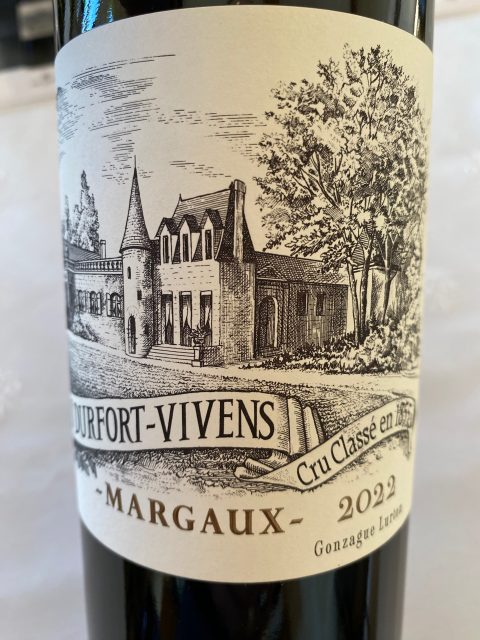
Château Durfort-Vivens 2022 (Margaux; 84% Cabernet Sauvignon; 16% Merlot; a final yield of 30 hl/ha; pH 3.75; 13.5% alcohol). There’s wonderful clarity here. Intensely floral, as ever, with violets and freshly picked roses and a little saffron. Black cherry, blueberry and mulberry. Yes, as it opens the fruit lightens, with more raspberry appearing. The patience in the vineyard is rewarded by the textural softness this exudes. Caressing on the palate, delicate yet ample with lovely ultra-fine grained tannins detailing the extremities. Very long and precise and focussed on the finish. It’s like something chiselled in real-time rather than constructed in advance. Very lively and bright. Translucent. Sinuous. Beautifully formed and shaped. A very fine expression of its terroir. Lovely in this vintage and similar is quality and style to the 2020. 96+.
Château Giscours 2022 (Margaux; 64% Cabernet Sauvignon; 30% Merlot; 3% Cabernet Franc; 3% Petit Verdot; tasted at the property with Jerome Poisson). Divine, if a little closed at first, I find this rather delicate and introvert but in a very attractive and enticing way. It opens slowly with lovely dark floral notes – a little more lilac and perhaps even peony than the roses so evident en primeur, though they’re there too. Walnut shell. Graphite. Pencil shavings. It’s lovely to find this so true to my recollections of it en primeur. It remains very Margellais and very Giscours too – in its most recent sublimation. Intensely floral, as it was when first tasted. Gorgeous on the entry. Taffeta. Supple, ample but with a beautifully limpid and luminous mid palate – sheets of silk gently rippling in the breeze. As aerial in the mouth as it is aromatically. 97.
Château D’Issan 2022 (Margaux; 65% Cabernet Sauvignon; 30% Merlot; 1% Petit Verdot; 2% Cabernet Franc; 2% Malbec; 14.5% alcohol). This could be no other wine than d’Issan, so beautifully floral aromatically is it. Gently and very naturally sweet, a lovely note of new season walnuts accompanying the now familiar tiny spring flowers and blooms, lilacs, a little violet, wild thyme and cassis. Alongside Desmirail, Durfort and Ferrière, this is the most floral of Margellais expressions in this vintage – though each has its own distinct florality. Plunge-pool cool, brilliantly precise and focussed cassis and blackcurrant, a little blueberry too. Graciously soft and svelte tannins. Glorious textural refinement. Nothing too much. All in balance. One of the prettiest wines of the vintage. I love the style being constructed here. The best vintage of this in my lifetime. Violet and velvet on the finish! 97.
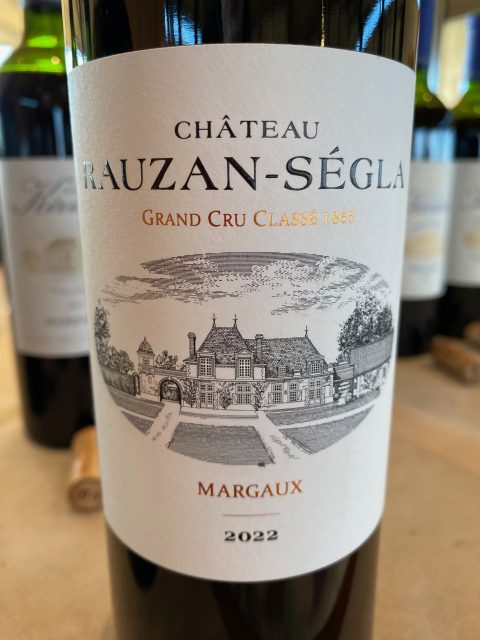
Château Rauzan-Ségla 2022 (Margaux; 72% Cabernet Sauvignon; 26% Merlot; 2% Petit Verdot; a final yield of 30 hl/ha; 14.5% alcohol). Like Brane, tasted just before it in the series, this is a little reluctant at first to reveal itself – but that tends to be a good thing. It is here. Opulent, gracious and voluptuous in equal measure, this has a fabulously well-integrated and complete nose. It’s a little more classic and austere than Brane and even darker fruited – with more berry than stone fruit too. There is cedar, graphite, pencil shaving, dark berry and, yes, just a little stone fruit and the finest grated dark chocolate. Incredibly velvety and ample, with impressive layering and pixilated detail. When the tannins grip this carves out, as it builds, a second wave more charged with juicy freshness. Very impressive and confirming every positive expectation one could have for it. 98.
Château du Tertre 2022 (Margaux; 57% Cabernet Sauvignon; 23% Cabernet Franc; 15% Merlot; 5% Petit Verdot; 13.5% alcohol). Brilliant and by some distance the best I have ever tasted from here – like Desmirail, Ferrière and Siran, perhaps the most floral of the Margaux wines in this vintage, and now the gorgeous cedar notes that signal a little bottle age. Plunge-pool freshness and softness, super plump black cherries, walnut and graphite. Very long, very refined, with exquisitely soft tannins. Ample and yet compact. A very pleasing intensity and a lovely mouthful of croquant cassis with plenty of natural sweetness. Bravo! 95.


