



Hill-Smith Family Estates says goodbye to organics
Barossa’s Hill-Smith Family Estates has chosen to move away from organic and biodynamic winemaking in favour of its own sustainability programme. Head of sustainability Louisa Rose tells db the reason why.
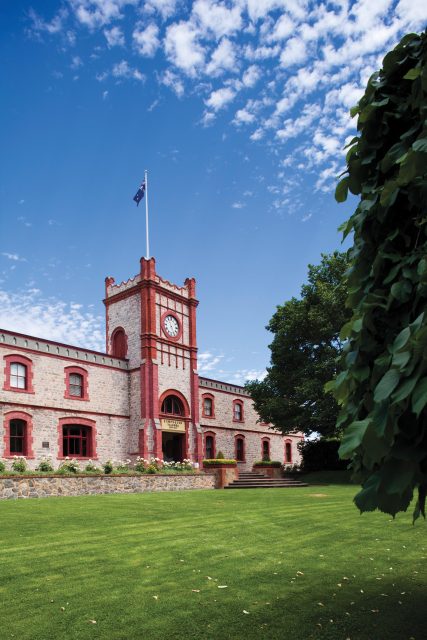
As winemaker and head of sustainability at Hill-Smith Family Estates, a family-run business now in its sixth generation, Louisa Rose has one aim: “to make sure the land we farm is left in better condition for the next generation”.
The business owns and operates wineries across Australia and New Zealand including Yalumba, Oxford Landing and Jansz Tasmania, and has been a member of International Wineries for Climate Action (IWCA) since 2021.
Hill-Smith Family Estates’ approach to viticulture is not totally hands off, but Rose says it’s “hands in pockets most of the time”.
Its vineyards have been free from synthetic insecticides for 40 years; Rose says she trusts nature to “look after itself” with a little bit of support and guidance here and there.
The family business’ approach to sustainability has taken many forms throughout the years. The Hill-Smith family’s first organic certified wines came to market in the 1990s. Experimentation with biodynamics began in 2010.
But in recent years, the business has shifted away from these practices. Rose says that while some vines are still certified organic today, they won’t be for long.
Partner Content
“We’re not organic and just not bothering to certify,” she says. Instead, some organic practices have been integrated into Hill-Smith Family Estates’ sustainability programme, but not all. “Our holistic sustainability programmes, which are continuous improvement and low input, are better for our vineyards than just going down the organics route and having to tick all these boxes and not doing some other things that would probably be better for vine health,” Rose explains.
The same goes for biodynamics. “We’ve had a couple of vineyards in the Barossa that have been biodynamically certified, and we’ve actually just stopped that practice now,” she continues, because “those vines and vineyards were suffering in terms of vine health”.
“I’m not saying that biodynamics doesn’t work in other parts,” Rose insists. “We saw these amazing wines that were made from biodynamically-certified vineyards and thought it works for them, let’s see if it might be amazing for us.”
But with a dry climate and shallow soils, after decades of experimentation the family concluded that both organic and biodynamic viticulture were “not for us in the long term”.
Rose says: “We think our sustainability programme is better.”
Beyond results in the vineyard, she argues that consumer demand for organic Australian wines just isn’t strong enough. “We’ve been making organic certified wine since the 90s. We thought there would be huge demand, and there wasn’t,” she admits. “We didn’t see people make decisions to purchase those wines because they were organic; in some cases even the opposite.”
Related news
Brane Cantenac unveils label celebrating 100 years of Lurton family ownership
‘A warrior variety’ – Cabernet’s resilience from the Maipo to Margaux
French vineyards battle extreme heat as climate pressures mount


